Wyll's Potential Redemption: How Baldur's Gate 4 Could Transform the Underdeveloped Warlock
Baldur's Gate 4 and Wyll Ravengard promise thrilling character evolution, inviting new studios to unleash his untapped complexity and moral depth.
As the gaming world looks toward the future of the Baldur's Gate franchise in 2026, discussions about character evolution have taken center stage. While Larian Studios has made it clear they're moving on from Baldur's Gate 3, the door remains wide open for another studio to pick up the torch for Baldur's Gate 4. If and when that happens, one character stands out as particularly ripe for reinvention: Wyll Ravengard, the devil-bound warlock whose potential was never fully realized in the acclaimed third installment.
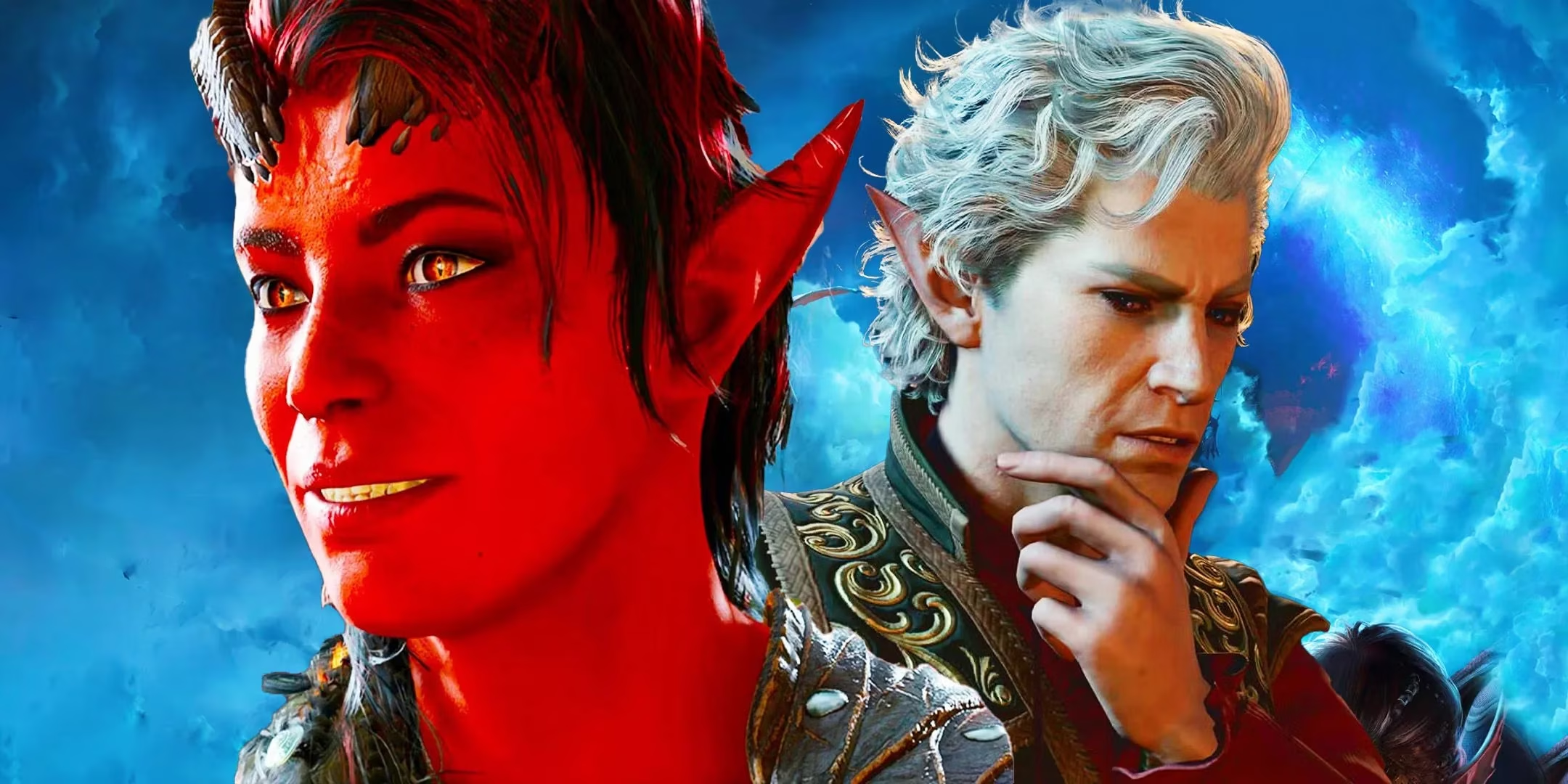
The Devilish Details: Wyll's Lost Complexity
The current iteration of Wyll in Baldur's Gate 3 presents what many players describe as a 'Prince Charming' archetype—noble, honorable, and somewhat predictable. However, early access versions of the game revealed a much different vision for the character. Originally conceived with greater alignment to traditional Dungeons & Dragons warlock personality archetypes, Wyll was intended to showcase more morally gray characteristics that ultimately got sanded down due to early feedback about him being 'unlikable.' This watering-down of his personality created what many fans now see as a missed opportunity.
Key elements that were cut from Wyll's character development include:
-
A more complicated relationship with his father, Duke Ulder Ravengard
-
A history of thievery and questionable past decisions
-
Greater distrust toward institutions like the Flaming Fist
-
More sexually charged, complex interactions with his patron Mizora
Why Wyll Falls Short in BG3
When compared to other origin characters, Wyll's shortcomings become particularly glaring. Let's break down the main issues:
| Character | Moral Ambiguity | Romance Depth | Character Arc Complexity |
|---|---|---|---|
| Astarion | High 😈 | Extensive 💋 | Multi-layered 🎭 |
| Shadowheart | High ⚖️ | Well-developed 💖 | Intricate 🔄 |
| Wyll | Low ⚪ | Limited 💔 | Straightforward 📈 |
Wyll's romance is consistently rated as one of the least satisfying among players, not just because of limited cutscenes, but because it lacks the emotional complexity and moral tension that make other relationships compelling. As one player put it, "Wyll's story feels like it's playing it safe when everyone else is going all-in on their flaws and contradictions."
The Cut Content That Could Have Changed Everything
Perhaps most telling of Wyll's lost potential is the early version of his relationship with Mizora. Data mining and developer notes suggest there were plans for:
-
A genuinely intimate, possibly romantic dynamic between warlock and patron
-
Morally questionable collaborations that would force players to reconsider Wyll's 'good guy' image
-
Sexually explicit dialogue options that would have pushed the game's mature themes further
-
Story beats where Wyll's pact obligations directly conflicted with his heroic aspirations
This version of Wyll would have better reflected the classic warlock dilemma: power gained through questionable means from questionable entities. Instead, players got a character whose devilish pact rarely feels truly devilish.
How BG4 Could Give Wyll the Overhaul He Deserves
With Baldur's Gate 4 potentially on the horizon, developers have a golden opportunity to resurrect Wyll with the complexity he deserves. Here are several approaches that could work wonders:
Option 1: The Fallen Hero 🎭
Imagine encountering Wyll years after the events of BG3, having become disillusioned with his heroic path. Perhaps the pressures of his pact, his father's expectations, or the harsh realities of saving the world have pushed him toward more pragmatic (read: morally questionable) solutions. This would allow for:
-
A character who has genuinely evolved rather than simply being 'updated'
-
Exploration of how idealism can curdle into cynicism
-
Genuine tension if he appears as a potential antagonist or rival
Option 2: The Fully Realized Warlock 🔥
Instead of downplaying his infernal connections, a sequel could lean into them. What if Wyll has fully embraced his pact's power, becoming a formidable but terrifying figure? This could manifest as:
-
A companion whose 'help' comes with Faustian strings attached
-
Romance options that genuinely explore power dynamics and manipulation
-
Story choices where Wyll's 'solutions' are effective but ethically horrifying
Option 3: The Supporting NPC With Bite 🗡️
If not returning as a full companion, Wyll could shine as a consequential NPC. Picture him as:
-
A faction leader with ambiguous motives
-
A quest-giver whose requests reveal hidden agendas
-
A potential ally who might betray you for his patron's favor
Learning From Franchise History 📜
The Baldur's Gate series has excellent precedent for bringing back characters with fresh perspectives. Jaheira evolved from companion to Harper leader across games. Minsc maintained his beloved personality while gaining new relevance. Sarevok transformed from villain to potential ally. Wyll deserves similar thoughtful evolution.
What Players Want in 2026 🎮
Modern RPG audiences have sophisticated expectations. They crave characters who:
-
Defy easy categorization as 'good' or 'evil'
-
Have relationships with meaningful consequences
-
Evolve in response to player choices and game events
-
Present genuine moral dilemmas rather than obvious 'right answers'
Wyll's current incarnation checks few of these boxes. His redemption in a potential sequel isn't just about adding content—it's about adding conflict, both internal and external.
The Technical Possibilities 💻
With next-generation technology available in 2026, a revived Wyll could benefit from:
-
More dynamic dialogue systems that reflect changing relationships
-
AI-assisted character development that makes interactions feel less scripted
-
Expanded companion systems allowing for deeper relationship building
-
Branching storylines that truly change based on how players interact with him
The Bottom Line ⚖️
Wyll isn't a bad character—far from it. He's a solid foundation that was never built to its full height. While other companions got Gothic spires and elaborate dungeons of personality, Wyll got a tidy cottage. Nice, but not particularly memorable in a landscape of architectural wonders.
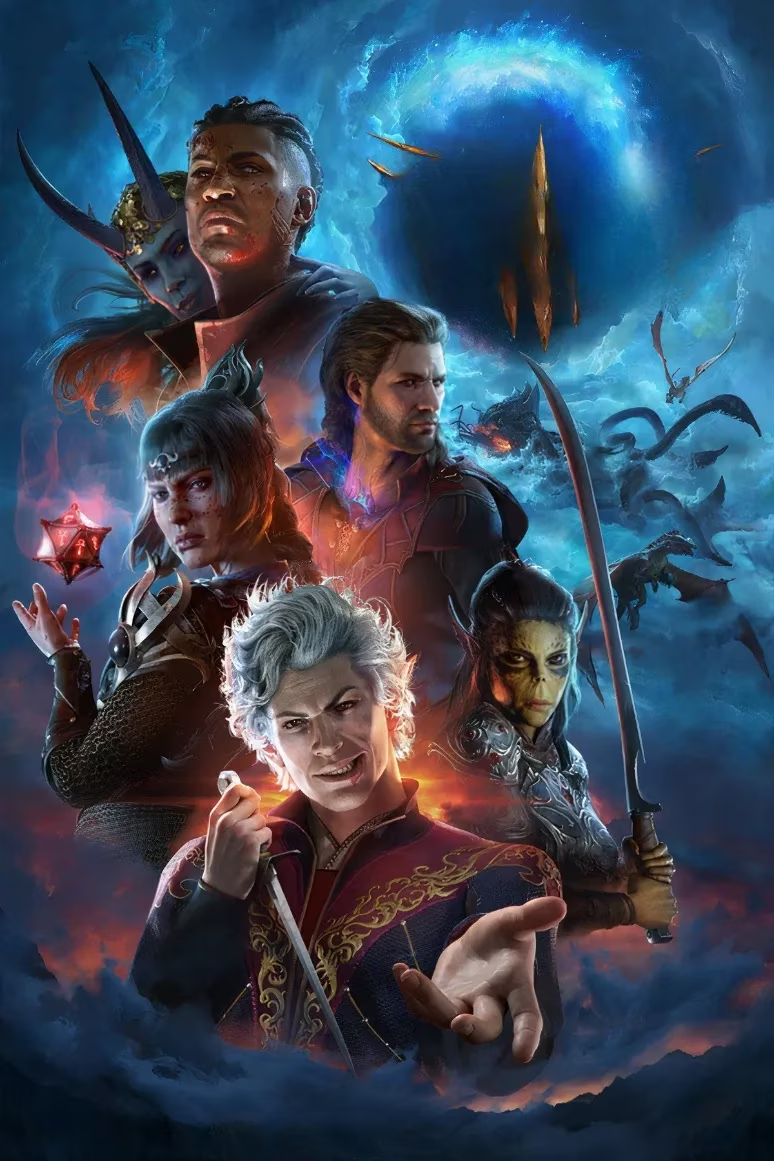
The question isn't whether Wyll could be more interesting—the cut content proves he was designed to be. The question is whether future developers will have the guts to embrace that darker, more complex vision. In an era where players crave nuanced characters who live in the gray areas between heroism and villainy, Wyll's potential transformation could be one of the most exciting aspects of a hypothetical Baldur's Gate 4.
As we look toward the future of the franchise, one thing is clear: if Wyll returns, he deserves to come back with the edge he was always meant to have. Not necessarily as a villain, but as a character who finally makes us question what it really means to make a deal with devils—and what that does to a person over time. That's the kind of character evolution that could make Baldur's Gate 4 not just a sequel, but a meaningful evolution of everything that made its predecessor great.