Why Karlach's Tragic Endings in Baldur's Gate 3 Were Always Meant to Be
Karlach's tragic fate in Baldur's Gate 3 is a deliberate and poignant narrative choice, masterfully exploring themes of terminal illness and dignified acceptance. This heartbreaking design resonates deeply, offering a powerful reflection on finding beauty in inevitable loss.
As a player who's poured hundreds of hours into Faerûn, I can tell you that Karlach's story hits differently than any other companion's in Baldur's Gate 3. It's 2026, and even after all the updates, patches, and community discussions, that fiery Tiefling's fate remains unchanged: you either watch her engine burn out as she faces death on her own terms, or you follow her back to the hells of Avernus for one last desperate gamble. People have been arguing about this since launch—some calling it cut content, others a narrative misstep—but according to Karlach's own voice, Samantha Béart, this heartbreaking design was as intentional as a rogue's sneak attack.
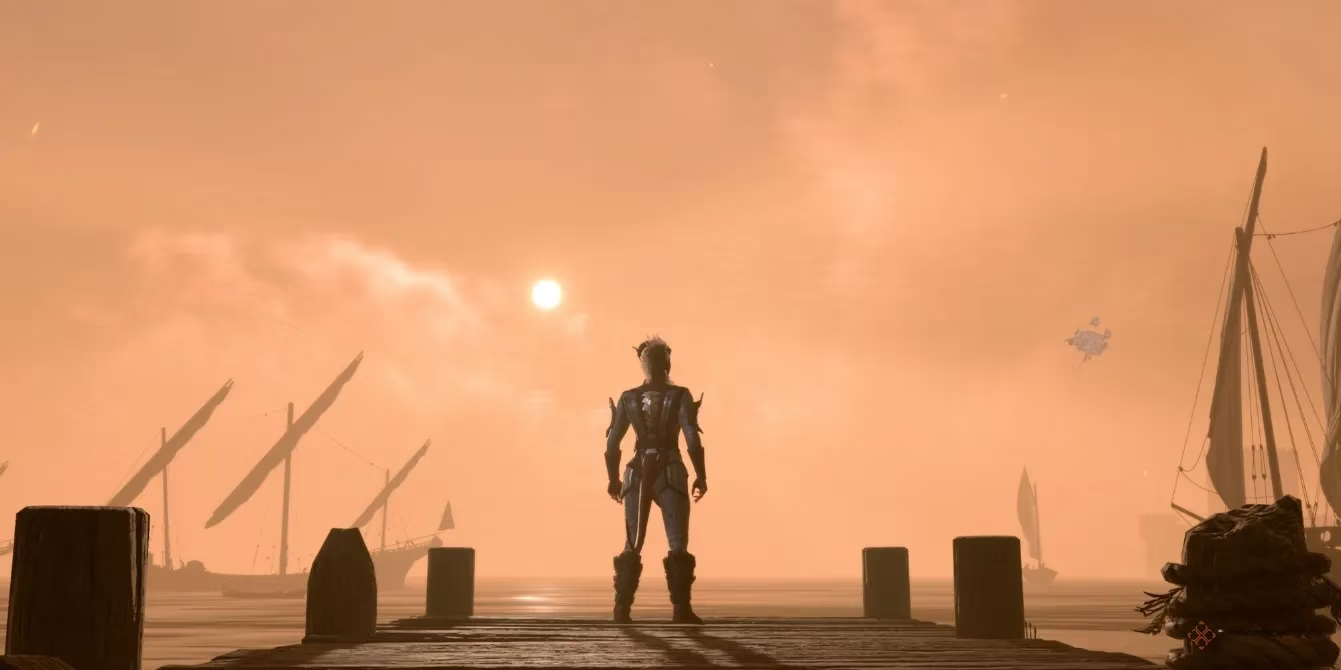
Béart recently revealed that the writing team, led by Sarah Baylus, crafted Karlach's arc with deliberate precision. "The writing is there because that's what the writer wanted to put out," Béart explained, emphasizing that the lack of a "perfect" ending wasn't an oversight but a conscious creative choice. For me, playing through her questline felt like holding a beautiful, cracked vase—you can admire what it once was, but you know it can never hold water again without spilling. That's Karlach: magnificent, broken, and tragically temporary.
What really struck me was Béart's discussion about how players with chronic or terminal illnesses have responded to Karlach's journey. They find comfort and recognition in her story, seeing their own struggles reflected in her fight against an internal clock she can't reset. Béart argued that slapping a magical solution onto her engine would be "a very cheap trick"—like using a bandage to fix a shattered bone. It might cover the surface, but it ignores the deeper reality. This perspective transformed how I viewed those final moments with Karlach. Suddenly, her refusal of easy fixes felt less like a game limitation and more like a profound narrative statement about dignity in the face of inevitable loss.
Béart also shared this brilliant characterization: "She's a Viking, she's going to die young. She wants to go to Valhalla." This clicked for me immediately. Karlach isn't designed for peaceful retirement in a cottage; she's built for glorious, blazing ends. Her entire personality—the loud laughter, the fierce loyalty, the impulsive joy—is that of someone determined to burn brightly while she can. Trying to give her a quiet, safe ending would be like forcing a wildfire into a lantern; it might contain her, but it would destroy what makes her magnificent.
Yet, even warriors have their soft spots. In another beautiful revelation, Béart mentioned that the way Karlach confesses her love was actually their suggestion. This adds another layer to her tragedy: she finds profound connection just as her time is running out. Her romance scenes aren't just about attraction; they're about two people clinging to moments of beauty while standing on a crumbling cliff edge. For me, those moments made her eventual fate hurt more, but also feel more meaningful—like finding a perfect, fragile seashell just before the tide sweeps it away forever.
So why has Larian stuck to this vision through years of updates? The answer seems to be about respecting the story's emotional truth. Baldur's Gate 3 gives us god-like powers to reshape reality, but Karlach's narrative reminds us that some things—love, mortality, choice—remain beyond even magical intervention. Her endings force players into difficult positions we might recognize from real life:
-
The Carer's Dilemma: Supporting someone who's decided they're "ready to go"
-
The Companion's Choice: Following someone into darkness because leaving them alone is worse
-
The Bystander's Pain: Witnessing beauty destroyed by circumstances beyond anyone's control
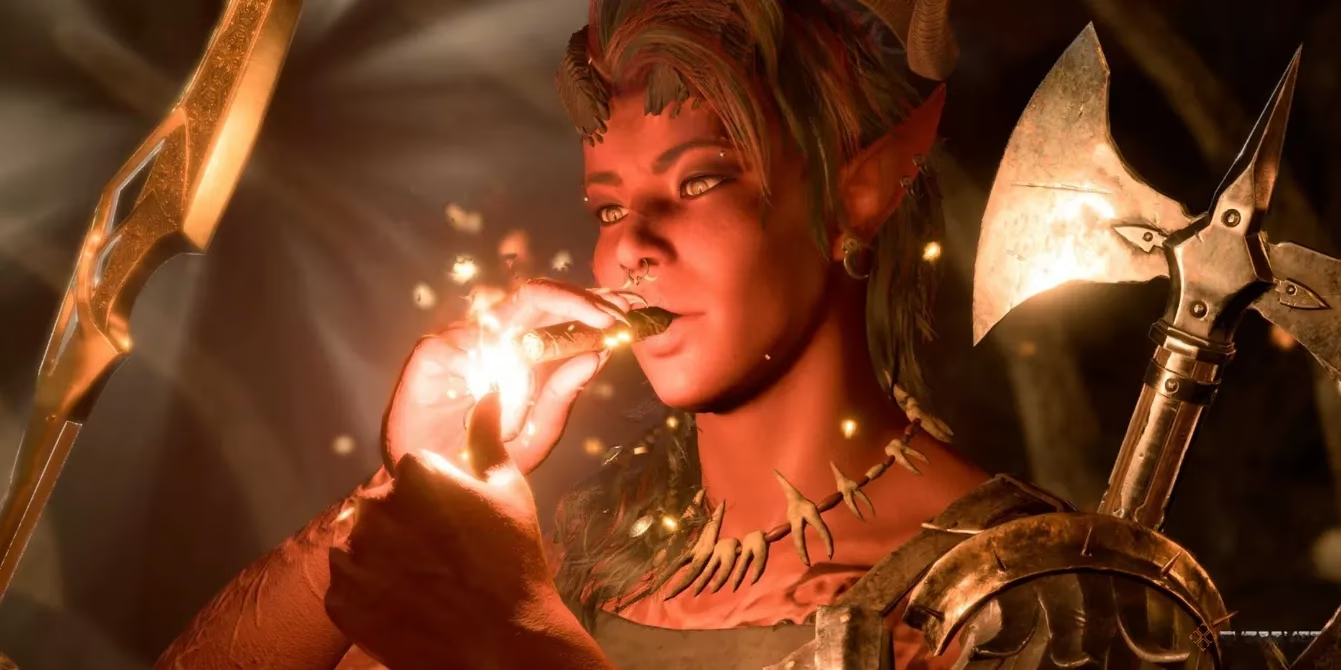
Playing through Karlach's story multiple times, I've noticed how her tragedy actually enhances other characters' arcs. Wyll's nobility shines brighter when he volunteers for Avernus. The player's capacity for selflessness gets tested when offered this no-win scenario. Even the game's theme of resisting external control gains depth when contrasted with Karlach's internal, inexorable countdown.
Here's what makes her endings work, even when they hurt:
| Ending Type | What It Offers | What It Costs |
|---|---|---|
| Accepting Death | Agency, peace, a beautiful final moment | Future possibilities, more time together |
| Returning to Avernus | Hope, companionship, continued fight | Safety, freedom, the peaceful life she wanted |
| Becoming a Mind Flayer | Survival, in a twisted form | Everything that made her Karlach |
Béart's insights helped me understand that Karlach's value isn't diminished by her tragedy—it's defined by it. In a game full of characters who can be "fixed" or "saved," she remains beautifully, frustratingly unfixable. Her engine isn't just a plot device; it's a metaphor for the human condition itself: we're all running on limited time, trying to make our moments count before the flame goes out.
As I play Baldur's Gate 3 in 2026, with all its new content and expanded epilogues, Karlach's story remains my benchmark for emotional storytelling in games. She taught me that sometimes the most powerful narratives aren't about giving players what they want, but about giving them what they need: stories that challenge, hurt, and ultimately transform how we think about life, death, and what makes our brief time meaningful. Her flame might be destined to burn out, but the light she casts illuminates corners of the human experience that easier, happier stories never reach.