Whispers in the Stone: My Dance with the Zhentarim in Baldur's Gate 3
Explore the enigmatic Zhentarim in the Sword Coast, uncovering their shadowy alliances and the legendary Titanstring Bow in 2026's Forgotten Realms.
The shadowed paths of the Sword Coast are never empty. They are woven with whispers, with deals struck in the dark, and with the cold, pragmatic gaze of those who trade in secrets and steel. In my journey through the chaos of 2026's vibrant Forgotten Realms, one such thread was the Zhentarim. They were not villains painted in broad strokes, but a shade of grey so deep it drank the light, an organization whose presence in Act One felt like finding a venomous serpent coiled peacefully in a sunbeam—beautiful, dangerous, and offering a choice that would echo in the chambers of my own conscience.
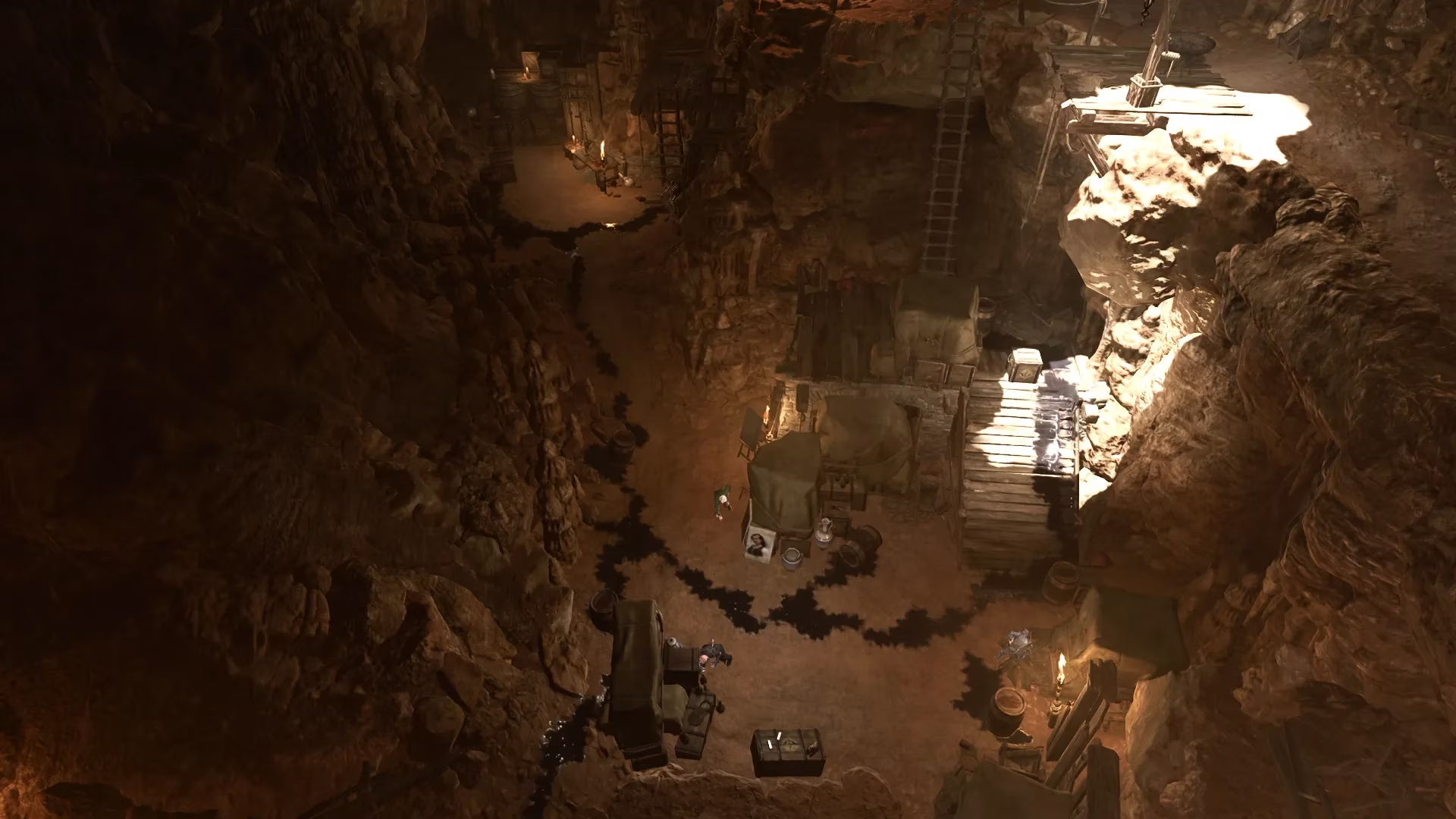
My first true introduction came not in a dank alley of Baldur's Gate, but beneath the smoldering ruins of Waukeen's Rest. A cave, unassuming, holding a nest of agents led by the formidable Zarys. The air was thick with the scent of damp earth and ambition. To spare or to slaughter? The game presented it not as a moral absolute, but as a calculus. Slaying them offered the immediate, visceral rewards: experience to harden my party, and loot to glean from their still-warm bodies. The narrative tapestry, I learned, would not unravel from this act; the grand design of the Absolute's cult and the city's fate in Act Three would proceed, largely unmoved by the silence in this particular cave. Yet, it felt like closing a door. The merchant within, with his cache of fine arms, would be lost to me, a pragmatic sacrifice for a cleaner, if bloodier, path.
But there was another road, one paved with uneasy alliance. By rescuing their operatives, Olly and Rugan, from the gnoll-infested Risen Road, I carried not just their gratitude, but a token of passage. Walking into that subterranean haven with Rugan's word was a different experience entirely. The suspicion in Zarys's eyes softened to a calculating acknowledgment. A reward was given, not just in gold, but in trust—or the mercenary facsimile of it. The Harold crossbow, a piece of beautifully crafted malice, was placed in my hands.
 And with it, access. The merchant's stock opened like a treasure vault, revealing the Titanstring Bow, a weapon of legendary pull. This was the Zhentarim's true currency: not just coin, but opportunity, power, and connection. They dealt in the tangible, and for a price, they could make you formidable.

Yet, this alliance was a spider's web, delicate and perilous. The basement itself was a testament to their paranoia and preparedness—rigged with sparkpowder barrels, a self-destruct mechanism to erase all evidence. I remember standing there, the strategic part of my mind whirring. A simple Minor Illusion to gather them, a shift into turn-based mode where seconds stretched into eternities, and then, a single spark. The chain reaction was both horrifying and efficient, a cleansing fire they had prepared for themselves. Looting in the acrid aftermath felt like picking bones after a lightning strike.
| Choice | Immediate Consequence | Long-term Narrative Impact | Key Reward |
|---|---|---|---|
| Destroy the Hideout | XP, loot, no hostile merchants. | Minimal. Zhentarim plot in Act 3 proceeds independently. | Whatever you can scavenge. |
| Ally via Rescue | Harold crossbow, full merchant access. | Opens dialogue options; establishes a business relationship. | Titanstring Bow, unique gear. |
| Trigger Their Own Traps | Mass elimination, possible survivor cleanup. | Erases the local cell completely. | Explosive satisfaction and their supplies. |
The weight of the choice lingered. It was never about good or evil. It was about what kind of shadow I wanted to walk in. The Zhentarim, as of my recent travels, remain entrenched in their shady business—smuggling, coercion, whispers of slavery in dark corners. Allying with them meant getting my hands dirty, but also gaining tools to fight greater evils. Destroying them was a statement of purity, but also of poverty, turning away from resources in a world where every advantage counts.
In the end, my path was one of cold pragmatism, tinged with poetic irony. I took their reward, I perused their wares, and I learned their secrets. And when the time came to move on, I left the sparkpowder undisturbed. Some doors, once opened, are better left ajar, a reminder of the delicate dance between light and the deep, consuming grey. For in Baldur's Gate 3, the most powerful stories are not always about defeating monsters, but about deciding which ones you can bear to do business with.