The Wit and Whimsy of Baldur's Gate 3's Puzzles: A Player's Guide to Brain Teasers and Head-Scratchers
Baldur's Gate 3 masterfully blends cerebral puzzles and character-driven riddles, from philosophical Chamber tests to strategic chess challenges, offering a uniquely rewarding intellectual adventure.
Ah, Baldur's Gate 3. A game where you can be a hero, a villain, a lover, a fighter... and, for a significant portion of your journey, a glorified escape room enthusiast. Sure, there are mind flayers to battle and ancient evils to thwart, but sometimes the biggest threat to my party's survival is a tricky riddle or a stubborn chessboard. As I've traversed Faerûn, I've come to realize that combat is just the flashy side dish to the main course of cerebral conundrums. From chambers that test your soul to puzzles that test your sanity, let me regale you with the trials and tribulations of being the smartest person in a room full of magical misfits.
The Chamber of "Wait, Is This a Personality Test?"
Let's start with the good stuff, the puzzles that make you feel like a genius. Remember those four Chamber puzzles beneath Wyrm's Rock Prison? Justice, Courage, Wisdom, and Generosity. Now, I'm no philosopher, but being forced to define these virtues while dodging traps really makes you think, doesn't it? The Chamber of Justice was my favorite. You're presented with paintings and shadows, and you have to make a moral judgment. I mean, who gave these ancient architects the right to psychoanalyze me? My tiefling warlock's idea of "justice" probably involves more fire and screaming than the puzzle designers intended. But that's the beauty of it! The solutions aren't just about logic; they're about who your character is. The Courage chamber throws combat at you, Wisdom gives you riddles (my barbarian companion, Karlach, was not a fan), and Generosity... well, let's just say I'm not great at sharing my precious healing potions. These aren't just puzzles; they're character development sessions in disguise.
Checkmate, or How I Learned to Let Gale Do the Thinking
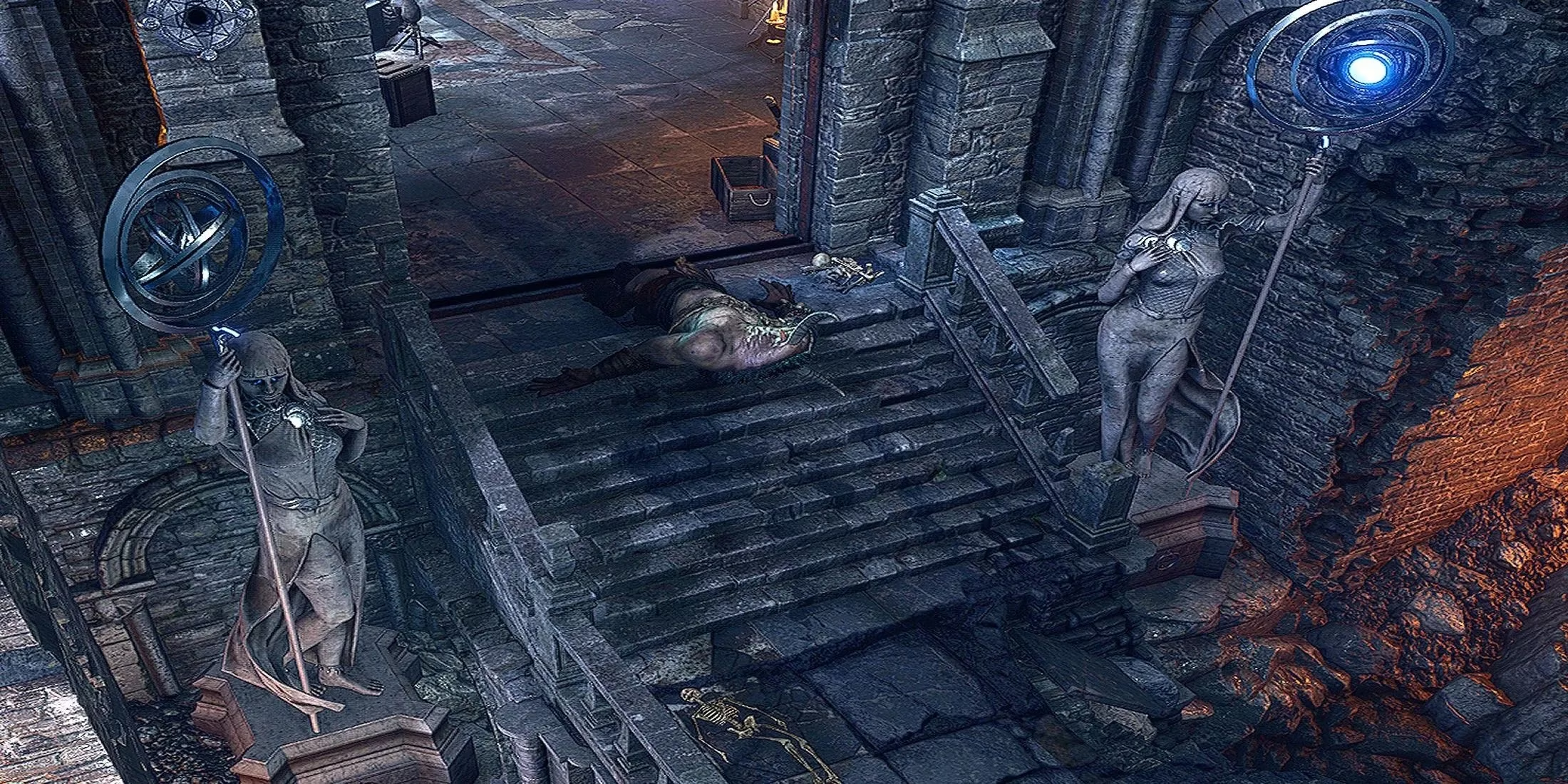
Then there's the chess. Oh, the chess. In Balduran's tower, you're faced with classic "checkmate in two moves" scenarios. Now, I ask you, when you're in a high-fantasy world of dragons and demons, is knowing the Sicilian Defense really a prerequisite? Thankfully, Larian Studios are merciful gods. If, like me, your strategic prowess peaks at tic-tac-toe, you can simply turn to your companion Gale and say, "You handle this." And he does! It's a brilliant design choice. It respects the chess masters among us while giving the rest of us a lore-friendly "skip puzzle" button. It made me wonder, what other real-world skills should I have brushed up on before embarking on this adventure? Sudoku? Crossword puzzles? My character sheet definitely didn't have a "Chess ELO" stat.
Mooning Over Lunar Logic
The moon phase puzzle is a masterclass in environmental storytelling. You need to align phases based on Selunite lore. At first glance, it seems esoteric. But then you look around. The clues are everywhere in the architecture. It's the perfect balance: challenging enough to make you feel clever when you solve it, but never so cryptic that you're left staring at the moon wondering what you did to offend the goddess Selûne. It's a puzzle that says, "Pay attention to the world around you." And in a game as dense as BG3, that's a valuable lesson.
The Gauntlet of Shar: A History Test in the Dark
The Gauntlet of Shar is less a single puzzle and more an entire academic course on a goddess of loss. You're interpreting murals, piecing together the tragic life of General Thorm, and solving sequences based on "splendor, tragedy, infamy." It's atmospheric, it's narrative-driven, and it makes you feel like an archaeologist unraveling a dark mystery. Sure, fumbling around in the literal and metaphorical darkness can be frustrating, but the payoff—the feeling of understanding a piece of this world's deep history—is immense. It elevates simple tile-matching or sequence-solving into a profound story beat.
The Whimsical Side: Pigeon Post and Cat Chats
Not every puzzle needs to be world-shattering. Sometimes, you just need to help a villager find their lost letters, which leads to negotiating with a pigeon and having a chat with Gale's flying cat, Tara. Is it a complex logic gate? No. Is it utterly charming and a delightful break from saving the world? Absolutely! It showcases BG3's range. One minute you're debating the nature of evil in a death chamber, the next you're asking a tressym if she's seen any stray mail. It’s these moments of low-stakes, whimsical problem-solving that make the world feel truly alive.
The "Wait, That's It?" Puzzles
Now, let's talk about the other end of the spectrum. Every game has them: the puzzles that make you go, "Huh." The early-game key-next-to-chest "puzzle." Come on. Finding a key sitting plainly beside the lock it opens isn't a test of wit; it's a test of basic object permanence. It's the tutorial of puzzles, and while it serves its purpose, it feels almost insulting after you've later grappled with multi-layered moral chambers.
Then there's the Overgrown Ruins Entrance. It has multiple solutions (like sneaking through the sewers), which is great for role-playing! But the core puzzle itself? It's a bit... standard. A lever here, a pressure plate there. Where are the clever environmental hints? The deep lore connections? It gets the job done, but it doesn't sing.
And who could forget the Silent Library? This puzzle, friends, is the reason the internet exists. The clues are so subtle, the feedback so minimal, that most players (myself included) eventually just started clicking on everything or, shamefully, opened a browser tab. A difficult puzzle is fun. An obscure puzzle is just frustrating. There's a fine line between "challenging" and "poorly communicated," and this one trips over it.
Traps: The Reflex "Puzzle"
Spotting and disarming floor traps. Is this a puzzle? It's more of a perception check and a steady hand. It creates tension—nothing like the panic of seeing your rogue fail a roll while standing on a pressure plate—but it doesn't really engage the problem-solving part of your brain. It's a test of reflexes and stat bonuses, not logic. Necessary? Yes. A memorable brain-teaser? Not really.
The Druid's Dialogue Dilemma
Finally, the Druid Grove's challenge. Is it a puzzle? It's more of a multi-choice conversation with stakes. Persuade, intimidate, steal, or fight your way through. It's thematically cool, fitting the druidic setting perfectly, but its design is... serviceable. It reminds me of the Overgrown Ruins: narratively flexible, but mechanically it doesn't spark joy in the same way the Chamber puzzles do.
In Conclusion: A Spectrum of Shenanigans
So, what have we learned? Baldur's Gate 3's puzzles are a wild ride. They can make you feel like the smartest detective in the Sword Coast or the most confused adventurer to ever hold a d20. They range from integrated, narrative masterpieces that test your character's soul to simple lock-and-key affairs that test your patience. But even the weaker ones contribute to the game's incredible variety. They force you to interact with the world in different ways, to think, to observe, and sometimes, to just ask your wizard friend for help with the chess.
In the end, these puzzles are a core part of BG3's identity. They ensure that your journey isn't just about where you hit, but also about how you think. And isn't that what a great role-playing game is all about? Now, if you'll excuse me, I have a moon puzzle to stare at until it makes sense.