The Weight of a Level: When Digital Ascension Truly Matters
Western RPGs masterfully transform the simple act of leveling up into a profound and meaningful step in a character's becoming, as seen in games like Baldur's Gate 3 and The Witcher 3.
In the vast digital landscapes where progress is often measured by a fleeting number on a screen, the profound significance of growth has been diluted. The simple act of leveling up, once a momentous occasion in a player's journey, has become a common, almost forgettable tick of an experience bar. Yet, in the hands of true artisans of the craft, this fundamental mechanic is reforged into something more: a meaningful step in a character's becoming, a tangible shift in reality, a narrative beat that resonates with the weight of earned power.
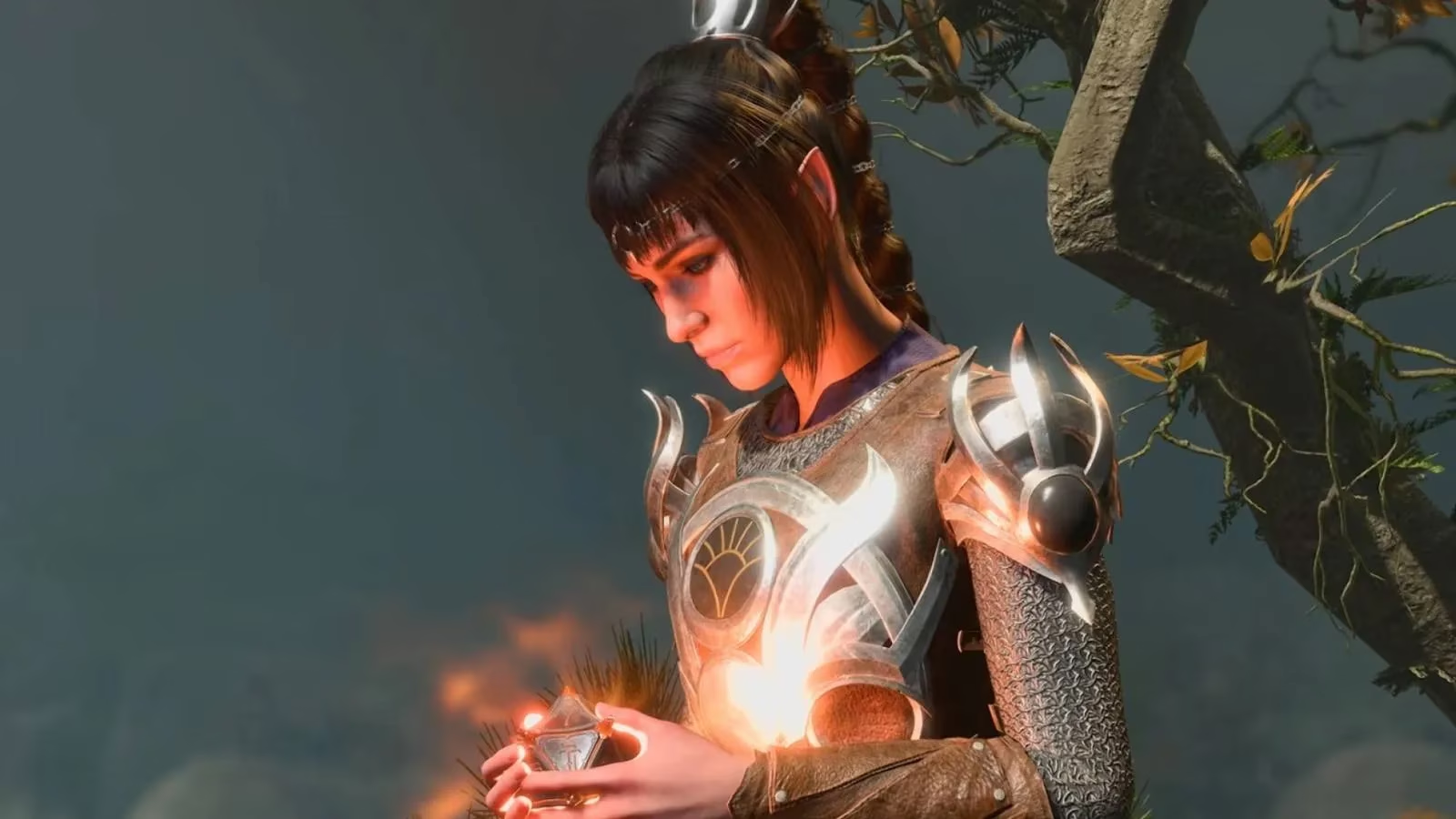
Among these artisans, the Western RPG stands as a bastion of deliberate progression. Here, levels are not plentiful, but precious. They are milestones, not millstones. Baldur's Gate 3 personifies this philosophy, weaving a tapestry of power where each new tier unlocks a symphony of strategic possibilities. A single level can be the chasm between a humiliating rout and a dominant victory, introducing new spells, abilities, and class features that fundamentally reshape the battlefield. The game paces this ascent with a master's touch, ensuring the player is neither a god nor a gnat, but a hero perpetually on the cusp of their next great evolution.
In the wind-swept, monster-haunted realms of The Witcher 3: Wild Hunt, progression is earned not through mindless slaughter, but through the completion of stories. Experience flows from quests, from resolving the tangled fates of peasants and kings alike. This system guards against meaningless power inflation; tackling a quest far beneath one's station yields no reward, preserving the intended challenge and narrative weight of each encounter. Every skill point, therefore, becomes a deliberate choice, a carefully placed stone in the foundation of Geralt's combat prowess and survival.
For those who seek a harsher, more unforgiving tutor, the world of Gothic awaits. It is a crucible where the early game is a lesson in humility. A simple scavenger can be a death sentence. Here, survival is not a given but a hard-won prize. Players must farm experience with desperate care, seeking refuge and purpose within one of the world's camps. It is only there, under the tutelage of camp trainers, that raw experience is transmuted into tangible strength—a sharper blade, a sturdier block, a new combat maneuver. Each point invested is a step away from being prey and a step toward becoming a predator in a world that shows no mercy.
Then there is Skyrim, the land of the Dragonborn, where progression is as free and organic as the mountain air. Shedding the rigid class structures of its predecessors, it whispers a powerful promise: do, and you shall become. Every swing of a sword, every fired arrow, every successfully bartered potion contributes to one's growth. This philosophy of practiced mastery allows for unparalleled freedom. The blacksmith can become a archmage, the thief a warrior-poet. A level up is not a gate but an opening, a celebration of the path walked and a blessing for the paths yet unchosen.
In the rain-slicked, psyche-shattered streets of Revachol, Disco Elysium performs a masterful sleight of hand. It removes combat entirely, yet makes the act of leveling up more psychologically potent than any stat boost. Here, experience points are invested into the fragmented facets of a broken man's mind: his intellect, his psyche, his physique, his motorics. Leveling up is an act of self-discovery and reconstruction. Will you become a brilliant, insufferable logician? A volatile powerhouse of street-smart intuition? Each choice defines not just Harry Du Bois's capabilities, but his very perception of reality and his relationship with the world and his unflappable partner, Kim Kitsuragi. It is role-playing in its purest, most literary form.
Returning to a world of augments and conspiracy, the original Deus Ex presented a vision of progression as pure specialization. As operative JC Denton, players sculpt a unique agent from a block of nano-augmented clay. Points invested in hacking transform locked doors into open passages. Points in weapon training turn a shaky-handed rookie into a steady-eyed sniper. The improvement is immediate and visceral. The game never pretends you are a jack-of-all-trades; you become a master of your chosen craft, and the world reshapes itself around your competencies. It is a powerful testament to the idea that true power lies not in having all options, but in excelling at the ones you choose.
The pursuit of realism finds its apex in Kingdom Come: Deliverance, where Henry, son of a blacksmith, begins his journey not as a hero, but as a nobody. He cannot read. He can barely hold a sword. A single skirmish can be a life-or-death struggle. Progression here is a slow, painful, and immensely gratifying climb from incompetence to competence. Like Skyrim, skills improve through use—swing a sword to become a better warrior, read a book to become literate. Unlocked perks then refine these abilities, offering crucial edges in the brutal, unforgiving realism of medieval Bohemia. Every level is a hard-fought lesson in survival.
Finally, in the claustrophobic, blood-stained corridors of the starship Von Braun, System Shock 2 merges survival horror with deep, meaningful customization. The journey begins with a defining choice in the tutorial, setting the initial parameters of your nameless soldier's expertise. From there, every cybernetic module or Psi hypo collected is a lifeline and a choice. Will you bolster your strength to wield heavier weapons, or invest in psychic abilities to bend the ship's malevolent AI to your will? The RPG elements are not an afterthought but the core of the survival strategy. For a beginner, pure strength is a reliable crutch. For the expert, a return journey as a powerful Psi-operative offers a terrifying and thrilling new way to experience the nightmare, proving that a meaningful leveling system can redefine an entire world on a second playthrough.
In these exceptional worlds, a level is never just a number. It is a turning point, a hard-earned skill, a new facet of identity, a key to a previously locked door. It is the quiet, powerful beat in the heart of a great adventure, reminding the player that in the best stories, growth—true, meaningful growth—is the greatest reward of all. 🗡️📖✨