The Upper City of Baldur's Gate 3: A Necessary Cut for the Game's Success
Discover why the legendary 'Baldur's Gate 3' cut content, specifically the Upper City, was a pivotal decision that preserved its masterpiece status. This crucial omission ensured flawless pacing and technical stability, solidifying its role-playing excellence.
Ever since its 2023 release, Baldur's Gate 3 has captivated players with its immense scale and rich narrative depth. However, two years on, one of the most persistent topics of discussion remains the infamous cut content, with the planned Upper City of Baldur's Gate standing as the most legendary 'what-if' scenario. While it's tempting to dream of a more sprawling metropolis, a closer examination reveals that omitting the Upper City wasn't just a practical necessity—it was the only choice that could have preserved the game's legendary status as a masterpiece of role-playing. The decision, though painful for some, ultimately safeguarded the game's pacing, technical stability, and narrative cohesion.
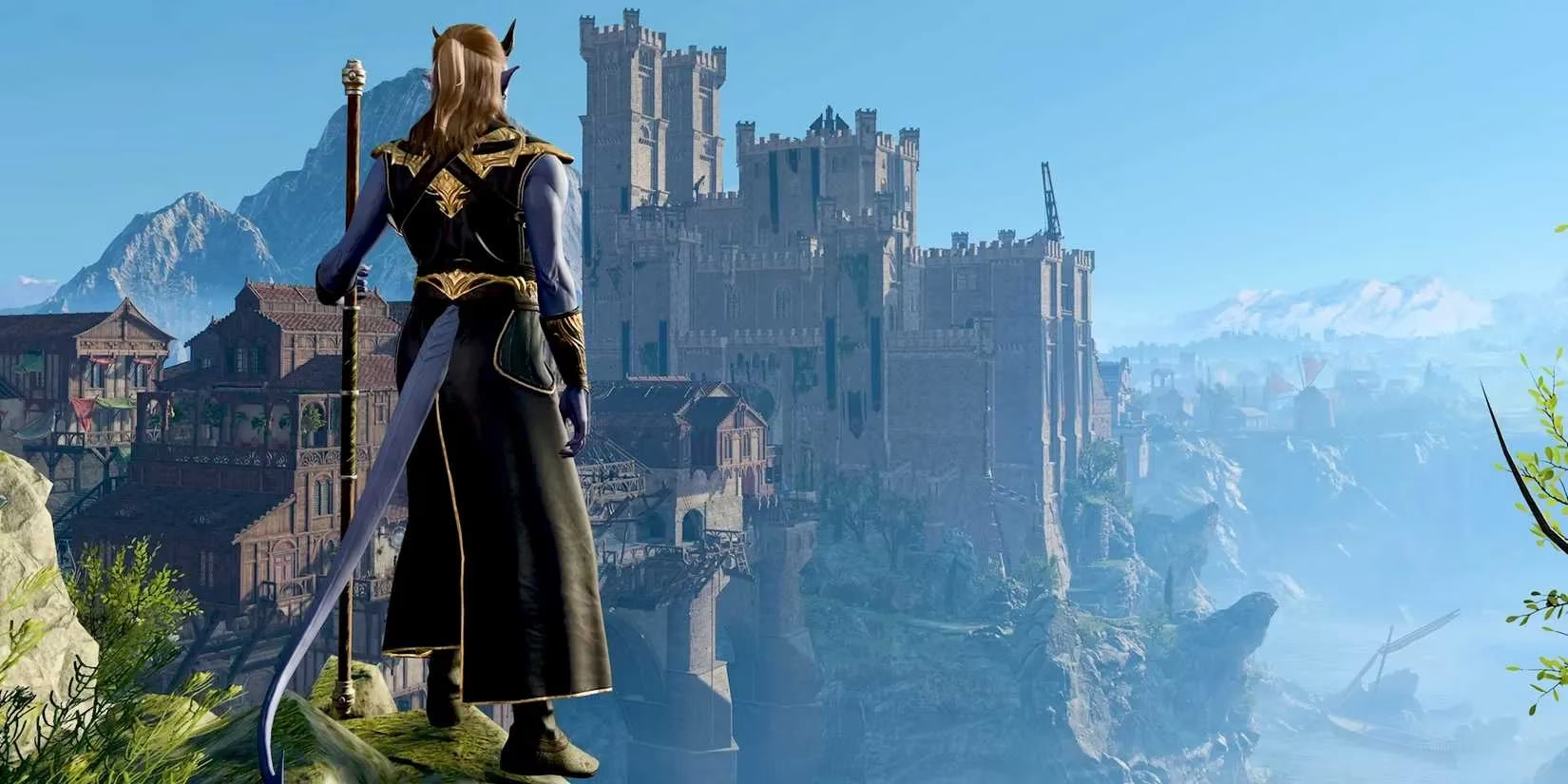
🔍 The Grand Vision vs. The Harsh Reality of Development
Let's be clear: Baldur's Gate 3 is famously huge. Every nook and cranny of its world is packed with intricate details, reactive NPCs, and meaningful choices. The idea of adding an entire Upper City district, which would have effectively doubled the size of Act 3, presented fundamental challenges that went beyond mere asset creation.
-
Narrative Momentum vs. Exploratory Freedom: Act 3 is the narrative climax, where all companion quests and the main story converge. Introducing a vast new area at this point risked sagging under its own weight. Players could easily lose the thread of the urgent, world-ending plot amidst a sea of new side quests and districts.
-
The Quality Standard Problem: The Lower City set an incredibly high bar for density and bespoke reactivity. A great Upper City would have needed to meet, if not exceed, that standard. Doing so would have required an astronomical amount of resources, likely stretching the development timeline to a breaking point.
-
Reallocation Isn't a Solution: Some argue the Lower City could have been deprioritized to make room. But this creates a lose-lose scenario—either both areas feel undercooked, or the act becomes impossibly bloated. Larian Studios had to draw a line, and cutting the Upper City was that line.
🐛 Act 3's Rocky Launch Proves the Point
Remember the state of Act 3 at launch? Even without the Upper City, it was the buggiest, most performance-intensive part of the game. It had a larger scope than Acts 1 and 2 but had less polish.
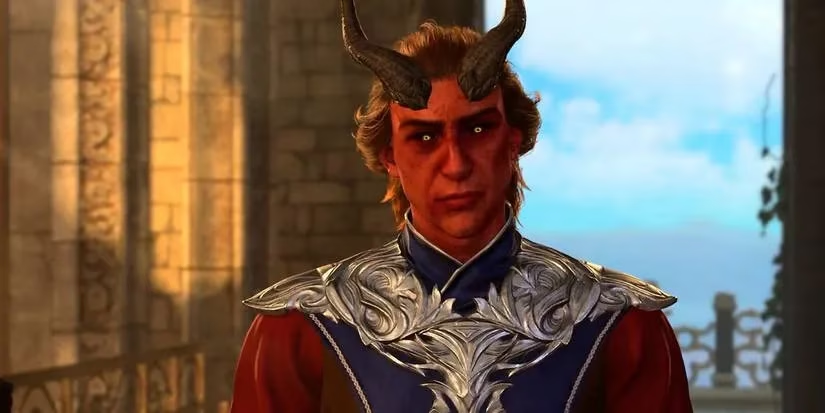
Adding the Upper City wouldn't have solved these issues; it would have magnified them exponentially. Baldur's Gate 3 already had a lengthy development cycle. Piling on several more years of work for one district would have likely cratered team morale and risked the dreaded 'development hell.' The game might never have been released in its current, celebrated form. The 'miracle' of BG3 was delivering both quantity and quality by knowing when to stop. The Upper City would have stretched that miracle past its breaking point.
😫 Player Burnout: The Silent Killer
Beyond technical hurdles, there's a human factor: player fatigue. Baldur's Gate 3's brilliance won over millions, including many more casual RPG fans. A core design goal is to guide players to a satisfying conclusion.
-
The Accelerant for Burnout: The Upper City would have been a massive, optional zone right before the finale. For completionists, it could have added dozens of extra hours. For the average player, it could have been an overwhelming roadblock, causing them to abandon the game before seeing the epic ending they'd invested 100+ hours to reach.
-
Preserving the Magic: The game's success lies in leaving players wanting more, not feeling exhausted. Cutting the Upper City helped maintain that delicate balance between epic scope and manageable commitment.
💡 Cut Content, Not Cut Potential
It's important to note that some brilliant ideas originally slated for the Upper City found new homes. Locations like Cazador's palace in Astarion's questline, which fans speculate felt more suited to an upper-class district, were seamlessly integrated into the existing cityscape. This shows Larian's ability to adapt and refine their vision.
🔮 The Future and the Final Verdict
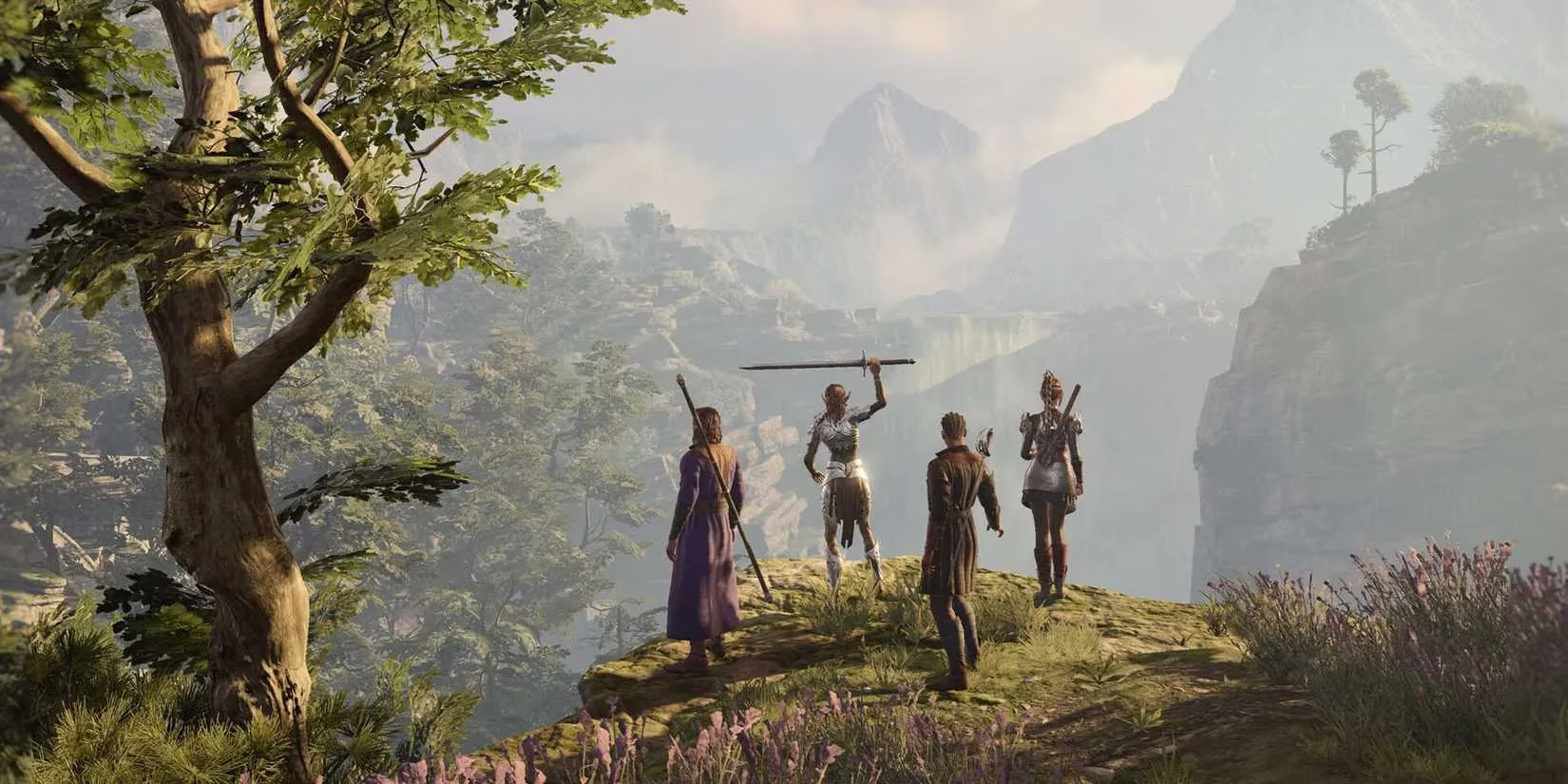
Could we see the Upper City one day? Possibly! If the Baldur's Gate franchise continues under new stewardship, a dedicated Upper City expansion or a sequel featuring it could be phenomenal. But for the 2023 release of Baldur's Gate 3, its exclusion was a masterstroke in project management and creative discipline.
In the end, the choice was between a good, complete game and a potentially great but unfinished and unstable one. Larian chose the former, and we got one of the greatest RPGs of all time. The Upper City remains a fascinating ghost in the machine—a testament to ambitious dreams, but also a reminder that sometimes, the best edits are the ones you make for the health of the entire story. 🎮✨
TL;DR: The Upper City was cut because adding it would have:
-
Destroyed Act 3's pacing right before the climax.
-
Worsened the already shaky technical state at launch.
-
Likely caused massive player burnout before the ending.
-
Potentially delayed the game indefinitely or led to a rushed, inferior product.
Sometimes, less truly is more.