The Unseen Threshold: Console Modding's Race to Nowhere in Baldur's Gate 3
Explore the groundbreaking yet constrained world of Baldur's Gate 3 console race mods, where creative ingenuity meets platform limitations for a uniquely fragmented experience. Discover how modders cleverly navigate strict rules to deliver brilliant, if temporary, transformations.
In the sprawling, sun-drenched realms of Baldur's Gate 3, where choice is the currency of adventure, a silent frontier persists—a line drawn not by gods or devils, but by platform architecture. As of 2026, the vibrant tapestry of player customization woven by PC modders casts a long, intricate shadow over the console landscape, where aspirations to embody new races are met with ingenious, yet fundamentally fractured, reflections. The passion of the community is not in question; it is a roaring, creative fire. Yet, this fire meets a wall of polished, unyielding crystal—the structural limitations of console ecosystems. The result is a landscape of brilliant facsimiles, where the dream of true transformation is often just a cleverly applied mask.
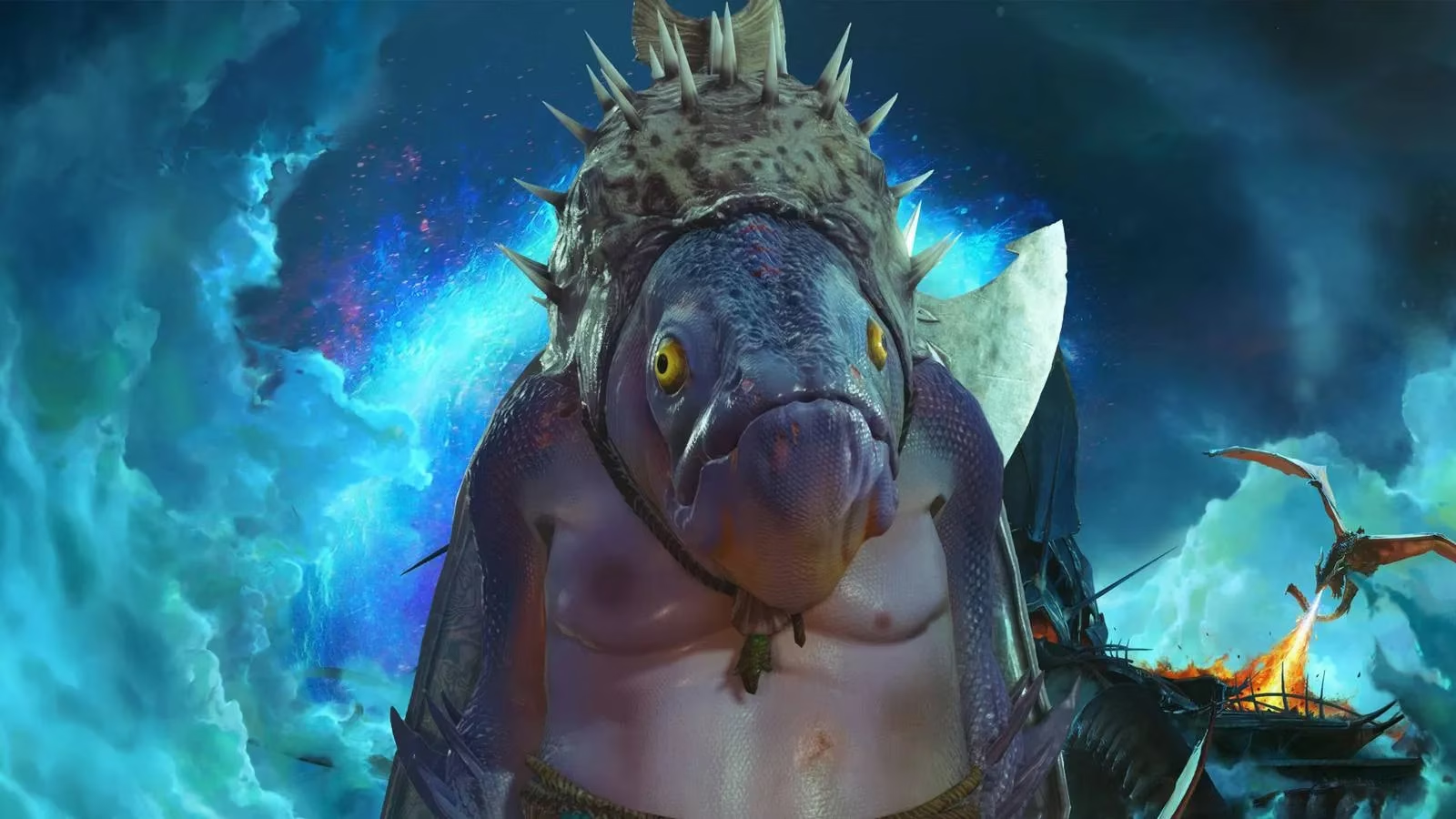
To understand the absence, one must first map the confines of the console garden. The process is less about planting new seeds and more about training existing vines into novel, approved shapes. On PC, race mods are architects, freely overwriting foundational blueprints: models, skeletons, animations, and the very UI of creation. Console mods, by stark contrast, are interior decorators working within a pre-furnished, locked-room apartment. They operate under a covenant of strict rules:
-
The Sanctity of Core Code: No adding, modifying, or removing of shaders—the very light that gives the world its soul.
-
Content Boundaries: Mods that amplify existing nudity or violence are forbidden.
-
The Triple-Locked Gate: Every submission must pass the gauntlet of internal testing by Larian, Sony, and Microsoft, a process as deliberate and slow as continental drift.
-
Stability as Law: Mods must not hinder the game's boot process or its mod management, and any that cause crashes are exiled.
-
Format Purity: Unsanctioned file formats (.exe, .dll) are verboten.
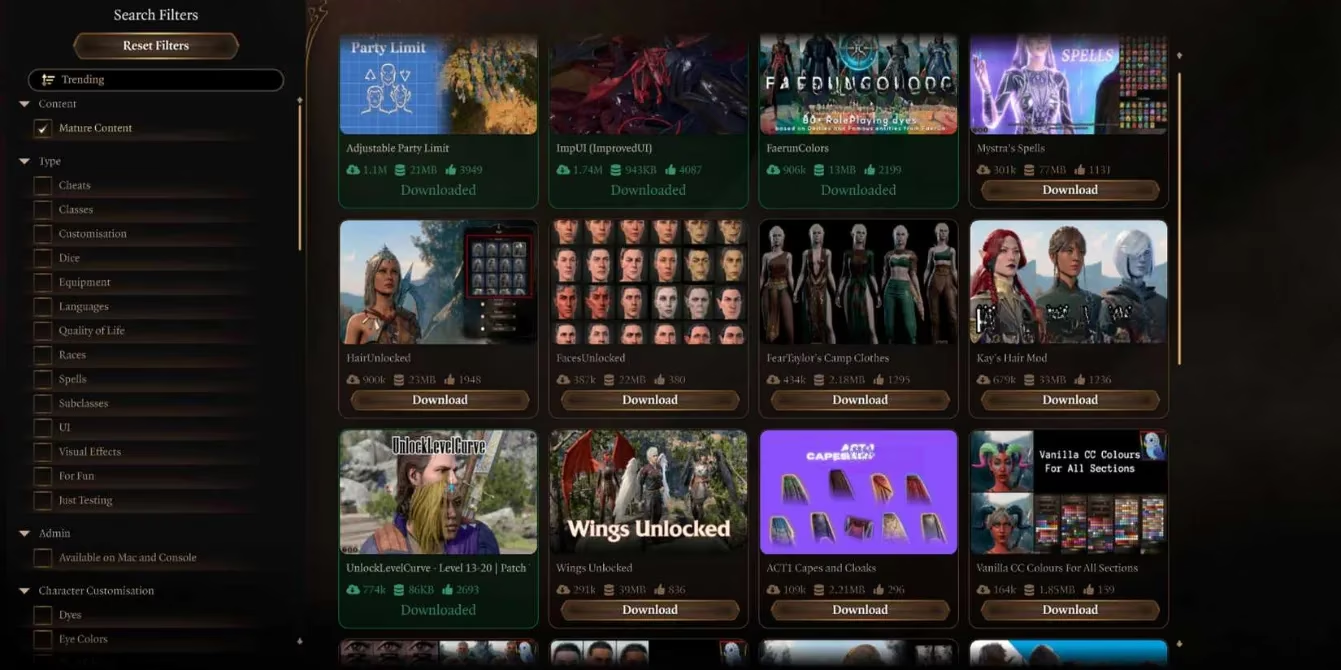
These constraints are not mere suggestions; they are the bedrock. Larian Studios themselves have clarified that the technical symphony required for true race implementation is one that consoles, in their current orchestration, cannot perform. This edict has not stifled creativity but has channeled it into a river of cunning workarounds. The dominant strategy has become a grand masquerade—a polymorph or disguise system. Instead of birthing a new race from the character creator's womb, modders offer a magical garment or a latent power that temporarily cloaks the player in a predetermined form. It is a brilliant sleight of hand, a flickering illusion that provides a taste of otherness. Yet, it remains an echo of the true voice, a costume donned over an unchanged soul. The console modding scene, therefore, thrives on imagination constrained, like a master painter who has been given only a single, unchanging brush.
The Phantom Menagerie: What Console Players Yearn For
If the gates were open, a glorious caravan of Dungeons & Dragons races would have found a home in Faerûn by now. The PC realm already hosts many of these beloved peoples, making their absence on console a poignant silence.
| Race | Core Appeal & Synergy | Status on Console |
|---|---|---|
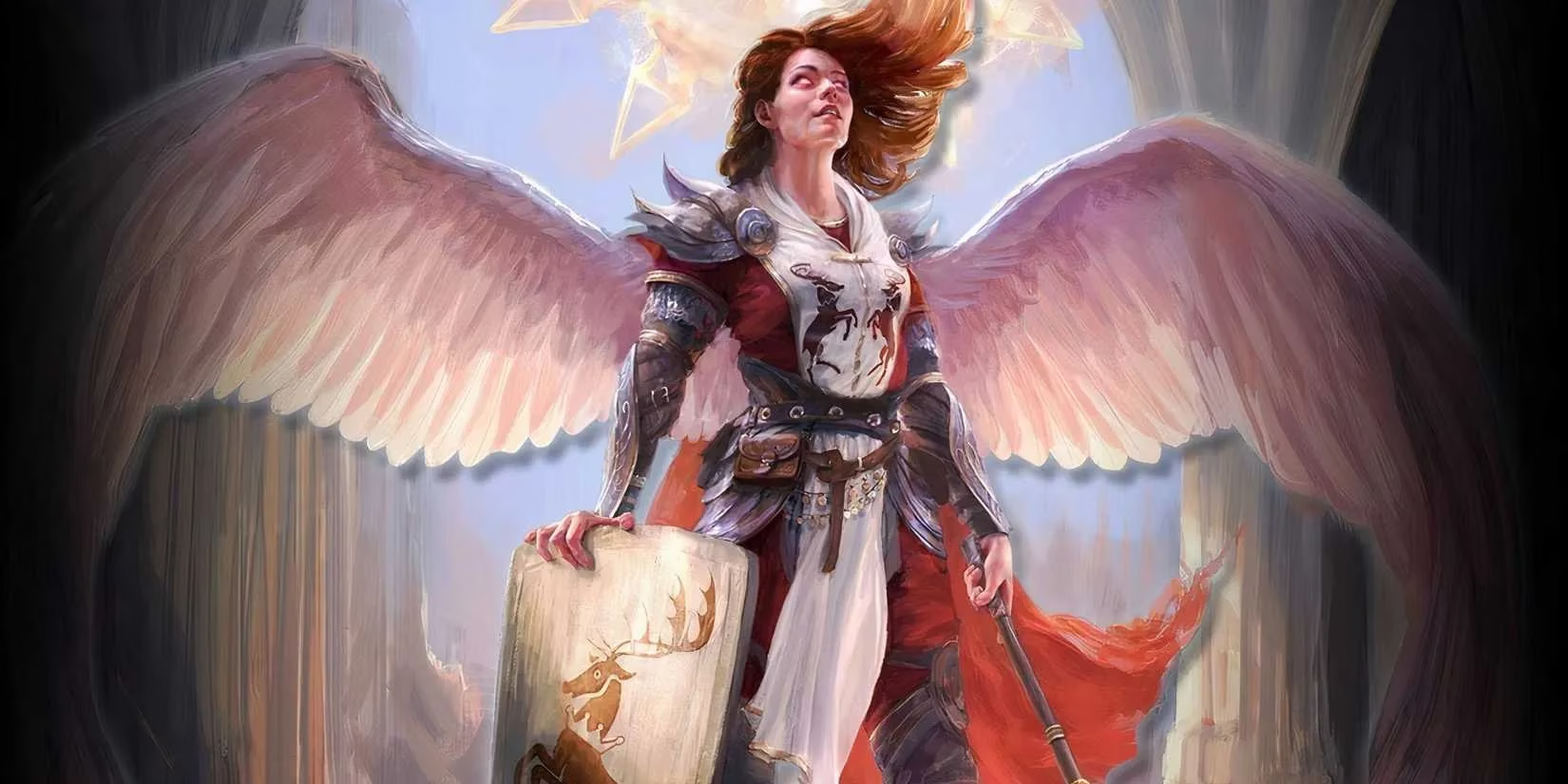
| Aasimar | Celestial-blooded beings with radiant powers; perfect for Paladins & Clerics. | Available on PC; a hauntingly absent angel on console. |
| Shifters | Lycanthropic-adjacent with transformative abilities. | Could mirror Disguise Self, but remains a shapeshifter's dream. |
| Goliaths | Towering, mountain-born stalwarts of physical prowess. | A fan-favorite giant whose footsteps console players cannot yet trace. |
| Genasi | Elemental incarnates of fire, water, earth, and air. | Their essence already flickers in-game, but their forms are locked away. |
| Kalashtar | Psionically gifted dream-weavers. | A perfect key for psionic locks already present in the game's design. |
The Great Disguise: Current Console "Race" Offerings
In this landscape, modders have performed heroic acts of theatrical engineering. Below is the current repertoire, a gallery of magnificent impersonations:
🔹 ASE – 10 Monster Races (Bugbear, Drider, etc.)
One of the most ambitious projects. It offers ten creature forms, each with unique animations and dialogue tags. The catch? They are not races, but disguises activated by equipping special items—a magical undergarment that rewrites reality. All armor vanishes, character creation is bypassed, and shifting forms is a manual toggle. It is a sprawling, impressive workaround, a marionette show of astonishing detail where the strings, though visible, are masterfully controlled.
🔹 ASE – Devils (Cambions, Succubi/Incubi)
Another disguise-based masterpiece. Dozens of infernal appearances, from classic demons to character-inspired visages like Raphael, come with themed spells. The imagination here is infernally hot, but the execution is cooled by the platform's rigid rules.
🔹 ASE – Automaton (Warforged/Steel Watcher-Inspired)
For those who wish to be a construct of clanking steel and arcane gears, this mod is a marvel. It boasts custom passives, unique abilities, and roleplay tags. The animations integrate surprisingly well, yet it remains a soul wearing a suit of animated armor, not a being born of forge and magic.
🔹 ASE – Kobolds / Goblins / Undead / Ghosts
These mods provide delightful fantasy flavors—scampering kobolds, sneering goblins, spectral ghosts. They operate on the same disguise-toggle principle, offering fun but ephemeral experiences that cannot root themselves in the game's foundational systems.
The Solitary Sovereign: The Kuo-Toa Exception
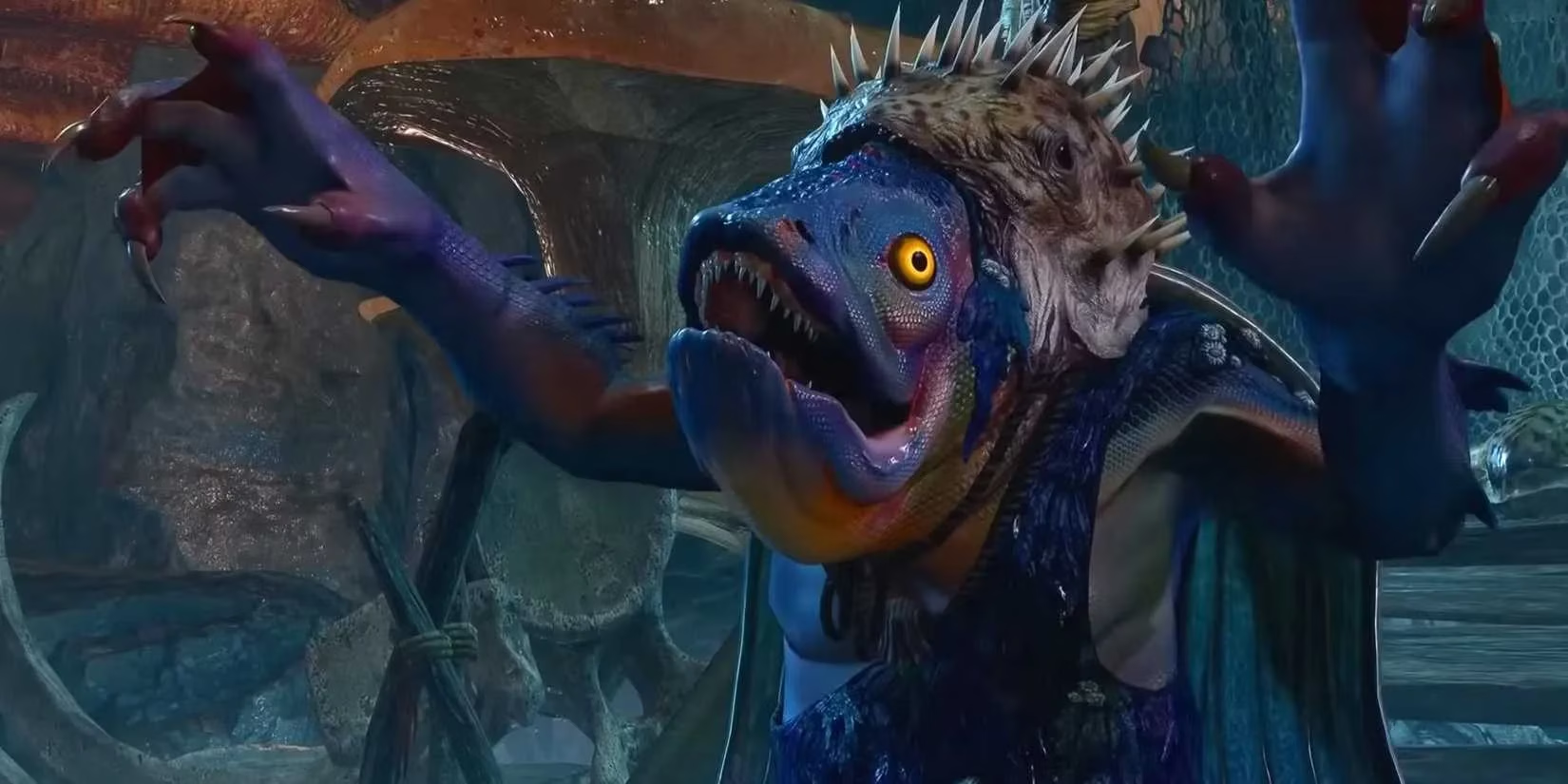
Amidst the sea of disguises, one island of truth exists. The Kuo-Toa mod stands alone as the only genuine, fully playable race on console, complete with its own spells, deity, and Dream Guardian options. It passed the certification gauntlet for one simple, revealing reason: it utilizes an existing Kuo-Toa asset already nestled within the game's code. It is the exception that proves the rule, a single, hardy weed that managed to grow through a crack in the otherwise seamless pavement of restrictions. Its existence is a beacon and a lament, highlighting what is possible yet perpetually out of reach for almost every other race.
The core issue is not a drought of interest or talent; it is geological. Console modding for Baldur's Gate 3 is shaped by the tectonic plates of Sony and Microsoft's policies, the foundation Larian has poured, and the materials modders are permitted to use. The extra layer of poignancy is that Baldur's Gate 3 is a cathedral built for diversity of being. Its systems have vacant pews, its assets include unused stone, and the congregation of players is fervent and ready. PC modders have already held services in these unused wings, proving the structure's innate flexibility. Yet, for console players, those doors are not just locked; they are often invisible, existing as a smooth, unmarked wall where a portal ought to be.
As 2026 unfolds, Baldur's Gate 3 remains a titan of moddable RPGs, and its console mod support was a gift of monumental proportions. However, the limitation on race mods has become the final, frustrating horizon on an otherwise expansive map—a shimmering mirage of potential that never draws closer. If the journey of this feature is to continue, this is the frontier that must be charted next: empowering console players with the tools their PC counterparts wield, or at least forging a key for the character creation door. For a game whose soul is choice, its mod support on console should be an extension of that philosophy, not its most poignant limitation.