The Unseen Cost of Gaming Fame: Why Studios MUST Step Up to Protect Their Actors
Game devs and actors face rising online toxicity in 2026, urging studios to boldly support their teams and combat harmful abuse in gaming communities.
Yo, gamers. Let's talk about something real that's been haunting the industry like a bad glitch that just won't patch out. It's 2026, and the toxicity online towards game devs and actors isn't just a bug; it's a full-blown, system-crashing virus. We've all seen the headlines, right? From the death threats hurled at Final Fantasy 14's Sena Bryer for playing Wuk Lamat to the relentless waves of hate hitting casts from Resident Evil, Baldur's Gate 3, and the latest, Ghost of Yotei. It's getting out of hand, and honestly, it's killing the vibe. While some big names like Ubisoft (shoutout for supporting their Assassin's Creed Shadows team) and Square Enix (threatening legal action, you love to see it) are starting to fight back, the truth is, for most actors sweating it out in the mocap suit, the support is basically non-existent. They're left to face the trolls alone, and that's just not okay.
I mean, let's be real for a second. The passion in gaming communities is next level—it's what makes this space so special. But when that passion curdles into pure, unadulterated hate? That's a different game entirely. We're not just talking about harsh critique here; we're talking about targeted abuse that cuts deep.
The Frontline Stories: It's More Than Just "Online Comments"
Recently, Baldur's Gate 3 legend Aliona Baranova (performance director and actor extraordinaire) dropped some truth bombs that hit harder than a critical hit from a vorpal sword. She straight-up called out studios for needing to "do a bit more to protect the cast." And she's speaking from experience, fam.
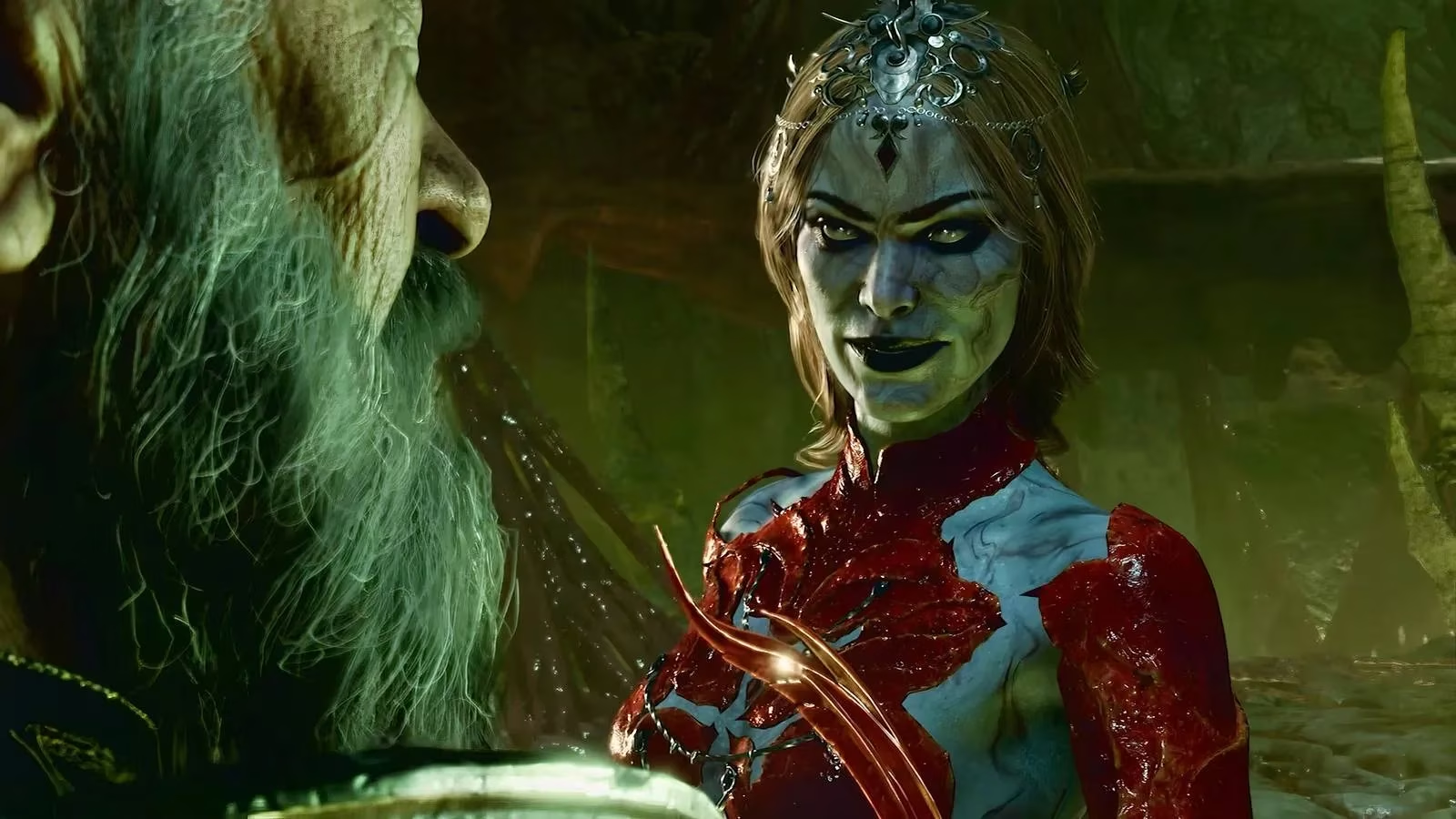
She broke it down with examples that are all too common:
-
Race and Reboots: "If a series has been rebooted, and a black or an Asian actor is taking a role that, in the past, has been played by a white actor, that person needs to be protected because they are going to receive a lot of hate online." This isn't speculation; it's a pattern. She mentioned an actor from Rings of Power and BG3 who got absolutely flooded with abuse. The studio's response? Often, crickets.
-
The Queer Experience: Baranova, who's in a beautiful, public queer relationship with her co-star Jennifer English, has personally faced homophobic abuse. Her take? "We're ourselves and it hurts. Of course, it hurts to get hate online for just being yourself." It's that simple, and that devastating.
Her point is crystal clear: the studios make the casting choices. They reap the benefits (and the profits). So when the backlash hits, they can't just ghost their own team. They need to step up to the plate and face the fandom directly: "Please, do not abuse our actors. This is the choice we made." That kind of public backing? It's a shield that actually works.
The Support Gap: It's a Messy, Unfinished Side Quest
Let's look at the current state of play. Some companies are finally adding this "Protect Your People" DLC to their corporate strategy.
| Studio | Action Taken | The Vibe |
|---|---|---|
| Ubisoft | Offered psych & legal support post-Assassin's Creed Shadows backlash. | W. Actually caring for your devs. |
| Square Enix | Publicly stated they'll pursue legal action against harassers. | Big "find out" energy. We stan. |
| Many Others | ??? | Radio silence. It's a major L. |
The problem is, the "Many Others" category is still way too big. For every studio that has a protocol, there are a dozen where the support is basically: "Hey, maybe don't read the comments?" That's not a solution; that's a cop-out. As Baranova put it, studios don't get the abuse targeted at them as much, and they're the big company with resources. The actors are just individuals, sharing their art and themselves.
Why This Matters for ALL of Us
This isn't just an "industry insider" problem. This affects the games we love and the stories we get to experience.
-
Talent Drain: Why would amazing, diverse actors sign up for a role if they know it comes with a side of traumatic harassment? They might just nope out, and we lose their talent.
-
Stale Stories: If studios get scared and only cast "safe" choices to avoid backlash, our games become less interesting, less representative of the real world. That's a boring meta, and nobody wants that.
-
Community Poison: This toxicity doesn't stay in its own lane. It seeps into forums, social media, and in-game chats, making the whole ecosystem worse for everyone. It's literally bad for the game's health.
The Path Forward: Time to Git Gud at Support
So, what's the play? It's 2026, we have the tech and the know-how. Studios need to level up their support game, stat.
-
Proactive, Public Defense: Before a game even launches, especially one with diverse casting, studios should have a comms plan. Be ready to publicly support your cast from day one. Make it clear abuse won't be tolerated.
-
Real, Tangible Resources: Offer actors (and devs) access to:
-
Professional mental health support.
-
Security and privacy consultation.
-
Legal teams ready to send cease-and-desists or pursue further action.
-
-
Fandom Management: Work with community managers to set clear boundaries and moderate toxic behavior swiftly. Don't let your official spaces become breeding grounds for hate.
-
Listen to Your Cast: People like Aliona Baranova are speaking up. Hear them. Their experiences are the bug report for this systemic issue.
At the end of the day, gaming is supposed to be fun, creative, and inclusive. The actors who bring these iconic characters to life deserve to do their job without fearing for their mental well-being. Studios have the power and the responsibility to build a better, safer environment. Here's hoping more of them take a page from the Ubisoft and Square Enix playbook and finally start playing defense for their team. The community, the games, and the people who make them will all be better for it. Let's keep the passion, but lose the poison. GG.