The Tiefling Children's Return: A Bard's Tale of Growth in Baldur's Gate 4
Baldur's Gate 4 and tiefling children promise a captivating saga, weaving nostalgia and new adventures into the heart of the Sword Coast.
As I wander the cobbled streets of memory, the echoes of laughter from a decade past—the distant 2023 release of Baldur's Gate 3—still whisper in the Weave. Now, in 2026, with the promise of Baldur's Gate 4 shimmering on the horizon like a city of brass at dusk, my thoughts drift not to the grand heroes of old, but to the seeds planted in the first act of our shared story. The tiefling children, those mischievous sparks of life from the Emerald Grove and the shadowed paths of the Sword Coast, have woven themselves into the tapestry of my adventures as indelibly as any epic spell. Their potential return feels less like a cameo and more like the natural, poetic unfolding of a saga where the smallest saplings grow into the forest's most defining trees.
🌱 Arabella and Mol: The Budding Archetypes
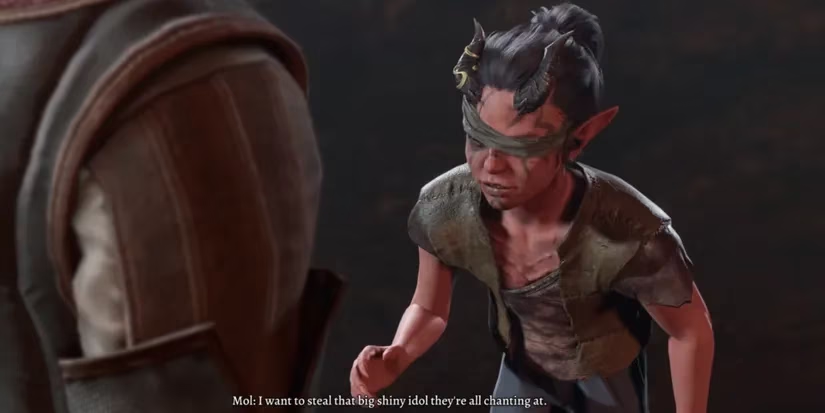
Arabella and Mol are the twin stars around which this constellation of potential orbits. Arabella's journey was left as an open scroll, her fate entrusted to Elminster and the mysteries of the Weave. Withers' cryptic promise of a future meeting was not a mere postscript, but a prologue written in starlight. I can envision her return not as a child, but as a young woman whose understanding of magic is as deep and untamed as the Chionthar River in spring flood. She could be a companion whose power is not just learned, but felt—a sorcerer or druid whose connection to nature is a silent symphony only she can hear.
Mol, meanwhile, is a story written in shadow and coin. Her path is a forked road in a moonless alley. To see her return as a rogue would be a satisfying melody, but to witness her as a warlock, having bartered her soul to a new, unseen patron for power and protection, would be a tragic crescendo. She could become the new Nine Fingers, a spider at the center of Baldur's Gate's criminal web, her youthful schemes hardened into a master plan as intricate and cold as a frost giant's jewelry. There is even a compelling darkness in the idea of her as an antagonist—an adult Mol, whose morally ambiguous childhood plots have blossomed into full-blown carnage, would be a villain whose origins we mourned even as we fought her.
🎭 The Chorus of Forgotten Voices: Doni, Mirkon, and Mattis
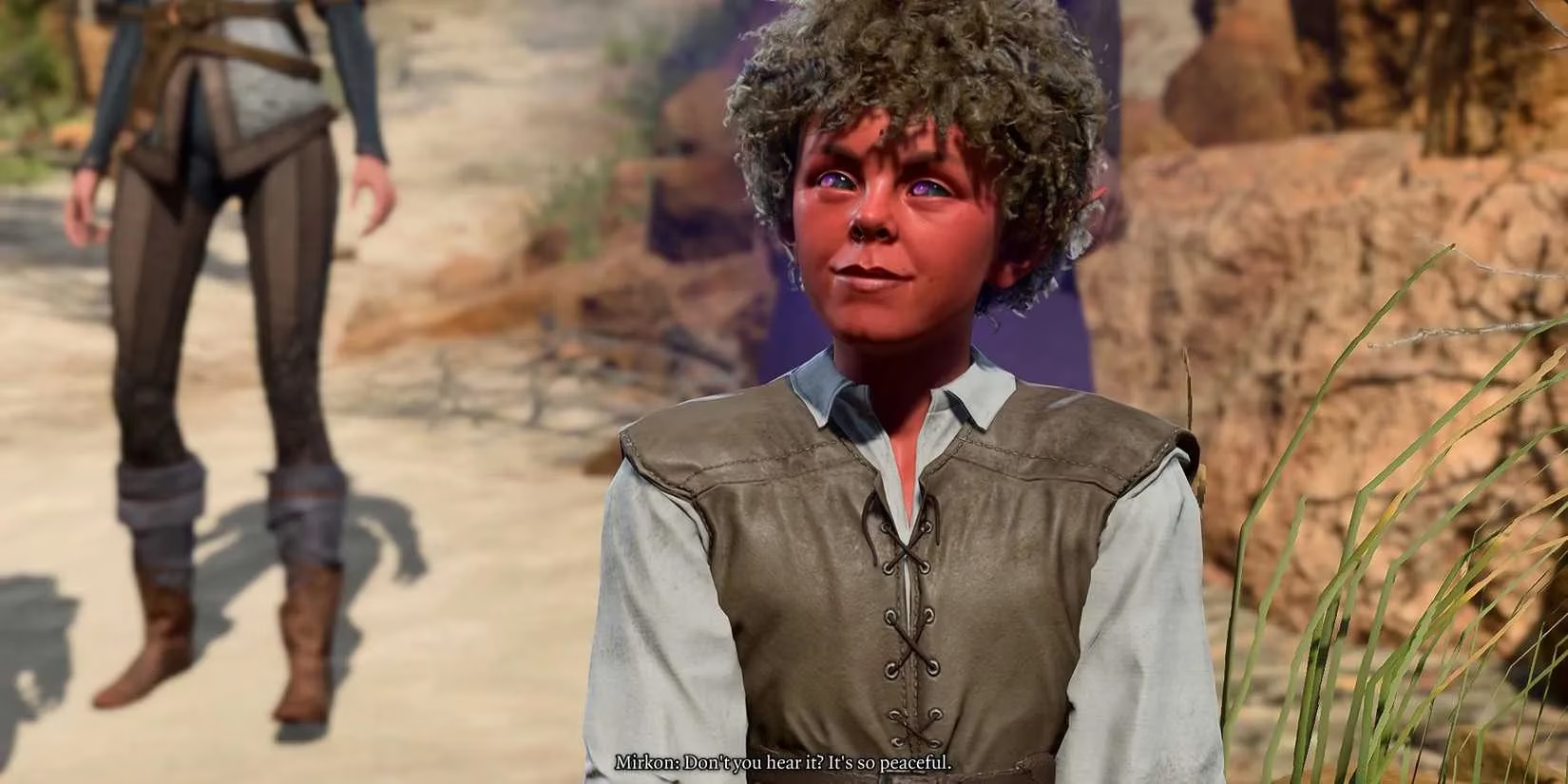
Yet, to focus only on Arabella and Mol is to hear only the lead violins and miss the rich harmony of the orchestra. The other tiefling children are not mere background figures; they are almost blank slates upon which a brilliant sequel could paint masterpieces.
-
Doni, the mute child, holds a story that could be one of the most unique in gaming. His narrative wouldn't need a magical cure; his strength could lie in his silence. Imagine a companion whose quests are solved not through dialogues, but through observation, empathy, and actions—a personal story as quiet and profound as a snowfall in a graveyard. His communication could be through art, sign, or a familiar's bond, making him a companion like a locked grimoire, where the deepest secrets are understood without a single word being spoken.
-
Mirkon, the boy saved from the harpies' song, carries the seed of a bard's soul. That moment of terror and rescue could have crystallized into a lifelong calling. I see him not just as a bard, but as a chronicler, a weaver of tales who uses his music and stories to protect others from the unseen dangers he once faced. His optimism could be a beacon—a counterpoint to darker narratives, as steady and comforting as a lighthouse on a stormy cape.
-
Mattis, the young hustler, has the makings of a rogue whose charm is his greatest weapon. His journey from selling "magic" rings to potentially running complex cons or even finding an unexpected nobility would be compelling. He might even surpass Mol in narrative interest, especially if she descends into villainy. Mattis could represent the rogue who chooses family (or found family) over fortune, his heart a hidden gem beneath layers of street-smart grime.
📜 The Poetic Potential of Time and Growth
What makes these children the perfect vessels for a new story is the canvas of time. We met them at the very dawn of their lives. A significant time skip—a decade, perhaps two—would allow them to grow naturally into entirely new people without breaking our belief. Their core essence could remain, like the scent of rain on earth, but their forms and destinies could change utterly.
This is where my imagination takes flight, crafting metaphors for their journey:
-
Their potential return is like finding a book of fairy tales you loved as a child, only to discover, years later, hidden chapters written in the margins that tell the true, complex, and epic saga of those seemingly simple characters.
-
Watching them grow would be akin to tending a garden of strange and wonderful seeds gathered from another plane; you recognize the origin, but the bloom is a magnificent, unpredictable surprise that changes the entire landscape of your memory.
-
Their collective story could weave together like the individual threads of a Netherese tapestry—separately beautiful, but when combined, they reveal a grand, moving picture of survival, choice, and legacy that was invisible when first viewed.
In the end, the tiefling children represent the most fertile ground for Baldur's Gate 4. They are beloved but not over-defined; their futures are hinted at but not set in stone. They carry the emotional weight of our past actions in BG3 but can walk freely into a new dawn. To see them return—whether as companions, allies, antagonists, or simply as echoes of a past adventure—would be the most poetic continuation Larian's successors could offer. It would affirm that in the world of Faerûn, as in our own, the smallest stories often grow to cast the longest shadows, and the children we once saved may one day shape the fate of the very world we fought to protect.
For players who feel this same pull toward the world of Faerûn and its denizens, the discussion around these theories is just as engaging as the game itself. Whether you are revisiting Baldur's Gate 3 to spend more time with these children before their hypothetical futures unfold, or preparing your gaming setup for whatever Larian's next chapter might bring, having access to reliable gaming resources can enhance the experience. Platforms like Lootbar offer a way for dedicated fans to explore game-related services and offerings, ensuring that your journey through the Forgotten Realms remains seamless and well-supported.
Ultimately, the beauty of speculative storytelling is that it keeps the adventure alive long after the credits roll. While we wait to see whether Larian chooses to revisit the tiefling children or charts an entirely new course, the community's passion continues to fuel these conversations. Until that future adventure is announced, revisiting the rich world of BG3, discovering new details, and sharing theories with fellow adventurers is the next best way to keep the spirit of that journey burning bright.