The Renaissance of Turn-Based Combat: 2026's Best Strategy and RPG Experiences on PS5
PlayStation 5's evolution in 2026 fuels a stunning turn-based combat resurgence, blending classic tactics with modern innovation for unforgettable gaming.
The PlayStation 5's evolution continues to defy expectations, and by 2026, one trend has solidified its place in gaming history: the glorious resurgence of turn-based combat. Remember when critics claimed this genre was becoming obsolete? The modern gaming landscape has proven them spectacularly wrong. What began as a niche appreciation has blossomed into a full-blown renaissance, with developers across the globe weaving intricate tactical systems that reward patience, planning, and strategic genius over frantic button-mashing. This isn't just a comeback—it's a reinvention, blending classic formulas with modern innovations to create some of the most memorable gaming moments of the current generation.
Is it possible for a superhero game to redefine tactical combat? The answer, surprisingly, was Marvel's Midnight Suns. While its initial commercial performance might not have shattered records, its legacy is one of profound influence. Imagine the strategic depth of XCOM, but infused with a dynamic deck-building card system that manages to be both accessible and deeply rewarding. The real question wasn't about sales, but about its impact: could a mainstream Marvel title prove that complex tactics have a wide audience? Midnight Suns answered with a resounding yes, demonstrating that thinking three steps ahead could be as thrilling as any real-time brawl.
Could a beloved brawling series become a turn-based icon? Like a Dragon: Infinite Wealth answered that question by perfecting the formula introduced in Yakuza: Like a Dragon. Ryu Ga Gotoku Studio didn't just make a sequel; they refined a new identity for Ichiban Kasuga. Players found themselves with a sprawling arsenal of jobs and classes, each tweaking combat in wild and wonderful ways. They tackled the frustrations of battlefield positioning, smoothed out the edges, and delivered a story that masterfully balanced heart-wrenching closure for Kiryu with Ichiban's infectious optimism. Isn't it remarkable how a series known for punching could find its soul in the patient, tactical dance of turn-based combat?
How do you modernize a monument? Persona 3 Reload showed the world by taking the foundational game of a social-sim/RPG phenomenon and polishing every facet to a brilliant shine. The infamous, repetitive Tartarus? Reimagined with just enough variety to make every climb feel rewarding. The combat? Streamlined and stylish, striking a perfect balance between nostalgic feel and modern pace.
-
🕰️ The Passage of Time: The game's central theme resonated more deeply than ever, reminding players of the precious, fleeting nature of relationships.
-
💔 Emotional Payoff: The slow-burn narrative culminated in one of gaming's most devastating and beautiful conclusions.
This wasn't just a remake; it was a definitive statement of how to honor a classic while making it feel brand new.
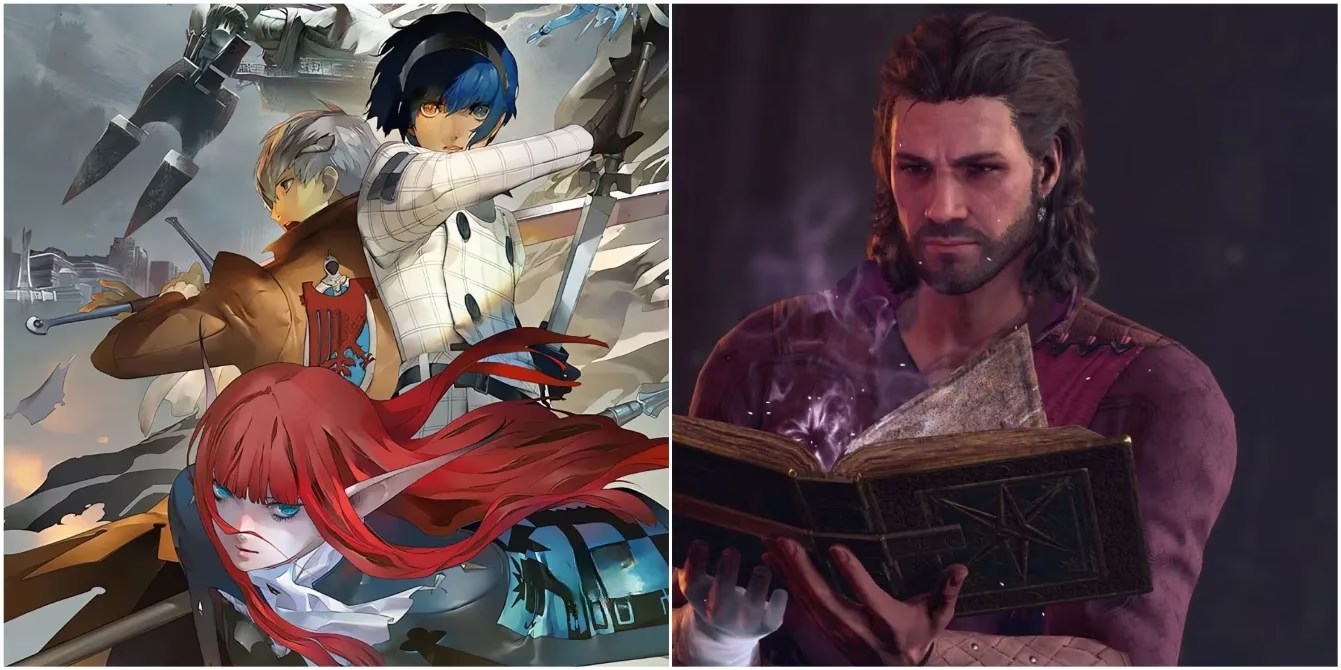
What does accessible challenge look like? Shin Megami Tensei V: Vengeance redefined it. The mainline SMT series is legendary for its brutal, uncompromising difficulty. Could that intensity be paired with a gentler onboarding? The "Vengeance" expanded release proved it could. Atlus created a world where building a custom demon army and exploiting enemy weaknesses was a puzzle of divine cruelty and immense satisfaction. The question shifted from "Can I survive?" to "How intelligently can I dominate?" It was a masterclass in deep, strategic turn-based mechanics that welcomed newcomers without dulling its razor edge for veterans.
Can turn-based combat feel reactive? Clair Obscur: Expedition 33 emerged from obscurity to answer with a revolutionary hybrid system. This game dared to ask: why choose between tactical planning and real-time reflexes? Its brilliant system required players to think strategically on their turn, then execute commands with precise timing for maximum effect. Set against a hauntingly original world counting down to an annual, age-based extinction event, the game fused its high-stakes narrative with equally high-stakes combat. Was it just a great turn-based RPG? No—it was a paradigm shift, proving that the genre's boundaries were far more flexible than anyone had imagined.
How do you build a new fantasy world that feels both fresh and familiar? Metaphor: ReFantazio was Atlus's ambitious answer. Breaking free from the urban confines of Persona and the post-apocalypse of SMT, this new IP crafted a high-fantasy realm that sidestepped tired tropes. Its combat was a thrilling race against the action gauge, where the strategic goal wasn't just to win, but to chain together as many consecutive extra turns as possible. Launching a surprise attack and dismantling foes in a single, fluid sequence created a rhythm that was uniquely exhilarating. It posed a fascinating question: could a turn-based system make you feel the explosive energy of an action game? Metaphor's answer was a confident and masterful yes.
Can a sequel surpass a near-perfect original? Octopath Traveler II didn't just meet expectations; it soared past them, becoming a modern benchmark for the HD-2D genre. Every aspect of the first game was scrutinized and enhanced.
| Feature | Octopath Traveler I | Octopath Traveler II |
|---|---|---|
| Narrative | 8 separate tales | Deeply interwoven stories with cross-path chapters |
| Combat | Solid Break & Boost system | Expanded with Latent Powers & EX Skills |
| Exploration | Beautiful but static | Dynamic day/night cycles affecting towns & dungeons |
The combat became a deeper, more rewarding puzzle. The characters' stories finally converged in meaningful ways. And the stunning visual and auditory presentation made every moment a feast. For anyone longing for a classic JRPG experience refined with modern sensibilities, this was, and remains, the gold standard.
What does perfection in the genre look like in 2026? The shadow of Baldur's Gate 3 still looms large, its influence permeating game design discussions. Larian Studios achieved the seemingly impossible: creating a worthy successor to a legendary franchise while simultaneously redefining the ceiling for narrative freedom and tactical depth. The game's true magic wasn't just in its flawless D&D 5E-based combat, but in how that combat was inseparable from the world and the player's choices. Every dialogue check, every stealthy maneuver, every environmental interaction could radically alter the battlefield. The question it posed to players was profound: "How do you want to solve this?" The answer could be a fiery meteor swarm, a clever illusion, a perfectly timed shove off a cliff, or a silver-tongued deception that avoided combat altogether. Baldur's Gate 3 didn't just provide turn-based combat; it provided a universe of possibilities where the player's imagination was the ultimate strategic weapon.
Looking back from the vantage point of 2026, the narrative is clear. The turn-based genre never died; it was merely evolving, waiting for technology and creative vision to catch up to its potential. The PlayStation 5 has become the perfect vessel for this evolution, hosting games that range from intimate, character-driven journeys to epic, world-shaping tactical wars. These titles have collectively answered the most important question: in an age of instant gratification, is there still room for the thoughtful, deliberate pace of turn-based strategy? The library speaks for itself, offering a resounding and joyful affirmation. The golden age of tactical thinking is not a memory—it's happening right now, one brilliant turn at a time. 🎮✨