The Overlooked Magic of 'Speak with Dead': How BG3's Most Forgotten Spell Reveals Hidden Stories
Baldur's Gate 3 players often overlook the powerful Speak with Dead spell, missing vital secrets and immersive narrative moments hidden in plain sight.
In the sprawling, conversation-rich world of Baldur's Gate 3, players often pride themselves on talking to every living soul they encounter. Yet, even the most diligent adventurers tend to walk right past a treasure trove of narrative gold—the silent dead. Years after the game's release, the Level 3 Necromancy spell, 'Speak with Dead,' remains one of the most criminally overlooked tools in a player's arsenal. It’s the kind of thing you swear you’ll remember to use next time, and then… poof, it’s gone from your mind the moment you see a shiny new piece of loot.
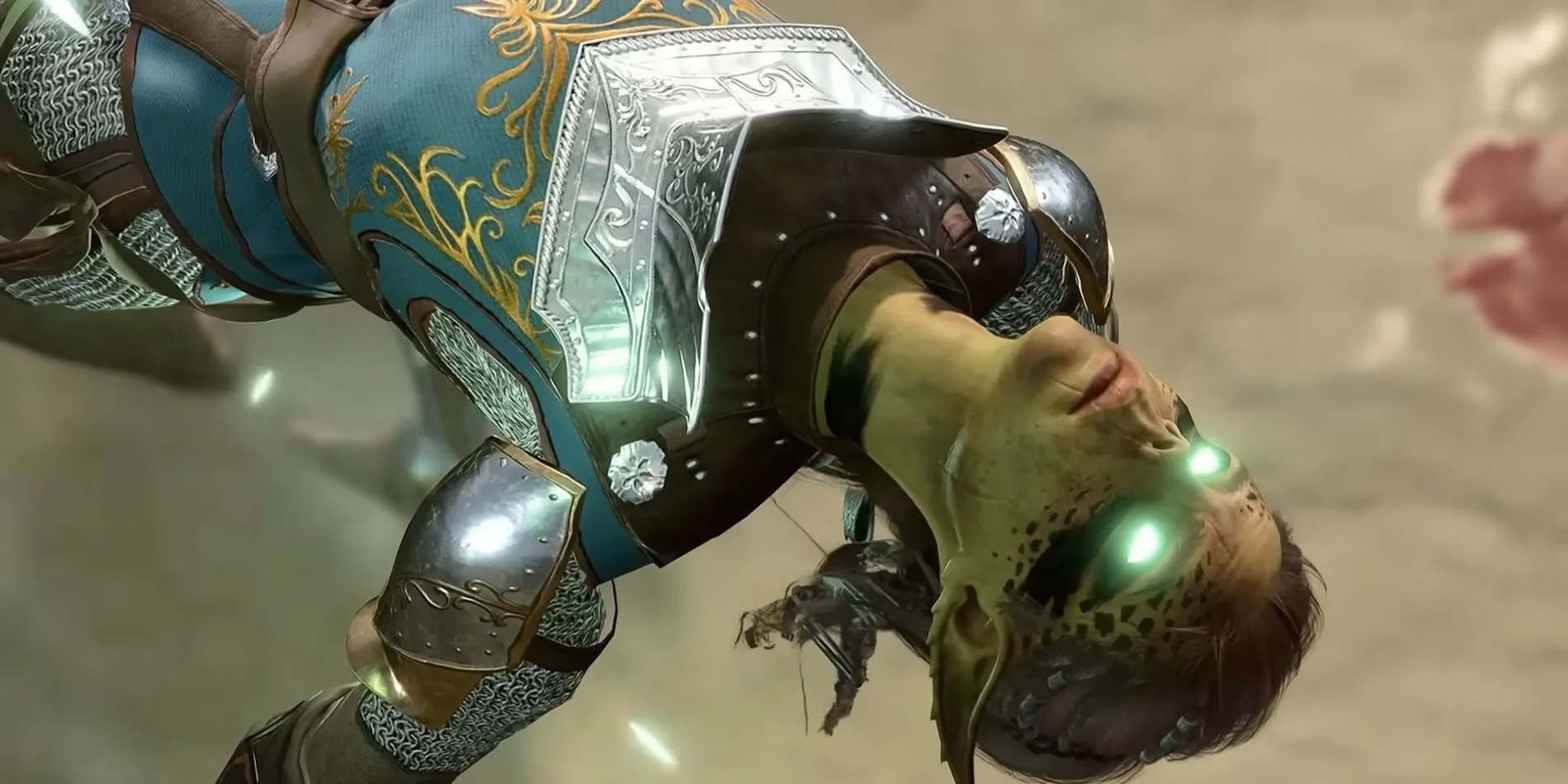
It's Shockingly Easy to Forget the Dead Have a Voice
The spell itself is deceptively simple: cast it on a suitable corpse, and you're granted five questions with a spectral semblance of the deceased. The catch? Well, there are a few. The magic fizzles on bodies damaged by acid, fire, or radiant energy—no mouth, no service. It also doesn't work on the undead, making it a situational spell that's easy to bench, especially when you're busy looting a battlefield. After a tough fight, you’re more likely to be checking for gold than wondering about a fallen enemy’s life story. And let's be real, with the sheer number of corpses littering the Sword Coast across three massive Acts, it’s no wonder even veteran players miss dozens of these chilling conversations. The game just doesn't hold your hand and say, "Hey, this guy has some juicy gossip."
Unlocking Memorable Moments and Vital Clues
Where 'Speak with Dead' truly shines is in its ability to pry open secrets that characters took to their graves. Many NPCs you meet are tight-lipped, but their corpses? They have to answer you. This leads to some of the game's most unforgettable and revealing moments.
A prime example is the drow spellcaster True Soul Nere in Act 1. Defeating him is one thing, but casting the spell on his corpse reveals he was in service to the then-mysterious Ketheric Thorm, digging in the Grymforge to access a hidden temple. Even more crucially, he name-drops Balthazar, Ketheric's necromancer advisor. This isn't just flavor text—it’s a vital narrative breadcrumb. Without it, players entering the shadow-cursed lands of Act 2 might be completely in the dark about the source of Ketheric's invulnerability. That one dead-drow chat provides the missing link: necromancy.

The spell's utility extends far beyond main quests:
-
Companion Insights: Speaking to fallen party members can reveal new layers to their personal stories.
-
Boss Lore: Major antagonists often have more to say in death, offering context for their actions and hints about what's to come.
-
Missable NPCs: It's the only way to "meet" characters like Helena, Orin the Red's mother, or a tragic version of the child Arabella, adding profound depth and atmosphere to locations.
Conversations with the Unseen: When Other Entities Answer
In its most fascinating twists, 'Speak with Dead' sometimes lets you talk to someone—or something—else entirely. The spell doesn't always reach the departed soul; sometimes, another power uses the corpse as a mouthpiece. The standout case is in Act 3 with Gortash. His soul is long gone, but casting the spell allows you to converse with Bane, the god of tyranny whom Gortash served. It’s a chilling reminder of the higher powers at play in the game's world.
A Tool for the Curious Adventurer
So, why do players keep forgetting this spell? It boils down to a few key reasons:
-
Situational Restrictions: The damage-type limitations create uncertainty.
-
Post-Battle Overload: After combat, spell slots are low, and looting is the priority.
-
Assumptions: It's easy to assume a random bandit or a foe you killed won't have anything useful to say.
But the rewards for persistence are immense. Think of it as the ultimate detective tool for the game's many mysteries, from the murder at the Open Hand Temple to the hidden histories of forgotten tombs.
| Spell Aspect | Common Player Assumption | The Reality |
|---|---|---|
| Usefulness | "Only for quest-related corpses." | Reveals lore, future plot clues, and character backstory from nearly any body. |
| Dialogue | "They'll just refuse to talk." | Corpses must answer, often revealing secrets they'd never tell alive. |
| Outcome | "It's just flavor text." | Provides tangible gameplay advantages and critical narrative context. |
In 2026, with the game's legacy firmly established, 'Speak with Dead' stands as a testament to Baldur's Gate 3's deep, systemic storytelling. It’s a spell that doesn't just break the fourth wall; it digs under the cemetery soil. While it might feel a bit macabre, it opens doors—or perhaps, coffins—to interactions that fundamentally enrich the adventure. So next time you see a body, maybe give it a second glance. After all, you never know who's dying to talk to you. 😉