The Next Chapter: Carrying the Torch of Baldur's Gate 3 into 2026
Baldur's Gate 4 and Larian Studios face soaring expectations after Baldur's Gate 3's legacy, promising innovation and emotional depth.
As I stand on the precipice of 2026, looking back at the legacy left by Baldur's Gate 3, I feel a mix of profound gratitude and daunting anticipation. Larian Studios, in many ways, pulled off a modern miracle. They didn't just make a game; they captured lightning in a bottle, delivering an experience that redefined the very soul of the CRPG. It was a perfect storm of player agency, cinematic storytelling, and emotional depth that resonated on a global scale. The echoes of that triumph still reverberate, and now, the question hanging over the Sword Coast isn't if there will be a Baldur's Gate 4, but how on earth anyone can follow that act. The pressure is real, folks, and it's not just about making a game—it's about honoring a legacy while daring to dream anew.
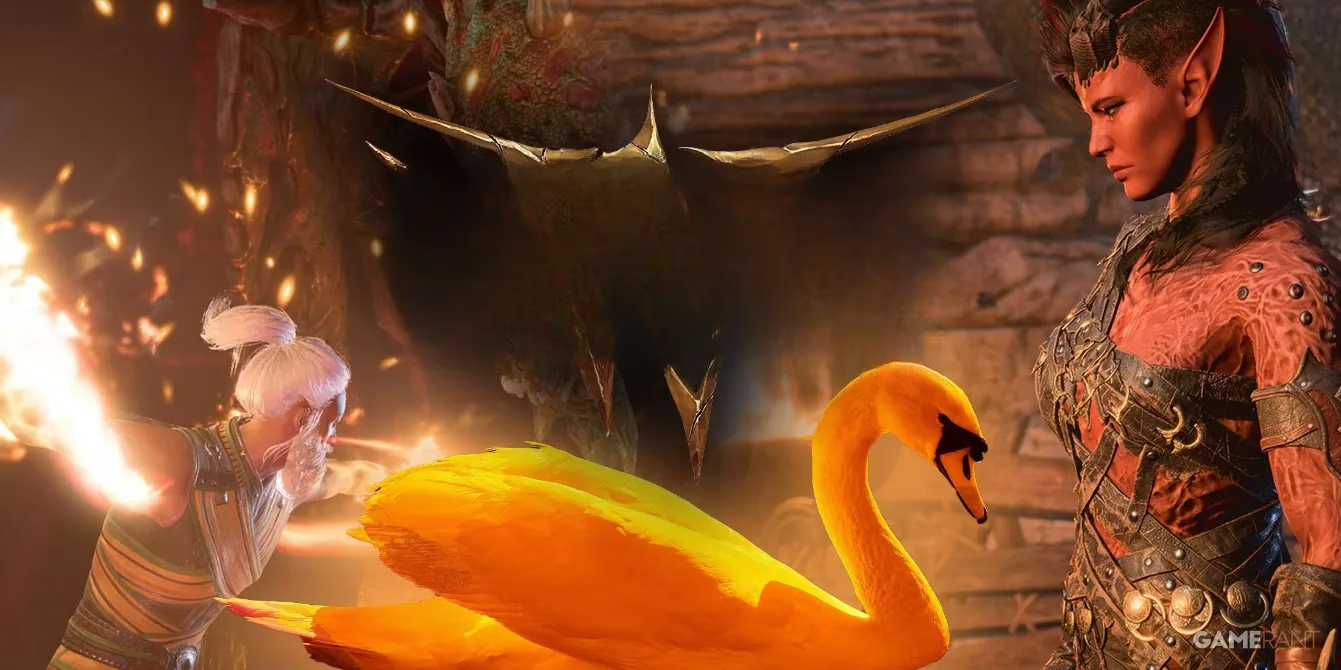
The Unenviable Task: Following a Masterpiece
The shadow cast by BG3 is long and deep. Wizards of the Coast finds itself at a pivotal crossroads, holding the keys to a 'golden goose' that everyone fears might stop laying. Every single decision from this point forward carries the weight of those stratospheric expectations. We're talking about:
-
Narrative Direction: Should it be a direct sequel, picking up the threads of the Netherbrain and our beloved companions? Or should it forge a completely new path in Faerûn to avoid the inevitable, and frankly unfair, side-by-side comparisons?
-
Gameplay Evolution: How do you iterate on a system that players already consider near-perfect? The 'Larian magic' of environmental interaction and creative problem-solving set a new bar.
-
The Creative Vacuum: Larian's distinct voice—that blend of dark humor, earnest heart, and moral complexity—is now absent. Finding a studio with a compatible creative DNA is perhaps the single greatest challenge.
The community is split. Part of me yearns to see where Astarion, Shadowheart, and Karlach's stories lead. Their performances weren't just voice acting; they were soul-baring art. The cast has expressed interest in returning, and the thought of Faerûn without these now-iconic figures feels... empty. Yet, another part of me whispers that a clean slate might be the braver, and ultimately wiser, choice. 🤔
The Million-Dollar Question: Who Develops BG4?
This is the ultimate dilemma. Larian has passed the torch, and now WotC must choose who catches it. It's not just about technical skill; it's about philosophy. Larian succeeded because they operated with a rare trifecta:
| Larian's Success Formula | Why It Mattered for BG3 |
|---|---|
| Proven Track Record | The Divinity series showed they could craft deep, systemic RPGs that stood toe-to-toe with giants like The Witcher. |
| Creative Freedom & Trust | They were given the space to experiment, to be daring. This led to those magical 'what if I try this...' moments that defined the game. |
| Player-Centric Development | They listened during Early Access, learned, and polished relentlessly. They built a game with the community, not just for them. |
So, does WotC look inward, building a dream team at an internal studio like the rumored Skeleton Key? This offers control but risks corporate red tape and a risk-averse culture. Or do they seek another external partner—a studio with the indie spirit but AAA ambition? Whoever it is, they must understand that the goal isn't to replicate BG3, but to capture its spirit: the reverence for the source material, the trust in the player's intelligence, and the courage to tell a bold, new story.
Building on a New Gold Standard
Let's be real: BG3 changed the game. It raised the bar for what we expect from narrative, choice, and companion interaction. For BG4 to succeed, it must build on this foundation, not just rest on it. Here’s what my heart, as a player, hopes to see:
-
Evolution of the 'Yes, And...' Philosophy: BG3 famously said 'yes' to player creativity. BG4 needs to expand this sandbox, introducing new systemic interactions that make us gasp with delight.
-
A Story That Earns Its Place: Whether it deals with the lingering Bhaalspawn threat, a new Illithid incursion, or a completely fresh cosmic horror, the narrative must feel both epic and intimately personal.
-
Companions That Feel Like Home: New faces need to have the same depth, ambiguity, and soul as the OG crew. We need to love them, hate them, and debate their moral choices for years to come.
The path forward is fraught with peril, but also brimming with potential. The passionate community that rallied around BG3 is still here, hungry for more adventures in Faerûn. If Wizards of the Coast listens to that community, partners with a studio that shares that sacred trust, and empowers them to create with both boldness and care, then Baldur's Gate 4 has every chance to not just meet expectations, but to once again, against all odds, capture that lightning.