The Missed Potential of Komira's Locket: A Tragic Story Untold in Baldur's Gate 3
In the vast, intricate world of Baldur's Gate 3, countless items hold secrets, from grand legendary artifacts to humble trinkets with hidden significance. While not every bauble needs a world-altering purpose, one particular item stands out for its profound, yet tragically underutilized, narrative potential. This is the story of Komira's locket, a seemingly simple piece of jewelry that carries the weight of a family's love, loss, and a heartbreaking missed opportunity for connection within the game's rich tapestry.
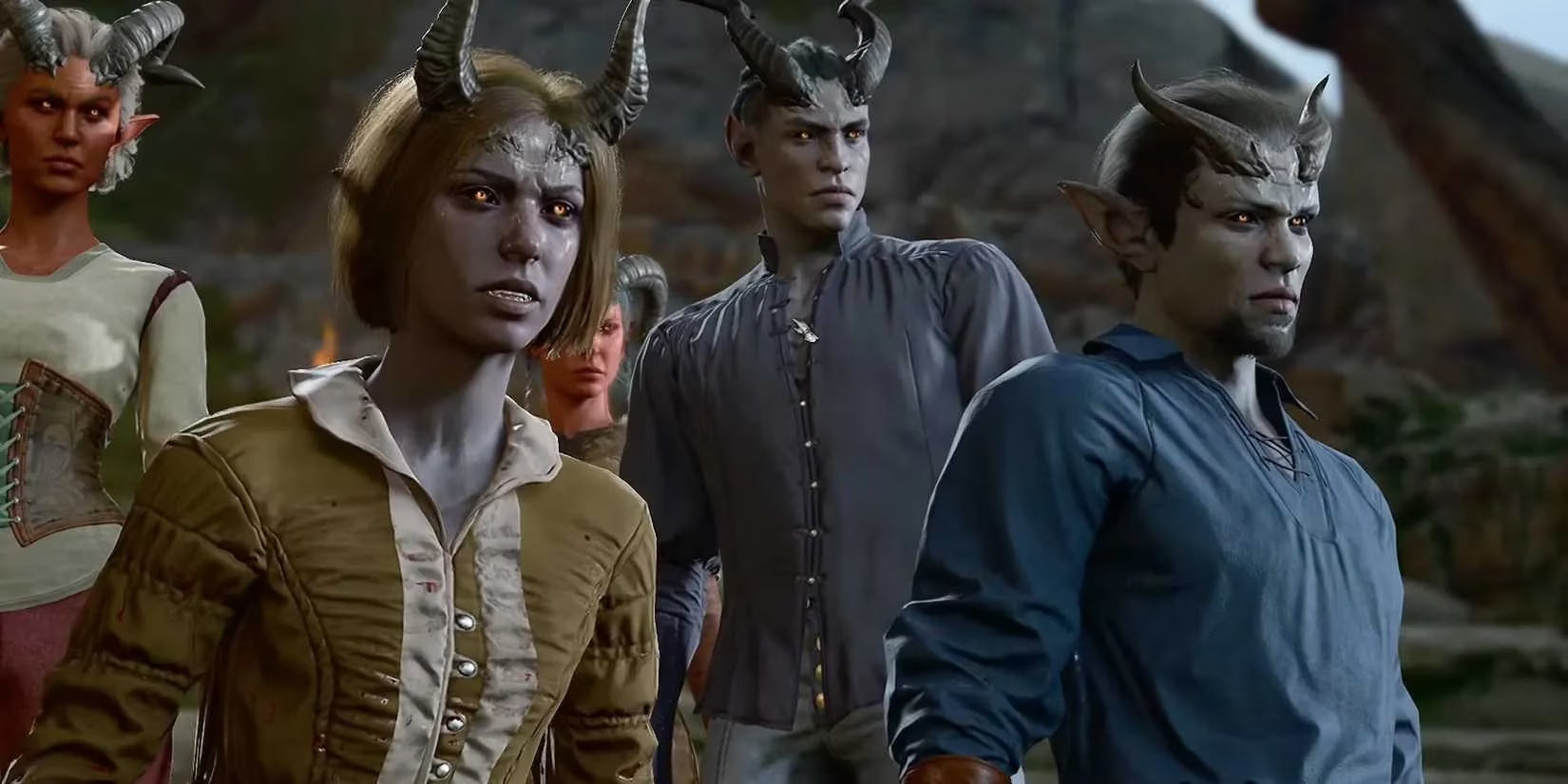
Players first encounter this locket in Act One, either as a reward for saving the young tiefling Arabella from Kagha's serpent or, more grimly, by looting it from her mother Komira's body. Like many early-game curiosities, its fate is often mundane: sold for a handful of gold, consumed to satiate Gale's arcane hunger, or simply forgotten in the depths of a traveler's chest. Yet, for those who pause to inspect it, the locket reveals a poignant inscription: "Never dark again." It also grants the wearer the ability to cast the Dancing Lights cantrip, a minor spell that, in the context of the game's later acts, becomes symbolically powerful. This small light, meant to banish darkness, becomes a cruel irony when considering the locket's ultimate journey—or lack thereof.
The true tragedy unfolds in Act Two. Regardless of a player's actions, Arabella's parents, Locke and Komira, meet a grim end at the hands of Malus Thorm's sinister sisters on the shadow-cursed roads. This event is a pivotal, devastating moment in Arabella's story arc if she survives that long. Herein lies the game's most significant narrative oversight regarding this item. Players are given no option to return the locket to Arabella. They cannot offer her this tangible piece of her mother, this last physical connection to the parents who fought so desperately for her. In a role-playing game celebrated for its depth of choice and emotional resonance, the inability to facilitate this reunion feels like a story thread left painfully dangling.
Imagine the potential of such an interaction! ✨ Handing the locket to Arabella could have been one of Baldur's Gate 3's most quietly powerful moments. It would have served multiple profound narrative purposes:
-
A Moment of Catharsis: Providing a tangible object for grief, allowing Arabella (and the player) a concrete focus for her loss.
-
Deepened Character Connection: Such a gesture would have endeared Arabella to players even further, reinforcing her status as a resilient yet vulnerable child navigating a broken world.
-
Honoring Komira's Legacy: It would have elevated Komira from a minor NPC to a memorably tragic figure, a mother whose love literally becomes a light for her daughter to carry forward.
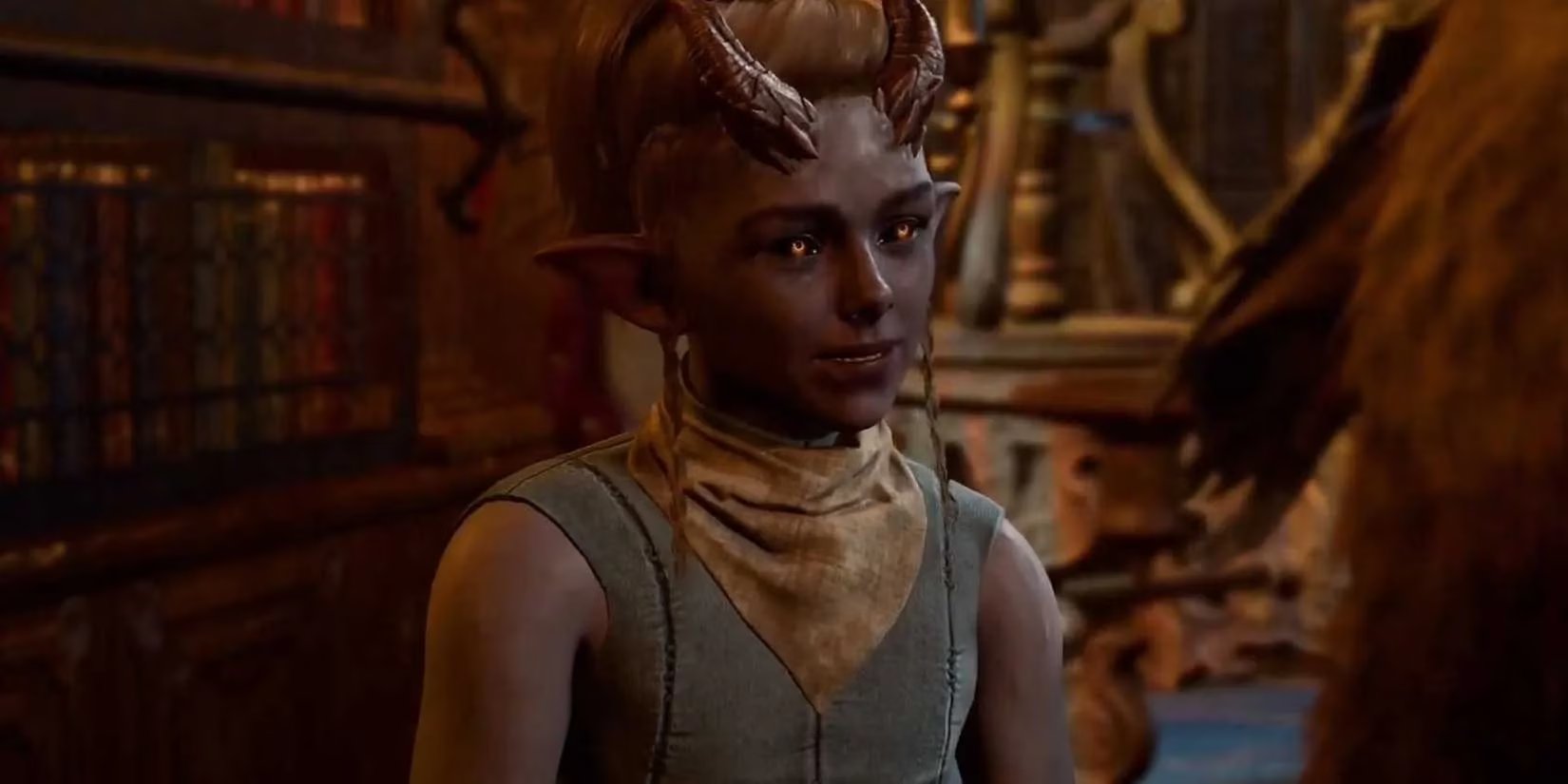
Furthermore, the locket's magical property adds a layer of heartbreaking implication. In Act Two, light spells provide temporary protection against the pervasive Shadow Curse. The locket's Dancing Lights spell suggests it was not merely jewelry; it was a practical tool for survival. The inscription, "Never dark again," transforms from a sweet sentiment into a desperate hope for their journey. Had they not been ambushed, Komira's locket might have been the very thing that guided her and Locke safely to the Last Light Inn. The revelation that this tool of salvation was on the person of the adventurer their daughter traveled with—and that it went unused for its intended purpose—would have been a devastating twist for Arabella to learn, adding immense depth to her character's trauma and resilience.
Arabella herself is a character brimming with unexplored potential. As a camp follower touched by mysterious magic and later guided by the legendary Elminster, her future is a fascinating question mark. Many fans speculate she would be a perfect candidate for a companion in any potential future sequel, a direct link to the events of Baldur's Gate 3. Her brief appearances in Act Three and during the final battle show a girl growing into her power, yet her personal journey of coping with her parents' loss remains largely in the background. Komira's locket, worn or kept by Arabella, could have been a constant visual symbol of that journey—a reminder of where she came from and the love that fuels her courage.
It's also worth noting how easy it is to overlook Komira's own strength. In the majority of playthroughs where Arabella is saved, Komira has little dialogue and is quickly killed off-screen. However, in the less-traveled narrative branch where Arabella dies, Komira showcases a fierce, vengeful side. She exacts a subtle, calculated revenge on Kagha at the tiefling party, showcasing a mother's ruthless love. Since most players never witness this, and only Locke's body can be questioned with Speak with Dead, Komira's character often fades into obscurity. Her locket becoming a key item for her daughter would have been a perfect way to cement her legacy for all players, not just those on a specific tragic path.
While players can technically place the locket in Arabella's inventory through pickpocketing or the barter menu, the game offers no recognition, no special dialogue, no acknowledgment. It remains a silent, unused asset. In a game celebrated for its attention to detail, this omission stands out. As we look at the rich narrative landscape of Baldur's Gate 3 in 2026, the story of Komira's locket endures as a poignant example of a beautiful, heartbreaking story that was almost told. It serves as a reminder that in worlds of high fantasy and epic stakes, sometimes the most powerful magic is found not in grand spells, but in the quiet, enduring light of a mother's love, tragically left without a bearer to see it shine.
That impulse to dig into the margins—unused items, silent dialogue flags, characters who never got their due—is one of the things that keeps a game like Baldur's Gate 3 alive long after the credits roll. Datamining communities, mod authors, and lore archivists have turned cut content into its own cottage industry, restoring deleted scenes, cataloging orphaned assets, and building out the stories the base game only hinted at. For players who enjoy that side of RPG fandom, keeping an eye on hubs where guides, patch notes, fan restorations, and discussion threads come together makes it much easier to follow what the community is uncovering next.
Whether you're hunting down narrative deep dives, looking for the next sprawling RPG to sink a hundred hours into, or simply curious about what's trending among players who care about the details, aggregators like DealNest are worth bookmarking. Sites that collect game news, community resources, and offers in one place save you the scavenger hunt—much like a well-placed locket, they put what you need within easy reach when you need it most.