The Lost Art of the Gut Feeling: How Data Obsession is Stifling AAA Gaming
AAA gaming in 2026 faces creative stagnation, as data-driven design overshadows innovation, sparking a fascination with indie studios.
It's 2026, and I've got to say, sometimes looking at the AAA gaming landscape feels like staring at a beautifully rendered, hyper-realistic bowl of beige mush. You know the feeling—another open-world looter-shooter with crafting mechanics and a battle pass lands on your screen, and a little part of you sighs, "Haven't I played this before?" It's like the entire big-budget industry is stuck in a feedback loop, terrified to take a single step off the well-trodden, data-proven path. This isn't just a player's grumble anymore; it's a diagnosis from within the industry itself.
The Data-Driven Doldrums
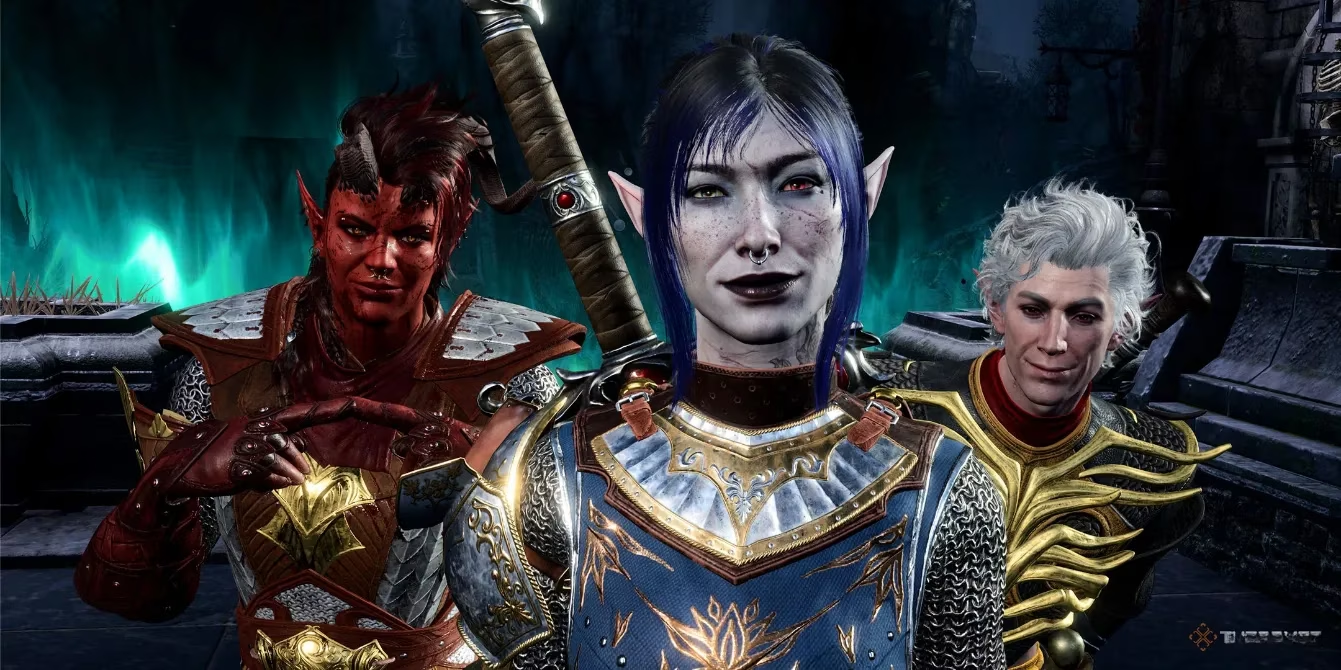
So, how did we get here? According to industry voices like Larian Studios' Michael Douse, the culprit is a long-term, aggressive addiction to data. He paints a pretty stark picture: over generations, the institutional ability—and even the intellectual courage—to lead with creative instinct has become a "lost art." Think about it. When games cost hundreds of millions to make and take half a decade to develop, the pressure is astronomical. One commercial misstep doesn't just mean a bad review; it can mean hundreds of people losing their jobs. In that environment, playing it safe isn't just a strategy; it feels like survival.
But here's the kicker, the perverse irony of it all: by playing it so safe, AAA studios are actually starving themselves. They're avoiding risks, which means they're gathering less and less new data. They're stuck analyzing the same old patterns from the same old hits. Douse puts it bluntly: "The datasets are all increasingly trash because they can't predict breakout hits, nor predict failures." It's a self-fulfilling prophecy of stagnation.
A Perverse Fascination with the Indie Underdog
This data drought has led to what Douse calls a "perverse fascination" with the indie scene. And you can see it everywhere! Indie studios, unshackled from shareholder demands and bloated production cycles, have the freedom to follow their gut. They can be weird, personal, and wildly inventive. When a game like Peak or Schedule 1 blows up, AAA executives scramble, not to understand the creative spark, but to mine it for new data points to feed their hungry algorithms.
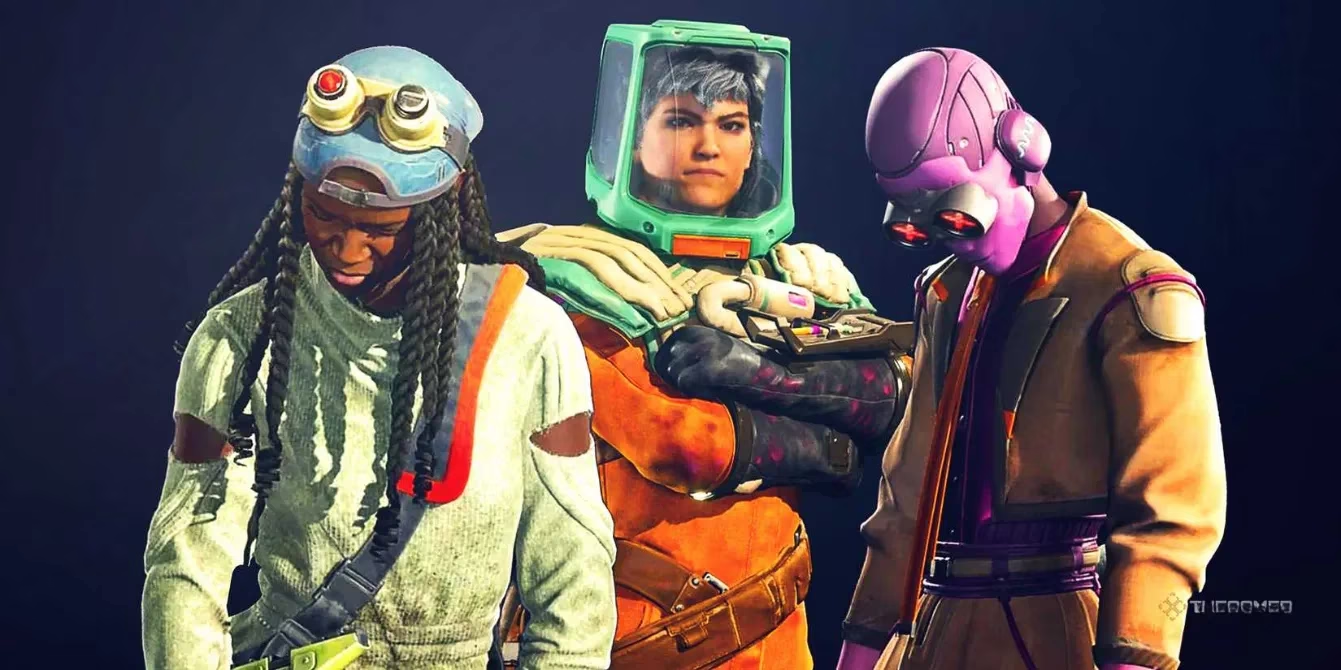
It's a messy, often clumsy process. We end up with these Frankenstein's monsters of game design—a narrative-driven RPG awkwardly stuffed with live-service elements, or a tight-knit adventure game stretched thin over a vast, empty open world. The core, heartfelt idea gets filtered and parsed through spreadsheets until its soul is... well, let's just say it's not the same.
Where Do We Go From Here? The Beacons of Hope
All this sounds pretty gloomy, right? But hold on, it's not all doom and gloom. Even in 2026, there are brilliant exceptions proving the rule. Studios that manage to blend scale with soul.
-
The Instinctual Architects: Look at teams like Kojima Productions. Love him or find him utterly baffling, you can't deny Hideo Kojima builds worlds from a deeply personal, instinctual place. His games are events, not just products.
-
The CRPG Revolutionaries: Larian Studios themselves are a prime example. Baldur's Gate 3 was a massive, complex, turn-based CRPG in an age of action—a decision that likely gave many a data analyst a heart attack. Its success was a testament to passion over pure metrics.
-
The Console Kingpin: Then there's Nintendo. While not immune to trends, their first-party philosophy has always been gameplay-first, often creating genres rather than following them. They listen to their gut, and their gut has pretty good ideas.
-
The Indie Engine: And of course, the indie scene remains the relentless, chaotic, beautiful engine of innovation. It's where the new "data"—the new ideas—are born.
The path forward for AAA isn't about abandoning data entirely. That's not realistic. It's about rebuilding that institutional muscle memory for creative risk. It's about giving small, passionate teams within these giants the trust and space to follow a hunch, to make something because it feels right, not just because the numbers say it might work.
Because at the end of the day, the games we remember, the ones that stick with us for years, aren't the ones designed by committee to check every box on a market research list. They're the ones that felt like someone had a story they were burning to tell, a world they were desperate to build, or a feeling they needed to share. That spark... you just can't quantify it. And until the big studios remember how to find it again, we'll keep seeing that same beautifully rendered bowl of beige, waiting for the next indie revolution to give it some much-needed flavor.
As players, we hold more influence than we often give ourselves credit for. Every purchase is a vote—a signal sent directly to the publishers who fund the next round of development. When we choose to support bold, unconventional games over safe, polished sequels, we help prove that passion still has a place in the boardroom. And with platforms like Lootbar, supporting the games we love has never been easier, whether that means grabbing in-game currency for a daring new indie title or gifting a friend something that deserves far more attention than it got.
The industry will eventually find its balance between data and instinct—it always does. But until then, the most powerful thing we can do is champion the developers who dare to be different, one purchase at a time. Because if there's one metric that truly matters, it's the joy we carry with us long after the credits roll.
That joy often begins with discovery—stumbling upon a game that speaks to you long before the marketing machine kicks in. Whether it's hunting for a discount on a cult classic or tracking down a rare physical edition of an indie darling, part of the thrill comes from the hunt itself. Platforms like DealNest have made that treasure hunt easier, connecting curious players with the games that deserve a second look without the barrier of a full-price commitment.
So the next time you're scrolling through yet another sterile showcase of safe sequels, remember that the counterculture of gaming is only a click away. The developers taking risks need us to take a chance on them—and a little help finding the right games at the right price can make all the difference between a bold idea that fades away and one that sparks a movement.