The Looming Shadow of Baldur's Gate 3: The Quest for the Next Great D&D RPG
The monumental success of Baldur's Gate 3 sets a daunting new standard for D&D CRPGs, leaving Wizards of the Coast with the thrilling yet Herculean task of crafting a worthy successor. This inevitable follow-up must navigate a perilous tightrope of immense fan expectations and the towering legacy of Larian's narrative depth and companion writing.
The echoes of Baldur's Gate 3's triumph still resonate across the realms of gaming in 2026, a monumental achievement that has left an indelible mark on the landscape of computer role-playing games. With Larian Studios having stepped away from the franchise to forge new paths, the torch has been passed, and the question hangs heavy in the air, thick with anticipation and trepidation: How does one follow an act like that? Wizards of the Coast has declared its intention to create more games in the mold of Baldur's Gate 3, a promise as thrilling as it is daunting. The first announced successor is an action-adventure from Giant Skull, but the true challenge lies in the inevitable CRPG that must one day attempt to walk in those colossal footsteps.
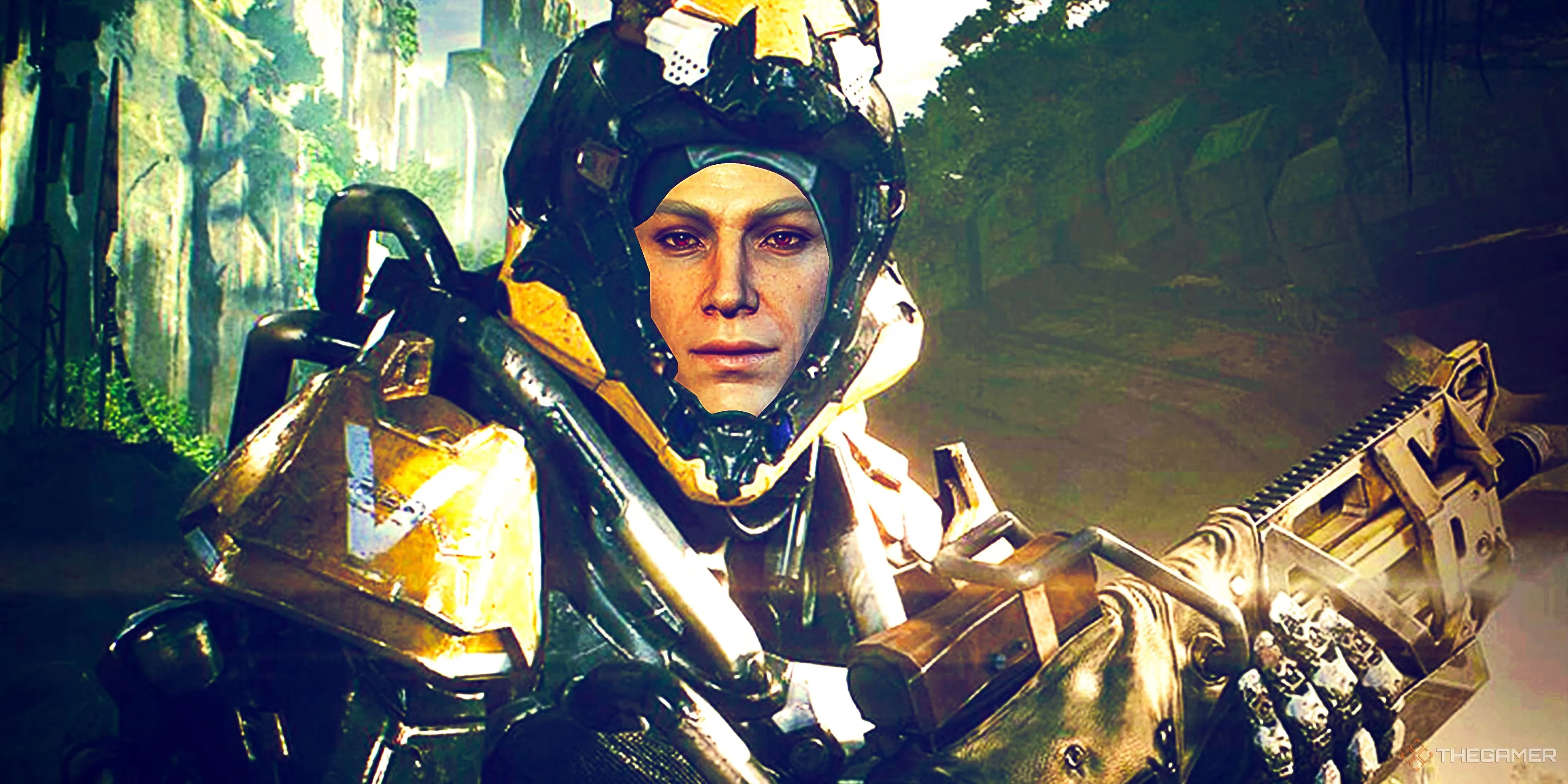
The Impossible Standard: A Legacy Forged in Fire
To craft a worthy successor to Baldur's Gate 3 is, by all accounts, a Herculean task. It's like being asked to compose a symphony right after Beethoven's Ninth. Even without the Baldur's Gate 4 moniker, any new D&D CRPG will be held to the astronomically high bar Larian set—a bar defined by narrative depth, systemic reactivity, and companion writing that felt less like code and more like kinship. A developer might rise to the occasion and knock it out of the park, but doing so will be a perilous tightrope walk over a chasm of fan expectation. The ghost of Astarion's smirk and the memory of Karlach's fiery heart will be the specters in the machine, the benchmarks against which every new character will be measured.
The Archetype of Ascent: Climbing the RPG Mountain
The secret to Larian's success wasn't an overnight miracle; it was a decades-long grind. The studio's journey mirrors the classic arc of legendary RPG developers—a slow, steady climb from obscurity to the pinnacle. This is the RPG Mountain that all greats must scale:
| Developer | The Grind (Early Days) | The Breakthrough (Niche Hit) | The Peak (Mainstream Triumph) |
|---|---|---|---|
| Larian Studios | Divine Divinity, Divinity II | Divinity: Original Sin 1 & 2 🎯 | Baldur's Gate 3 ⛰️ |
| CD Projekt Red | The Witcher 1 | The Witcher 2: Assassins of Kings | The Witcher 3: Wild Hunt |
| Bethesda Game Studios | The Elder Scrolls: Arena, Daggerfall | The Elder Scrolls III: Morrowind | Oblivion, Skyrim, Fallout 3 |
| BioWare | Baldur's Gate, Neverwinter Nights | Star Wars: Knights of the Old Republic | Mass Effect 2, Dragon Age: Origins |
This path is almost a rite of passage. It involves years of honing craft, learning from mixed results, and building the technical and narrative muscle needed for that one defining, genre-dominating release. Larian had the perfect storm: deep RPG experience from the Divinity series and the chance to revive a long-dormant, beloved franchise. The next studio must find itself in a similar sweet spot—on the way up, with something to prove and the chops to back it up.
The Perilous Descent: When Peaks Become Valleys
Yet, history shows that after the summit often comes the descent. RPG developers, like athletes at their prime, can struggle to maintain dominance.
-
Bethesda has faced challenges recapturing the universal acclaim of Skyrim in its subsequent releases.
-
BioWare's story is particularly poignant. After ruling the late 2000s and early 2010s, the studio encountered a rough patch with titles like Mass Effect: Andromeda and Anthem, which faced lackluster reviews and commercial headwinds.
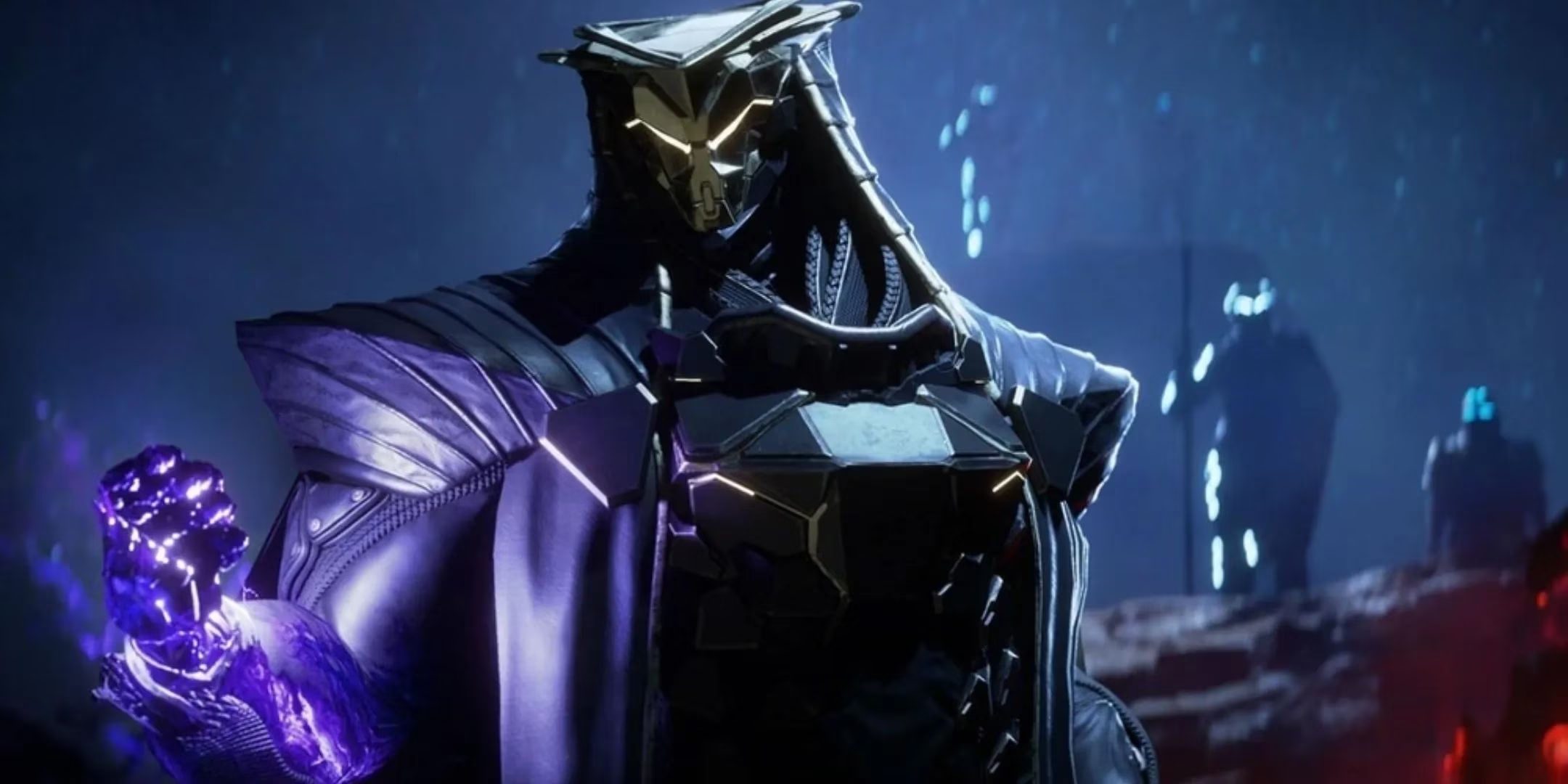
A studio on the way down is more likely to look inward, to its own franchises, for rejuvenation (think Fallout 5 or The Elder Scrolls VI). They're not typically in the market for taking on another studio's monumental legacy. Therefore, the mantle of the next great D&D CRPG will likely fall to a studio hungry for its "level up" moment, just as Larian was.
The Poisoned Chalice: Risks vs. Rewards
Herein lies the million-dollar question: Do the risks outweigh the rewards? Taking on a D&D CRPG post-BG3 is like accepting a poisoned chalice—glittering with potential but fraught with peril. Larian benefited from two key factors:
-
They revived a sleeping giant (the Baldur's Gate series).
-
They were the first major AAA CRPG to break into the mainstream in years, competing mostly against their own past work.
The next developer will have no such luxury. Every aspect of their game will be dissected under the blinding light of BG3's legacy:
-
Depth of Systems: "It may be deep, but is it BG3 deep?" 🤔
-
Companions: "Great characters, but are they iconic like Shadowheart or Gale?"
-
Combat & Reactivity: "Fun tactics, but does the world breathe and react like it did in the Sword Coast?"
-
Role-Playing Freedom: "Many choices, but are there as many nuanced, consequence-laden paths?"
It's a tempting proposition for any ambitious team—the chance to play in the richest fantasy sandbox ever created. But the shadow of BG3 is long, and the community's appetite, while hungry, is now discerning to a fault. The successor must not merely imitate; it must innovate while honoring the soul of Dungeons & Dragons. It must find its own voice in a chorus still singing Larian's praises. The journey to the next peak begins not at the base of BG3's mountain, but somewhere on its slopes, looking toward a new, uncharted summit. The climb will be the story.