The Lingering Enigma of Amanita Szarr: A Forgotten Soul in Baldur's Gate 3
The haunting mystery of Amanita Szarr, a rebellious young vampire spawn in Baldur's Gate 3, continues to captivate players with its poignant, unresolved fate. Theories range from a tragic sunlit escape to grim justice from a Harper, weaving compelling narratives from the game's shadowy lore.
In the sprawling, shadow-kissed tapestry of Baldur's Gate 3, some threads are woven so subtly they nearly disappear, leaving behind only the ghost of a question. Even in 2026, years after its release, the game continues to exhale secrets, and none are more poignant than the whispered fate of Amanita Szarr. She is a phantom in the parchment, a young vampire spawn who dared reject the cruel rites of Cazador's 'family' and vanished, leaving behind only her words in a dusty attic and a mystery that has players utterly stumped. The community, usually so adept at unraveling every knot, finds itself circling this particular enigma, theories fluttering like moths against a darkened pane of glass.
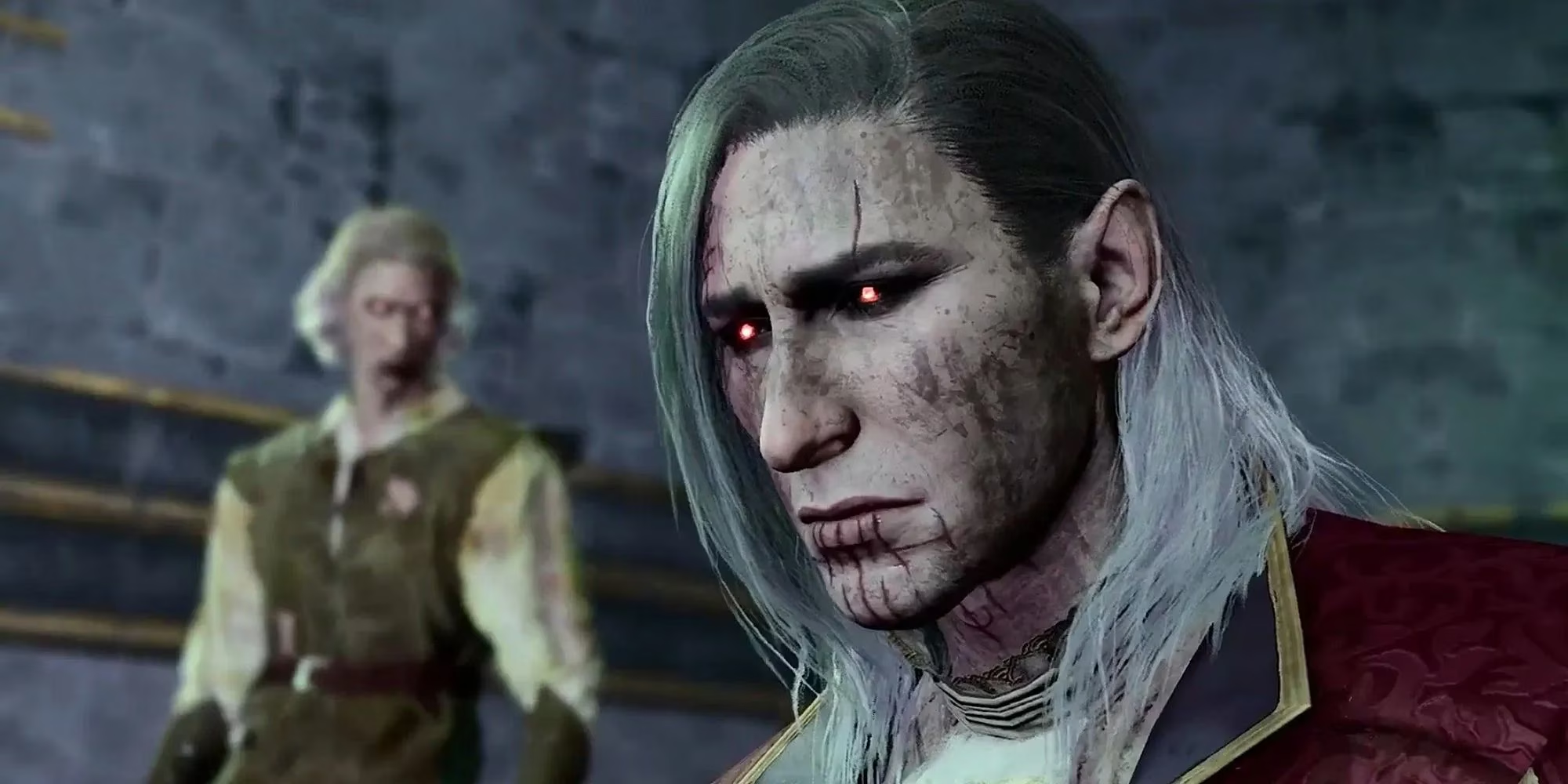
The Attic's Silent Testament
Her story is told in fragments, in notes and journals found amidst the crates and odd treasures of Cazador's attic—a prison of wood and neglect. Known also as Lady Incognita, Amanita was terribly young when turned, her spirit seemingly too vibrant for the undead curse. She rejected the family's dark rituals, a rebellion that earned her confinement. Yet, the attic holds no final answer; no skeleton, no definitive sign of her end. Just her writings and, most tellingly, a hole in the roof where sunlight, the vampire's bane, dares to intrude. It's a scene that speaks volumes without uttering a word. The most bittersweet theory suggests she clawed her own path to freedom in the worst way possible. Without a protective tadpole, that beam of sunlight would have been a cleansing, if agonizing, pyre. Did she choose it? Was it an accident born of desperate escape? The attic keeps that secret, her absence a louder statement than any corpse could make.
Theories Woven from Shadow and Sunlight
The fanbase, ever creative, has spun several compelling narratives for Amanita's fate. They're not just guesses; they're stories born from the game's rich soil.
1. The Harper's Justice: One theory points a finger at the legendary Harper, Jaheira. She once recounts a tale from her youth about killing a vampire by half-burying it to let the sun finish the job. The timeline's a bit wobbly—Amanita was active about fifteen years ago, and Jaheira speaks of her 'youth'—but the idea has legs. Astarion and his siblings are masters of disguise, but Amanita, fresh and rebellious, might have been more likely to slip up, to show her true nature before the wrong eyes. It's a poetic, if grim, possibility: freedom found not in escape, but in a Harper's grim mercy.
2. The Author's Ironic Prison: Another, deeply ironic theory posits that Amanita's soul met a fate befitting a writer. In the lair of the vampire lord Vellioth, a scroll named "Eternal Cruelty" whispers a terrible promise: "For my sins, my soul was made ink and written onto this parchment, where its scrawl crawls sleeplessly for eternity - unless you free it." Could the rebellious scribe have become the very ink she once wielded? There's no direct link, sure, but man, what a twist of fate that would be—to spend eternity as a story you never meant to tell. It would certainly explain why no physical trace of her remains.
3. A Simple, Tragic End: Sometimes, the simplest answer rings truest. The hole in the roof, the absence of remains... it all points to a final, desperate bid for dawn. Perhaps, after years of torment, she chose to greet the sun, to let it burn away the curse in one brilliant, painful moment of agency. It's a quiet, devastating kind of heroism.

The Beauty of the Unanswered Question
In an age where every lore detail is often datamined and dissected, the enduring mystery of Amanita Szarr is a testament to Larian Studios' masterful storytelling. It's the rich narrative that really keeps people coming back, long after the credits roll. The game, with its insane replayability thanks to countless class combinations and the evolving world post-Patch 8, thrives on these hidden depths. Not every stone needs to be unturned; some are better left half-buried, allowing the moss of imagination to grow over them.
These lingering questions make the world of Baldur's Gate 3 feel truly alive, vast, and strangely real. They invite players to become co-authors, to fill the silences with their own theories and headcanons. Years later, fans are still uncovering new nuances, proving that no two journeys through Faerûn are ever the same. The case of Amanita isn't a plot hole; it's a deliberate breath of ambiguity, a space for wonder to flourish. It reminds us that the most memorable stories often live in the shadows between the words, in the fate of a forgotten spawn whose final chapter was written not by a developer, but by the dawn itself.
| Key Clues & Theories at a Glance | | :--- | :--- | | The Attic Evidence | Notes, journals, a hole in the roof, no bodily remains. | | Sunlight Theory ⭐ | Amanita escaped/was destroyed by sunlight through the roof. | | Jaheira Connection | Harper's vampire-killing story might align with Amanita's timeline. | | Scroll of Eternal Cruelty | Ironic fate: a writer's soul trapped as magical ink. | | Narrative Purpose | The mystery itself enriches the game's world and replay value. |
So, what did happen to Amanita Szarr? The game, in its infinite wisdom, shrugs. And sometimes, that's perfectly okay. The mystery is the point. It's the whisper in the attic, the unanswered question that makes you look at the rising sun a little differently. It's what keeps the world spinning long after you think you've seen it all.