The Last Light Inn Horror: How Isobel's AI Doomed My Honor Run
Experience the unforgettable Last Light Inn sequence in Baldur's Gate 3 Honor Mode, where AI choices and tragedy reshape your Forgotten Realms journey.
It was my third journey through the Forgotten Realms in Baldur's Gate 3, a journey I foolishly believed I had mastered. Having conquered the game twice before, I approached the iconic Last Light Inn sequence with a veteran's confidence. I'd seen the online whispers, the frustrated posts about a certain cleric's self-destructive tendencies, but I dismissed them. 'Exaggerations,' I thought, 'mere tales from unlucky adventurers.' Oh, the hubris. On this run, the stakes were ultimate: Honor Mode. No save scumming, no take-backs. A single, permanent story. And it was there, under the fragile magical dome of Last Light, that I learned the true meaning of despair, courtesy of Lady Isobel Thorm.
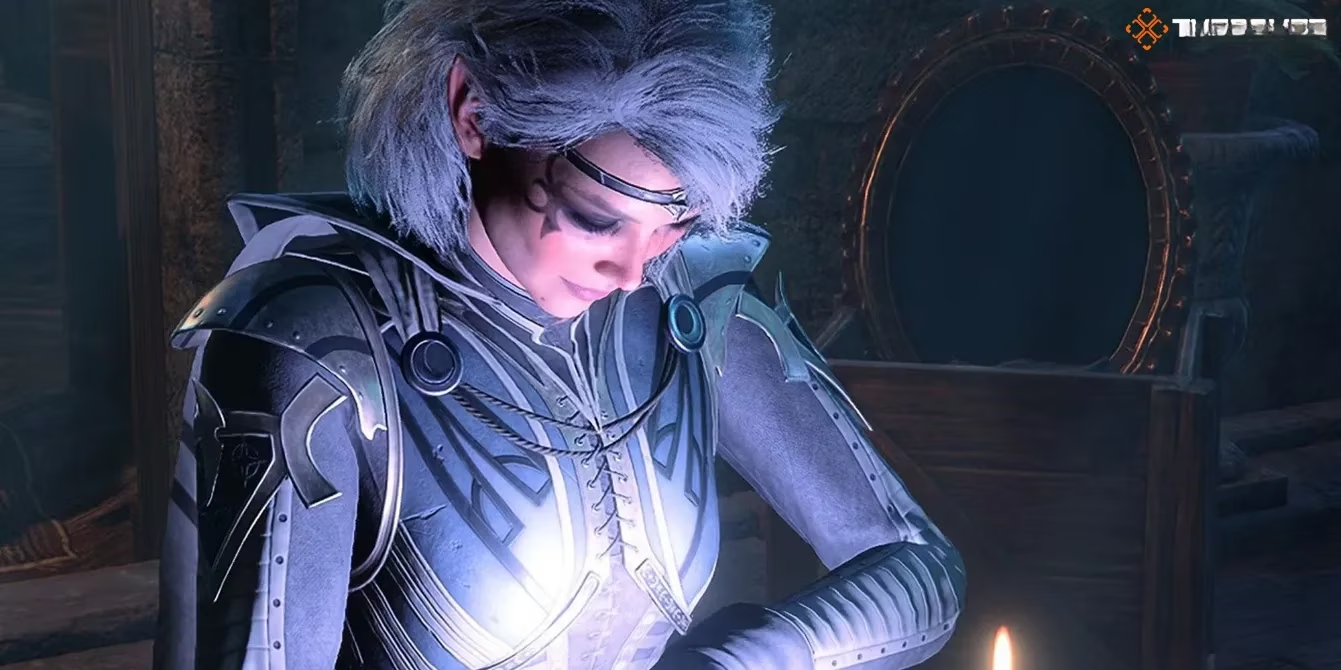
My party was ready. The plan was crisp and brutal. As the winged horrors descended and Marcus revealed his betrayal, we struck with precision. By the end of our first turn, Marcus was a corpse on the tavern floor, and several of his fiendish allies had joined him. A surge of triumph washed over me. This was going smoothly. Too smoothly. Then, it was Isobel's turn. Surrounded by four remaining Winged Horrors, she had options. She could have disengaged. She could have held her ground and cast a healing word or a guiding bolt. The AI, in its infinite, tragic wisdom, chose... to walk. She took a casual step away, provoking a chorus of opportunity attacks. The sound of wings and tearing flesh was followed by a dreadful silence. Isobel fell, captured before my eyes, on the very first round of combat. My confidence shattered into a thousand pieces.
The consequences were immediate and catastrophic. With Isobel gone, her protective spell over the inn failed. The sinister shadow curse seeped in, twisting the souls of everyone within. In moments, the safe haven became a slaughterhouse. The friendly faces I knew—Alfira with her lute, the hopeful tieflings, the gruff but kind Dammon—all turned into cursed shadows, their eyes glowing with malevolent light. We were forced to cut them down. The horror was compounded by Jaheira, the legendary Harper. Her pre-recruitment AI proved equally disastrous. Instead of joining our defensive line, she charged headlong into the corrupted crowd, a heroic but utterly futile gesture that ended with her being overwhelmed. Just like that, two potential companions were lost.
The ripple effects of that single, stupid AI decision stretched across my entire campaign. Let me catalog the damage:
-
Permanently Lost NPCs: Alfira the bard, Dammon the infernal mechanic, and every other tiefling refugee. Their stories, their quests, gone.
-
Companion Catastrophe: Jaheira was dead, which meant recruiting the legendary Minsc later was now impossible. A huge chunk of act three content, locked away forever.
-
Romance Ruined: I was romancing Karlach. Her engine needed upgrades from Dammon to survive. With Dammon a pile of shadow-cursed ash, her personal quest hit a dead end. Our romance was frozen, impossible to progress to its hopeful conclusion. The thought of telling her we couldn't fix her heart was a fate worse than any game over screen.
In that moment, staring at the carnage that was once Last Light Inn, I understood. The true boss of this fight wasn't Marcus or the horrors. It was the game's own logic. The strategy for Honor Mode isn't just about optimizing your party's damage output or positioning. It's about accounting for, and desperately mitigating, the suicidal impulses of your AI-controlled allies. You must protect Isobel from herself. This means strategies that seem suboptimal become essential:
-
Crowd Control is King: Spells like Hold Person on Marcus or Slow on the horrors are more valuable than any fireball.
-
The Bodyguard Protocol: Position a tanky character literally on top of Isobel at the start of combat. Use the Sentinel feat to lock down enemies near her.
-
Pre-buffing is Mandatory: Cast Sanctuary on her before the dialogue even ends. It won't stop Marcus's kidnapping attempt, but it will make the horrors waste turns.
-
Accept the Chaos: Sometimes, you just have to let Marcus take her. It's a scripted event, and fighting in the inn afterward is arguably easier than the rooftop battle where her AI can sprint off the edge.
My Honor Mode run continued, a hollow, wounded thing. Every step felt heavier. The loss of Karlach's potential future, the absence of Jaheira's dry wit in camp, the silence where Alfira's music should have been—these weren't just gameplay setbacks. They were emotional scars on the story. The game, through a few lines of dodgy code, had crafted a uniquely tragic narrative, one of preventable disaster. I pressed on, not for glory, but out of a grim determination to see how deep the consequences would run. The memory of Isobel's fateful step haunted me, a permanent lesson in Baldur's Gate 3's most unforgiving truth: sometimes, your greatest enemy is the ally you're trying to save.