The Human Touch Behind Accessibility: How a Voice Actor's Request Shaped Clair Obscur: Expedition 33's Difficulty
Discover how a voice actor's heartfelt request for accessibility in Clair Obscur: Expedition 33 led to an inclusive, stress-reducing Story Mode.
It's 2026, and looking back on the RPG landscape of the past year, few titles sparked as much conversation as Clair Obscur: Expedition 33. It wasn't just the incredible, turn-based combat or the profound narrative that hooked the gaming community; it was also the game's thoughtful approach to welcoming players of all skill levels. But did you know that this inclusive design has a wonderfully human origin story? The inclusion of a gentler difficulty setting—a feature many of us now take for granted—directly resulted from a simple request made by the voice actor behind one of the game's own characters. It makes you wonder, how often do we consider the personal stories behind the accessibility options we use?
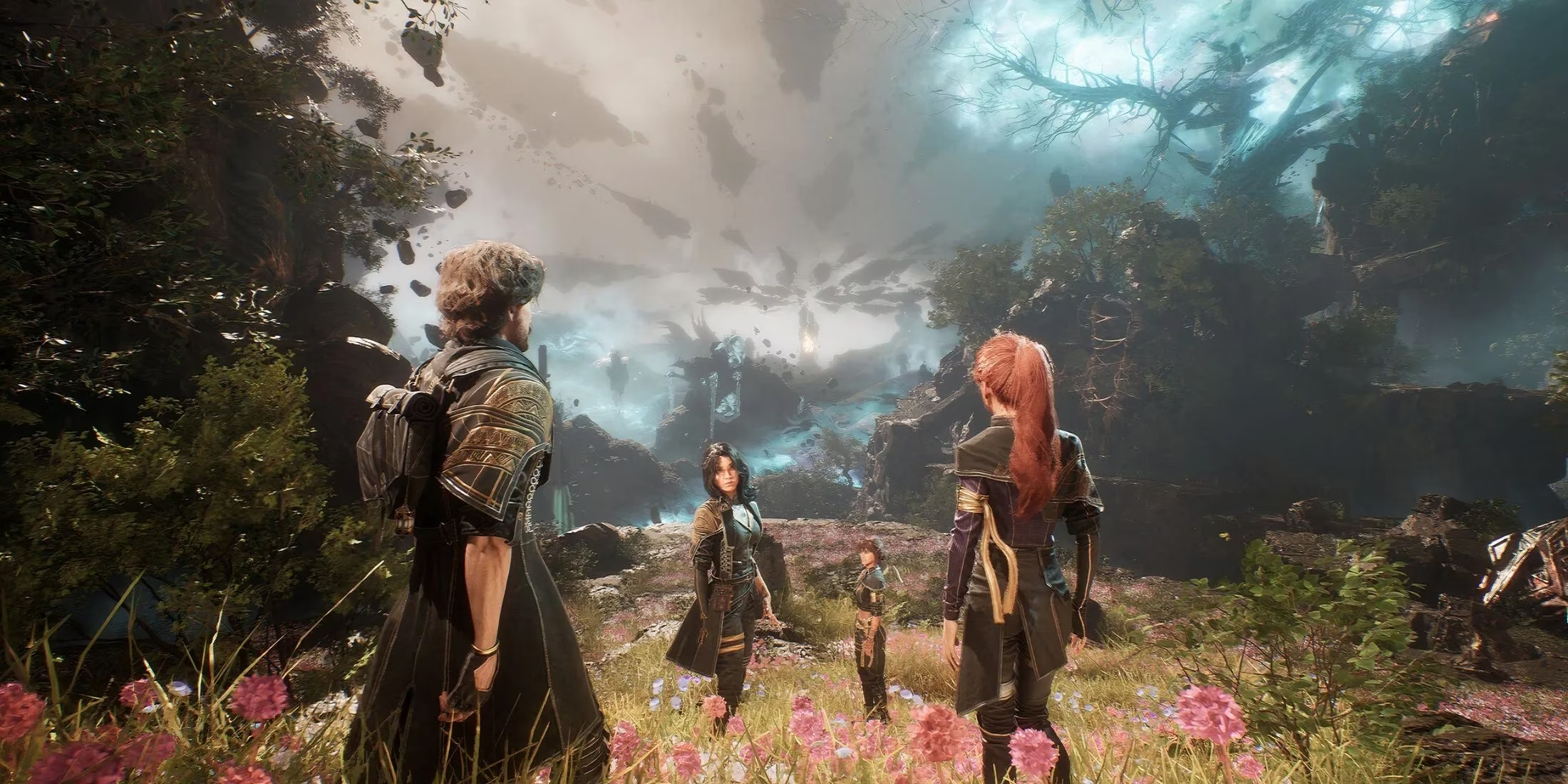
For me, the revelation was a delightful peek behind the curtain. Jennifer English, the talented performer who brought the character Maelle to life, genuinely wanted to play the game she helped create. However, she worried that the game's famously engaging but challenging combat might be a barrier for her. So, she did something beautifully simple: she asked the developers at Sandfall Interactive if an easier mode could be included. To her delight, they listened and implemented it. It’s a testament to a collaborative environment where even the cast's experience matters. The story gets even more charming when you hear that fellow actor Ben Starr jokingly dubbed this new setting the "Jennifer English Memorial Mode."
In a candid moment on their Twitch stream, Aliona Baranova, a Performance Director from Baldur’s Gate 3 who was involved in the discussion, confirmed the impact of this request: "That is the reason there’s an easy mode." So, every time I, or countless other players, have enjoyed a stress-free journey through the game's beautiful world, we have Jennifer English to thank. This mode, officially called Story Mode, is designed for players like her—and like me, on my more relaxed days—who want to immerse themselves in the rich narrative without the frustration of punishing boss fights or intricate combat mechanics. In this mode, enemies deal significantly less damage, and mechanics like dodging have more forgiving timing windows. It’s a gateway, ensuring no one is excluded from experiencing the story.
Understanding the Difficulty Spectrum 🎮
Clair Obscur: Expedition 33 offers a well-considered spectrum of challenges to suit different play styles:
| Mode Name | Focus | Designed For | Key Features |
|---|---|---|---|
| Story Mode | Narrative & Exploration | Newcomers, narrative-focused players | Reduced enemy damage, relaxed timing on parries/dodges. |
| Expedition Mode | Balanced Challenge | The majority of RPG players seeking a fair test. | The developer's intended "standard" experience. |
| Expert Mode | Mastery & Hardcore Play | Veterans craving extreme difficulty. | Enemies are smarter, hits are deadlier, resources scarce. |
But the game's commitment to challenge doesn't end there! For the truly masochistic adventurers, the world is dotted with high-level optional areas. These zones are separate from the main story's progression and exist purely as a testing ground for optimized builds and perfect strategy execution. It’s the perfect answer to the age-old question: Just how good are you, really?
The Everlasting Debate: One True Way or Player Choice? 🤔
This personal anecdote from Clair Obscur feeds directly into a perennial debate in our gaming community. On one side, some players believe a game should present a singular, "official" vision of difficulty—a curated challenge that everyone must overcome for the authentic experience. On the other, many of us champion the idea that games should adapt to us, not the other way around. Shouldn't a great story be accessible to everyone, regardless of their reflexes or available time?
The trend in 2025 and into 2026 has decisively leaned toward inclusivity. Look at the seismic shift when Lies of P, a game firmly in the notoriously difficult "Soulslike" genre, announced it was adding formal difficulty options. It challenged the very definition of what those games could be and reignited this debate with fresh passion. What Clair Obscur: Expedition 33 demonstrates, through its Jennifer English-inspired mode, is that accessibility isn't about "dumbing down" a game. It's about opening the door. It's about recognizing that players seek different things from their interactive stories—some seek the adrenaline of conquest, while others seek the solace of a beautiful tale.
Why This Matters Beyond a Single Game 🌟
Reflecting on this as a player in 2026, the lesson from Clair Obscur feels more relevant than ever. When developers listen—not just to data analytics or market trends, but to the human beings in their own creative circle—they make better, more empathetic games. The inclusion of a Story Mode didn't detract from the brutal satisfaction of Expert Mode; it simply coexisted alongside it, allowing the game to become one of 2025's biggest surprises and commercial successes. It reached a wider audience because it refused to gatekeep its wonders.
So, the next time I boot up a game and see a range of difficulty options, I'll think of Jennifer English. I'll remember that sometimes, the most impactful game design choices come not from a boardroom, but from a simple, personal desire: "I want to play, too." And isn't that what gaming is all about at its core? Creating worlds that everyone can explore and enjoy in their own way? Clair Obscur: Expedition 33 answered that question with a resounding, and very accessible, yes.