The Gaming Industry's Political Backslide: Censorship, Queer Stories, and the Indie Resistance
A compelling exploration of how the 2024 US election's chilling effect on corporate DEI initiatives is now powerfully impacting video game development, leading to censorship and the cutting of vital queer storylines.
In the politically charged landscape of 2026, the long shadow of the 2024 US presidential election continues to stretch its fingers into the most unexpected corners of culture—including the vibrant, escapist world of video games. Ever since that pivotal election, a palpable shift has rippled through corporate America, with many companies scrambling to align themselves with the new administration's ethos. This often meant the quiet—or sometimes not-so-quiet—abandonment of Diversity, Equity, and Inclusion (DEI) initiatives. But did anyone think the gaming industry, that bastion of dragons, space marines, and plumber-heroes, would be next in line to bow to political pressure? Well, buckle up, because it seems the industry is facing its own boss fight against regressive politics.
Queer Stories on the Chopping Block?
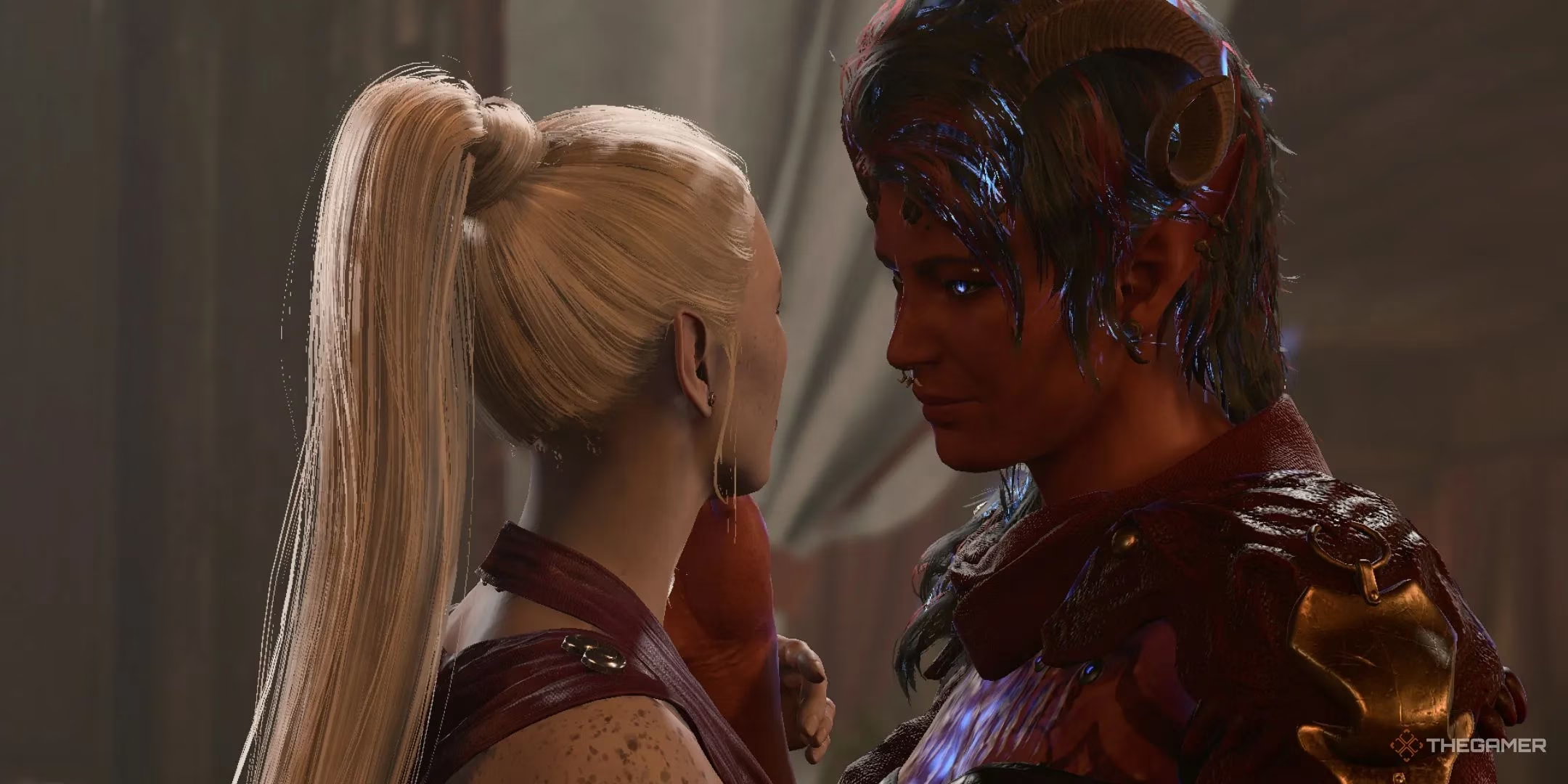
The conversation took a serious turn in a revealing interview with actor Samantha Béart, the brilliant voice and performance behind the fan-favorite tiefling barbarian, Karlach, from the legendary Baldur's Gate 3. Béart dropped a bombshell that sent shivers through the RPG community: game developers are already facing censorship. "Without exposing devs, I know that's happening. Their storylines have been cut," Béart revealed. The context? A climate where diverse narratives, particularly queer stories, are being viewed as a liability rather than the rich, character-defining arcs they are. Isn't it ironic? An industry built on creating entire worlds is being told to make those worlds less reflective of our own.
Béart's concerns weren't abstract. They were speaking to a direct fear: would a game as beautifully, unapologetically diverse as Baldur's Gate 3 even get made today? The game, after all, was a landmark achievement, allowing players to romance characters regardless of gender or race with a depth rarely seen. Yet, here we are, with developers allegedly being told to trim those very elements. Béart, ever the optimist, pointed to history: "Appeasement is a really bad thing." They're not wrong. Giving ground to censorship rarely stops at the first demand.
The Ghost of GamerGate and the "Bad for Sales" Myth
This unsettling trend isn't happening in a vacuum. It's coinciding with the unfortunate and toxic revival of the GamerGate movement. Remember that? It's back, like a poorly written sequel nobody asked for, bringing with it a renewed wave of online harassment targeting developers, journalists, and critics. This environment fuels a persistent and demonstrably false argument: that games featuring non-white or queer characters are commercial poison.
Let's bust that myth right now with some hard numbers, shall we? Baldur's Gate 3, a game celebrated for its inclusivity, was reported to have sold a staggering 15 million copies by late 2024. That's 15 million reasons why the "diversity doesn't sell" argument is complete nonsense. It seems players are more than happy to invest in worlds that reflect a spectrum of human experience. Who would have thought?
A History of Backsliding and the Indie Hope
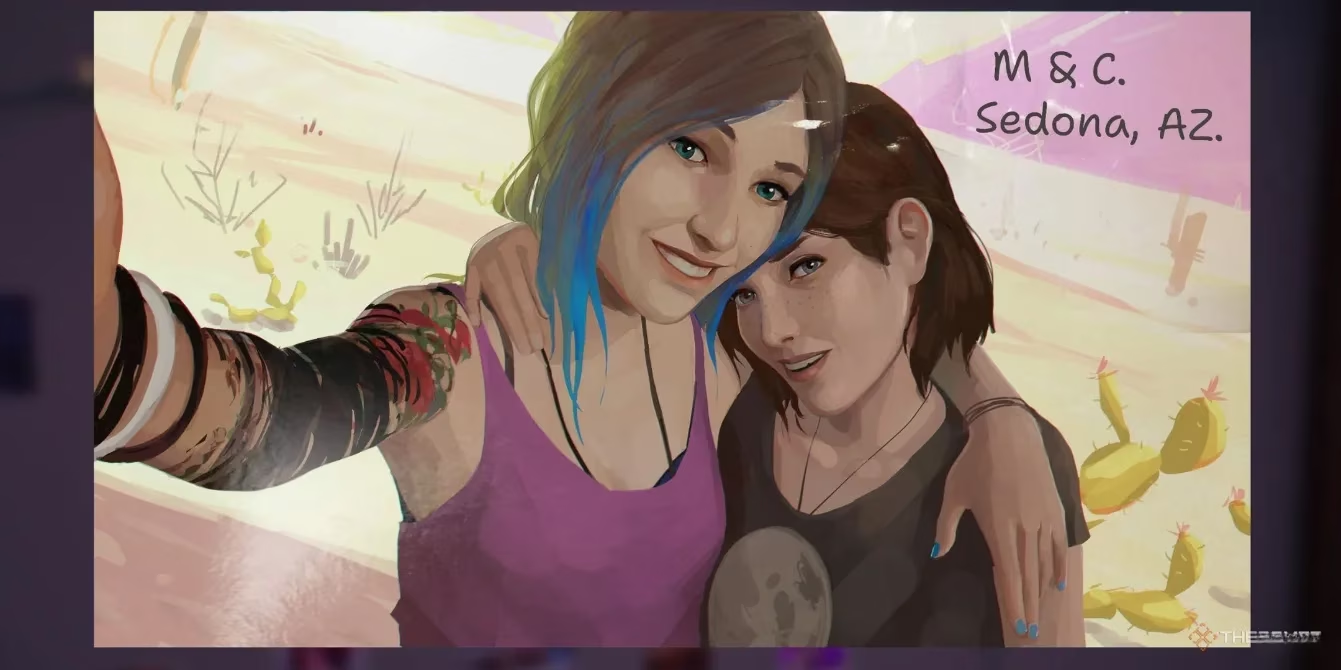
This isn't the industry's first rodeo with censorship. Béart alluded to a darker chapter from the 2000s. Veteran gamers might recall the controversy around Mass Effect 2, where developers were pressured to rewrite a potential queer romance for the companion character Jack due to negative media attention from certain outlets. We've fought hard to move past that era, with countless games now offering rich, normalized queer romance options. So, seeing the industry potentially slide backward is particularly gut-wrenching. Are we really going to let political winds undo decades of progress in storytelling?
But here’s where the beacon of hope shines through: the indie scene. Béart's optimism is firmly rooted there. "Indies exist. And people can write, and communities will get together, and we will absolutely get through this together." This is the crucial counter-force. Independent developers, free from the shackles of massive publishers who might be keen to "appease" certain political agendas, have the creative freedom to tell the stories that matter. They are the resistance, proving that there is a massive, hungry audience for authentic narratives.
Let's not forget, Baldur's Gate 3 itself was a self-published title by Larian Studios. Its success is a testament to the power of developer-driven vision, unfiltered by corporate-political interference. The blueprint for resistance already exists, and it's a proven winner.
The Path Forward: Community and Resilience
So, what does the future hold for gaming in 2026 and beyond? The landscape is undoubtedly challenging. The pressures are real:
-
Political Censorship: Direct and indirect pressure to alter or remove diverse content.
-
Toxic Revival: The resurgence of harassment campaigns under old banners.
-
Corporate Timidity: Big publishers potentially prioritizing perceived safety over artistic integrity.
However, the countervailing forces are powerful:
| The Challenge | The Source of Hope |
|---|---|
| Publisher Censorship | The thriving, fearless Indie development scene. |
| "Bad for Sales" Myth | Blockbuster successes like Baldur's Gate 3 (15M+ sold). |
| Online Harassment | Strong, supportive gaming communities rallying together. |
| Historical Backsliding | The lessons learned from past fights (e.g., Mass Effect). |
The community itself is the ultimate shield and catalyst. Players vote with their wallets and their voices. Supporting indie devs who champion diverse stories, calling out censorship when it occurs, and celebrating inclusive games are all acts of defiance. As Béart wisely stated, we will get through this together. The industry may be facing a difficult level, but if history has shown us anything, it's that gamers love a good challenge—especially when the reward is a richer, more representative universe of stories to explore. The final boss of regressive politics might be tough, but the player base has already proven it's up to the task. Game on.