The Forgotten Echo: Viconia DeVir and the Shadow of Lost Narratives in Baldur's Gate 3
The iconic Baldur's Gate 3 companion Viconia DeVir, a Sharran Mother Superior, is disappointingly relegated to a brief, one-dimensional cameo, overshadowing her complex legacy and potential for redemption from the series' past.
In the vast, tapestry-woven world of Baldur's Gate 3, where companions bloom into legends and minor characters whisper profound truths, there exists a dissonant note, a character whose narrative thread was snipped short, leaving a frayed end where a grand design once might have been. The game is an ocean of stories, with its ten recruitable companions serving as brilliant, guiding constellations in a player's journey. Yet, for all its narrative depth, one soul from the saga's storied past finds herself cast not as a star, but as a mere reflection, a ghost of potential left haunting the margins. This is the tale of Viconia DeVir, a Sharran Mother Superior whose return feels less like a homecoming and more like an echo fading into the dark.
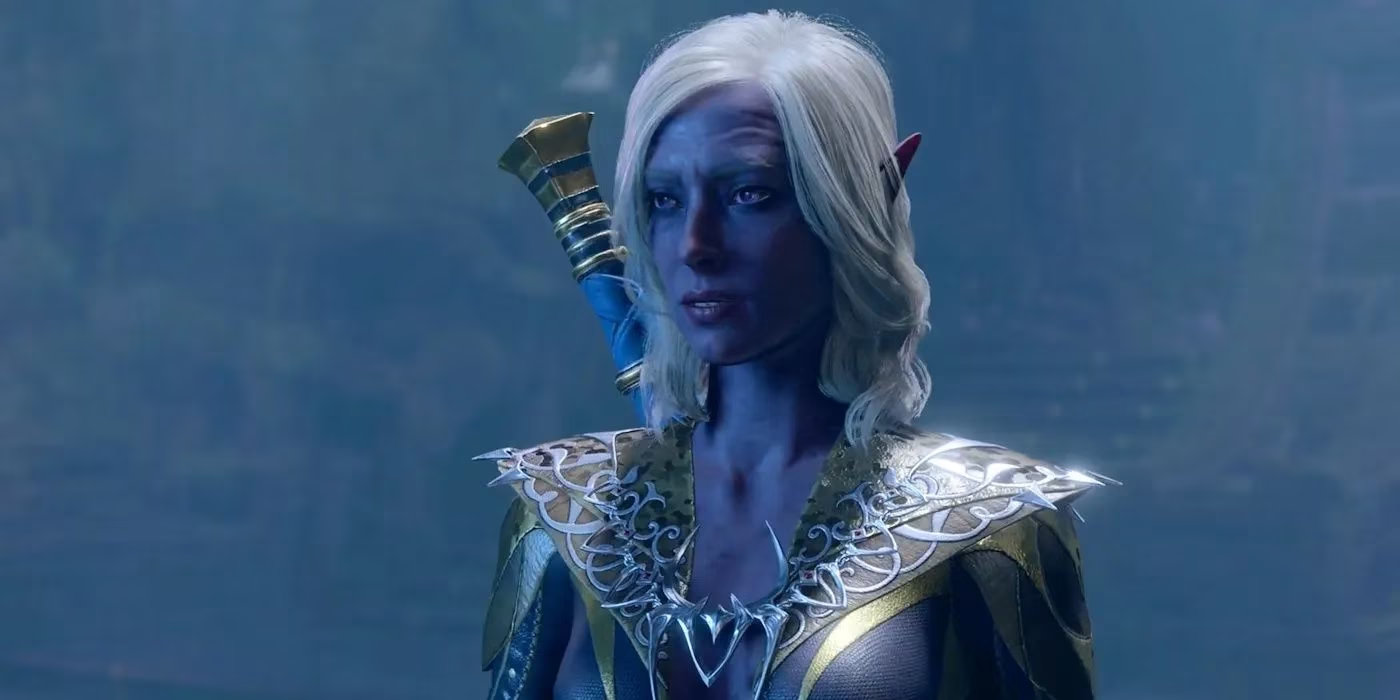
While iconic figures like Jaheira and Minsc returned to the fold as full-fledged companions, welcomed with open arms by veterans and newcomers alike, Viconia's role was relegated to that of a fleeting specter. Her appearance is brief, a cameo that feels as substantial as a shadow cast by a guttering candle. For those who walked the paths of Baldur's Gate 2 alongside her, this portrayal has been a source of profound disappointment. Where once there was complexity—a drow cleric wrestling with faith, prejudice, and the possibility of redemption—Baldur's Gate 3 presents a figure flattened into a caricature of cartoonish villainy. She becomes a narrative accessory, a minor antagonist in Shadowheart's personal odyssey, her presence as functional and one-dimensional as a rusty key meant only to unlock a single door.
The Weight of a Past Unraveled
In the previous installment, players could guide Viconia toward a path of redemption, particularly through a nuanced romance arc. This journey revealed emotional depths and vulnerabilities that made her one of the series' most compelling characters. Baldur's Gate 3, however, discards this potential like a forgotten melody. The game canonizes a version of Viconia who has fully succumbed to Shar's manipulations, becoming as cold and unyielding as obsidian. This decision renders the player's previous choices in BG2 meaningless, a narrative betrayal that stings for long-time fans. It raises a poignant question: was it necessary to resurrect her only to diminish her? Her role in the 'Daughter of Darkness' quest is so minor that her ultimate fate—death or a vague mention in the final battle—feels like an afterthought, a narrative loose end hastily tied.
A Whisper of Acknowledgment, Lost in the Gale
Larian Studios did offer a sliver of recognition for Viconia's past. A rare piece of party banter between Shadowheart and Jaheira hints at a deeper history.
"Shadowheart. You should know - Viconia was not half so heartless as she liked to appear." - Jaheira
This line is a fragile bridge to the past, suggesting Viconia was once a mirror to Shadowheart, a soul similarly ensnared by Shar's web. Yet, this single, whispered conversation is like a drop of ink in a vast ocean; it does little to dilute the salt of disappointment for those who knew her former self. The game's overarching themes of cycles of abuse and manipulation are powerfully explored through new characters like Astarion and his sire Cazador, or through the history of Ketheric Thorm. Viconia's truncated arc, in comparison, feels unnecessary, a callback that adds little to these richly woven themes. Her inclusion becomes a narrative cul-de-sac where a sprawling avenue of story could have been.
The Lingering Shadow on Future Tales
Viconia's treatment has cast a long shadow, making some fans apprehensive about the potential handling of beloved characters in any future installment. The fear is that a character's complex journey could be reduced to a simplistic, "bad" ending without the room for further exploration or redemption. Imagine, in a hypothetical Baldur's Gate 4, encountering a version of Astarion who had completed the Rite of Profane Ascension, but only as a one-dimensional dungeon boss to be defeated. Such a portrayal would strip the character of the tragic grandeur and player-agency-defined pathos that made him compelling. Viconia's case serves as a cautionary tale: the return of a legacy character should enrich the narrative tapestry, not merely provide a familiar name for a combat encounter.
A Legacy Better Served by Memory
Ultimately, the greatest disservice to Viconia DeVir may not have been her portrayal as a villain, but the decision to include her at all for such a minuscule role. Her story in Baldur's Gate 3 adds nothing of substance to her character; it only subtracts from the legacy she built in the hearts of players. Sometimes, the most respectful tribute to a complex character is to let their story rest, allowing their fate to remain in the realm of player imagination and choice. In the grand, symphonic narrative of Baldur's Gate 3, Viconia's note is a dissonant one, a reminder that not all echoes from the past should be forced to speak in the present.