The Final Curtain: Meerna's Unbreakable Fate and the Paradox of Player Choice in Baldur's Gate 3
Baldur's Gate 3 agency and Meerna's fate highlight unchangeable destinies, creating a haunting legend within its immersive narrative.
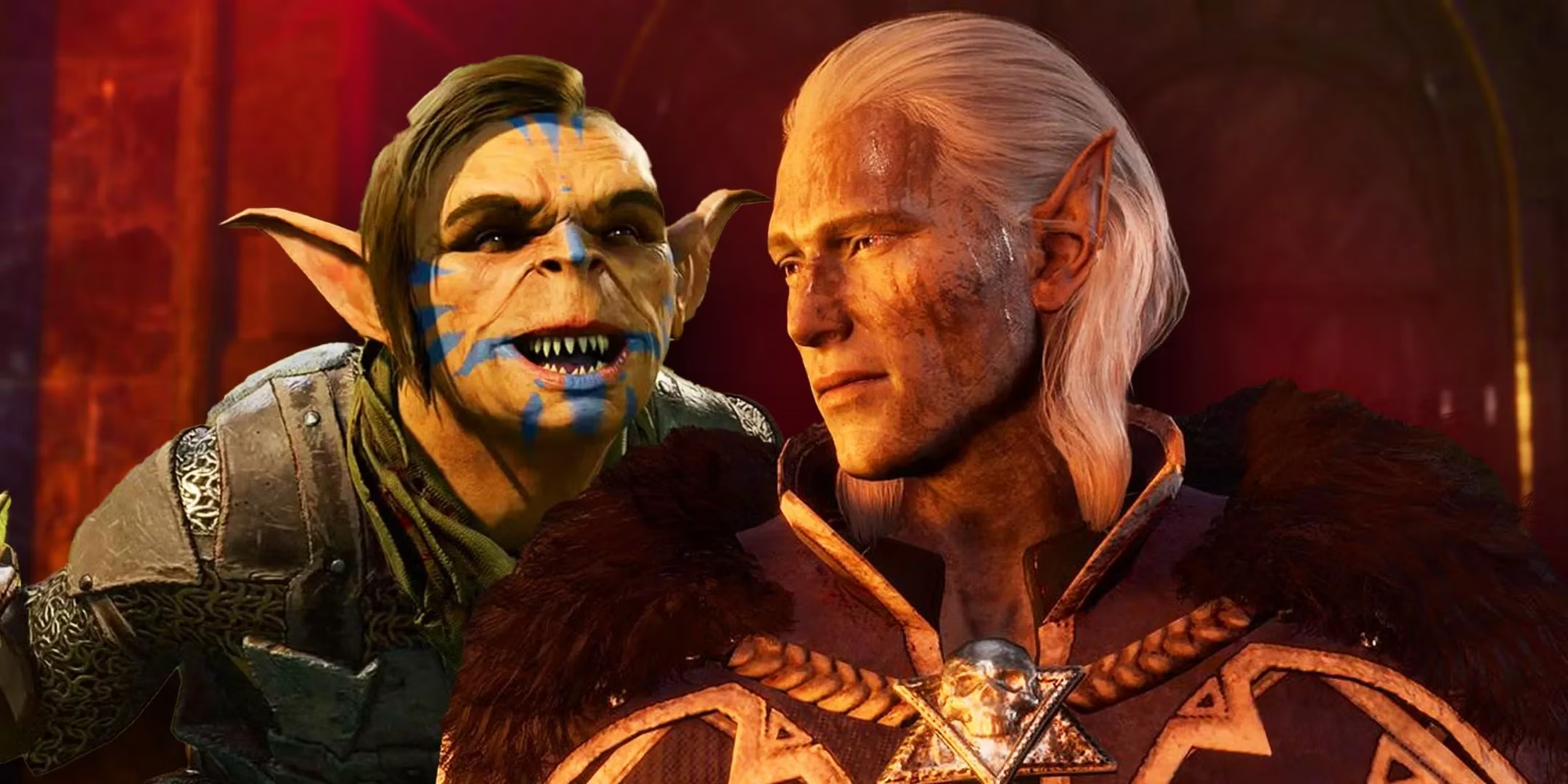
In the sprawling, breathing world of Baldur's Gate 3, the promise of agency is like a whispered secret carried on the wind. Tav walks through the world knowing their choices can bend destinies, yet there are places where even the most determined footfalls cannot tread. Among the teeming tapestry of lives, one fate remains stubbornly, poetically immovable, a single note in a grand symphony that refuses to be altered. It is the fate of a deep gnome named Meerna, whose scripted end at the hands of the True Soul Nere has become a quiet legend among adventurers—a testament to how a story's heart can sometimes beat outside the realm of player control.
The Doomed Gnome and the Ghost in the Machine
Years after the world first opened its doors, players are still trying. You see the posts, echoing through the taverns and forums, a question that's become almost a rite of passage: "Has anyone ever figured out a way to save Meerna?" Heck, it's the kind of puzzle that gets under your skin. There's Nere, a cruel figure of authority, and there's Meerna, seemingly caught in the wrong place at the wrong time. The scene is framed like so many others where a hero's intervention is the whole point of the journey. And on paper, it feels more preventable than most—a quick spell, a well-aimed arrow before the deed is done. Players have danced at the edges of possibility, finding bug-filled methods to interrupt the fatal moment, maybe even dropping Nere before the cutscene can take its breath. But it’s all a mirage. After the dust settles, the game's world, a living entity with its own memory, simply forgets she was ever spared. It considers her dead, and so she is gone, vanished from the story as if she never was, leaving behind a peculiar kind of silence.
This design choice stands in stark, almost lonely, contrast to the game’s celebrated ethos of freedom. You can save secretive Harpers from shadowy ambushes. You can turn the tide at the Emerald Grove, rewriting the fates of tieflings and druids. Yet here, in this one specific candlelit cavern, the story demands its pound of flesh.
The Narrative Anchors: Why Some Doors Remain Locked
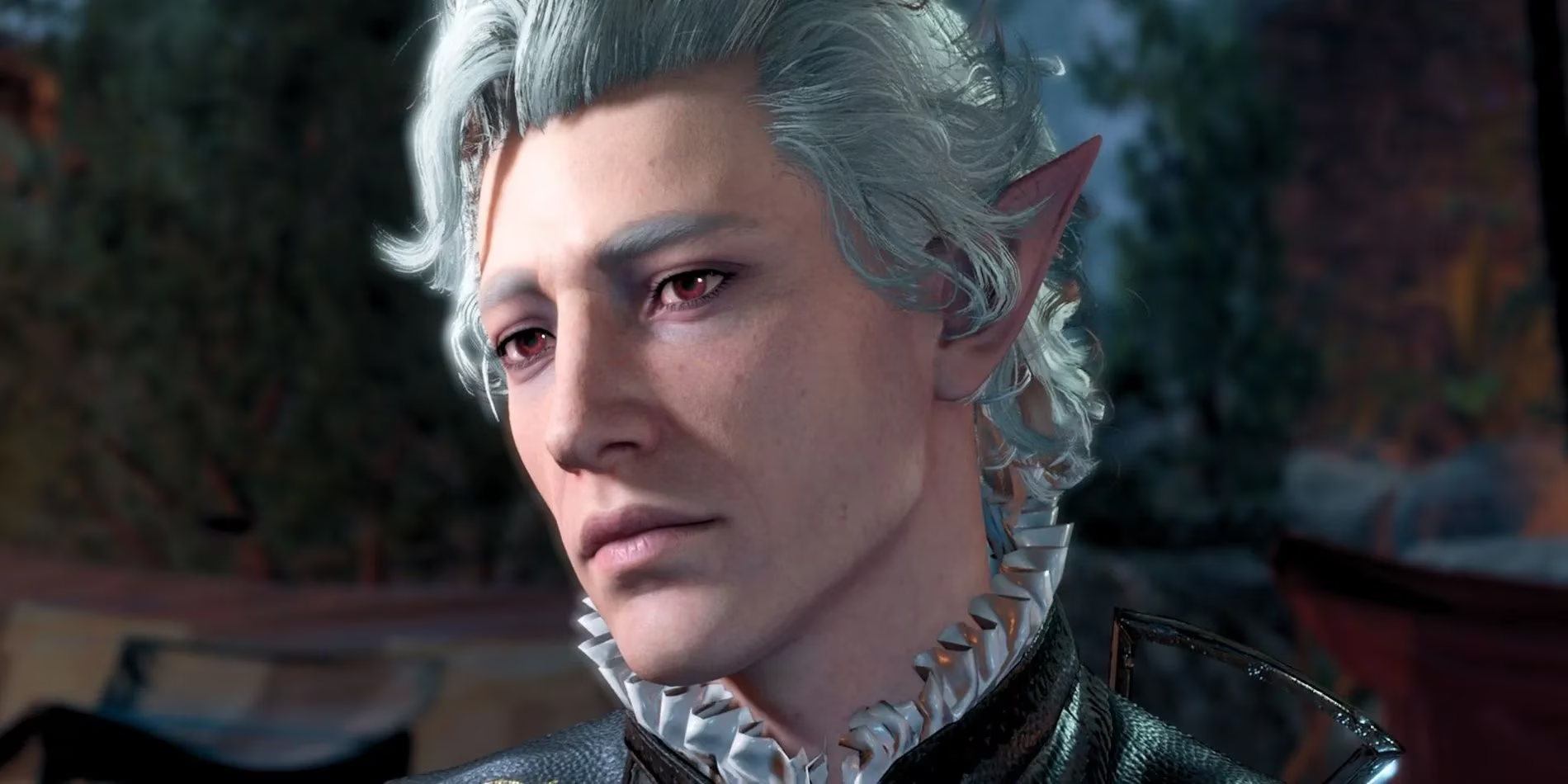
Meerna's fate speaks to a deeper truth within even the most open of worlds. Not every doomed character in Baldur's Gate 3 can be pulled back from the brink. Consider Kanon, the tiefling who falls during the siege of the Grove—a loss that happens off-stage, a tragic backnote to your arrival. These moments are the narrative anchors, the fixed points around which the rest of the story's chaos can swirl. They are what theorists call 'canon events,' crucial beats that give the tale its weight and consequence.
In a game driven by player narrative, this creates a fascinating tension. You have all the freedom in the world to try, to prepare for the inevitable with every potion and scroll in your pack, but sometimes the story's script holds a firmer pen. As one seasoned observer put it, there's only so much wiggle room to be had. The game master, in this case Larian Studios, occasionally needs to say, "This is how it must be," to make other choices feel meaningful. It's a reminder that true freedom exists within a frame, and sometimes the most poignant moments come from confronting a door that will not open.
The Lingering Question: A Developer's Deliberate Choice
What makes Meerna's case linger in the community's mind is the whisper of what might have been. Some who walked these paths in the game's early days recall a different possibility—a version where her salvation was an option. This raises the question of why Larian Studios decided to leave these kinds of inevitable encounters in the final release. The studio is renowned for its reactive world-building, where sparing a major villain like Nere can unlock whole new narrative branches. So why not a seemingly minor deep gnome?
Maybe it’s because her death serves a specific, poignant purpose in Nere's character introduction, painting him irredeemably cruel in a single stroke. Or perhaps it's a deliberate lesson in humility for the player—a reminder that not all tragedies can be averted, no matter how powerful you become. It's a tough pill to swallow, but it adds a layer of gritty realism to the high fantasy. C'mon, even in a world of magic and mind flayers, some stories just end.
| Character | Fate | Can Player Intervene? | Narrative Purpose |
|---|---|---|---|
| Meerna (Deep Gnome) | Killed by Nere in a cutscene | No, despite many attempts | Establishes Nere's cruelty; a fixed story point |
| Harpers in Underdark | Ambushed by Duegar | Yes, with combat/skill checks | Optional side quest; rewards exploration |
| Kanon (Emerald Grove) | Dies in the pre-siege attack | No, occurs before player arrival | Establishes stakes and tragedy of the Grove conflict |
| Various Tiefling Refugees | Multiple potential deaths | Yes, through main quest success | Core consequence of player's major choices |
The Player's Eternal Struggle: Hope Against the Inevitable
It's hard not to try to save the Deep Gnome even after your first time playing through Baldur's Gate 3. There's that spark of imagination, that belief that with the right sequence, the perfect timing, the story could bend. This enduring effort is, in its own way, a tribute to the game's power. It makes you care enough to fight against its own design. Players have turned into amateur game theorists, dissecting triggers and AI behavior, all for the sake of one non-playable character. Yet, the ultimate takeaway is that Meerna’s story was never meant to be yours to write. Her role was to be a casualty, a moment of powerlessness that makes your other victories shine brighter and your other saves feel more earned.
In 2026, as players continue to unearth new secrets and hidden interactions in this vast RPG, Meerna's fate remains a fixed star in the constellation of possibilities. It is a quiet dialogue between player desire and authorial intent, a beautiful, frustrating piece of the whole. Sometimes, the most memorable freedom is knowing where it ends, and understanding that a story, like a river, needs its banks to flow. Her absence is a presence all its own, a ghost in the machine of Faerûn that reminds every Tav that they are a part of this world, but not its only author. And maybe, just maybe, that's how it should be.