The Enigmatic Legacy of Tav: Between Blank Slate and Forgotten Detective
Explore the intriguing history of Tav, the custom protagonist in Baldur's Gate 3, and uncover their hidden legacy in Blood in Baldur's Gate.
In the sprawling, intricate tapestry of Baldur's Gate 3, the majority of adventurers find their first steps not with a preordained hero, but with a silent reflection of their own design—the custom protagonist, affectionately nicknamed "Tav." This figure, a vessel for countless player fantasies, stands in quiet contrast to the origin characters with their woven histories. While The Dark Urge offers a path of pre-written tragedy and violent impulses, Tav appears as the ultimate canvas, a being seemingly unburdened by a past, ready to be painted with the hues of any player's imagination. Yet, beneath this surface of pure potential, whispers of a deeper, more defined legacy linger, hinting that this blank slate may have once held a very specific, and tragically short, story.
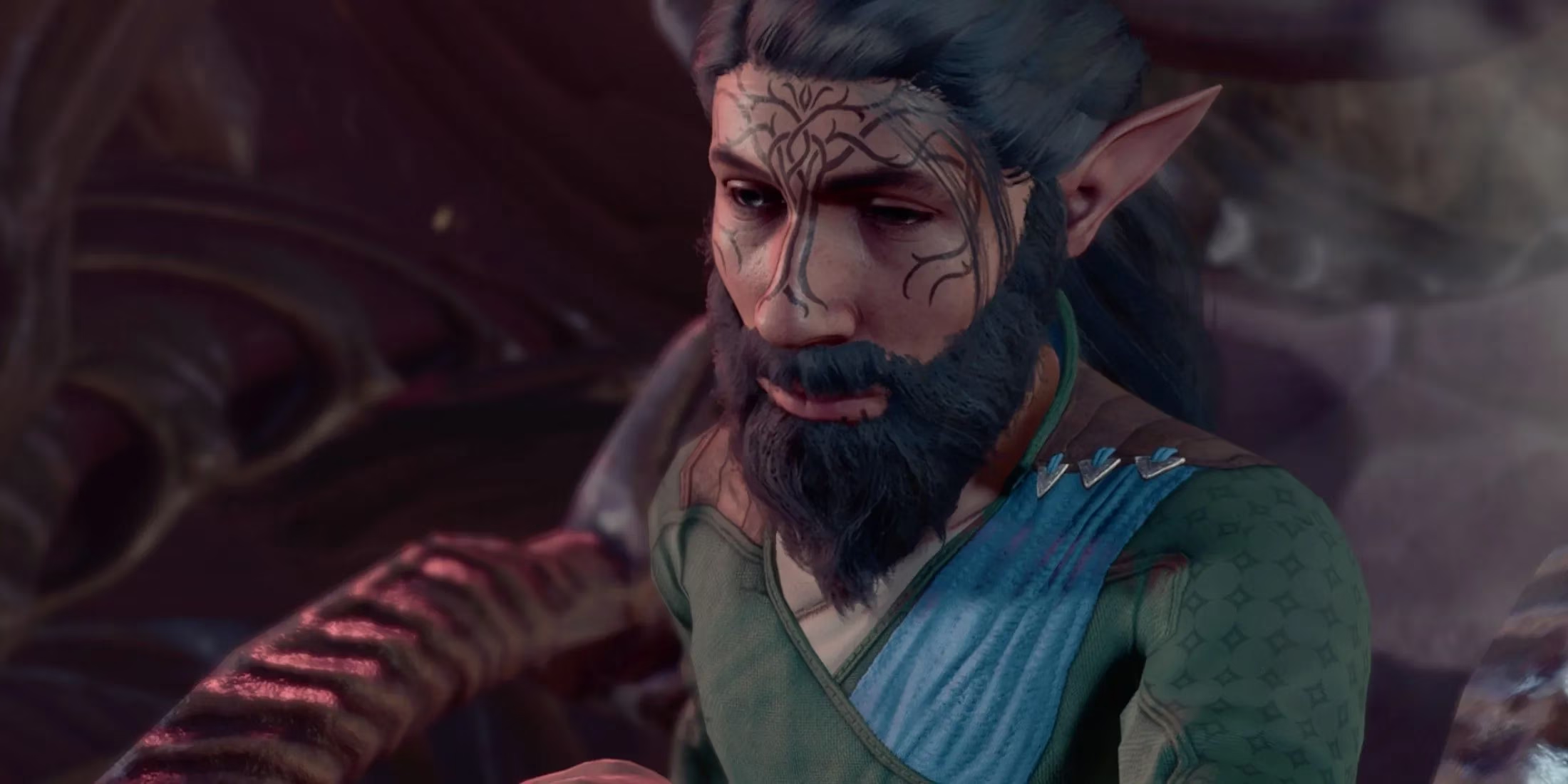
Long before the Illithid tadpoles and the crashing Nautiloid defined a new era, the name "Tav" first echoed through the rain-slicked streets of the city itself. In a community-driven prequel browser game titled Blood in Baldur's Gate, which ran in the lead-up to BG3's release, Tav was not an empty vessel but a defined individual: a detective from Baldur's Gate. This iteration of the character was tasked with unraveling a series of gruesome murders plaguing the city—a dark mystery that, perhaps unsurprisingly, led back to a figure players would come to know intimately: The Dark Urge, depicted in their default white dragonborn form.
This prequel narrative is a fascinating piece of lore, largely separate from the main game's events but rich with connective tissue. Characters like the sinister butler Sceleritas Fel make appearances, and familiar locales are referenced, building a bridge to the world of BG3. However, the most poignant and definitive element of Blood in Baldur's Gate is its conclusion. In a grim foreshadowing of the dynamic between these two potential protagonists, the story ended not with a triumphant arrest, but with a brutal murder. The Dark Urge, in a display of the sadistic nature they possessed before their BG3 amnesia, claimed Tav's life.
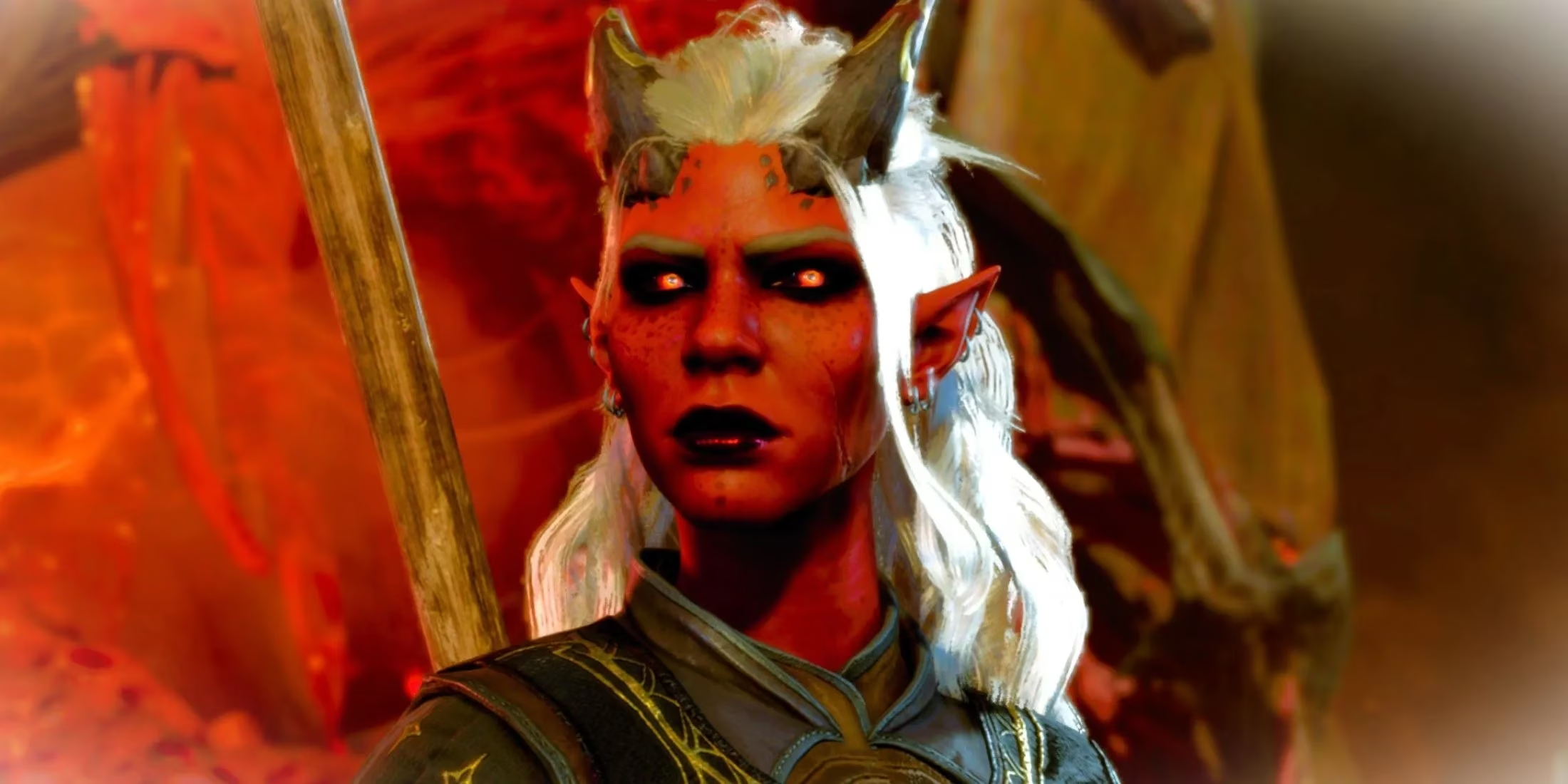
The implications of this prequel are profound. It suggests that The Dark Urge was originally conceived as the sole custom protagonist for Baldur's Gate 3, with their narrative being the central thread. Tav, the detective, was a supporting character in their origin story—a victim to be claimed. This casts the Tav most players create in BG3 in a new, melancholic light. Are they an alternate version of that detective, one who never began the investigation? Or perhaps a completely different soul who merely shares a name by cosmic coincidence?
The game itself presents a haunting echo of this dichotomy. If a player does not select The Dark Urge as their origin, they will eventually discover the Urge's body, slain by Orin, in her chamber. This discovery reinforces a compelling and tragic theme: Tav and The Dark Urge appear unable to co-exist in a single timeline. Choosing one as your avatar seemingly dooms the other to death, mirroring the finale of the prequel. It's a narrative symmetry that suggests a deep, foundational connection between these two archetypes, one of creator and victim, or perhaps two sides of the same fractured coin.
Of course, the boundless creativity Baldur's Gate 3 fosters complicates a single canonical interpretation. Players craft Tavs from every corner of the Forgotten Realms:
-
Githyanki warriors from the Astral Plane
-
Deep Gnomes from the sunless Underdark
-
Druidic Tieflings from the Emerald Grove
For these characters, the idea of being a Baldurian detective makes little sense. This suggests that, much like other player choices that diverge from established lore (such as the potential redemption of Viconia DeVir in earlier games), not every Tav's story will be considered "canon" in the grand tapestry of Faerûn's history. Larian Studios champions player agency, allowing each adventure to feel uniquely personal and valid.
Yet, as we look to the future and the possibility of future tales set in this world, the legacy of the Blood in Baldur's Gate detective may yet cast a long shadow. A potential Baldur's Gate 4 might look back and solidify a singular history—one where "Tav" is not a polymorphic hero of a thousand faces, but a specific, long-deceased investigator from the Sword Coast whose murder was a catalyst for darker events. This would enshrine The Dark Urge's journey as the central, canonical narrative, with the player's custom Tav becoming a beautiful, but ultimately non-canonical, "what-if" scenario.
Thus, Tav exists in a state of poetic duality. For the individual player in 2026, they are a perfect mirror, a silent partner in an epic of one's own making. But in the annals of Faerûn's lore, they may forever be a ghost—a detective with an unsolved case, whose greatest mystery was their own demise at the hands of a force they sought to understand. They are both everything and nothing, a legend waiting to be written and a footnote already etched in blood, forever caught between the player's boundless imagination and the grim, predetermined fate of a world that moves on, with or without them.
The haunting beauty of Tav's legacy is this very tension. It invites players to ponder: are they weaving a new tale, or are they merely glimpsing an echo of a story that already reached its end in the shadows of a city called Baldur's Gate? The answer, as always, lies in the heart of the adventurer who bears the name.