The Enduring Allure of Baldur's Gate 3's Sentient Amulet
Baldur's Gate 3 Sentient Amulet quest dazzles with its unique challenges and emotional storytelling, making it a must-experience adventure.
Even in 2026, years after its initial release, Baldur's Gate 3 continues to captivate players with its intricate world and hidden treasures. Among these, the Sentient Amulet quest remains a standout, a peculiar gem that many veterans of Faerûn refuse to skip. While the desire to complete every side quest may fade over multiple playthroughs, the allure of this chattering piece of jewelry endures. It's not just about the power it offers, but the memorable story it weaves and the universal camaraderie it fosters within the adventuring party, making it a perennial favorite in the community's collective memory.
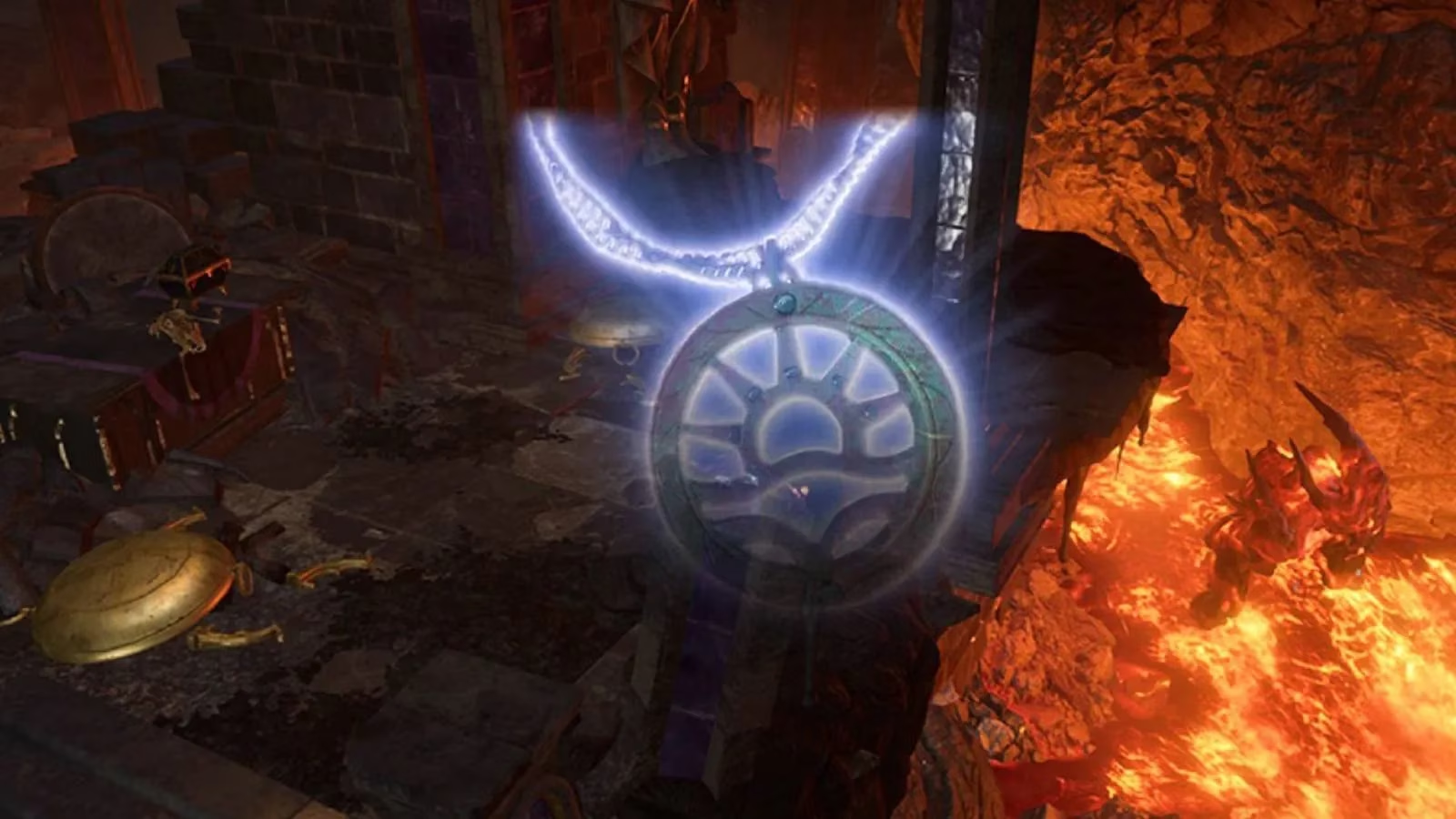
The journey to acquire the Amulet is an adventure in itself. Nestled deep within the shadowy, fungal forests of the Underdark, near the formidable Adamantine Forge, the amulet rests in a chest guarded by a seething Lava Elemental. This presents the first of several challenges. Players must either engage the fiery guardian in combat or ingeniously navigate the perilous molten rock without being incinerated. Upon opening the chest, the real test begins. A simple act of picking up the amulet triggers a magical compulsion, requiring a DC10 Wisdom saving throw. Failure results in the character bursting into uncontrollable, manic laughter—a moment of pure, unexpected hilarity that contrasts sharply with the Underdark's usual grim atmosphere.
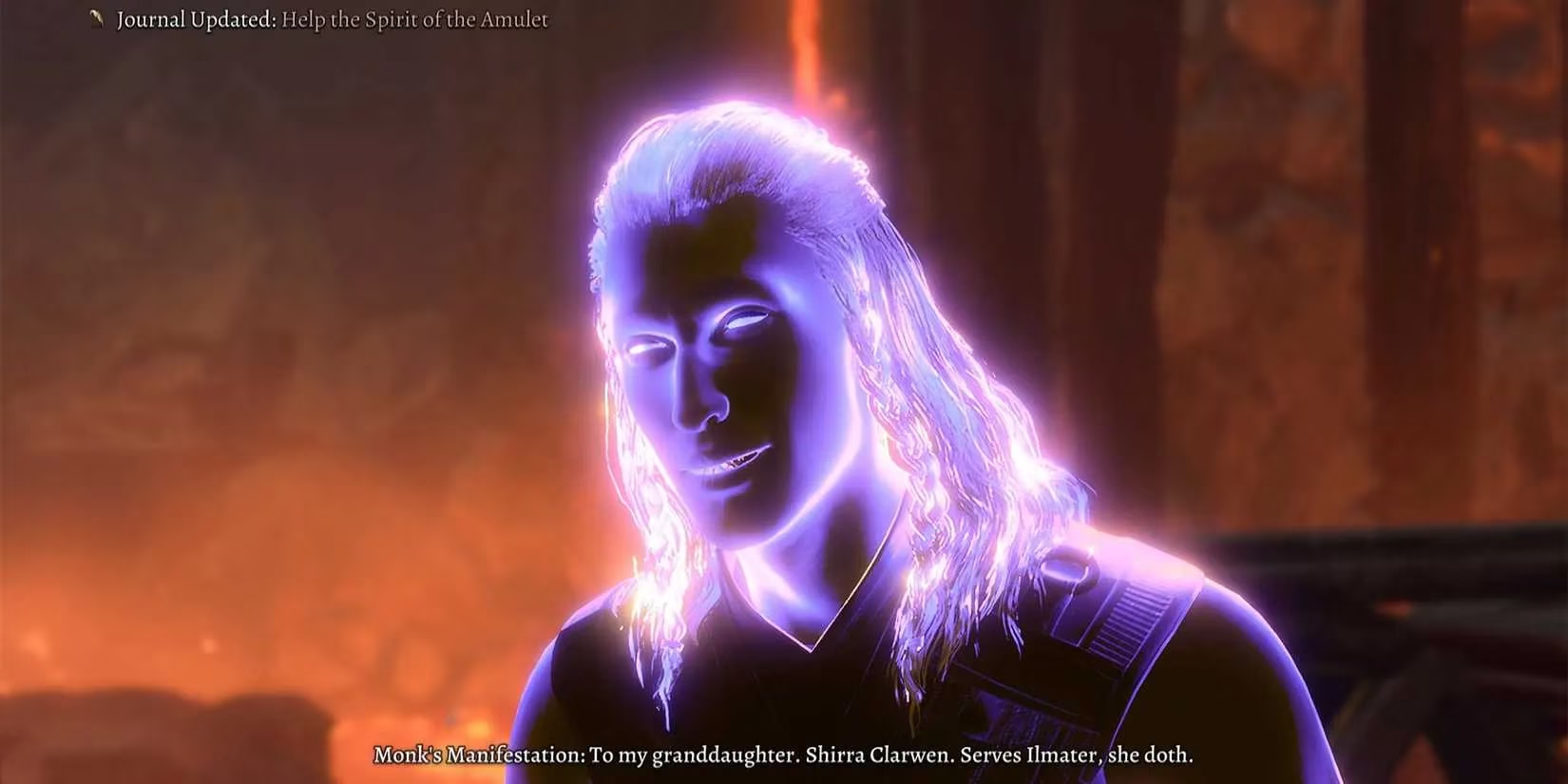
Successfully resisting the initial giggle fit summons the spectral form of a Cursed Monk. This tormented spirit pleads with the party, tasking them with a final act of redemption: returning the amulet to his granddaughter, Shirra, at the Open Hand Temple in Rivington. The amulet itself, in its base form, seems rather unremarkable for such effort. Its initial properties are modest:
-
Shatter Spell: Can cast this thunder-damage spell once per Short Rest.
-
Ki Restoration: Allows Monk characters to restore two Ki Points once per Long Rest.
-
Constant Commentary: The wearer can speak to the Cursed Monk at will.
-
A Risky Cast: Casting Shatter requires passing a DC10 or DC15 Wisdom check, adding an element of risk.
Given these traits, many might be tempted to simply feed the item to Gale, the party's resident magical consumer. However, the true potential—and the real narrative—unfolds only upon completing the monk's request.
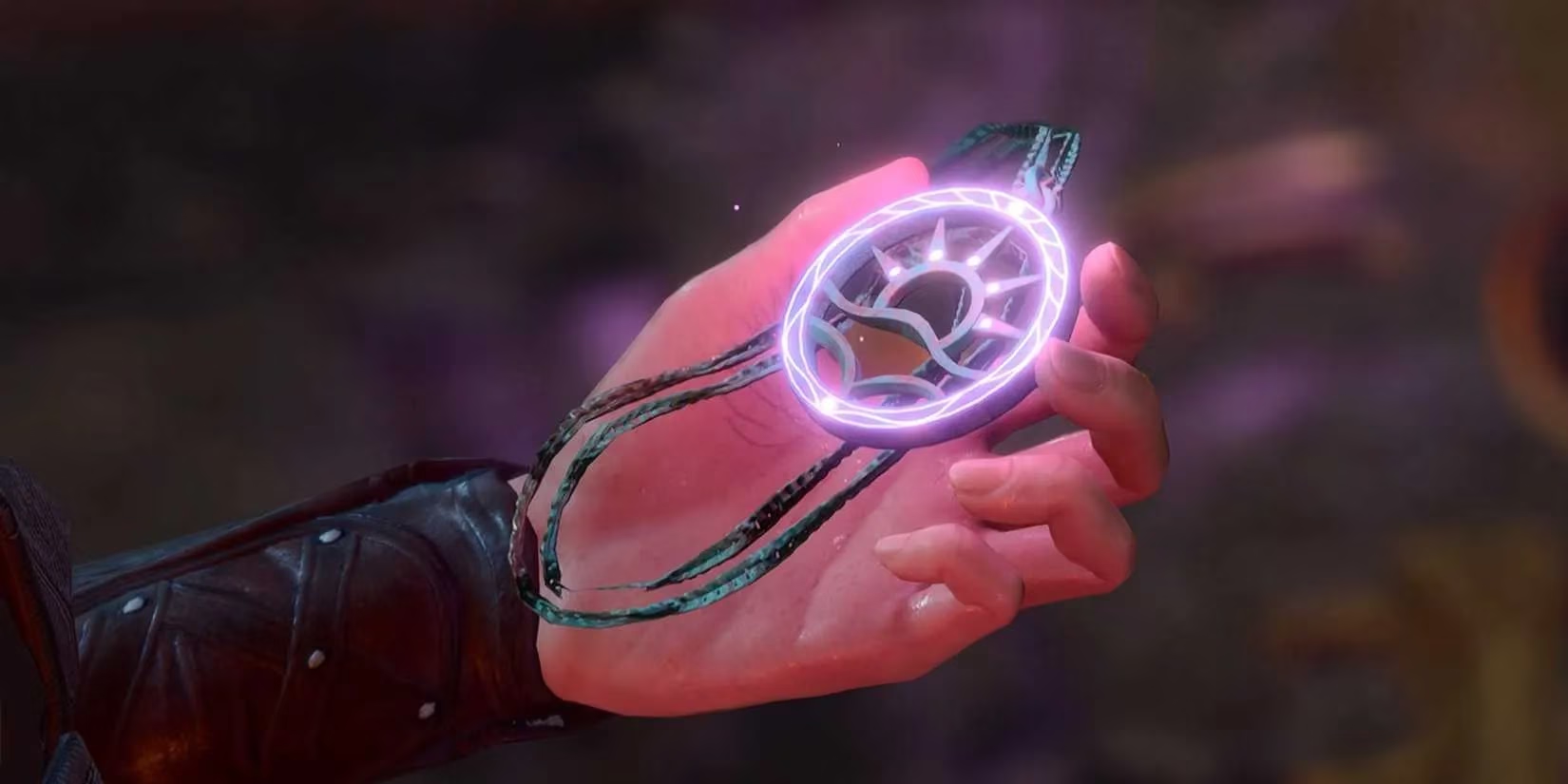
Upon locating Shirra at the temple, players face a critical narrative crossroads with tangible gameplay consequences. The Cursed Monk appears one final time, offering a choice: help him pass on by taking his curse upon yourself, or resist and force him into combat to claim an upgraded version of the amulet.
Path 1: Embracing the Curse
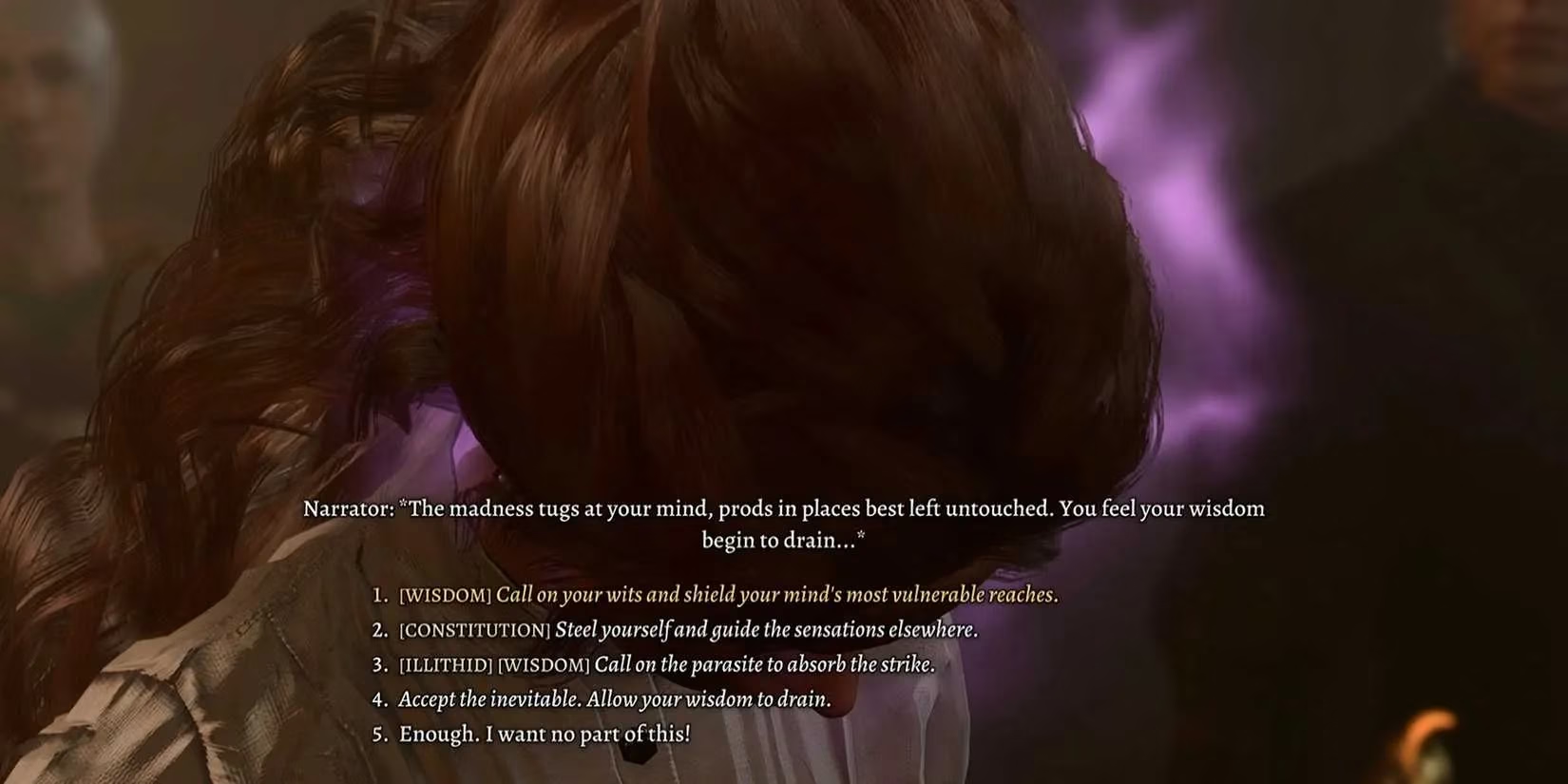
Choosing compassion and accepting the monk's burden is no simple feat. It requires passing two successive DC15 checks, either Wisdom or Constitution (or using Illithid powers to bypass them entirely). Success grants a unique, permanent boon:
-
Ability Gained: Cast Tasha's Hideous Laughter once per Long Rest.
-
Effect: Targets must succeed on a Wisdom saving throw or be afflicted with the Hideous Laughter condition for 10 turns, rendering them Prone, unable to take actions or reactions, and imposing disadvantage on certain saves.
-
The Catch: Failing either of the initial saving throws results in a permanent loss of 1 Wisdom.
Path 2: Resisting and Upgrading
Choosing to fight the monk's spirit yields a more straightforward reward: an enhanced Sentient Amulet. Its upgraded capabilities are:
-
Potent Shatter: Can cast Shatter as a 3rd-level spell (4d8 Thunder damage) once per Long Rest.
-
Superior Ki Restoration: For Monks, restores Ki points equal to their Martial Arts die once per Long Rest.
On a purely mechanical level, both rewards have their champions. Tasha's Hideous Laughter is a fantastically versatile control spell. Even in 2026, players praise its ability to trivialize dangerous encounters by incapacitating a key foe, from hulking brutes to cunning spellcasters, buying crucial time to heal or reposition. Conversely, the upgraded amulet is a cornerstone item for any Monk build. Given the Monk class's enduring reputation for high mobility and devastating flurries of blows, an item that reliably restores a significant chunk of their core resource (Ki points) is incredibly valuable. Many players reclass companions like Astarion or Halsin into Monks just to utilize this item effectively.
Yet, the most compelling reason to undertake this quest transcends simple statistics. The true, evergreen value lies in universal party approval. Successfully helping the Cursed Monk and gaining the Tasha's Hideous Laughter ability triggers a positive reaction from every single companion in the roster. This makes it an unparalleled tool for managing group dynamics. It can mend strained relationships, solidify bonds with stalwart allies like Shadowheart or Karlach, and provide a significant rapport boost for late-arriving party members such as the drow paladin Minthara or the veteran druid Jaheira. In a game where companion stories are deeply interwoven with approval, this universal goodwill is a treasure more valuable than gold.
Ultimately, the Sentient Amulet quest encapsulates what makes Baldur's Gate 3 timeless. It offers meaningful choice, character-driven storytelling, a dash of humor, and rewards that cater to both power gamers and role-players. It's a quest that creates shared stories—whether it's recounting the time Lae'zel's stern demeanor broke into giggles or how a well-timed Hideous Laughter turned the tide in a brutal boss fight. That combination of personal narrative impact and tangible, group-wide benefit ensures that, even now, players will always make the trek through the Underdark's dangers for a chance to help a chatty, cursed spirit find peace.