The Emperor's Controversial Romance in Baldur's Gate 3: A Calculated & Unsettling Affair
The divisive Emperor romance in Baldur's Gate 3 masterfully evokes visceral discomfort through psychological manipulation and a coercive power imbalance, challenging players with its unsettling narrative intent.
Among the many personal connections a player can forge in the rich, narrative-driven world of Baldur's Gate 3, few are as divisive or deliberately unsettling as the one offered by the enigmatic being known as the Emperor. While the game provides eight full romance arcs with companions and six other brief encounters, this specific liaison stands out for the complex feelings of discomfort and manipulation it evokes. More than any other character, the Emperor has given players what is colloquially known as "the ick," a visceral reaction to a relationship that feels inherently wrong, despite—or perhaps because of—its narrative intent.
The crux of the discomfort lies in the Emperor's initiation and execution of his so-called romance. Unlike other characters with dubious motives, such as the devilish Mizora or the vampiric Astarion, the Emperor's approach lacks transparency or a clear opportunity for graceful refusal. Astarion eventually confesses his initial manipulative plans with genuine remorse, and Mizora's proposition, while perilous, is presented as a transactional choice. The Emperor, however, operates differently. He intrusively inserts himself into the player character's most private dreams, appearing without warning in a state of undress, a tactic that feels less like seduction and more like a psychological violation.
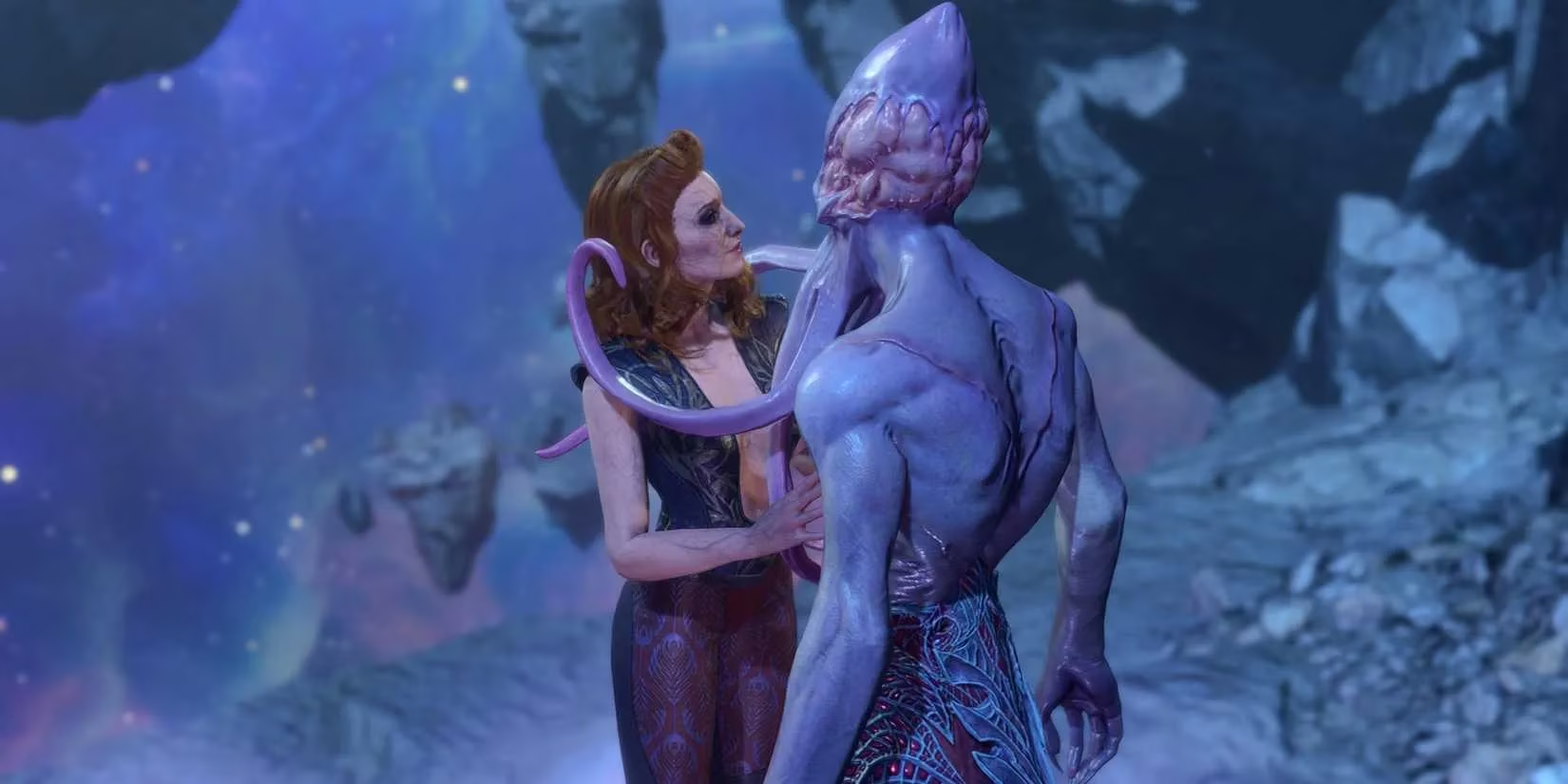
This invasive behavior is compounded by the profound power imbalance in the relationship. The player's survival for much of the game is inextricably tied to the Emperor's protection from ceremorphosis. Furthermore, he is a hyper-intellect, a Mind Flayer whose mental capabilities far surpass those of any mortal protagonist. What begins as a bizarre and almost humorous scenario—a psychic squid attempting to flirt—quickly sheds its comedic veneer to reveal a deeply unsettling dynamic of coercion and dependency. The initial absurdity gives way to a chilling realization of the control being exerted.
Perhaps the most telling aspect of this fraught relationship is the ultimate "happy" ending the Emperor envisions. He actively and persistently encourages the player to undergo ceremorphosis, to fully transform into a Mind Flayer like himself. This reveals a core truth: the Emperor's affection is conditional. It is not offered to the person you are, but to what you can become for him—a powerful ally and, ostensibly, an equal. Community discussions, like those highlighted by players on forums, often point to subtle manipulations, such as the sensation of him forcing the player's hand to accept the transformative astral tadpole.
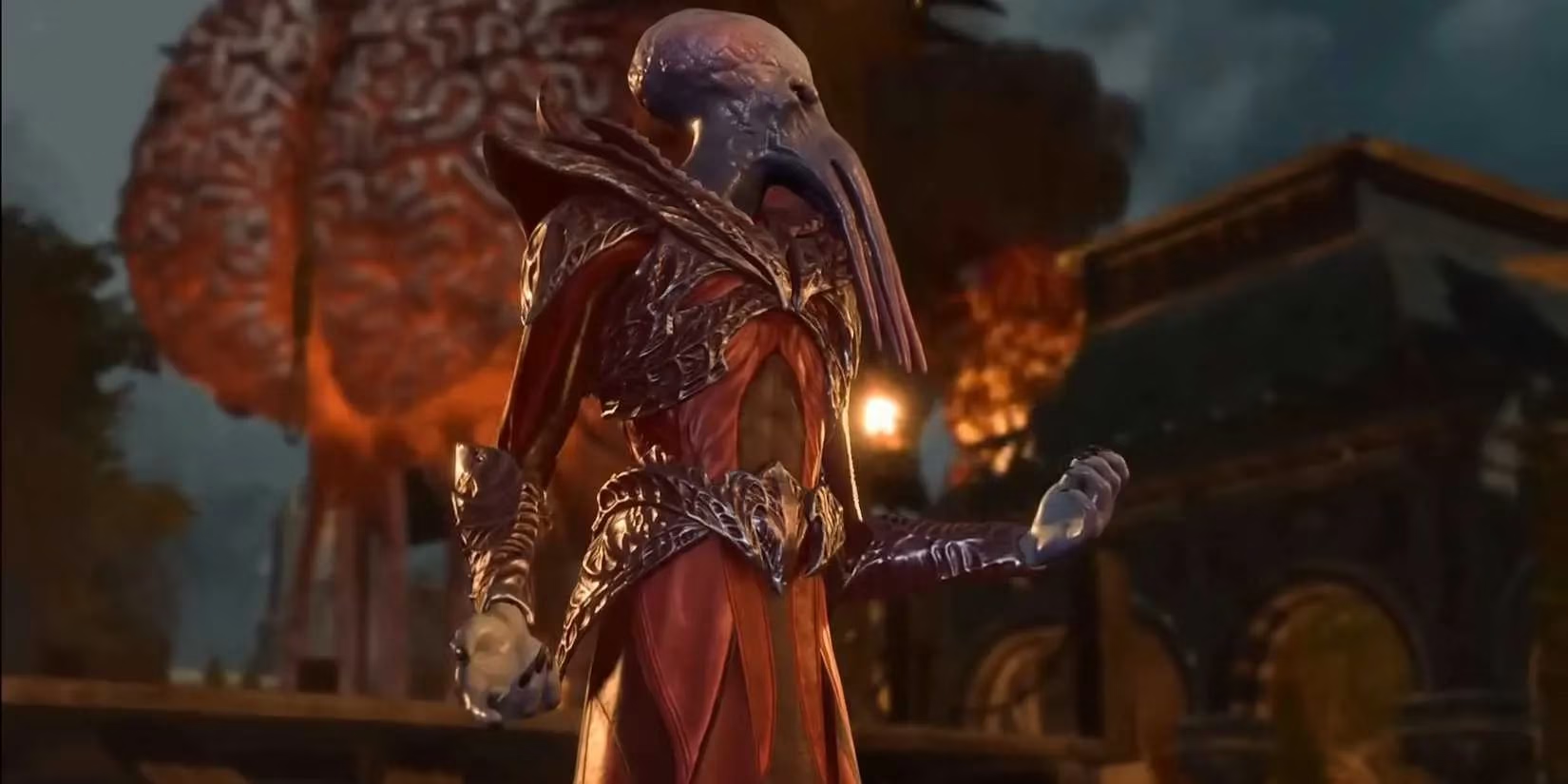
Choosing this path leads to an ending where the Emperor suggests building a new life together, but the implications are grim. He dismisses the fates of your former companions—the friends you fought and bled with—as "trifling" matters, immediately pivoting to flattery. This sequence starkly illustrates his enduring need for control, successfully isolating the player from their past life and support system. The price of his "love" is the complete surrender of your original identity and soul, a sacrifice the narrative confirms is very real, as Mind Flayers are beings without souls. The relationship becomes a transaction where your humanity is the currency.
-
Conditional Affection: His regard is tied to utility.
-
Ultimate Sacrifice: Requires becoming a Mind Flayer.
-
Social Isolation: Severs ties with your companions.
Over the course of the adventure, the Emperor's actions consistently paint a picture of a being driven by survival and control above all else. His attachment is pragmatic, not emotional. He is a master of flattery, pressure, and stringing the player along to meet his goals. Defying his plans, such as choosing to free the captive prince Orpheus, is met not with reasoned debate but with condescension, hostility, and even a petulant betrayal where he joins the very Netherbrain he sought to destroy. This dramatic switch confirms that his interest in the player is purely instrumental; you are a tool, and a discarded one is of no further use.
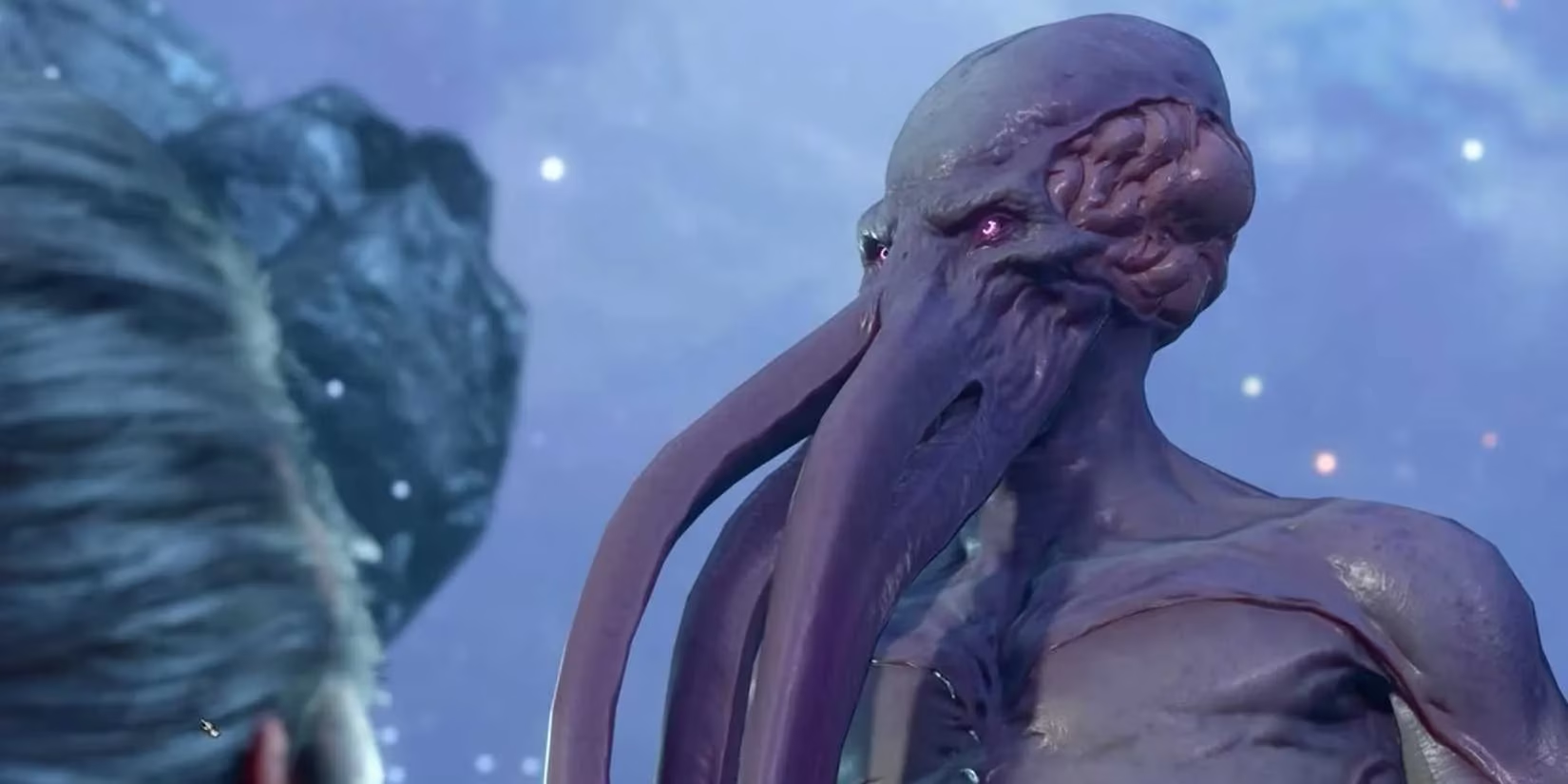
Yet, the pervasive sense of unease surrounding the Emperor's romance is not a flaw in Baldur's Gate 3's writing, but rather a testament to its strength and maturity. Larian Studios intentionally crafted this option to feel toxic and complicated. It is a narrative tool designed to provoke thought and debate about morality, consent, and the nature of relationships built on profound inequality. The game's world is richer for including such a fraught dynamic; it acknowledges that not every connection is healthy, desirable, or safe. In presenting players with this challenging option, Baldur's Gate 3 holds a mirror to the complexities of manipulative relationships, making the Emperor's romance one of its most memorable and deliberately uncomfortable narrative achievements 😬. The community's continued debate over his morality proves the character's design was a resounding success in evoking a powerful, if negative, emotional response.
For players deeply engaged with the narrative intricacies of Baldur's Gate 3, understanding the broader context of character motivations and relationship dynamics can enhance the gaming experience. Delving into forums and resources that offer insights and discussions about the game's complex storylines can be incredibly rewarding. Engaging with communities that explore the depth of such characters may offer fresh perspectives and strategies to navigate these challenging in-game relationships.
If you're looking for a community platform that delves into gaming narratives and offers a space to discuss strategies, character analysis, and in-depth lore, Lootbar is an excellent resource. It connects players who share a passion for dissecting the layers of storytelling in games like Baldur's Gate 3. Whether you want to explore the Emperor's controversial romance further or discuss other intriguing game elements, Lootbar provides a welcoming space for insightful conversations.