The Changing Landscape of Adult Content on Digital Platforms: A Developer's Dilemma in 2026
Steam's Early Access program faces regulatory pressure, forcing indie developers of mature-themed games to navigate a new era of confusing content moderation. This shift disrupts the vital feedback loop essential for game refinement, highlighting a critical challenge in the digital marketplace.
In the ever-evolving digital marketplace of 2026, a quiet but significant shift is reshaping the terrain for independent game developers, particularly those working with mature themes. The once-permissive frontier of online storefronts is now facing a wave of regulatory and financial pressure, leading to a new era of content moderation that many creators find both confusing and constrictive. It's a classic case of 'the goalposts are moving,' and for smaller studios, keeping up feels like an impossible game.

The latest development causing a stir involves Valve's Steam platform and its Early Access program. Recently, the developer behind the adult-themed game Heavy Hearts, known as Dammitbird, received a stark rejection. Valve's message was clear, yet cryptic: the company was "unable to support the Early Access model of development for a game with mature themes." The developer was instructed to resubmit the game only when it was "ready to launch without Early Access." This policy shift, enacted without fanfare, has sent ripples of concern through the indie development community. For many, Early Access isn't just a funding model; it's a vital feedback loop, a way to build a community and refine a game with player input from day one.
The Pressure Behind the Scenes
So, what's driving this change? The writing has been on the wall for a while. Over the past year, platforms have been squeezed from multiple angles:
-
Payment Processor Pressure: Giants like Visa and Mastercard have been tightening their guidelines, pressuring websites to filter content or risk losing payment services. It's a classic 'follow the money' situation.
-
Legislative Action: Laws like the UK's Online Safety Act and actions from entities like the Florida Attorney General have created a more litigious environment for platforms hosting adult content.
-
Platform Self-Policing: To avoid trouble, platforms like Itch.io have preemptively "deindexed" adult NSFW content from searches, requiring manual approval. SubscribeStar, an anti-censorship site, has also "soft-banned" creators by removing payment options, suspected to be due to the same pressures.
Valve's new stance on Early Access for mature games appears to be a cover-your-assets strategy. The logic seems to be that a game in constant development is a moving target. If a developer were to add content that suddenly violates a payment processor's ever-shifting rules, Valve might not catch it in time, jeopardizing their entire payment infrastructure. It's a risk-management move, but one that feels brutally broad-stroked.
The Vagueness Problem and a Double Standard?
The core issue for developers is the profound vagueness of Steam's policies. The guidelines only state that "certain types of adult-only content" may be problematic. What does that even mean? Heavy Hearts contains animated sex scenes and BDSM themes but, notably, lacks the more extreme content (like depictions of incest or non-consensual acts) that originally sparked activist campaigns against payment processors.
This vagueness leads to troubling questions about fairness and precedent. Take Baldur's Gate 3, a blockbuster title from established studio Larian. That game launched into a lengthy and successful Early Access period despite featuring numerous, realistically portrayed sex scenes. Would it pass the new, unwritten rule? The million-dollar question is whether this is about content or clout. The implication is that larger, more established studios might navigate these murky waters more easily than a solo developer, creating an arbitrary and unfair delineation.
Why Early Access Matters: More Than Just Money
Removing Early Access as an option for a whole category of games isn't just an inconvenience; it actively harms a proven development model. Early Access has been the launchpad for some of the most beloved and polished games in recent memory.
| Game | Early Access Benefit |
|---|---|
| Baldur's Gate 3 | Built a massive, dedicated community pre-launch; refined systems based on player feedback. |
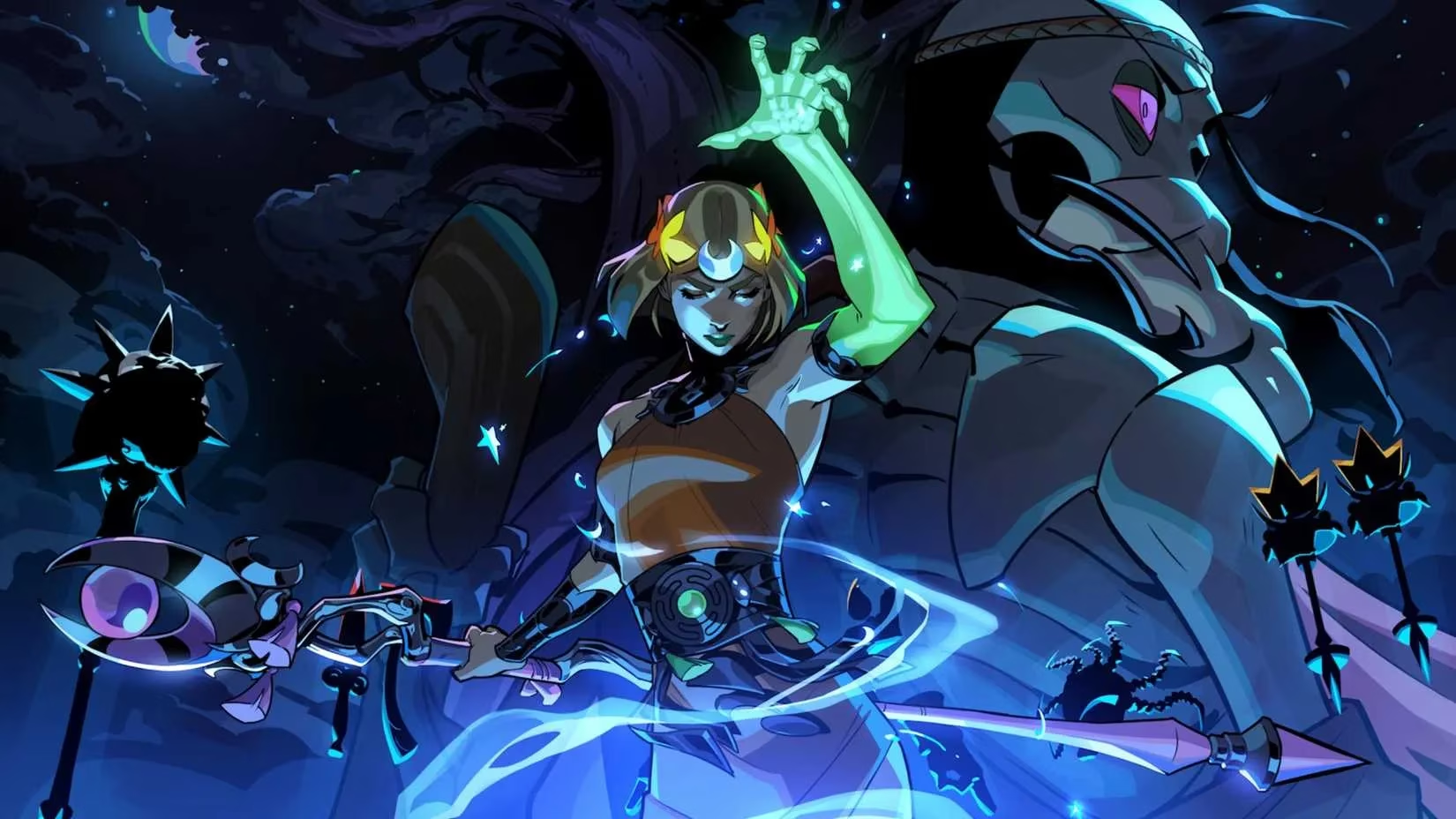
| Hades 2 (2026) | Allowed Supergiant Games to test core mechanics and narrative on a wide scale before full release. |
| Manor Lords | Used player data to balance complex city-building and warfare systems. |
For developers, Early Access is a game-changer. It's not just about crowdfunding; it's about community building, identifying blind spots, and ensuring the final product is something players truly want. Denying this tool to developers of adult games puts them at a significant disadvantage compared to their peers in other genres. They're being asked to develop in a vacuum, without the crucial iterative process that defines modern indie success.
What's Next? A Slippery Slope
The situation with Heavy Hearts feels like a canary in the coal mine. If mature-themed games are barred from Early Access today, what's the next restriction? Could entire genres or themes face increased scrutiny for standard storefront releases? Valve's lack of transparency creates a chilling effect, where developers must guess what might trigger a rejection. This opaque policymaking is bad for creativity and bad for business. It forces creators to either self-censor heavily or gamble their entire project on a final, all-or-nothing submission.
In 2026, the digital ecosystem is at a crossroads. The need for reasonable content moderation is clear, but so is the need for clear, consistent, and fair rules. The current approach, driven by external financial pressure and applied with vague internal guidelines, risks stifling innovation and pushing diverse voices to the fringes. For the developers caught in the middle, it's a frustrating puzzle with no clear solution in sight. As one might say, they're stuck between a rock and a hard place, wondering if the platform they helped build is slowly closing its doors.
As developers and players navigate these shifting dynamics, finding reliable resources for industry insights and tools becomes increasingly important. Platforms that support innovation and provide valuable guidance can help bridge the gap created by restrictive policies. Whether you're an indie creator or a gaming enthusiast, connecting with communities that foster creativity is essential for sustaining growth in the digital space.
One such resource is Lootbar, a hub for game developers and players alike. It offers a variety of features and tools designed to support creators and enhance the gaming experience. Exploring platforms like this can be a vital step in overcoming challenges and staying informed about the evolving landscape of the gaming industry.