The Best Ensemble RPGs: Where Party Dynamics Define the Adventure
Explore the captivating world of ensemble RPGs, where collective narratives and party dynamics redefine adventure. Discover how masterful storytelling in titles like Octopath Traveler and Divinity: Original Sin 2 elevates shared journeys to unforgettable heights.
In the ever-evolving landscape of role-playing games, a distinct subgenre has carved out a dedicated following by prioritizing collective narrative over solitary heroism. These are the ensemble RPGs, where the journey is defined not by a lone protagonist but by the intricate dynamics, diverse backstories, and collective growth of an entire party. As the gaming industry in 2026 continues to explore sophisticated storytelling, the legacy of titles that masterfully weave multiple character threads into a cohesive tapestry remains more relevant than ever. From classic JRPG homages to groundbreaking CRPGs, these games prove that the most memorable adventures are those shared.
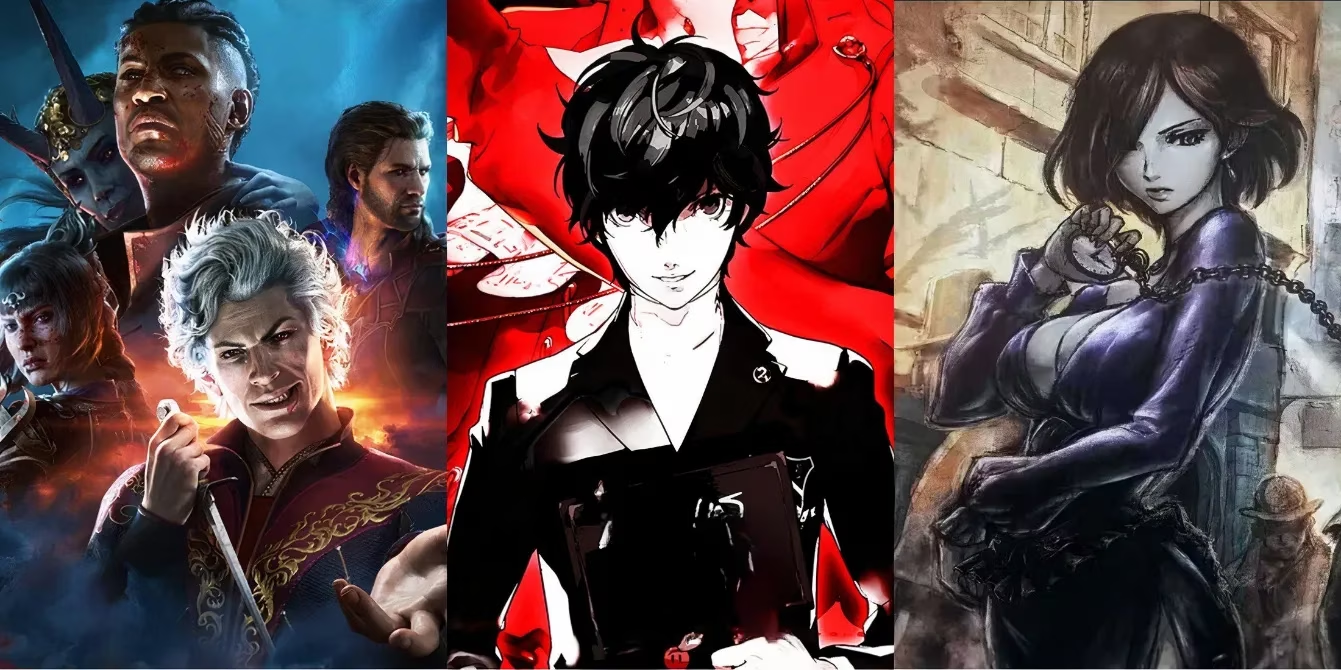
🎭 Octopath Traveler & Its Definitive Sequel: An Eight-Fold Love Letter
The late 2010s represented a period of longing for fans of traditional Japanese role-playing experiences. As many franchises pursued mainstream trends, a beacon of classic design emerged with Octopath Traveler in 2018. This title served as a heartfelt homage to the golden age of JRPGs, structured around eight distinct protagonists, each with their own complete narrative arc. Players could begin their journey with any character, though scholars often recommend starting with the erudite Cyrus for a smoother introduction to the game's mechanics. While the original faced some criticism for its segmented storytelling, its core innovation—placing equal weight on every party member—was undeniable. This foundation was perfected in its sequel, which arrived as a monumental refinement. The follow-up enhanced combat systems, elevated graphical presentation, and, most importantly, deepened the interwoven connections between the eight travelers. It transformed the formula from a novel experiment into the platonic ideal of a multi-protagonist narrative, proving that an ensemble cast could carry a game to critical and commercial acclaim.
⚔️ The CRPG Renaissance: Larian's Ensemble Mastery
Long before their industry-shaking success with Baldur's Gate 3, Larian Studios was honing its craft in crafting compelling party-based narratives. Divinity: Original Sin 2 stands as a testament to this expertise. The game offers unparalleled freedom, allowing players to either craft a custom avatar or immediately step into the boots of one of its richly defined pre-made characters. Each origin character—like the haunted elf Sebille or the scholarly lizard-man The Red Prince—is fully integrated into the world's lore, with unique dialogue, quests, and personal stakes. The genius lies in the game's permission to switch control between party members, ensuring the narrative spotlight is shared. This design philosophy, where "freedom is the name of the game," creates a dynamic where the party itself, a ragtag group of misfits, becomes the true protagonist. Their interactions and conflicting goals form the beating heart of the adventure.
🌟 Baldur's Gate 3: The Ensemble Benchmark
By 2026, Baldur's Gate 3 is widely regarded not just as a phenomenal game, but as a landmark achievement in digital adaptation of tabletop role-playing. Its triumph lies in its masterful translation of the Dungeons & Dragons 5th edition ruleset and, more profoundly, in its unforgettable companion characters. While players create a custom Tav or choose an origin hero like the vampiric spawn Astarion, the game's soul resides in the party members recruited along the way. Each companion is a novel-worthy character with deep-seated desires, complex moralities, and extensive personal quests that can dramatically alter the story. They are not mere followers; they are allies with agency, whose approval, romance, and betrayal feel intensely real. This emphasis on strong player companions set a new benchmark for character writing in CRPGs, demonstrating that an ensemble's depth could elevate a game from great to legendary.
🕵️♂️ Persona 5: Style and Substance in the Phantom Thieves
When discussing modern ensemble casts, the Phantom Thieves of Hearts from Persona 5 are invariably at the forefront. This game captured a global audience with its ultra-stylish presentation, but its enduring legacy is built on the foundation of its character writing. Each member of the Phantom Thieves—from the rebellious leader Joker to the nuanced navigator Futaba—is granted meticulous development across both their supernatural heists and daily "Confidant" social links. The game spends hundreds of hours making players care about these characters as friends, exploring their traumas, dreams, and growth. The ensemble doesn't just fight together; they live, laugh, and struggle together, creating one of the most compelling depictions of friendship in gaming history. Their collective dynamic is the engine that drives both the gameplay loop and the emotional core of the story.
💎 Underrated Classics: The Pioneers of Party-Focused Narratives
The history of ensemble RPGs is dotted with pioneering titles that dared to decentralize the hero's journey long before it became a more common trend.
-
SaGa Frontier (1997): Amid Square Enix's legendary late-90s output, this title was a trailblazer. Its "Free Scenario System" let players choose from several protagonists at the start, each embarking on a wholly unique adventure within the same interconnected world. The player's party was a fluid ensemble, assembled from a vast roster, granting an incredible sense of agency and replayability for its time.
-
Wild Arms 2 (1999): In a crowded fantasy market, this series stood out with its wild west and sci-fi motifs. The second entry doubled down on this uniqueness by refusing to crown a sole hero. Instead, it presented six protagonists with roughly equal narrative weight, forcing the story to focus on team-building and collective purpose over a chosen one's destiny.
-
Suikoden II (1998): Often hailed as a masterpiece overshadowed by its contemporaries, this game's ensemble scope was breathtaking. While guided by a silent main character, the true protagonists are the "108 Stars of Destiny"—a massive, diverse cast of recruits who join the player's army, base, and party. The scale of managing relationships with this huge ensemble, where every character has a name and story, was an ambitious feat that remains unmatched in its commitment to a collective narrative.
📊 Why Ensemble Casts Resonate: A Comparative Look
| Game | Ensemble Focus | Key Innovation | Legacy in 2026 |
|---|---|---|---|
| Octopath Traveler II | 8 Equal Protagonists | Interwoven Path Actions & Crossed Paths stories | The gold standard for multi-threaded JRPG narratives. |
| Baldur's Gate 3 | Companion Depth & Agency | Cinematic, reactivity-driven companion storytelling | Redefined player expectation for party member autonomy. |
| Persona 5 Royal | Social Link/Confidant System | Deep life-sim bonding mechanics outside of combat. | Proved character relationships can be a primary gameplay pillar. |
| SaGa Frontier | Non-linear Free Scenario System | Multiple distinct main character campaigns. | A classic reference point for narrative freedom and replayability. |
As the role-playing genre progresses, the lessons from these standout ensemble RPGs continue to influence new projects. They demonstrate that power of a shared narrative journey, where the growth of the party supersedes the power fantasy of a single hero. In an age where players seek deeper connection and more personalized stories, the ensemble RPG format offers a rich, multifaceted experience that celebrates diversity, camaraderie, and the complex truth that no one saves the world alone. The legacy of these games ensures that the focus on a cohesive, memorable party will remain a vital and cherished approach to storytelling in interactive entertainment for years to come.