Ranking Baldur's Gate 3 Companion Quests from Least to Most Impactful
Baldur's Gate 3 companion quests and memorable storytelling elevate this RPG masterpiece, making every character arc deeply impactful and unforgettable.
As I look back on my adventures in Faerûn from the vantage point of 2026, I find myself constantly returning to the heart of what made Baldur's Gate 3 such a landmark experience. The graphics were beautiful, yes, but what truly captured my imagination—and the Game of the Year award in 2023—was something deeper. It was the fun, tactical combat, the incredibly layered storytelling that felt uniquely mine, and, above all, the companions. These characters weren't just party members; they were the soul of the journey, the bread and butter of every decision, every victory, and every heartbreaking loss. Their individual quests weren't mere side activities; they were transformative arcs that reshaped my understanding of the world and of them. So, while debating who makes the best romantic partner is a matter of personal taste, I find myself asking a more compelling question years later: which of these companion quests truly stands the test of time as the most memorable and well-crafted?
8. Jaheira: A Quest That Arrived Too Late
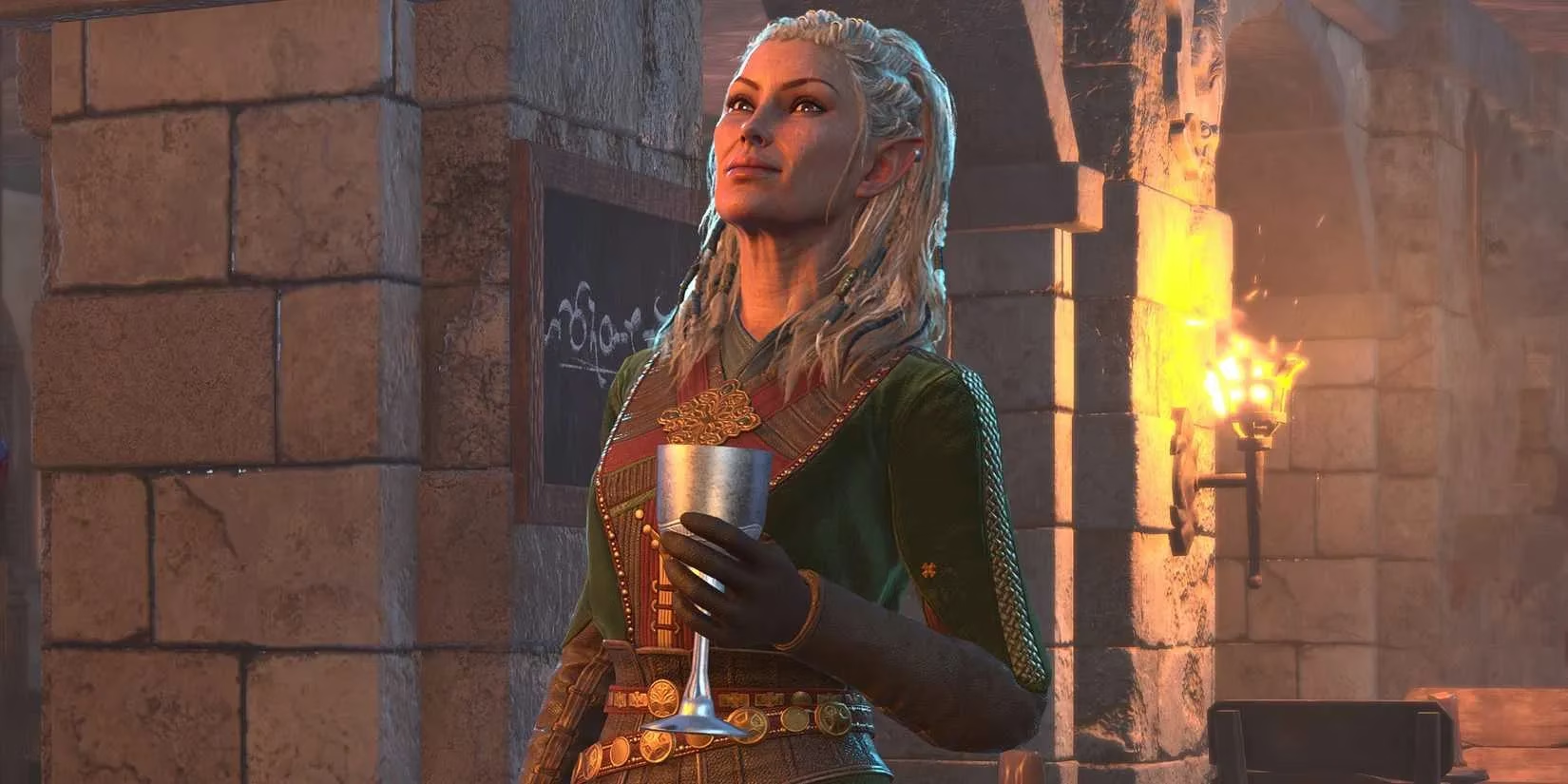
I first met the legendary Harper, Jaheira, in the shadow-shrouded Last Light Inn during Act Two. She was a formidable presence, but so consumed by the threat of Ketheric Thorm that her personal story didn't truly begin until we reached the city of Baldur's Gate itself in Act Three. Her quest sent me searching for her old friend, Minsc, who was causing chaos under the alias "The Stone Lord." Now, don't get me wrong—tracking him down through the city's underbelly and the Ye Olde Bank of Baldur's Gate was a fun diversion. Who doesn't want to adventure with these iconic characters from the series' past? But I couldn't shake the feeling that the quest lacked weight. It was introduced so late in the game that I hadn't built enough of a connection to this specific goal. There were no real consequences for ignoring it, and its primary reward was simply another companion. I kept thinking: what if this search had been foreshadowed earlier? What if Jaheira's worry for her lost friend had been a subtle thread woven through Act Two? The payoff would have felt so much more satisfying.
7. Wyll: The Blade Without His Own Story?
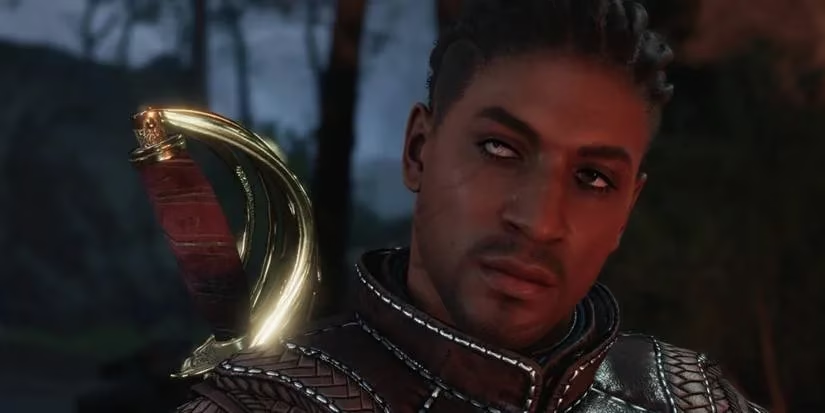
Wyll's situation always struck me as strangely tragic. Here is a man literally called "The Blade of Frontiers," the son of Grand Duke Ulder Ravengard, a figure woven into the very political fabric of the city. And yet, in his own story, he felt... optional. I remember on one playthrough, I had him wait at camp while I hunted Karlach, parleyed with his fiendish patron Mizora, and even braved the trials of the Wyrmway to save his father. He didn't seem to mind! His questline, which touches on duty, sacrifice, and reclaiming one's soul, has all the ingredients for greatness. But the execution left me feeling like an observer in his life, rather than a partner in his struggle. It's as if his personal narrative was detached from the man himself. For a character with such potential, his passive role in his own destiny felt like a missed opportunity. Where was the fire, the personal stake? Justice for Wyll, indeed—he deserved to be the driving force of his own tale.
6. Gale: The High Cost of a Divine Breakup
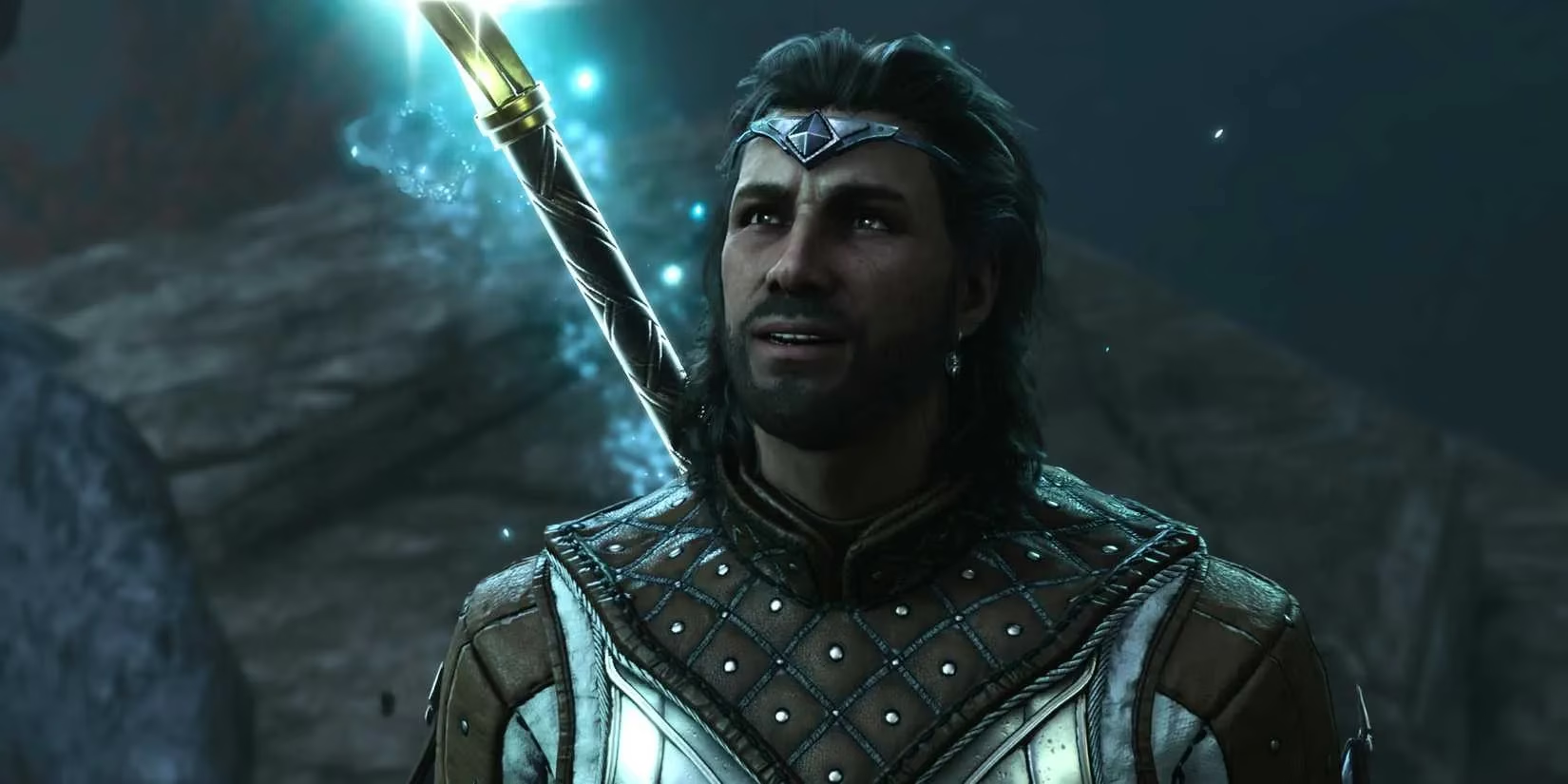
Ah, Gale. The wizard with a heart of gold, a talent for the arcane, and the most toxic ex in the multiverse: Mystra, the goddess of magic herself. His quest is a masterclass in exploring ambition and the scars of a broken relationship, but on a cosmic scale. The central tension is gripping: pursue godlike power through dangerous Netherese magic, or seek forgiveness from the deity who essentially told him to kill himself? I found his obsession poignant and frustrating in equal measure. Here was a man who had just stabilized the lethal orb in his chest, yet he was still willing to detonate it at his ex-goddess's suggestion! His story is a powerful allegory about letting go of a past that defines and diminishes you. The most satisfying resolutions, I found, were either romancing him and showing him a different kind of love, or, perversely, encouraging his godly ambition—both paths that finally broke Mystra's hold on him. It's a quest that asks, how much of yourself are you willing to sacrifice for power or for approval?
5. Karlach: A Story That Breaks Your Heart
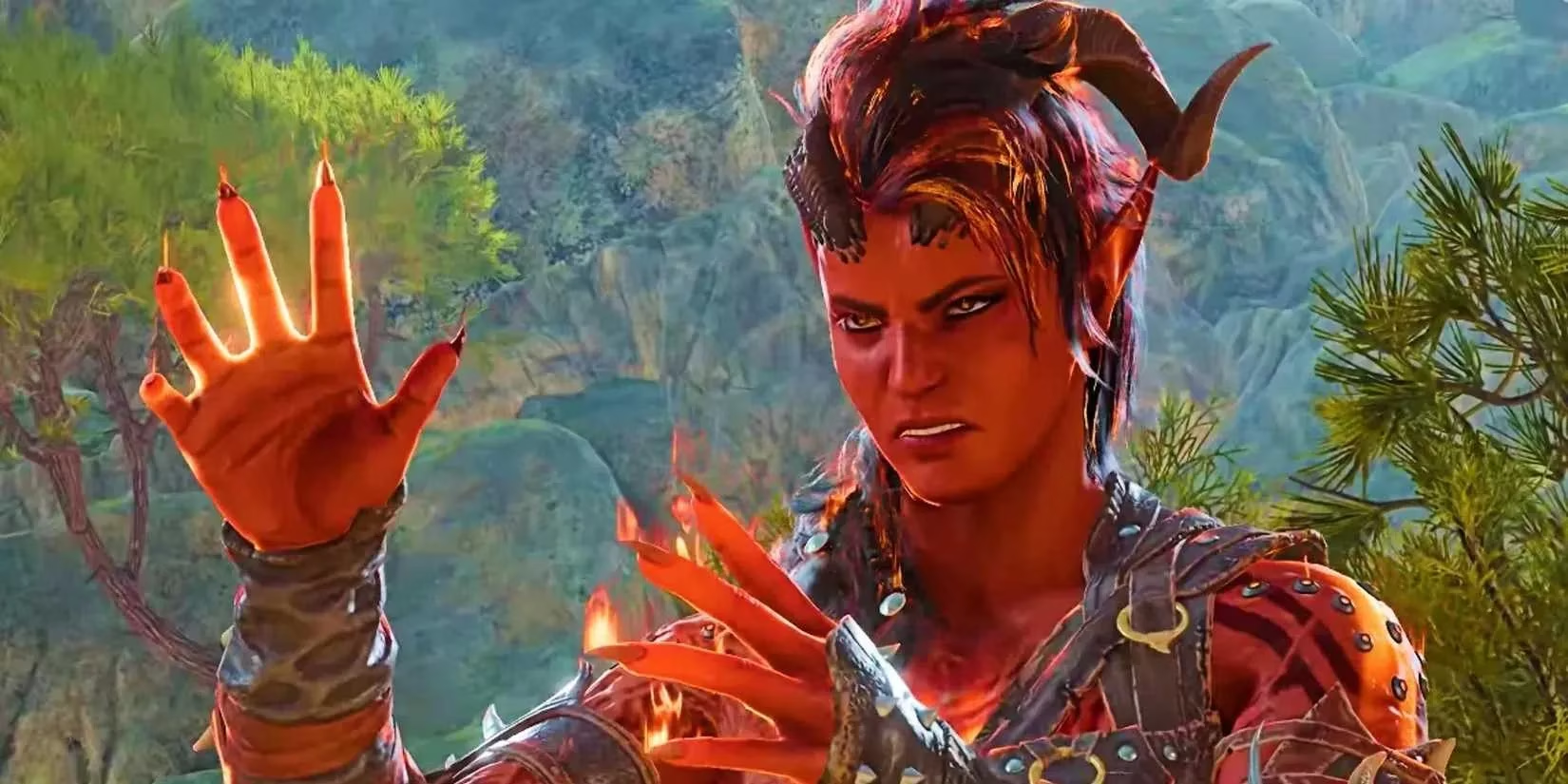
If you want to talk about emotional impact, look no further than Karlach's quest. From the moment I met this tiefling with a heart literally too big for this world, I was invested. Her journey to find Infernal Metal to repair her engine, to simply be able to touch someone without burning them, is a visceral, heartbreaking drive. The moment when the kind-hearted smith Dammon delivers the final, cruel diagnosis—that there is no true fix, only a delay—is one of the most devastating in the game. Her subsequent breakdown, her rage against the unfairness of it all, is performed with such raw power that it stays with you. Her quest forces a brutal lesson: carpe diem. Seize the day, because life is fragile and must be lived with passion in the moment. The tragedy is compounded by her initial role as Wyll's target, leading many first-time players to lose her before they ever knew her story. A quest with no happy endings, but one that makes you feel the precious weight of every single one.
4. Halsin: The Keeper of the Land
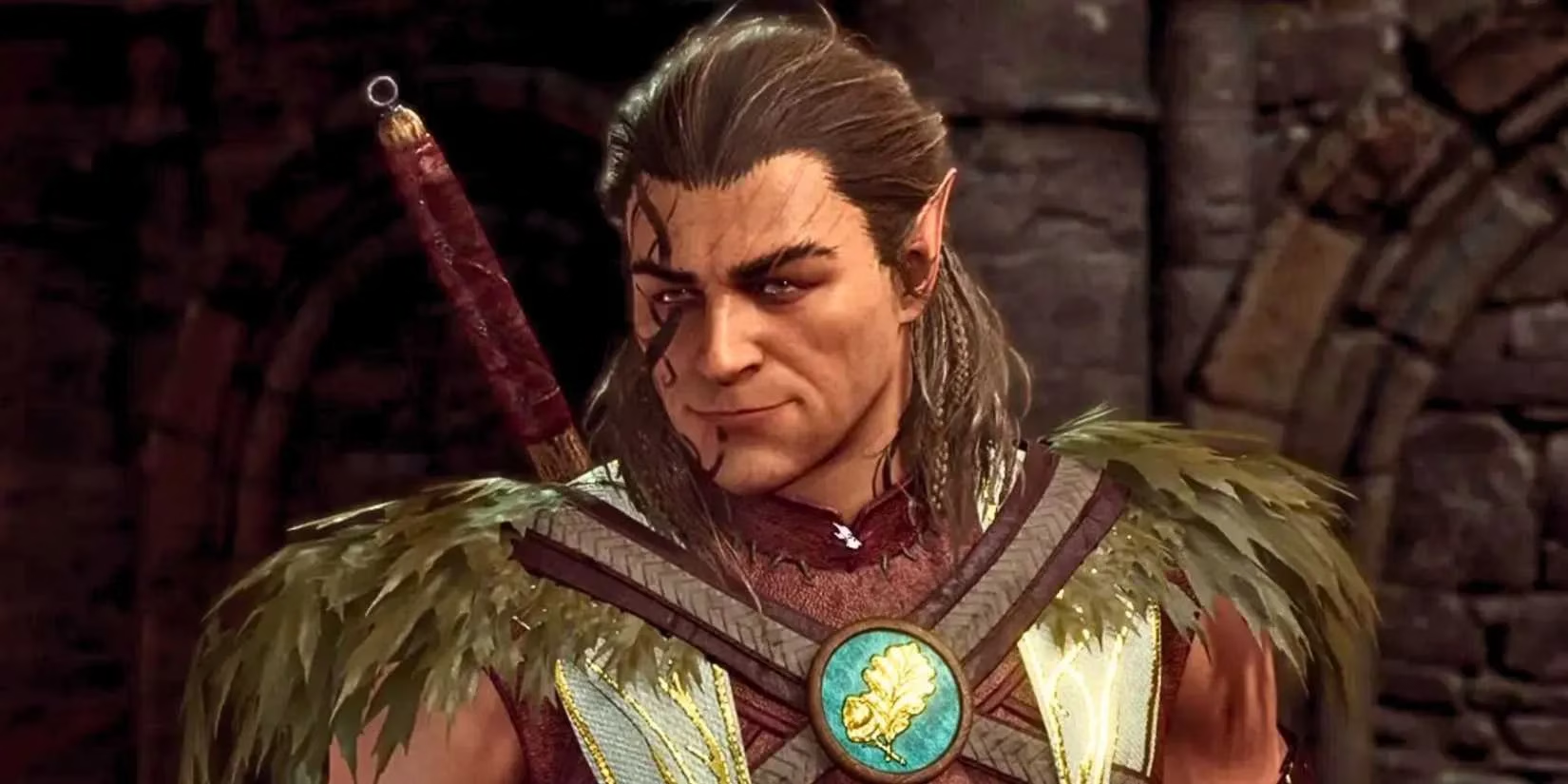
Halsin's quest may be singular, but its importance to the world of the game is immense. Joining in the latter part of Act One, his driving purpose becomes clear as we enter the cursed lands of Act Two: Lift the Shadow Curse. Unlike Jaheira's quest, this goal is established immediately, creating a tangible, environmental stake. Healing the land of Reithwin isn't just a task; it feels like a moral imperative. The quest itself delivers some of the most memorable sequences in the act. Investigating the macabre House of Healing and then defending a portal from waves of shadows while Halsin ventures into the spiritual realm to rescue Thaniel are tense, exciting, and narratively rich. They perfectly embody the druid's connection to nature and his steadfast resolve. My only regret is that after this monumental act of healing, Halsin's direct connection to the main plot in Act Three fades. His personal story feels complete, but it leaves him without a clear anchor in the finale, which is a shame for such a noble and powerful presence.
3. Astarion: Breaking the Cycle
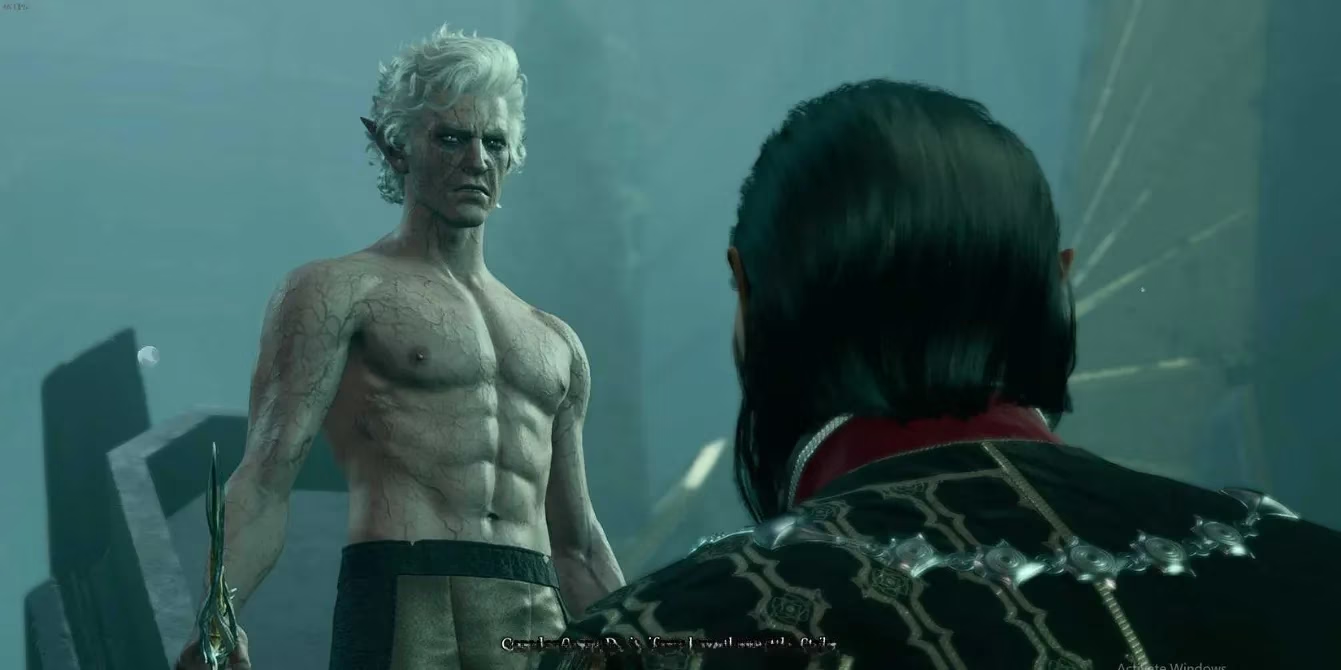
What do you do with a character defined by two centuries of brutal abuse, manipulation, and trauma? Astarion's quest provides a stunning answer. Initially, he's all sharp edges and bitter self-interest, a product of his torment under the vampire lord Cazador. His quest, uniquely, has almost nothing to do with the Absolute or the main plot. It is a purely personal story of vengeance, fear, and the chance for redemption. Unraveling the mystery of Cazador's grand ritual—the Rite of Profane Ascension—is a dark and gripping tale. But the true brilliance lies in the choice it offers. I could help him claim the power of his abuser, becoming the very monster he hated. Or, I could try to convince him to break the cycle. Talking Astarion down from the ledge of ultimate power, convincing him that he is more than what he was made for, is one of the most rewarding narrative payoffs in the game. It's a story about healing, about choosing not to let your trauma define your future. When paired with a Dark Urge character fighting their own nature, the themes of resistance and self-forgiveness become utterly profound.
2. Lae'zel: A Worldview Shattered
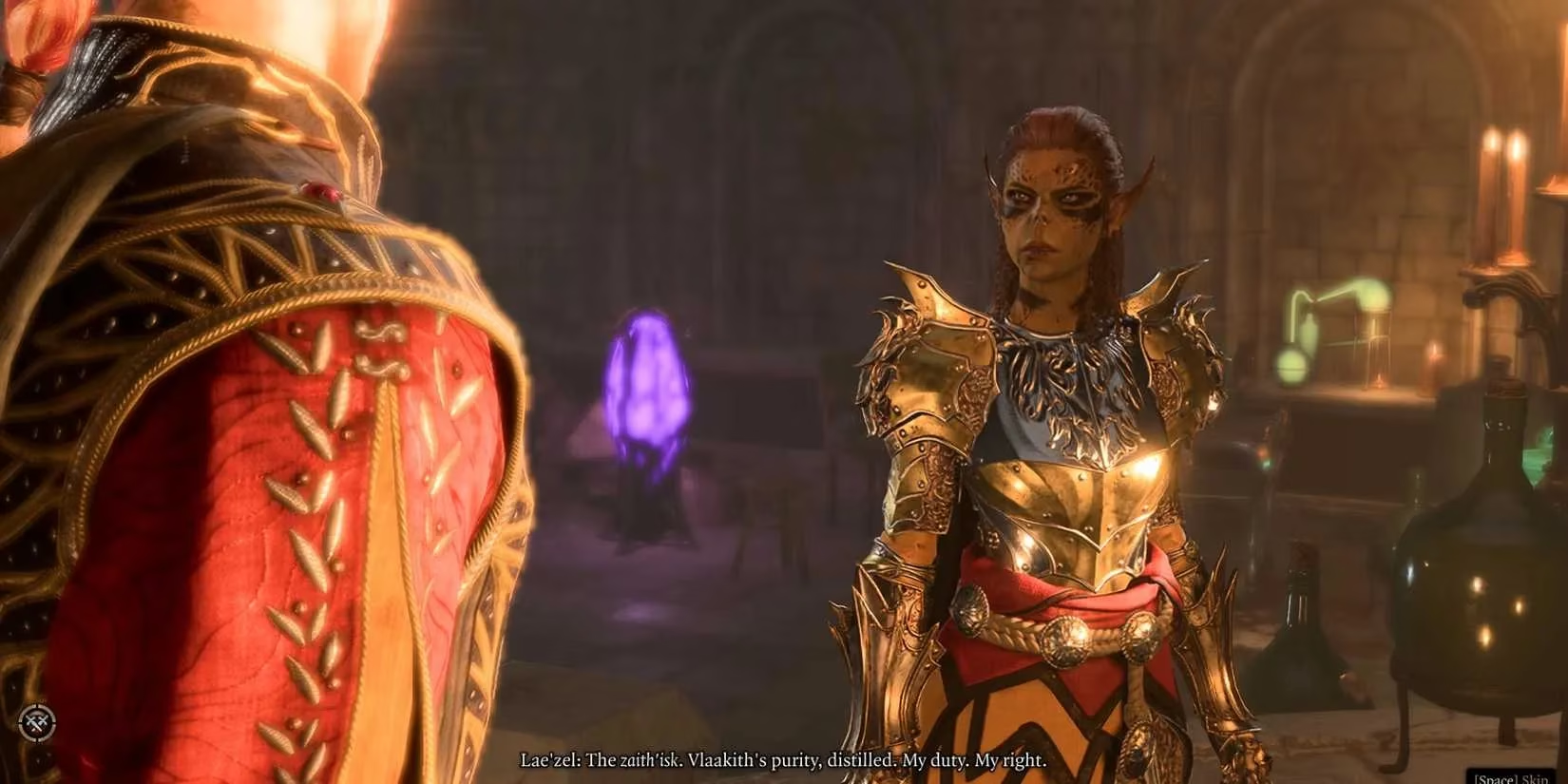
Few character arcs are as dramatic and well-earned as Lae'zel's. We meet her as a fanatical, ruthless soldier of the githyanki, utterly devoted to her queen, Vlaakith. Her initial quest seems straightforward: find a githyanki crèche and use their zaith'isk to purge the tadpole. Simple, right? What follows is a masterstroke of betrayal and revelation. The crèche, Crèche Y'llek, is one of the game's best-designed areas—a hostile, alien environment full of danger and intrigue. And there, her faith is systematically destroyed. Not only is there no cure, but her own people brand her a traitor and turn on her. This is just the first crack. In Act Three, the foundation of her entire life shatters as she uncovers the truth about the legendary hero Orpheus and Vlaakith's despotic, deceitful reign. Her quest organically evolves from a search for a cure to a revolutionary's crusade for freedom. Watching this fiercely proud warrior question everything she's ever believed, grapple with disillusionment, and ultimately choose a new path is incredible writing. Her development isn't just told; it's earned through fire and blood.
1. Shadowheart: The Beating Heart of the Story
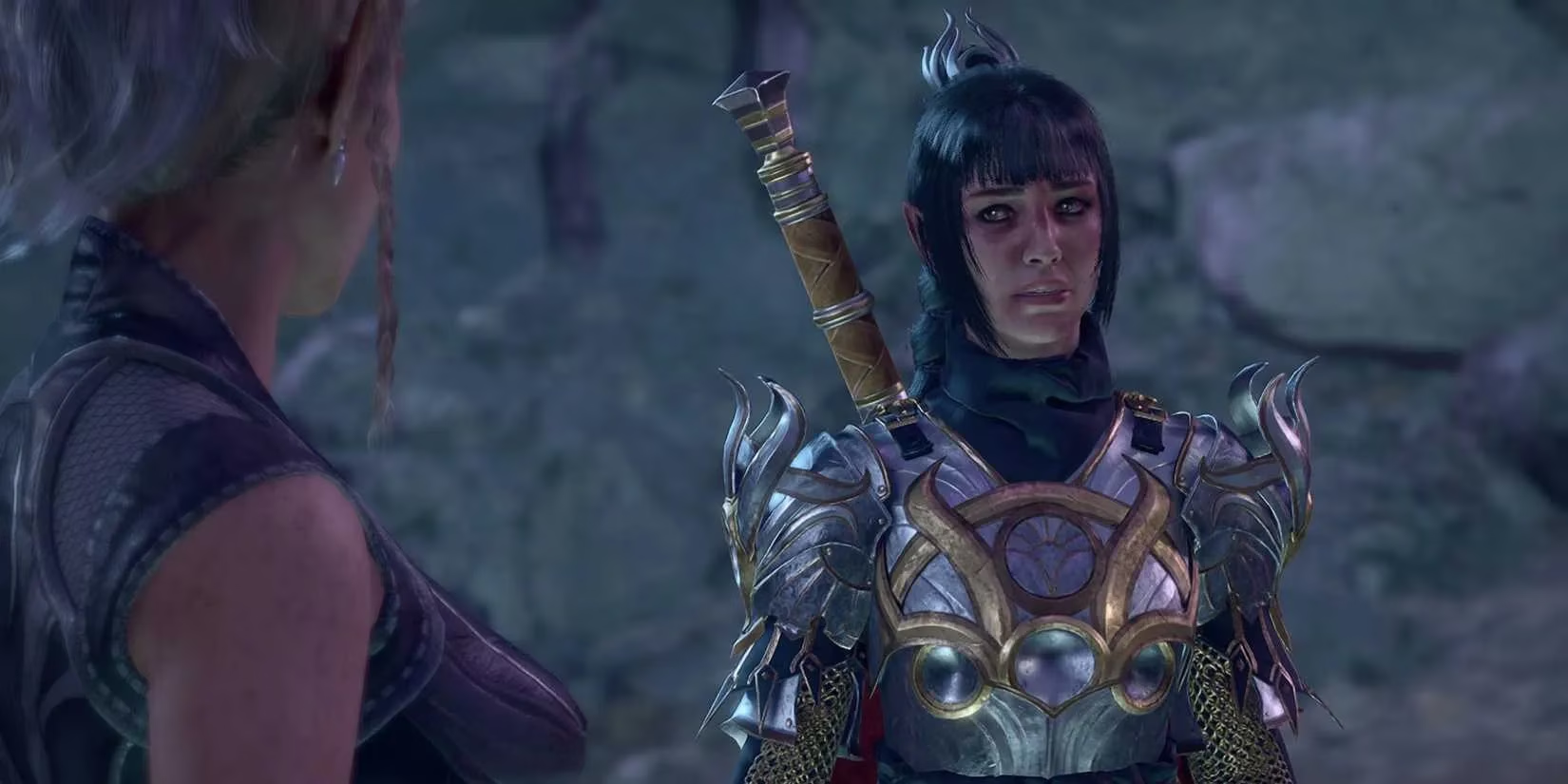
So, who claims the top spot? For me, it's unquestionably Shadowheart. Her questline isn't just a companion story; it feels like a parallel main plot woven directly into the tapestry of Baldur's Gate 3's central mystery. From the very start, her connection to the artifact, her worship of Shar, and her lost memories mark her as special. Her quest is a slow, beautiful burn—much like her romance. It's a constant commentary on the struggle between light and darkness, not just in the world, but within a single soul. The journey to the Gauntlet of Shar and the pivotal moment at the Silent Library are narrative high points. Discovering the tragic truth of her past is devastating, but her resilience in the face of it—whether she embraces the darkness or turns toward the light—is brilliantly written. What truly sets her quest apart is its depth in both moral directions. A good-aligned path is hopeful and redemptive, while an evil-aligned path is a chilling descent into fanaticism, and both feel completely fleshed-out and valid. She is so integral that playing as her Origin character feels like unlocking the definitive version of the story. In a game full of amazing characters, Shadowheart's personal journey is the most complete, the most emotional, and the one most deeply connected to the fate of the world itself. She isn't just a companion; in many ways, she's the main character.