My Paladin's Path to Ruin: How Betraying Balthazar in Baldur's Gate 3 Shattered My Oath and Forged a Better Story
In Baldur's Gate 3, the profound implications of player choices, particularly the pivotal decision regarding the necromancer Balthazar, lead to devastating consequences like oath-breaking, transforming a noble quest into a personal catastrophe of epic proportions.
Let me tell you, the sheer, gut-wrenching, world-altering weight of my decisions in Baldur's Gate 3 didn't truly hit me like a divine smite until I was staring down the ghoulish grin of that vile necromancer, Balthazar. I thought I was clever, you see? I thought I could navigate the murky waters of the Shadow-Cursed Lands with a noble heart and a pragmatic mind. I chose the Paladin, the paragon of virtue, the unshakeable bastion of justice! Oh, the irony! My journey was less one of holy crusade and more a spectacular, self-inflicted spiral into oath-breaking damnation, and it was all because of one fateful choice in the Gauntlet of Shar. This wasn't just a game moment; this was a personal catastrophe of epic proportions, and it was magnificent.
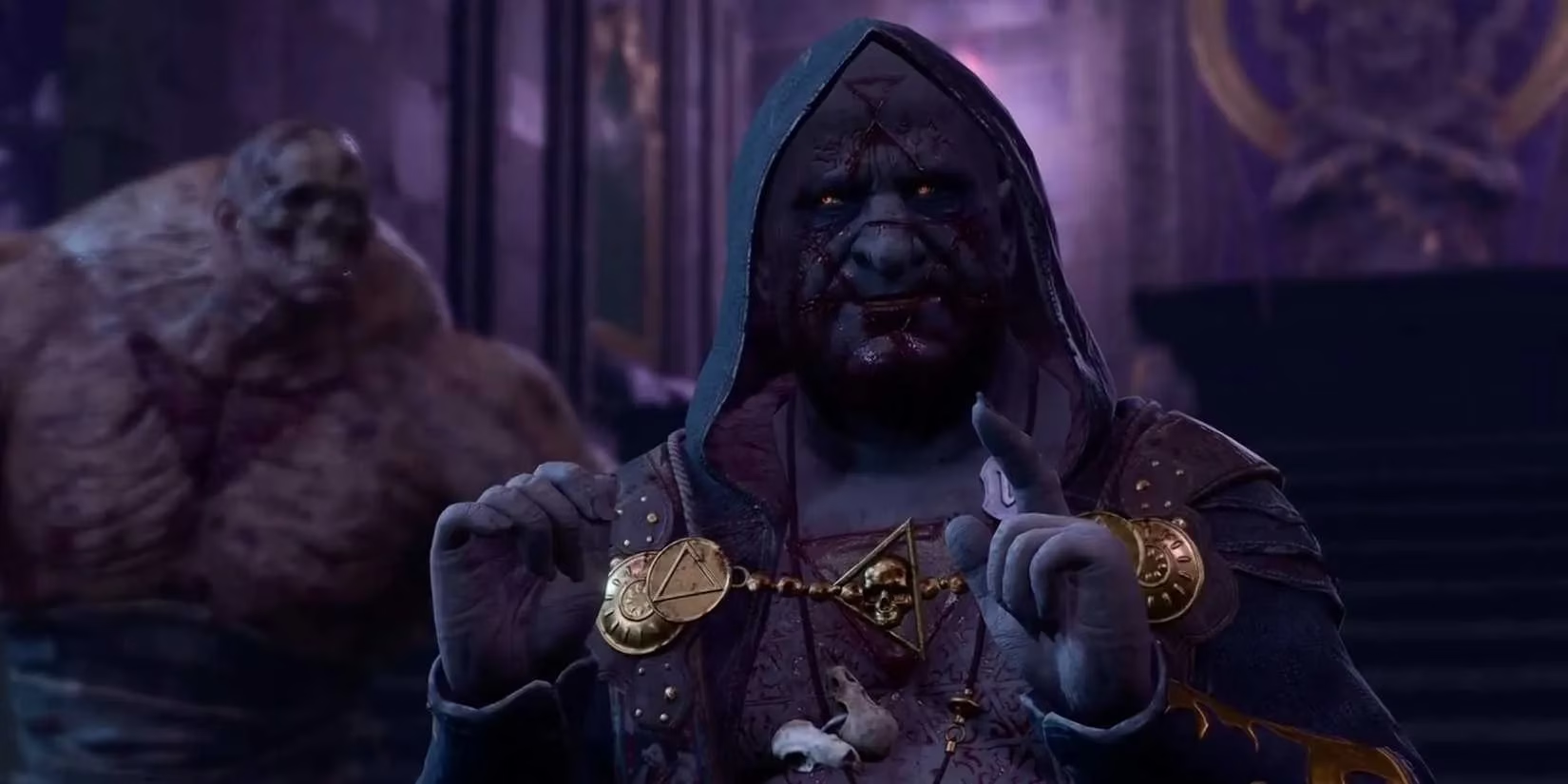
You see, my initial strategy was one of subterfuge and survival. The world was dangerous, and my party was weary. When I first infiltrated Moonrise Towers, I played the part of a loyal True Soul, a devoted follower of the Absolute. It was an act, a necessary deception to gather intelligence and survive. This charade led me to the grim, echoing halls of the Gauntlet of Shar, where I met Balthazar. The man—if you can call a creature of such palpable malevolence a man—was Ketheric Thorm's right hand, a master of necromancy tasked with guarding the source of Ketheric's power: the Nightsong. Presented with a choice, I took what I thought was the path of least resistance. I agreed. I gave my word. I, a Paladin sworn to the Oath of the Crown, with its sacred tenets of Civility, Responsibility, and above all, Keeping Your Word, looked this monster in the eye and promised to aid him. I figured I could always change my mind later, right? What's a little white lie in the face of absolute evil?
Oh, how naive I was! The game remembered. Larian Studios, those brilliant, unforgiving architects of consequence, remembered every handshake, every nod of agreement. When I finally descended into the heart of the Shadowfell and witnessed the truth—that the Nightsong was not a thing, but a person, the radiant Dame Aylin, an Aasimar who had endured a century of torment as Balthazar's prisoner—my righteous fury ignited. The calculus was simple: Balthazar was pure, unadulterated evil. He was a jailer, a torturer, a blight upon existence. Letting him take Aylin to Ketheric was unconscionable. It was a betrayal of every good and decent impulse my character supposedly possessed. So, I made my choice. I drew my sword. I betrayed my promise.
And the game responded with the most devastating click I've ever heard. Not a game over screen, but something far more personal. A notification flashed: Oath Broken. Just like that, the divine connection that fueled my powers was severed. The celestial light that once surrounded my strikes flickered and died. I was no longer a Paladin of the Crown; I was an Oathbreaker. And all because I initiated a fight against a necromantic abomination! The Oath of the Crown's obsession with order and promise-keeping deemed my morally righteous betrayal a greater sin than allying with a torturer. The hypocrisy was staggering, and the gameplay penalty was immediate and brutal.

The Aftermath: A Fall From Grace and a Rise in Narrative Stakes
This was my third transgression. My previous lapses—a moment of mercy misinterpreted as cowardice, a harsh judgment delivered in anger—had been costly warnings. But this? This was the final straw. The Oathbreaker Knight, that spectral arbiter of fallen warriors, awaited me at camp. His offer was simple: redemption for a king's ransom of 10,000 gold pieces. My party's coffers, drained by potions, scrolls, and fancy camp supplies, held a pittance. I was bankrupt in both coin and spirit.
So, I embraced the fall. My Paladin, the would-be hero, became an Oathbreaker. And here's the incredible part: the game didn't end. It got better. Richer. Deeper.
-
My character's development became profound. This wasn't a simple stat change. The weight of my failure, my repeated compromises, and my final, necessary betrayal colored every interaction. I wasn't a shiny hero anymore; I was a complex, flawed figure wrestling with the consequences of my own choices. Dialogues with characters like Jaheira or the Emperor took on new, darker nuances.
-
My gameplay was completely transformed. Gone were my Channel Oath abilities like Champion's Challenge or Turn the Tide. In their place, I gained sinister, necromantic powers from the Oathbreaker's arsenal. I could now Control Undead and harness Spiteful Suffering. My entire combat strategy, my role in the party, had to be reinvented from the ground up. It forced me to engage with mechanics I would have otherwise ignored.
-
The story felt uniquely mine. By 2026, we've seen countless RPGs promise "meaningful choices," but Baldur's Gate 3 delivers with a ruthlessness I've never experienced. That moment with Balthazar proved that my adventure was being woven from the threads of every promise kept and broken. It wasn't a binary "good vs. evil" fork; it was a tangled web of obligation, morality, and personal code where the "right" choice could still have devastating personal costs.
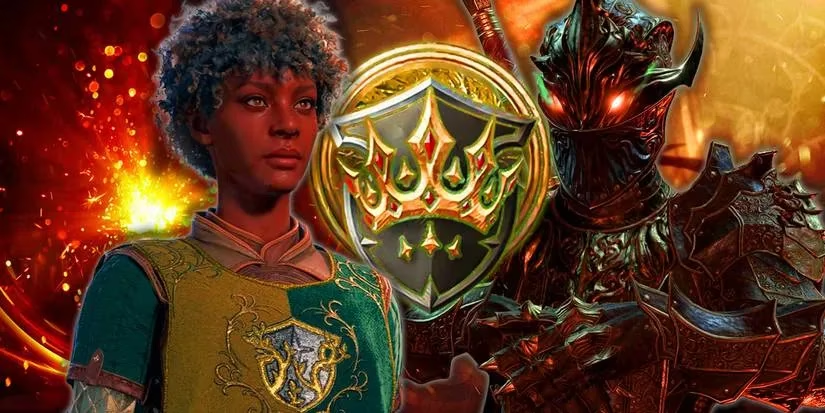
In the end, defeating Balthazar and freeing Dame Aylin was the catalyst for the glorious assault on Moonrise Towers. I saved the day! I was a hero to the Harpers and the Last Light Inn! Yet, I returned to camp a knight in tarnished armor, my divine spark extinguished. The victory was bittersweet, layered with a complexity that most games can only dream of imparting.
So, do I regret breaking my Oath? Not for a second. That catastrophic, expensive, humbling moment of failure taught me more about role-playing than a dozen flawless "good guy" playthroughs ever could. It showed me that in the truly great RPGs, like Baldur's Gate 3, your greatest triumphs are often born from your most spectacular failures. My Paladin's path didn't lead to a pristine throne; it led through the muck and the mire, and he—and I—were far more interesting characters for it. That's the magic Larian bottled, and it's a potion more potent than any you'll find in a forgotten dungeon.