My Journey Through Baldur's Gate 3 and the Future It Might Build
Baldur's Gate 3 legacy and AAA gaming's future intertwine, revealing a profound void and hope for single-player RPG innovation.
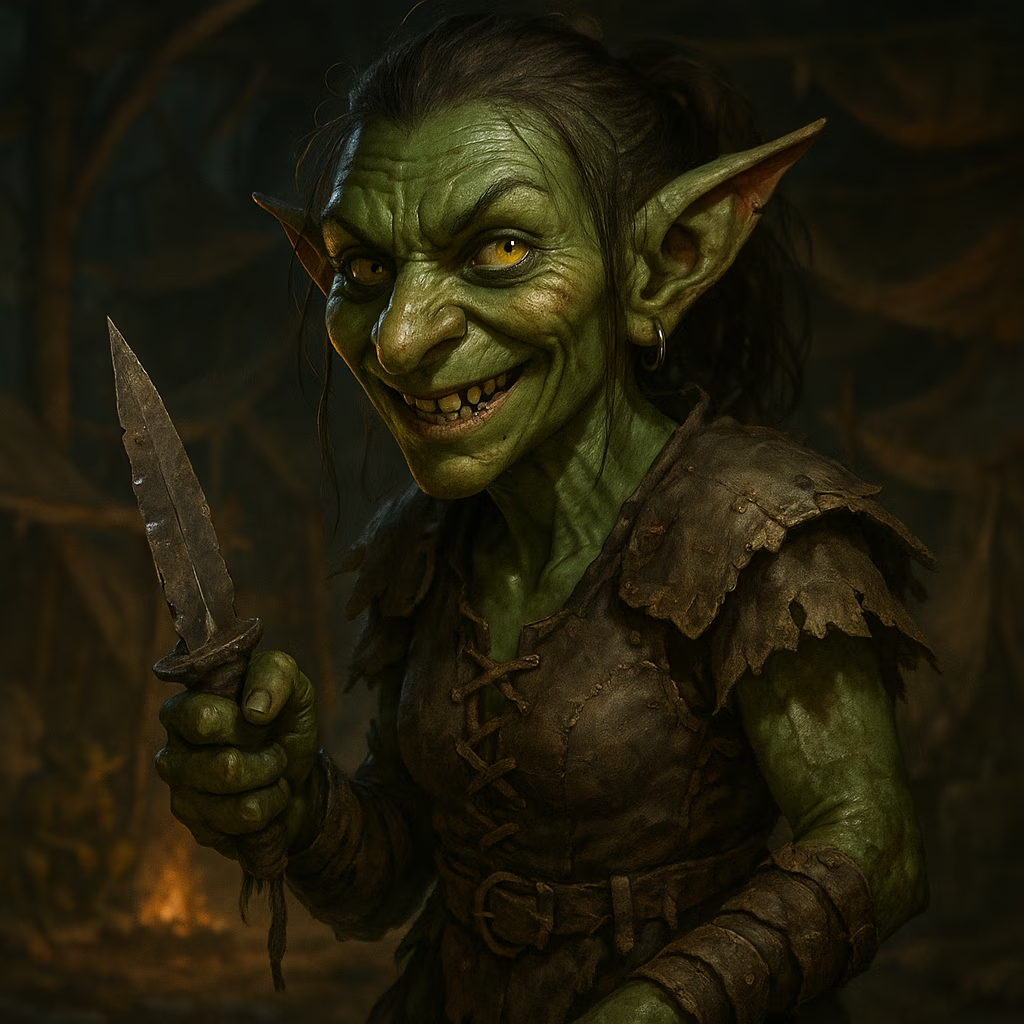
Here I am in 2026, years after the dust settled from its final major update, and I can still feel the profound emptiness left by Baldur's Gate 3. This wasn't just a game; it was a monolith that reshaped the very geography of the AAA landscape, leaving developers and players to navigate its shadow. When I first stepped into Larian's meticulously crafted Forgotten Realms, I didn't just see pixels and polygons; I saw a living argument against the prevailing industry currents. The game felt like a defiant, solitary mountain range in a flatland of microtransaction-infused battle royales, proving beyond doubt that players still thirst for deep, single-player worlds untainted by predatory monetization. It was both a destination and a farewell tour, a masterwork that was, from the moment it peaked, teaching us how to say goodbye to its own universe. The thought that Larian had moved on, its license returned to Wizards of the Coast, left the community feeling like a beloved library had been gifted to us, only to have its architect walk away before the final shelves could be filled. Yet, as I look back, I see not just an ending, but the possibility of a strange and compelling interlude, a bridge built from the very blueprints it left behind.
The Legacy and the Looming Void 😔
Baldur's Gate 3 wasn't a fluke—it was a meticulously constructed counter-narrative. Its success was built on pillars that much of the industry had left to crumble:
-
Single-Player Devotion: A complete, self-contained narrative experience.
-
Transactional Integrity: No microtransactions, just a full game in a single purchase.
-
Developer-Player Symbiosis: Open, honest communication from Larian throughout.
-
Content-Rich Support: Multiple free, substantial updates that expanded the world.
This philosophy was like a single, expertly tuned instrument performing a symphony against the cacophony of live-service orchestras, and the audience's sustained standing ovation—seen in its years-long reign atop Steam charts—was the resounding verdict. But this success made the silence that followed all the more deafening. The confirmation that Patch 8 was the final major act, followed by the license returning to WotC, felt like watching a brilliantly crafted clockwork universe wind down for the last time. The long, 23-year night between Baldur's Gate 2: Shadows of Amn and its successor seems destined to repeat itself, a grim celestial cycle for this storied franchise. With no known studio holding the license as I write this and development timelines ballooning into decades, the prospect of Baldur's Gate 4 feels less like a distant landmark and more like a theoretical horizon line, shimmering mirage-like in the heat of our collective anticipation.
A Historical Pattern and a Hopeful Interpolation 📜
As I contemplate this wait, I find myself looking backwards to see a potential path forward. History rarely repeats exactly, but it often rhymes. The post-BG2 era gave us the Dark Alliance duology—action-RPG spin-offs that, while different in genre (hack-and-slash dungeon crawlers versus deep, turn-based CRPGs), kept the world alive. They were like elaborate tapestries woven from the same threads as the main epic, focusing on the visceral, immediate dangers in the city's underbelly rather than grand, world-shaking narratives.
| Era | Mainline Release | Spin-Off Catalyst | Outcome |
|---|---|---|---|
| Early 2000s | Baldur's Gate 2 (2000) | Baldur's Gate: Dark Alliance (2001) | Critical & Commercial Success ✅ |
| Post-2020s | Baldur's Gate 3 (2023) | Potential New Dark Alliance (???) | To Be Determined ❓ |
This historical precedent is the silver lining in the long, dark cloud of waiting. The failed 2021 Dungeons & Dragons: Dark Alliance serves less as a warning and more as a lesson in what not to do: shallow storytelling and repetitive gameplay squandered its rich source material. It was a hollow echo where a resonant chord was needed.
The Case for a New Alliance: Building on BG3's Blueprint 🔧
What if the key to bridging this massive gap isn't another mainline sequel immediately, but a spin-off that directly channels the spirit and quality of BG3? The foundational work is already done; the world, characters, and a new gold standard for digital Forgotten Realms storytelling have been established. A Dark Alliance successor that learns from history could be the perfect stopgap. Here's what such a project, born from BG3'DNA, could look like.
Anchoring in the Known World
Why start from scratch? A new action RPG could be set in the immediate aftermath of the Netherbrain crisis, a period rife with instability, power vacuums, and lingering threats. This would make the world feel dynamic and directly consequential to my adventures in BG3. It could feature:
-
Familiar Locales: The Elfsong Tavern, the sewers of the Lower City, the ravaged streets of the Outer City.
-
Acknowledged Events: References to the Absolute's army, the fall of Gortash and Orin, the restoration efforts.
-
Beloved NPCs: Brief but meaningful appearances from fan-favorites, not as party members, but as quest-givers or figures of authority. Imagine seeking aid from a now-established Jaheira at the Harper's safehouse, or navigating the treacherous politics of a city where Nine-Fingers Keene is consolidating her power. These cameos would be like finding well-worn, personal notes in the margins of a grand history book.
Expanding the Narrative Canvas
While the Bhaalspawn Saga is (mostly) closed, BG3 introduced factions ripe for exploration. A Dark Alliance game would be the perfect vehicle to dive deeper:
-
The Cult of Bhaal: With Orin gone, infighting or a desperate resurgence could create deadly new threats in the city's darkest corners.
-
The Harpers & The Zhentarim: Their shadow war for influence over the recovering city-state could drive an entire campaign of intrigue and clandestine missions.
-
The Githyanki Infighting: The power struggle between Vlaakith loyalists and Orpheus followers could spill over into the Material Plane, offering high-stakes, otherworldly conflicts.
Gameplay Synergy and Distinction
Crucially, this wouldn't be Baldur's Gate 3-2. The Dark Alliance formula offers a separate but complementary experience:
-
Genre Shift: Fast-paced, real-time combat (with co-op!) versus BG3's tactical turn-based brilliance. Each would serve a different player itch.
-
Scope & Scale: More focused, dungeon-delving adventures versus a globetrotting epic. Like comparing a finely crafted short story collection to a sprawling, single-volume novel.
-
Carrying the Torch: By maintaining the same narrative weight, character depth, and ethical complexity, it can inherit BG3's soul while wearing different armor.
I can envision it so clearly: a smaller, dedicated team—perhaps even within Larian or a trusted partner studio—crafting a 20-30 hour adventure. It wouldn't try to eclipse BG3's sun, but instead orbit it, reflecting its light into the places its epic beam didn't fully reach. This approach wouldn't satiate the hunger for a true Baldur's Gate 4, of course. That longing will remain, a deep, persistent ache for a return to that level of grand, personal storytelling. But a worthy successor to the Dark Alliance name, built with the care and player respect that defined BG3, could transform the long wait from a barren desert into a journey through a vibrant, unexplored valley within the same beloved continent. It would be a promise that the story isn't over; it's simply being told from a new, thrilling angle while the main stage is prepared for the next epoch-defining act. For now, I hold onto that hope—the echo of greatness, not as a replacement, but as a companion in the long night before the next dawn.