Mirror in the Shadows: The Heartbreaking Hope of Astarion's Tent in Baldur's Gate 3
Explore the profound character insights in Baldur's Gate 3 through Astarion's poignant mirror, revealing his haunting vanity and deep emotional struggles.
In the sprawling, epic narrative of Larian Studios' critically acclaimed CRPG, Baldur's Gate 3, grand battles against mind flayers and world-ending threats often take a backseat to the intimate, character-driven moments that unfold at the party's camp. This sanctuary serves as the true emotional core of the adventure, a place where bonds are forged, secrets are whispered, and the intricate personalities of each companion are laid bare not just through dialogue, but through the carefully curated environments they call home. While the allure of romantic encounters is undeniable, it is the quieter, observational details—like the personal items scattered around each tent—that offer players a silent, profound insight into their traveling companions. From Lae'zel's weapon grindstone to Karlach's cherished teddy bear, every object tells a story. Yet, one item in particular, found in the tent of the charmingly sardonic vampire spawn Astarion, has captivated the player community with its poignant paradox: a mirror.
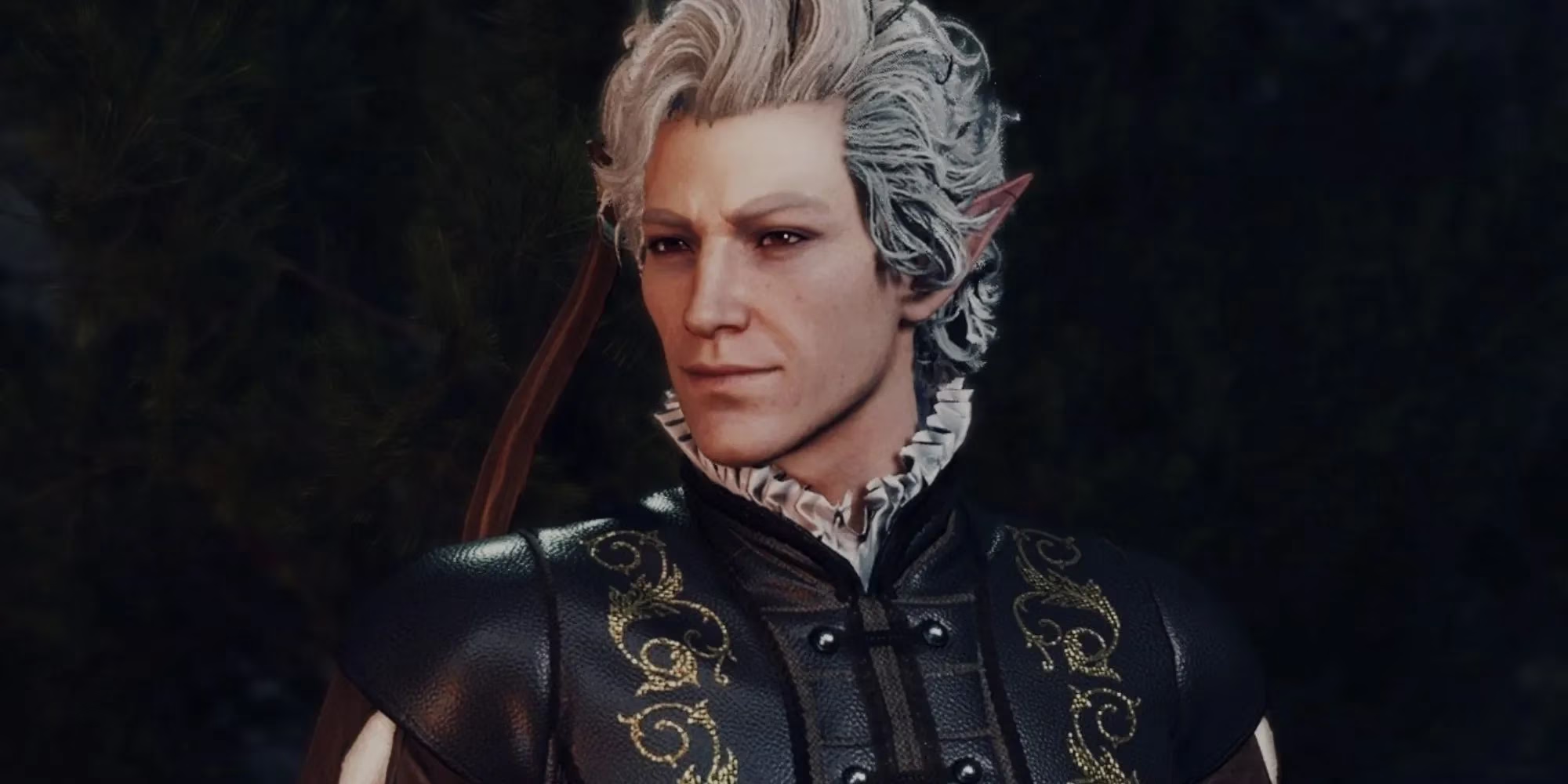
The Vanity That Never Dies
Upon noticing the looking glass placed on Astarion's table, players familiar with vampire lore were immediately struck by the incongruity. As a vampire, Astarion famously casts no reflection—a curse of his undead state. So, what purpose could such an object serve? The community's response was as multifaceted as Astarion's own personality. One prevailing theory, perfectly encapsulated by a fan's quip, is that "vanity never dies, darling." This sentiment rings true to Astarion's character; before his transformation, he was a magistrate, a figure of status and appearance. The mirror could be a stubborn relic of that past life, a refusal to let go of the self-image he once held. It sits there, like a stubborn ghost clinging to a forgotten memory, a testament to the ego that persists even when the reflection does not.
Practical Purposes and Poignant Theories
Beyond vanity, the community has devised several other explanations, each adding a layer to Astarion's story:
-
The Rogue's Tool: Some posit that as a rogue, Astarion uses the mirror to check his blind spots, a tool for watching his back. This theory, however, is humorously undercut by the fact that several characters—like Mizora or Orin—have managed to sneak up on him. A mirror clearly hasn't solved this security flaw.
-
The Predator's Advantage: A darker suggestion is that he uses it to spy on his sleeping companions, identifying potential victims for a "quick snack." This aligns with his predatory nature and initial self-serving motives.
-
The Heartbreaking Hope: By far the most resonant theory is one of simple, aching hope. The mirror represents Astarion's desire to one day see himself again—to remember the face he has forgotten, to reclaim a piece of his lost humanity. It is an object of aspiration, a silent wish cast into the void of his curse.
A Reflection of Narrative Depth
This small detail—a mirror in a vampire's tent—is not just a piece of set dressing; it is a masterstroke of environmental storytelling. It demonstrates how Baldur's Gate 3 builds its characters not only through dialogue trees and combat roles but through the silent language of their possessions. Astarion's mirror is a conversation starter, a puzzle box that players unlock with their own interpretations. It speaks to themes of identity, loss, and the clinging remnants of a former self. In a way, the party camp itself functions like a diorama of the soul, where each tent is a carefully arranged exhibit of a character's inner world.
Ultimately, the mirror's true purpose is what the player believes it to be. It can be a tool, a trophy, or a tear-stained piece of hope. This ambiguity is its strength, allowing each player to connect with Astarion's story on a personal level. It is a detail that, much like Astarion himself, is far more than it first appears—a brilliant sliver of glass reflecting the game's immense depth of character and the enduring hope for redemption, even for those who cannot see their own face in the light. For Astarion, the mirror may be an anchor to a past he can't remember, or a compass pointing toward a future he can't yet see—a silent companion in his tent, much like the tadpole in his skull, is a constant reminder of what he is, and a fragile hope for what he could become.