Mirkon's Tall Tales: The Deceptive Tiefling Child of Baldur's Gate 3
In the perilous world of Baldur's Gate 3, the captivating and mischievous Tiefling children, including the aspiring bard Mirkon, navigate danger with surprising grit. Mirkon's audacious rewriting of his harpy encounter from panicked survivor to heroic savior sparks compelling debates about survival and storytelling in a brutal landscape.
In the tumultuous world of Baldur's Gate 3, a motley crew of Tiefling children has carved out a special place in players' hearts. These youngsters, some orphaned and all forced to mature far too quickly, navigate a landscape of constant peril with surprising grit. Among them is Arabella, the defiant; Mattis, the scheming merchant; Mol, the ambitious ringleader; and of course, Mirkon—the aspiring bard whose relationship with the truth is, shall we say, creatively flexible. This particular scamp is best remembered for his ill-fated encounter with some melodious but murderous harpies on a secluded beach, an event that would later become the cornerstone of his most audacious boast.
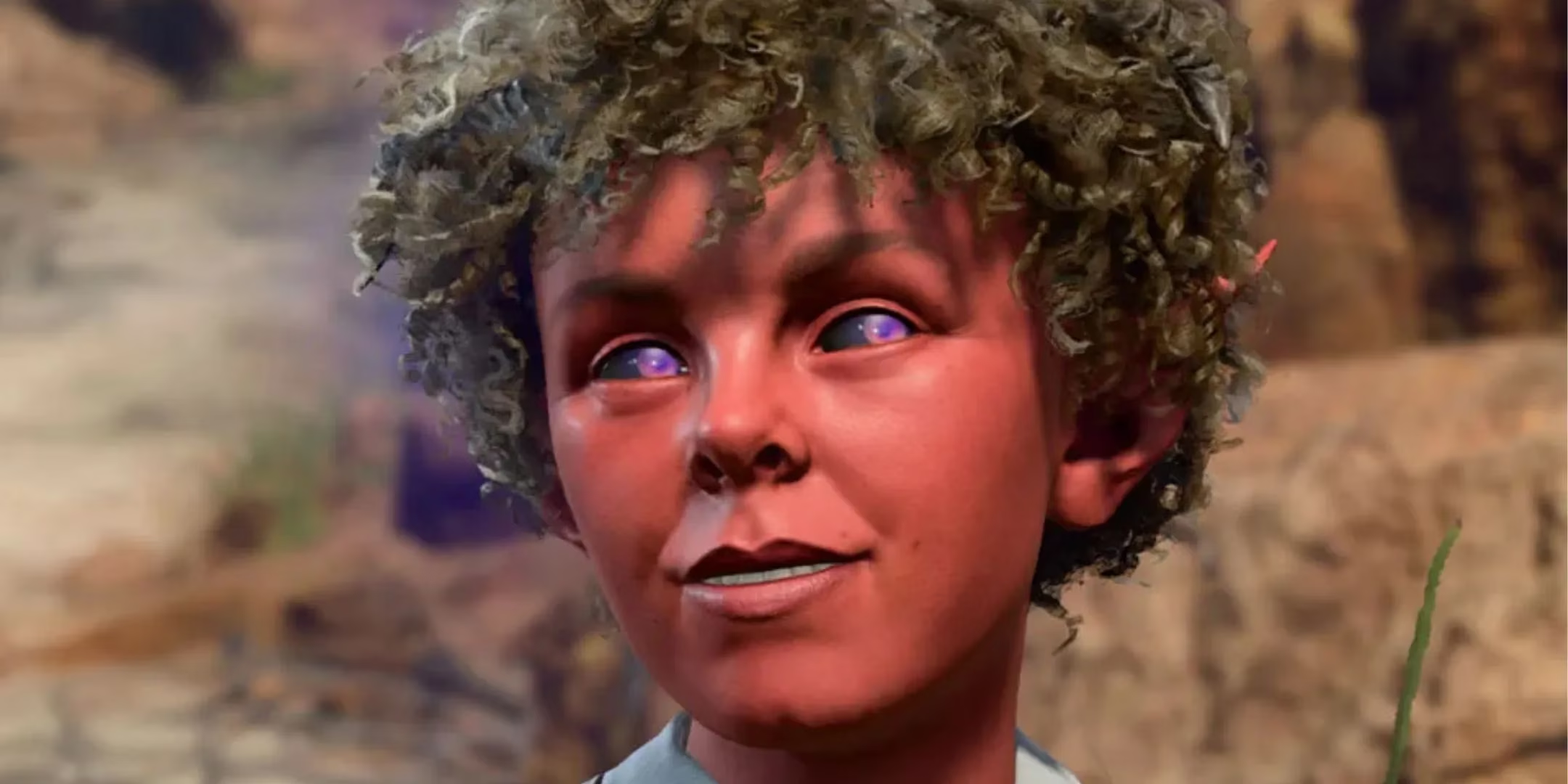
Players first meet Mirkon in Act One, behind the Emerald Grove at the Secluded Cove. There, they find the boy utterly enchanted—literally—by the siren song of a harpy, standing perilously close to the water's edge. What follows is a chaotic skirmish where the party must fend off the winged terrors while Mirkon contributes by... well, by running in panicked circles. His primary combat strategy involves dodging opportunity attacks, a dance of survival that endears him to no one, especially the adventurers doing the actual fighting. Victory secured, a grateful Mirkon presents the hero with a handwritten account of the battle. The document is a charming, if grammatically adventurous, piece of prose that rightly credits the player: "The adventurer was very strong and killed the harpie in one blow and safed the boy." It's a sweet, humble memento. Or so it seemed.
The plot, as they say, thickens considerably later in the adventure. When the Tiefling children are reeling from the kidnapping of their de facto leader, Mol, by the forces of Moonrise Towers, a desperate plan is hatched. It is in this moment of crisis that Mirkon's narrative takes a dramatic, heroic turn—a turn wholly unsupported by factual events. Advocating for a daring rescue mission, he puff out his chest and declares to his doubting peers, "We could! I beat up those harpies, and they're way scarier than shadows!" The sheer audacity of this claim left one vigilant player, Korrocks, utterly flabbergasted. As they noted in a now-famous 2026 Reddit dissection of Tiefling child psychology, Mirkon's entire contribution to the harpy battle was "running back and forth like a f**king Gondian while my team did all the work." The cognitive dissonance is staggering. Here was a child, in possession of his own written testimony praising the player, boldly rewriting history to cast himself as the protagonist.
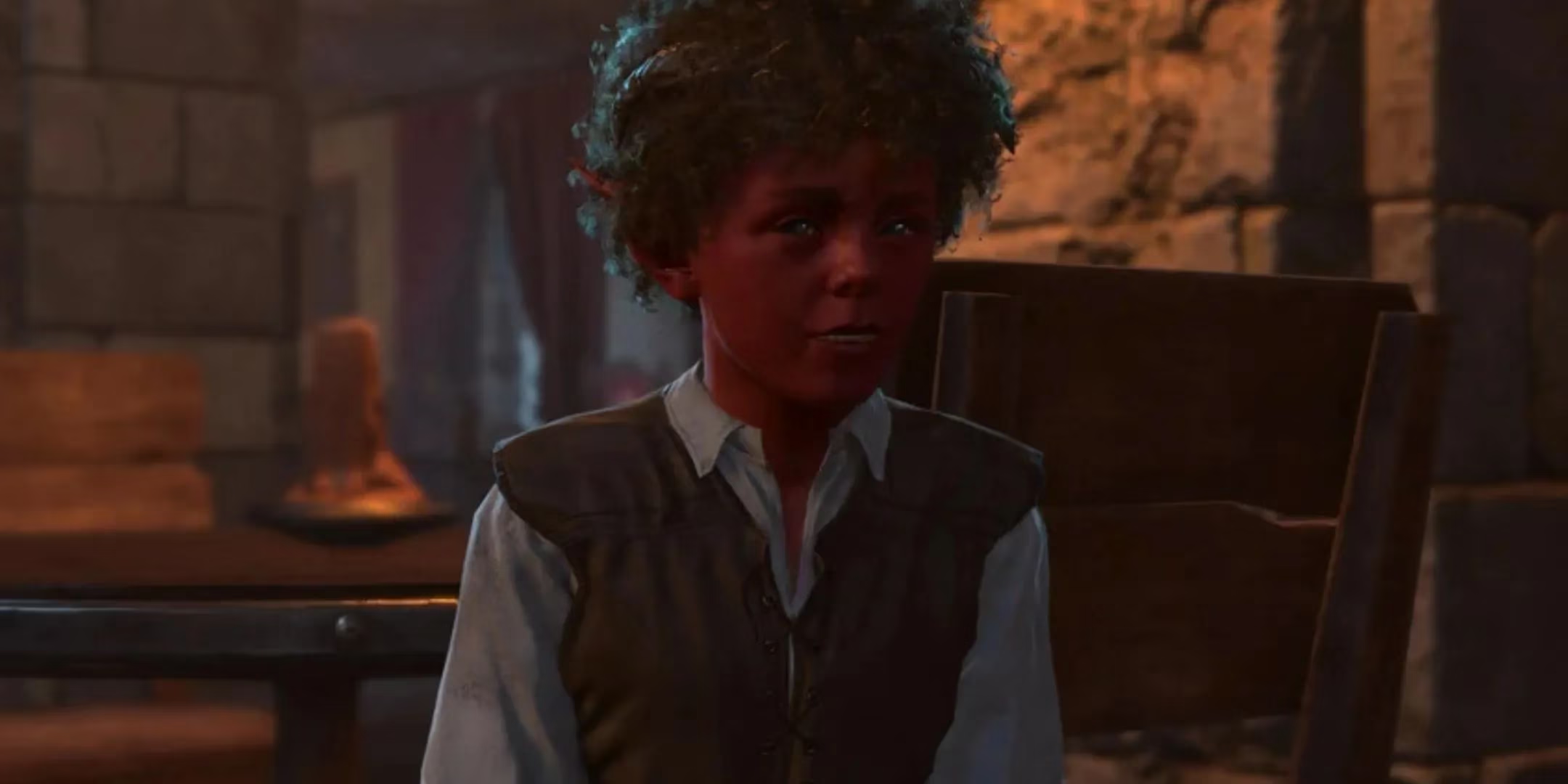
This revelation sparked a minor ethical debate within the fandom. On one taloned hand, Mirkon is a child living through a literal hellscape. His friend is in mortal danger, and a little bravado might be what the group needs to muster courage. Is it really in poor taste to call out a lie told under such duress? On the other hand, as Korrocks lamented, honesty is the best policy. The player is cruelly denied any dialogue option to produce Mirkon's own damning scroll and declare, "Behold! The primary source material!" The inability to fact-check the tiny Tiefling in real-time is a unique and quietly frustrating piece of Larian's storytelling. 😤
-
The Incident: Hypnotized by harpies; rescued by the party.
-
The Evidence: A handwritten note giving full credit to the player.
-
The Retelling: A boastful claim of single-handedly "beating up" the harpies.
-
The Irony: The truth was in his inventory the whole time.
Mirkon's deception fits perfectly within the ecosystem of the Tiefling kids. They are a society built on survival, where stories and reputations are currency. Mattis sells magical "rings" that are just bottle caps, Silfy is a proficient pickpocket, and Mol runs a full-fledged thieves' guild from a hidden cave.
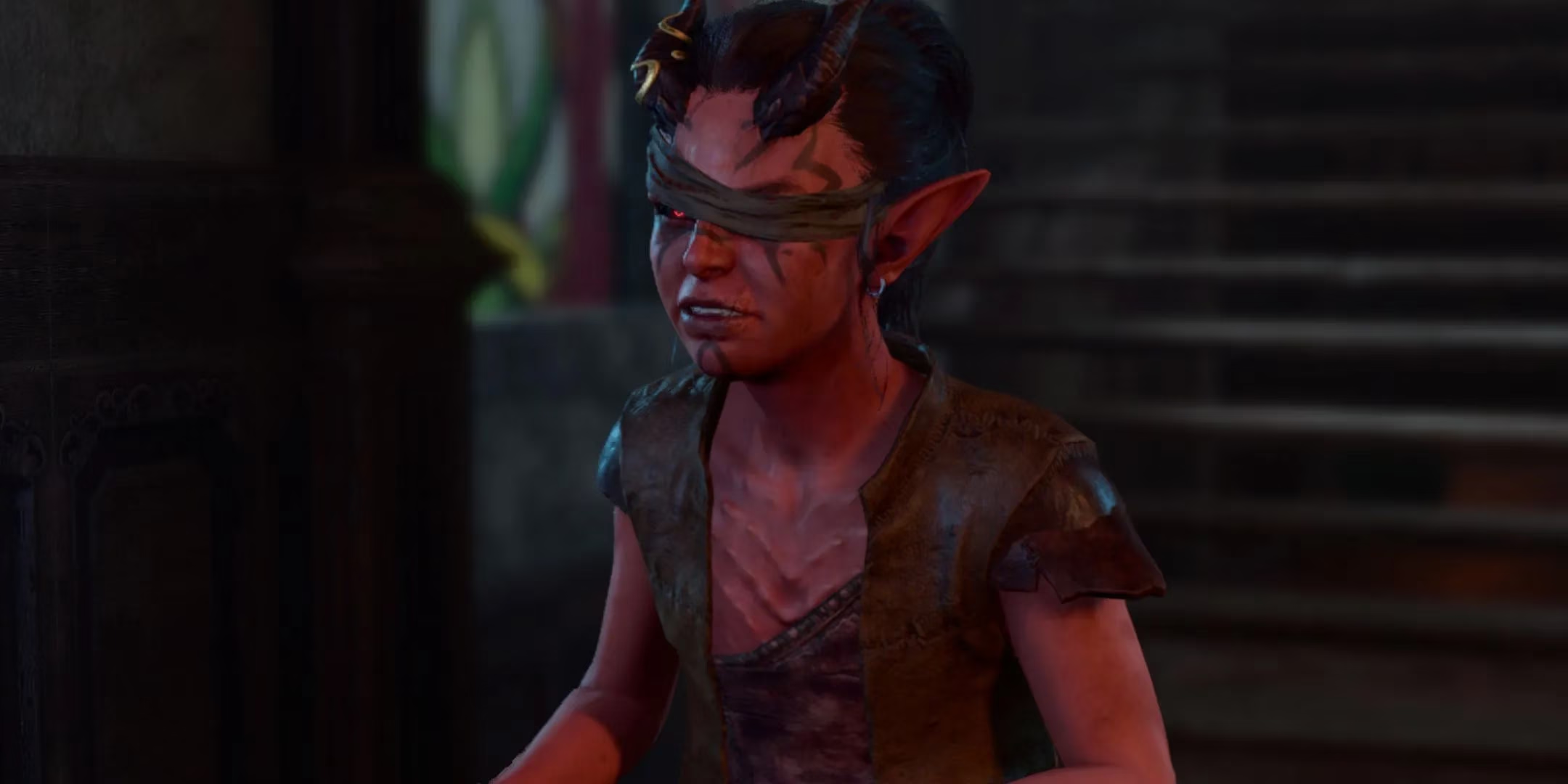
In this context, Mirkon isn't just lying; he's engaging in reputation management. By inflating his role in a scary event, he's trying to elevate his status within the group, especially in the power vacuum left by Mol's absence. He's crafting his own legend, one exaggerated feat at a time. It's a heartbreaking and clever bit of character writing—a child who has learned that perceived strength is often more valuable than admitted vulnerability.
So, where does this leave the noble adventurer who actually did the harpy-slaying? Mostly, just shaking their head in amused resignation. Mirkon joins the pantheon of Baldur's Gate 3 characters who are brilliantly, frustratingly human (or Tiefling). He reminds us that in a world of mind flayers, ancient gods, and cerebral parasites, sometimes the most compelling drama is a kid telling a tall tale to his friends, hoping desperately that they'll believe he's braver than he feels. And perhaps, in the grand scheme of saving the world, letting one small, scared boy have his moment of fabricated glory isn't the worst crime a hero can commit. After all, every legend needs a bard, even if that bard's source material is... questionable.