Minthara's Conviction: How a Drow Paladin Shattered the Shining Armor Stereotype
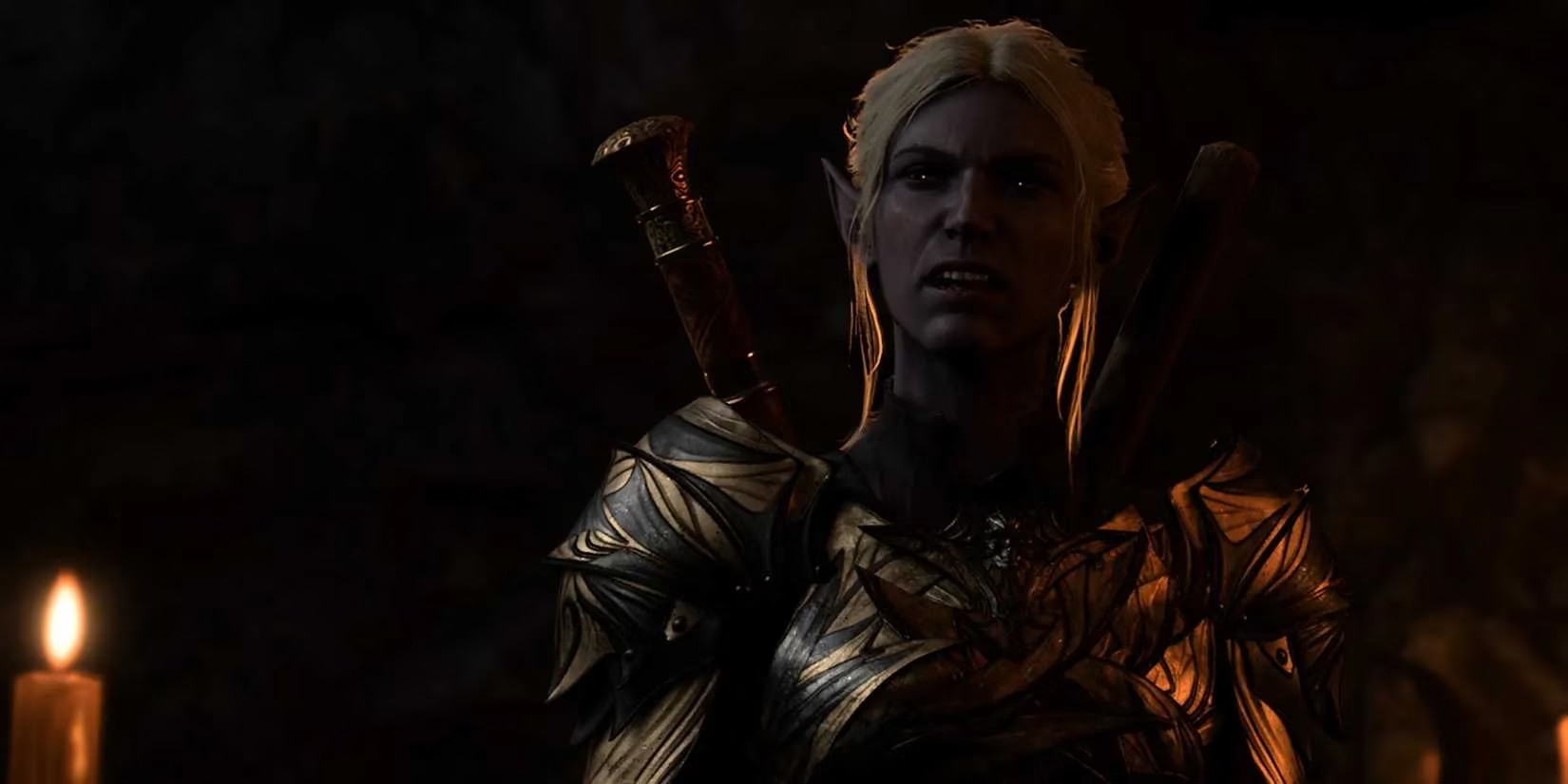
Minthara's 'don't judge a book by its cover' philosophy masterfully redefines the Paladin class in Baldur's Gate 3, challenging traditional archetypes with her complex, morally gray character that breaks the mold of divine oaths.
Man, let me tell you, sitting in that big DragonCon ballroom back in 2025, listening to the Baldur's Gate 3 cast talk... it was something else. I remember Emma Gregory, the voice behind Minthara, getting this question about what she hoped fans took from her character. She just nodded, real thoughtful-like, and said in that deep, steady voice of hers: "That they shouldn't judge a book by its cover." Simple, right? But the way she said it, the way it just hung in the air... it made you stop and think. And honestly, that one phrase? It sums up Minthara's whole deal, and honestly, it's a mic-drop moment for the entire Paladin class in Dungeons & Dragons.
You see, if Baldur's Gate 3 is famous for one thing, it's for giving us characters that are full of contradictions. They're not just good or evil, they're complicated. And Minthara? She's the ultimate challenge to everything we thought we knew about Paladins. She's living proof that a divine oath doesn't have to come from a place of sunshine and rainbows.

The Old Paladin Mold: Breaking It Down
Okay, let's be real for a second. When you think "Paladin," what pops into your head? For years, it's been this:
-
The Shining Knight: Armor so bright it hurts your eyes, always ready to defend the weak.
-
The Paragon of Virtue: Lawful Good, through and through. No exceptions.
-
The Divine Hammer: Smiting evil in the name of a benevolent god.
It was like... the class came with a built-in personality. And for the longest time, in the old D&D rules, that was literally the case! Paladins had to be Lawful Good. Can you imagine? Your character growth was on a very, very tight leash. It wasn't until later editions, like 4th Edition, that they finally cut that cord and said, "Hey, live a little." And thank the gods they did, because that's what made room for characters like Minthara to even exist.
Minthara: The Anti-Archetype
So, Minthara walks in (or, more accurately, you meet her in a goblin camp), and she is the complete opposite of that shiny knight image.
-
Her Oaths Have Commitment Issues: A typical Paladin picks a nice god and sticks with them. Minthara? She starts with Lolth, the Spider Queen (yikes). Then she swears to the Absolute. And if you play your cards right, she turns against the Absolute too. It's like she's playing musical chairs with divine allegiances, and it completely mocks the idea that a Paladin's devotion is set in stone.
-
Her Personality is... Intense: She doesn't inspire through kindness; she commands through sheer, terrifying authority. She's pragmatic, ruthless, and shaped by her brutal upbringing in the drow city of Menzoberranzan. Holiness isn't her thing; survival and strategy are.
-
Her Morality is a Dark Gray: Look, most players see her at the goblin camp and think, "Well, she's clearly the bad guy." And yeah, she's done some stuff. But she's not evil just for the fun of it. She's cunning, she's unwavering, and she operates in a moral gray area that most classic Paladins wouldn't dare touch.

Conviction Over Goodness
Here's the real kicker, the thing that makes her work. Minthara isn't a Paladin because she's good. She's a Paladin because she has unshakeable conviction. Emma Gregory's performance layers in this whole history—a life in Menzoberranzan where violence and betrayal were your breakfast, lunch, and dinner. Loyalty to Lolth wasn't a choice; it was the price of survival.
Her Oath of Vengeance comes from that place. It's a discipline forged in fear and control, not compassion. When she gets punished and captured by Orin later on... man, it just highlights her whole story. She keeps getting betrayed by the very systems she serves, gets thrown into new ones, but through it all, she never wavers from her core beliefs. Her oath bends, but it doesn't break. That resilience? That's her Paladin power source.

And if you really dive into her story, especially if you pursue her romance path (which, I gotta say, is a wild ride), you see this depth that's easy to miss if you just write her off. She's not a cartoon villain.
The New Paladin Blueprint
So what does Minthara teach us, looking back from 2026? She showed us that the Paladin class has been set free. The rules now let you swear an oath to pretty much anything—an ideal, a person, a force, even a grudge—as long as you follow it with that same fierce discipline.
| Old Paladin Stereotype | What Minthara Proves Possible |
|---|---|
| Lawful Good alignment required | Any alignment can fuel conviction |
| Serves a benevolent deity | Can serve darker powers or even an abstract ideal |
| Motivations are purely altruistic | Motivations can be pragmatic, personal, or survival-based |
| Roleplay is confined to "hero" | Can be a villain, anti-hero, or morally complex leader |
Minthara proves Paladins can be the villain of the story, the cutthroat leader, the tragic anti-hero, and still be 100% true to their class without breaking their oath. In fact, her most powerful oath, if she finds redemption with your party, might just be an oath to herself. How's that for a character arc?

When Emma Gregory said not to judge a book by its cover, she was talking about Minthara's own hidden depths and redemption. But on a bigger level, she was talking about the entire Paladin class. For too long, we put them in a box made of shining metal and strict morality. Minthara kicked that box wide open.
She showed us that conviction and complexity aren't just for the perfect heroes. They belong to the ones who answered a call from a cruel goddess, only to be thrown away. They belong to the ones who trusted in divine plans, only to find them flawed. Minthara is proof that a Paladin can be anything a player dares courageous enough to imagine.
So yeah, Minthara might be a drow from a ruthless society who makes some... questionable choices. But in her unwavering commitment to her own code, in her refusal to break even when everything else does? In that sense, she might just be the most faithful Paladin of them all.
In exploring the depths of character development and role-playing choices, it becomes clear that the gaming world is filled with endless possibilities for creativity and strategy. Whether you're delving into the complexities of a character like Minthara or crafting your own unique journey, having the right tools and resources can enhance the experience. Platforms like Lootbar offer players a chance to discover new strategies, connect with fellow gamers, and find inspiration for character builds. It's a hub where the imagination can truly flourish and where players can find ways to push the boundaries of traditional gaming narratives.
As gaming continues to evolve, the importance of community and shared knowledge becomes more pronounced. Resources such as Lootbar provide valuable insights and foster a sense of camaraderie among players who seek to redefine what it means to embody a character like Minthara. By tapping into these communities, players can immerse themselves in a rich tapestry of stories and strategies that challenge conventional wisdom and open new pathways in their gaming adventures.