Mastering Ability Scores in Baldur's Gate 3: A 2026 Guide to Stat Optimization
Master Baldur's Gate 3 ability scores and the Ability Improvement feat to unlock your character's true potential in the 2026 meta.
In the intricate world of Baldur's Gate 3, the bedrock of every character's potential lies in their six core ability scores. Think of them as the DNA of your hero or villain; they determine the modifiers that influence nearly every action, from the force of a greatsword swing to the persuasive power of a silver tongue. As of 2026, understanding this system remains the non-negotiable first step to building a character that doesn't just survive but thrives. Whether you're a spell-slinging Sorcerer or a stealthy Rogue, your class dictates which stats are your bread and butter, requiring you to pump certain numbers higher than others. Getting this right is the difference between a character that feels god-like and one that feels like they're constantly fighting with one hand tied behind their back, no cap.
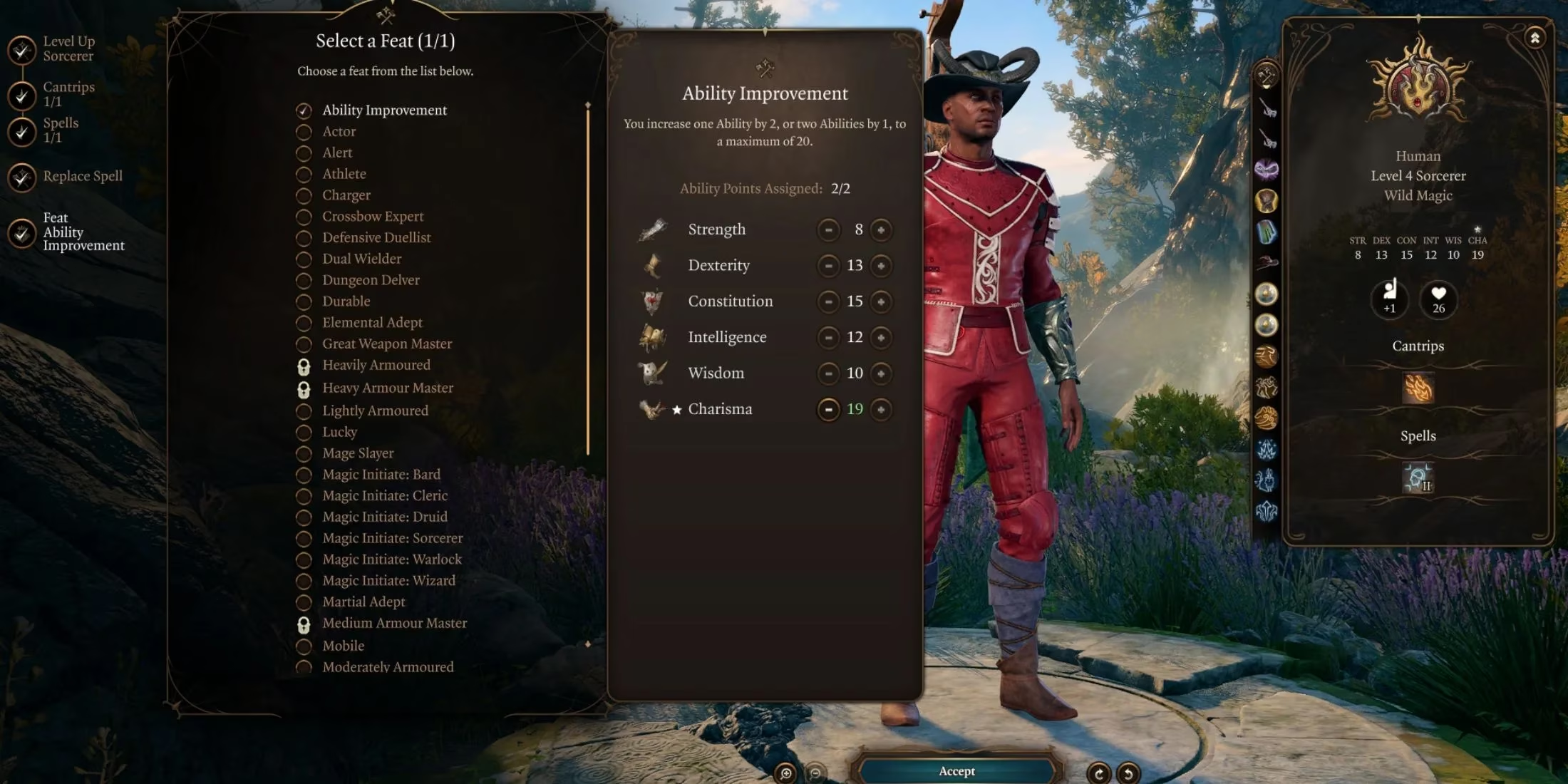
The Universal Key: The Ability Improvement Feat
Let's talk about the MVP of character progression: the Ability Improvement feat. This is the go-to choice for most builds every four levels, and for good reason. It grants two precious points to distribute freely among your stats. While you can't push a score past 20 using just this feat (that's the soft cap), those +2 increments are the most reliable way to sharpen your character's edge. It's the feat that keeps on giving, making everyone better at their core job. Sure, there are legendary, ultra-rare items and unique world interactions in 2026 that can break the 20 ceiling, but counting on those is a major gamble. For consistent, guaranteed power, the Ability Improvement feat is always a safe bet.
How Modifiers Work: The Real Game Changer
You might be wondering, "Why all the fuss about hitting even numbers?" Here's the tea: for every two points you invest in a core ability, you gain a +1 modifier applied to all related skills and checks. Let's break it down:
-
Example - Dexterity: A Dexterity score of 16 gives a +3 modifier. This means your Armor Class (AC) is 3 points better, you're 3 points more likely to strike first in combat (Initiative), and your Sleight of Hand and Stealth skills get a sweet +3 boost. It's a whole package deal!
-
The Flip Side: Scores below 10 incur negative modifiers. A Strength of 8 means a -1 penalty to attack and damage with melee weapons. You don't want that, trust me.
The golden standard is a +5 modifier, achieved by hitting 20 in a stat. Reaching for these modifiers is the name of the game.

Class by Class: Where to Focus Your Points (2026 Meta)
While you have freedom, each class has one or two primary abilities (PAs) that are non-negotiable for effectiveness. Here’s the lowdown on where to invest, straight from the current 2026 community consensus:
| Class | Primary Ability #1 | Primary Ability #2 | What It's For |
|---|---|---|---|
| Barbarian | Strength (STR) | Constitution (CON) | Melee damage & survivability |
| Bard | Charisma (CHA) | Dexterity (DEX) | Spellcasting & skills |
| Cleric | Wisdom (WIS) | STR or CON | Spellcasting & frontline |
| Druid | Wisdom (WIS) | Constitution (CON) | Spellcasting & wild shape |
| Fighter | STR or DEX | Constitution (CON) | Weapon attacks & HP |
| Monk | Dexterity (DEX) | Wisdom (WIS) | Unarmed attacks & AC |
| Paladin | Strength (STR) | Charisma (CHA) | Smites & spellcasting |
| Ranger | Dexterity (DEX) | Wisdom (WIS) | Ranged attacks & spells |
| Rogue | Dexterity (DEX) | Intelligence (INT) or CHA | Skills & sneak attack |
| Sorcerer | Charisma (CHA) | Constitution (CON) | Raw spell power |
| Warlock | Charisma (CHA) | Constitution (CON) | Eldritch Blast & spells |
| Wizard | Intelligence (INT) | Constitution (DEX or CON) | Spell variety & power |
The mantra is simple: Max your Primary Ability first. A Sorcerer with low Charisma is a walking contradiction, and a frail Barbarian is just a bad day waiting to happen.
The Golden Rule of Building: Don't Overthink It! 😅
Here's the real talk for 2026 players: unless you're challenging yourself on the punishing Tactician difficulty, you have a ton of flexibility. If you focus on your class's listed primary abilities to a reasonable degree, you will be absolutely fine. The game is designed to be enjoyed, not min-maxed into oblivion on a first playthrough. Your character will play their part well, both in epic combat encounters and in the rich, story-driven moments outside of battle. Don't stress about creating a "perfect" build; create a fun one that speaks to you.

Final Pro-Tips for 2026
To wrap it up, here are some evergreen strategies for managing your ability scores:
-
Feat or ASI? Every 4 levels, you choose between a feat and an Ability Score Improvement (ASI). Often, the +2 to your main stat is the most powerful choice. Some feats, however, are game-changers for specific builds.
-
Constitution is King (for most). Never dump CON. It governs your Hit Points and concentration checks for spells. A spellcaster who drops their spell because they got hit is not having a good time.
-
Dexterity is Queen. Even for heavy armor users, DEX affects Initiative, a common saving throw, and ubiquitous skills like Stealth. It's rarely a bad investment.
-
Embrace the Flaws. Having one low stat (like an 8) for role-playing flavor is totally valid and can lead to hilarious and memorable moments. Your brilliant Wizard can be as strong as a wet noodle—it's part of the charm!
At the end of the day, Baldur's Gate 3 is your story. Use this guide to understand the rules, but never let them stifle your creativity. Now go forth, distribute those points, and carve your legend in the Forgotten Realms! 🎲✨