Larian's Creative Future After Baldur's Gate 3
The monumental success of Baldur's Gate 3, a genre-defining CRPG, has created an immense creative dilemma for Larian Studios. Its next project will inevitably face intense scrutiny against this towering legacy of depth and player agency.
The monumental success of Baldur's Gate 3 has cast a long, defining shadow over Larian Studios and the entire CRPG landscape. Surpassing 15 million copies sold and earning universal acclaim, the game didn't just revive a beloved franchise; it fundamentally redefined the genre's modern expectations. This achievement has placed Larian in a unique, albeit challenging, position as it contemplates its next creative endeavor. The studio's future projects, regardless of their direction, will inevitably be measured against the towering legacy of Baldur's Gate 3, a comparison that is both a testament to its success and a formidable creative hurdle.
The Unavoidable Legacy of a Masterpiece
Baldur's Gate 3's impact extends far beyond sales figures. It reshaped player expectations for depth, presentation, and agency in role-playing games. Key innovations that became its signature include:
-
Cinematic, Fully Voiced Presentation: Every character interaction felt alive and immersive, setting a new visual and auditory standard.
-
Deeply Layered Companion Relationships: Characters like Astarion and Shadowheart weren't just party members; they were complex individuals with evolving personal arcs deeply tied to player choices.
-
Meaningful, Branching Narrative: Player decisions carried real weight, creating forks that could reshape entire storylines. The choice to side with or against a character like Minthara early on had profound, long-term consequences, making each playthrough feel unique.
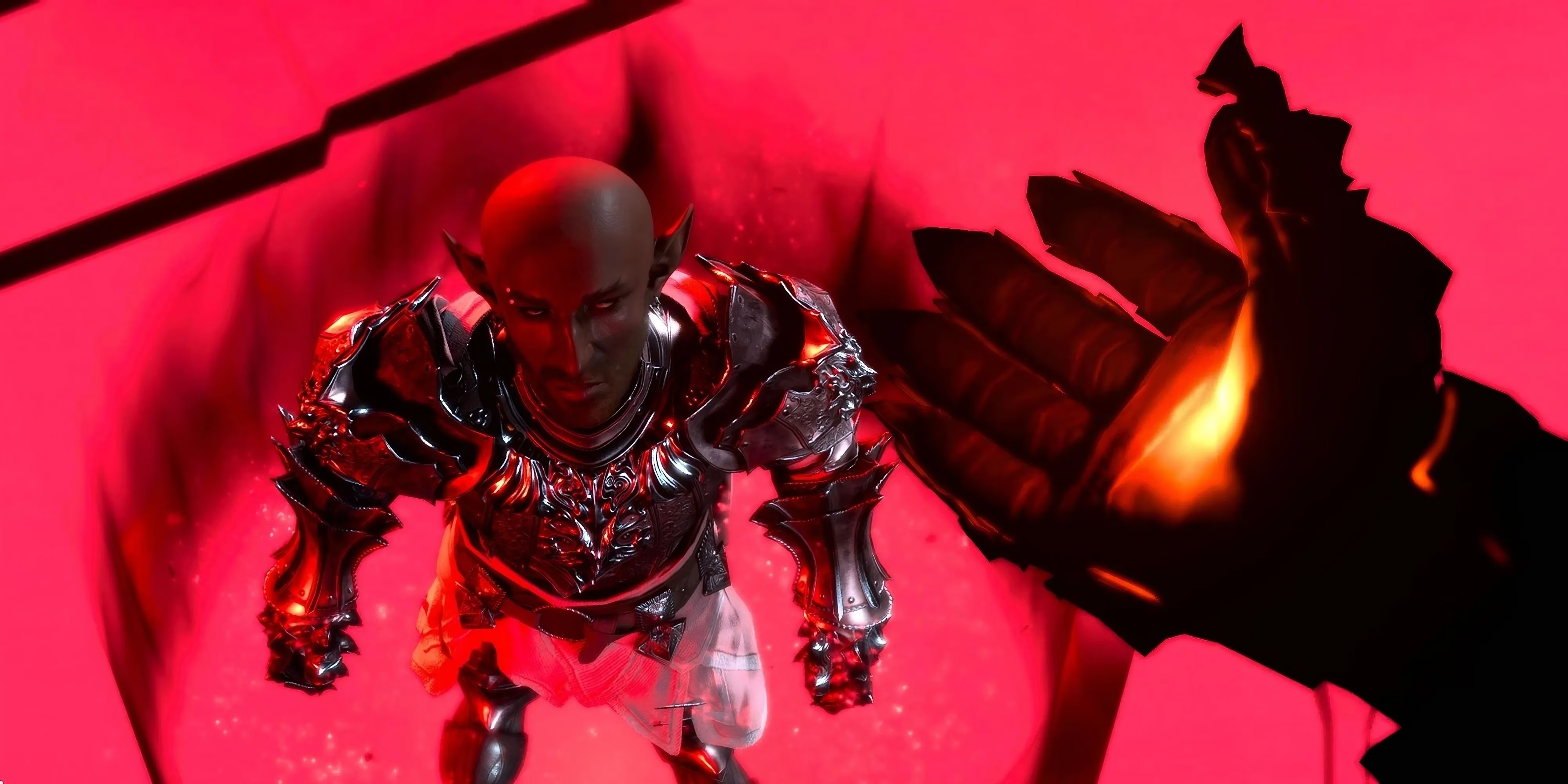
This legacy creates a significant creative dilemma for Larian. Do they attempt to replicate this successful formula to meet sky-high fan expectations, or do they deliberately pivot to an entirely new format to avoid creative fatigue and comparison? Repeating the structure offers familiarity but risks seeming derivative. A bold new direction could surprise and invigorate, but it also carries the risk of alienating fans who now intimately associate Larian with the Baldur's Gate 3 experience.
The Weight of Expectation on Larian's Next Move
Even before any official announcement, the gaming community is already speculating about Larian's next project. Every potential detail will be scrutinized through the lens of Baldur's Gate 3.
| Feature in a New Larian Game | Likely Comparison to Baldur's Gate 3 |
|---|---|
| Party-Based Combat | Will it have the same tactical depth and environmental interactivity? |
| New Companions | Can they match the emotional complexity and depth of BG3's iconic roster? |
| Narrative Structure | Does player choice feel as consequential and world-altering? |
| Production Values | Is the dialogue as cinematic and the world as meticulously crafted? |
This intense scrutiny creates immense pressure. Any perceived lapse in character development, writing quality, or world-building could be framed as a step backward. Consequently, Larian might leverage its proven skills in character-driven storytelling but apply them to a completely new setting. A shift away from high fantasy—perhaps into science fiction, historical fiction, or a new original universe—could provide the necessary creative space for new expectations to form organically, free from the constant shadow of the Forgotten Realms.
Ripple Effects Across the CRPG Genre
Larian is not navigating this post-BG3 landscape alone. The game's success has raised the bar for the entire genre, influencing both players and developers.
-
For Competing Studios: Developers like Owlcat Games (Pathfinder series) and Obsidian Entertainment (Pillars of Eternity, Avowed) now operate in a market where BG3's scope is a benchmark. Features like cinematic dialogue, deep companion arcs, and systemic reactivity are likely to become expected standards. However, the challenge lies in integrating these elements meaningfully rather than creating a shallow imitation.
-
For the Baldur's Gate Franchise: Any future Baldur's Gate title, whether developed by Larian or another studio, faces a Herculean task. It must honor the legacy of BG3 while delivering something genuinely new and compelling. A hypothetical Baldur's Gate 4 would need to evolve the formula significantly to stand on its own.
-
For the Genre's Future: BG3 demonstrated that a complex, narrative-heavy CRPG could achieve mainstream, blockbuster success. This will likely encourage greater investment and ambition in future projects across the industry.
Larian's Path Forward: Independence and Evolution
Larian's decision not to develop direct DLC or a sequel for Baldur's Gate 3 is a powerful statement of creative intent. It signals a desire to move forward rather than linger indefinitely in the world of Faerûn. This independence is crucial. While the world may forever view their next project through a BG3-tinted lens, this freedom allows Larian to experiment, grow, and potentially define a new era for themselves.
Potential directions for the studio are filled with both excitement and risk. A return to the world of Rivellon for a Divinity: Original Sin 3 would thrill one segment of their fanbase but invite immediate comparison to both DOS2 and BG3. A venture into a new genre or setting—a sci-fi epic, a historical drama, or a completely original fantasy realm—would be a bolder, cleaner break. It would allow the studio to carry over its mastery of storytelling, player agency, and systemic design without every element being held up directly against its prior work.
Ultimately, Larian Studios stands at a creative crossroads defined by its own unprecedented success. The path it chooses will not only determine its own future but will also send ripples through the role-playing game industry for years to come. The shadow of Baldur's Gate 3 is long, but within it lies the opportunity to build something new, different, and equally brilliant.