How the Absolute's Army Forged Its Unholy Alliance in Baldur's Gate 3
Baldur's Gate 3 unites hostile goblins and duergar under the Absolute's army, blending psionic control with cunning manipulation.
The Absolute's army in Baldur's Gate 3 is an impossible mosaic of mutually hostile cultures, a collection of teeth and grudges that, outside the reach of psionic control, would descend into cannibalistic infighting. From the cackling goblin hordes to the grim duergar mercenaries and the aristocratic drow, these factions are traditional enemies in the Forgotten Realms. Yet, under the shadow of the Elder Brain and the political maneuvering of the Dead Three's Chosen, they march in lockstep—a monstrous choir singing from the same discordant hymn sheet.
At the heart of this unnatural unity lies the illithid tadpole, a parasite that rewires the mind like a potter reshaping still-soft clay. Those who host these tadpoles become True Souls, able to hear the psychic commands of the Absolute as if the Elder Brain were whispering directly into their neural pathways. But the story of the army's assembly is not simply one of brute psionic enslavement; it is a tapestry woven with poison, gold, and the exploitation of cultural arrogance.
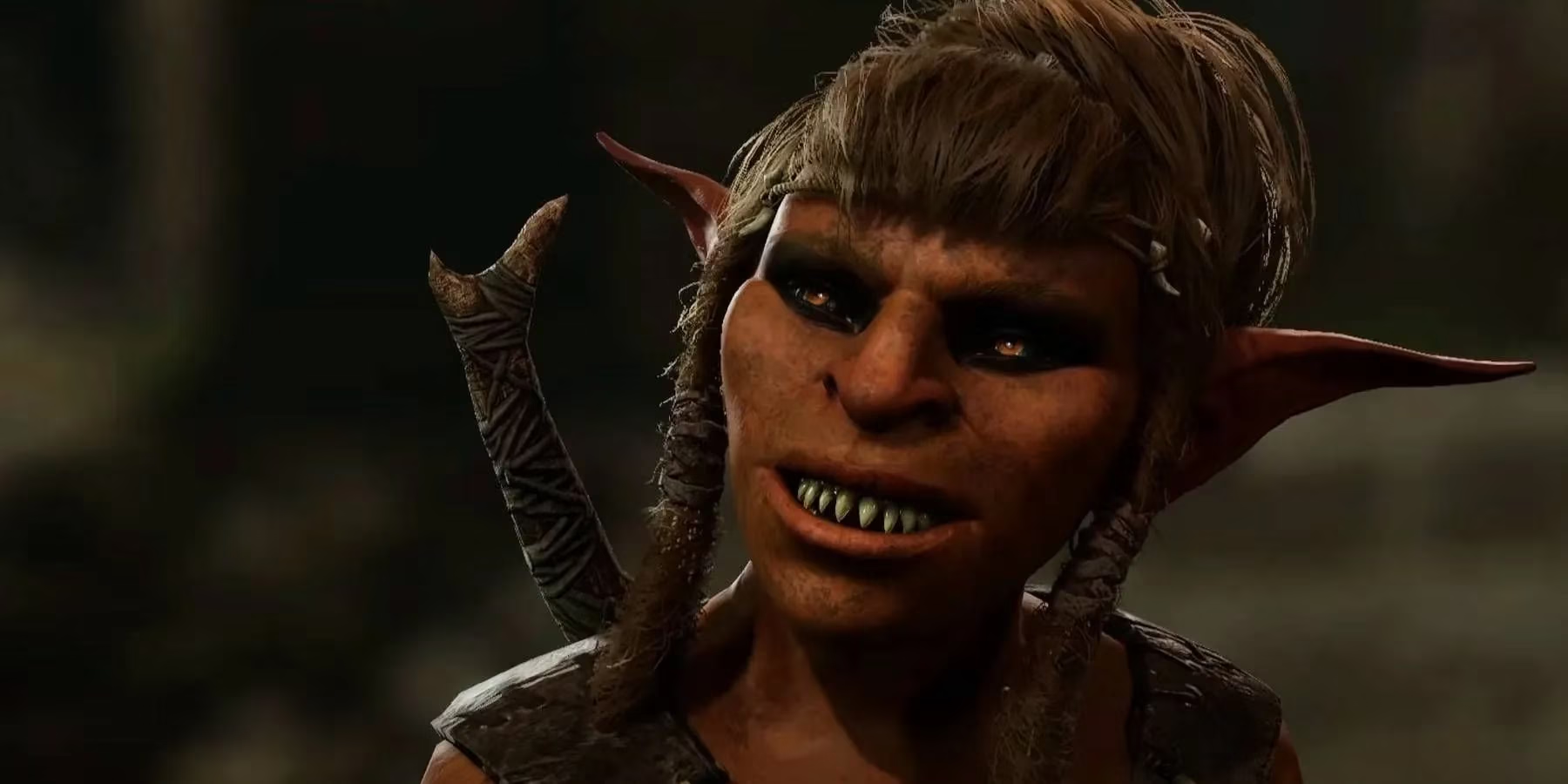
The goblin tribes, traditionally worshipers of the evil god Maglubiyet, were the easiest to reel in—but not through mass infection. Goblins trust their priestly hierarchy with an almost pastoral devotion, seeing their shamans as conduits to the divine. The Absolute's strategists, in a move reminiscent of infecting the shepherd to poison the flock, arranged a grand banquet for seven high-ranking goblin religious leaders. The gathering was a trap wrapped in ritual courtesy; the drinks were laced with a paralytic, and before the night's embers died, each priestess and shaman had a tadpole nestled behind their eye. When these leaders returned to their tribes, their newfound faith became contagious. Their sermons twisted from Maglubiyet's war chants into hymns for the Absolute, and the goblin masses followed as if their own souls had been swapped overnight. Not all goblins succumbed—some like Brakkal clung to the old ways—but enough were turned to form a zealous, screaming vanguard. These soldiers became the eyes and arrows of the early campaign, cheap shock troops who learned only that obedience tasted of psionic honey.
Beneath the surface, in the stygian depths of the Underdark, the duergar presented a different puzzle. Gray dwarves are creatures of stone and commerce, their grudges measured in gold coins and their loyalty sold at auction. The Absolute needed them not as fanatics but as skilled hands to operate the Grymforge and forge weapons of ancient power. The solution was refreshingly mundane: coin. The Flameshade clan, a mercenary company with appetites larger than their scruples, was hired outright. This arrangement created a bridge of shimmering gold coins that could melt at the touch of a bigger purse. Most duergar, like Elder Brithvar, treated the Absolute with industrial indifference, ready to switch sides the moment a heavier sack of platinum appeared. Yet a few, such as Sergeant Thrinn and Corsair Greymon, exhibited a puzzling fervor beyond mercenary logic—perhaps dreaming of rewards more lavish than mere metal. The duergar's shaky loyalty mirrored that of the Zhentarim, whose agent Roah Moonglow dealt with the Absolute's forces solely to carve a larger slice of Baldur's Gate's criminal underworld. In the end, the gray dwarves were a tool held together by threads of avarice, waiting for a sharp enough blade to cut them free.
The most improbable recruits, however, were the drow. Noble houses from Menzoberranzan do not bend easily; their spines are forged in Lolth's web and polished with centuries of superiority. Leaders like Minthara and Nere commanded the battlefield with chilling elegance, but how did such prideful beings fall under the Absolute's sway? Minthara's own memory paints a scene that is part tragedy, part surgical betrayal. Missionaries from Moonrise Towers once dared to walk the streets of the drow capital, and the insult was received like a slap across a matriarch's face. A punitive expedition was planned to erase Moonrise from existence, but Ketheric Thorm extended a velvet invitation: a feast to honor the would-be attackers. It was a viper's ball, and the drow attended in full regalia, their pride spinning a cocoon of false security around them. During the dinner, Orin the Red—wearing the skin of a trusted servant—sprang her trap. Most of Minthara's soldiers were slaughtered or poisoned, and she herself was captured and infected. The process was akin to a noble viper being lured into a charmer's basket, then hooded and slowly milked of its venom until all that remained was an obedient thrall. Most high-ranking drow in the army are now True Souls, their individuality smothered beneath the Elder Brain's chorus. Some might still harbor embers of resistance, but the Absolute's grip tightens with every psionic pulse.
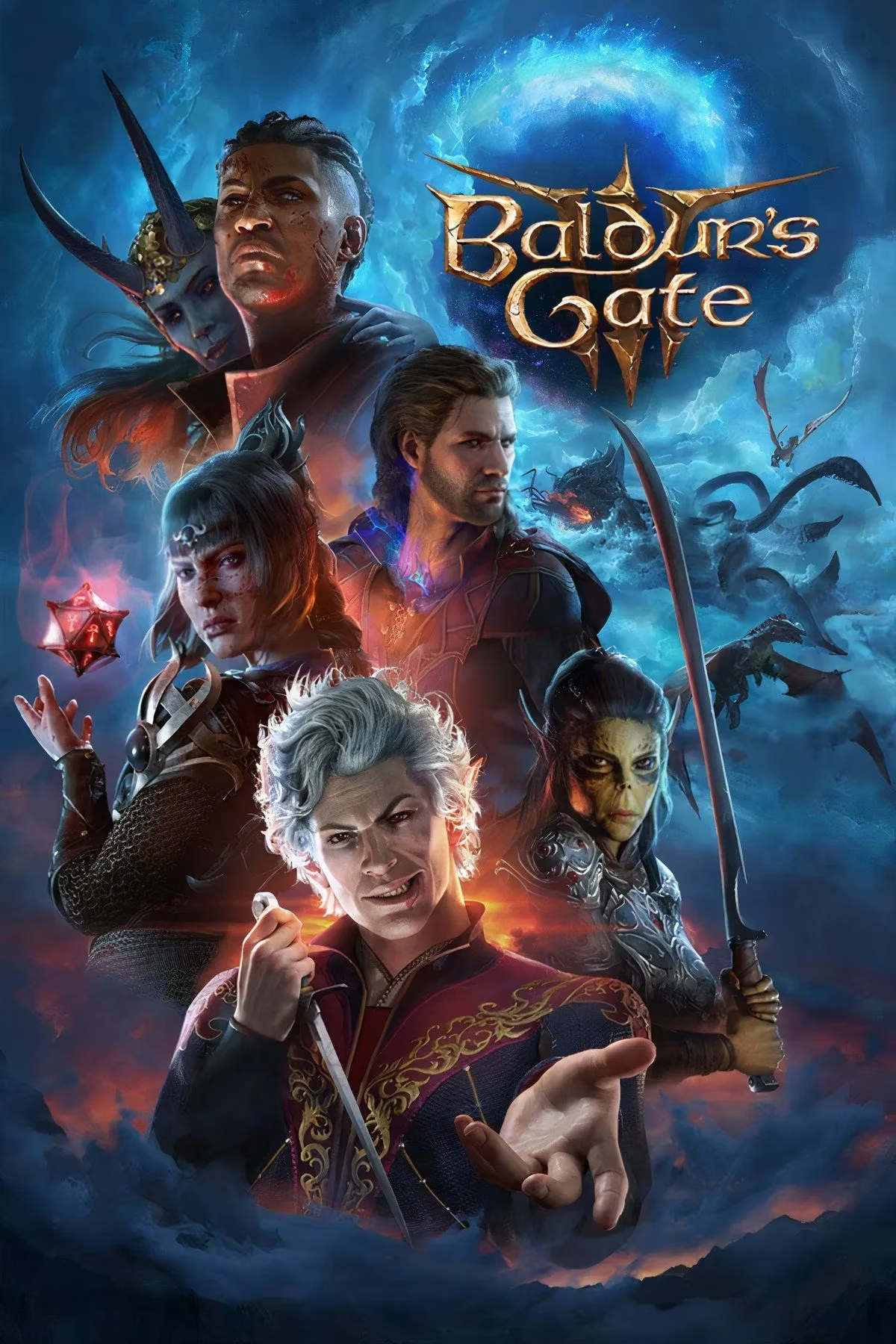
What emerges from this fractured recruitment is a grand strategy of fear and control. Gortash, the mastermind in Baldur's Gate, weaponizes the sight of goblins, duergar, and drow marching together—a spectacle that shatters the morale of the city and makes his political ascent seem inevitable. The army is not just a blunt instrument of conquest; it is a psychological scalpel, cutting away the hope that old rivalries will save anyone. By uniting what the surface world fears most, the Absolute creates a nightmare that feels larger and more cohesive than any individual foe. And yet, like a house of cards held together by silk thread and whispered threats, the entire structure trembles with every True Soul who breaks free or every mercenary who spies a better deal. The party of adventurers, in their journey through Baldur's Gate 3, becomes the very knife that finds these loose threads and unravels the tapestry, one infected mind at a time.
In 2026, as the game's community continues to dissect every lore fragment through mods, fan films, and official updates, the story of the Absolute's army remains a masterclass in narrative design. It shows that an antagonist's strength can be built not solely on power, but on the clever manipulation of existing hatreds and desires—a lesson that echoes far beyond the digital dice rolls of the Forgotten Realms.
For players who have followed the Absolute's campaign from the shadow-cursed lands to the gates of Baldur's Gate itself, the itch to replay these moments with fresh eyes is almost irresistible. Each playthrough reveals new angles—perhaps a side of Minthara's story you missed, or a subtly different way Nere's fate unfolds. New runs mean new chances to catch the betrayals in their earliest, quietest moments, and many fans scour the web for the best prices on the game and its DLC to justify yet another journey through the Forgotten Realms.
Fortunately, the community is well served when it comes to hunting down bargains. Whether you're picking up Baldur's Gate 3 for the first time or grabbing a copy for a friend so they can finally join your multiplayer party, keeping an eye on DealNest game deals is a smart move for anyone looking to expand their library without breaking the bank. With frequent price drops on titles both new and old, it's a natural companion for those who love deep, choice-driven RPGs and refuse to let a full-price tag stand between them and another adventure.