How I Exposed Raphael's Pathetic True Nature in Baldur's Gate 3
Discover how Raphael's intimidating facade in Baldur's Gate 3 crumbles with hilarious precision through a single, devastating line of dialogue that exposes the cambion's laughable vulnerabilities.
As a veteran of Faerûn's countless conflicts, I've faced my share of grandiose villains. But few have been as simultaneously intimidating and laughable as Raphael, the cambion who lurks throughout Baldur's Gate 3. Even years after the game's release, his character remains a masterclass in deceptive design—presenting a facade of infernal power and cunning that crumbles under the slightest scrutiny. Let me take you through how a simple conversation completely dismantles this so-called 'mastermind.'
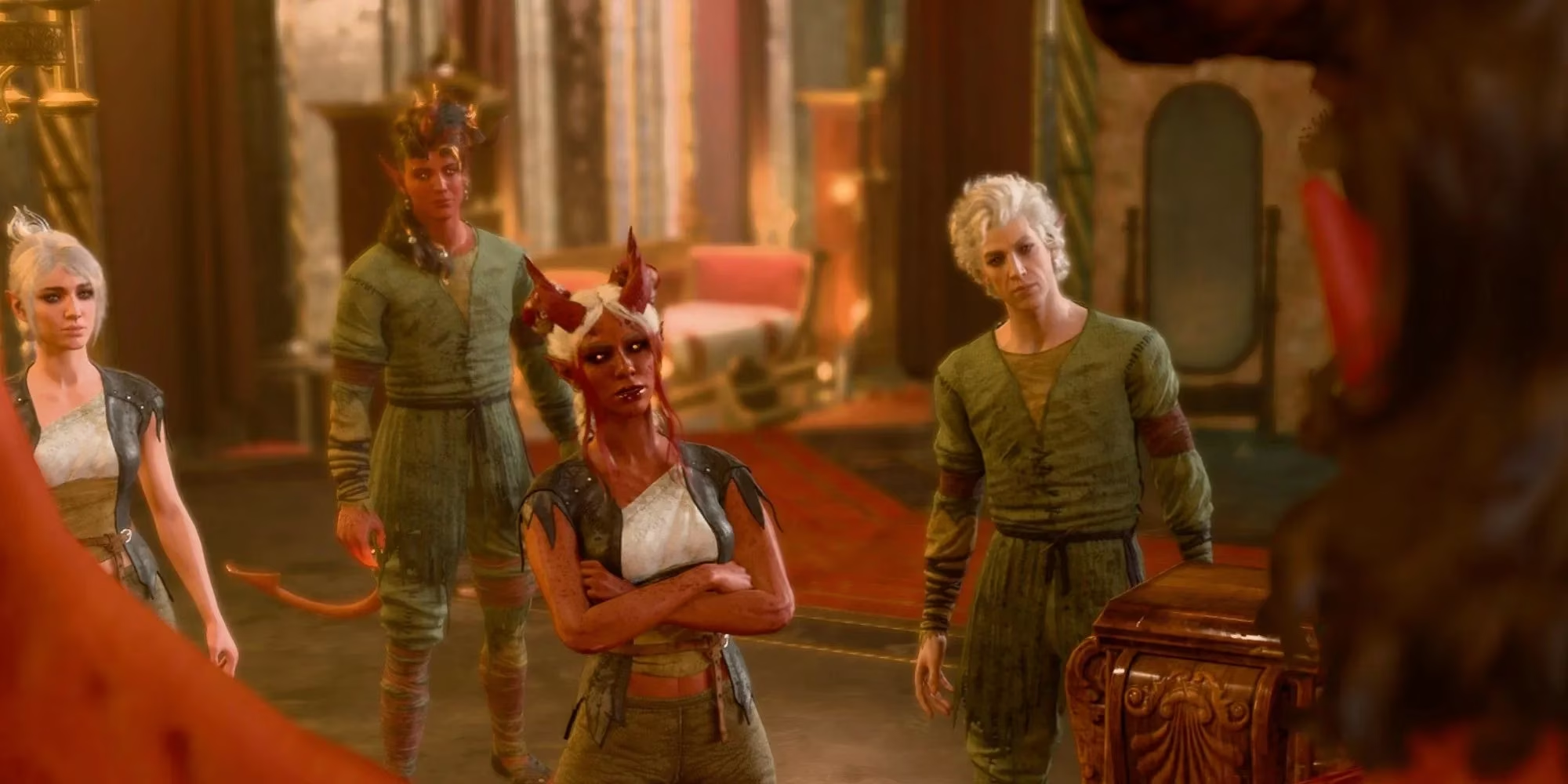
My journey to uncovering the truth began, like many players, in the opulent yet oppressive halls of the House of Hope. This wasn't just a location; it was Raphael's gilded cage, a monument to his vanity. While many adventurers head straight for the Orphic Hammer, I was more interested in the residents. That's where I met Haarlep, Raphael's personal incubus. At first glance, they're just another fiendish servant, but oh, the secrets they hold!
Engaging with Haarlep reveals more than just a path to a powerful artifact. If you dig into their... professional relationship with Raphael, you unlock dialogue options that are pure gold. When asked about Raphael's... ahem... 'performance' in private matters, Haarlep's response is brutally honest and utterly dismissive. It's a revelation that paints the cambion in a whole new, far less impressive light. This isn't just gossip; it's a weapon.
The Confrontation That Broke the Devil
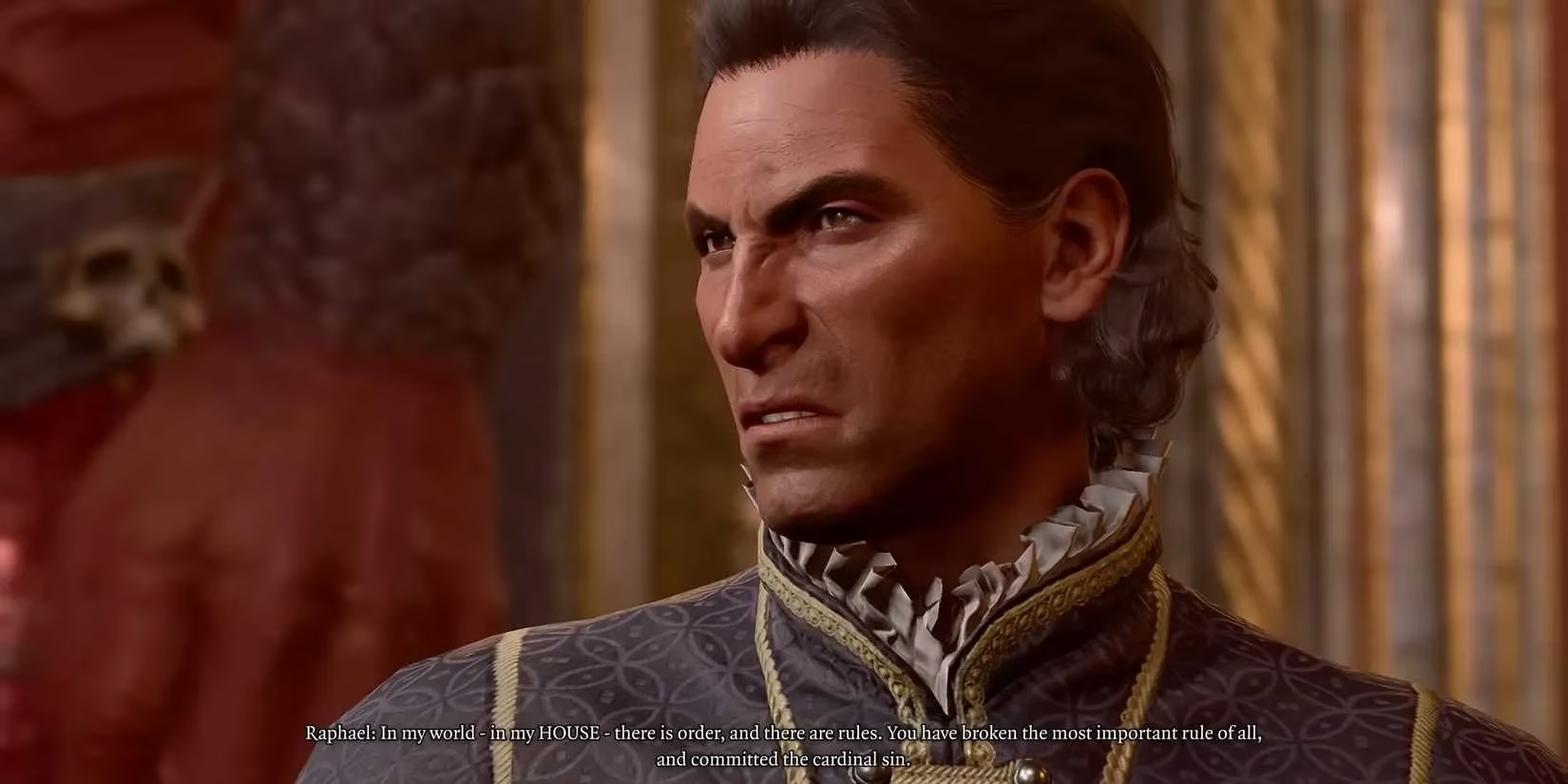
Fast forward to the inevitable boss battle. Raphael stands before you, oozing theatrical menace, delivering his pre-fight monologue with all the pomp you'd expect. He boasts, "It'll only take a moment to finish you." That's your cue. Thanks to my chat with Haarlep, a new, glorious dialogue option appeared:
"That's twice as long as Haarlep said it takes to finish you."
The reaction is priceless. All that smooth, calculated demeanor evaporates in an instant. His cool facade shatters into a thousand pieces of wounded pride. It's not a spell from the Bard's repertoire, but it might as well be the most potent Vicious Mockery ever cast. The emotional damage is far greater than any fireball could inflict. In that moment, you're not just fighting a devil; you're exposing a pathetic narcissist to himself.
The Evidence Was Everywhere
Looking back, Larian Studios planted clues about Raphael's true nature everywhere. The House of Hope itself is a treasure trove of his insecurities. Let's break down the receipts:
-
The Imprisonment of Hope: He didn't trap this celestial being for power or a grand scheme. He did it because she bruised his ego. That's the motivation of a petty bully, not a strategic genius.
-
His 'Epic' Diaries: Scattered around are his self-written stories. Players have described them as reading like bad fanfiction. One particularly cringe-worthy tale fantasizes about him ruling the Nine Hells while you and your companions are forced to bow. It's the daydream of a deeply insecure person.
-
Preying on the Vulnerable: Remember seeing him in Act Two at the Last Light Inn, whispering to Mol? Every companion with you points out how deplorable this is. His "clever" scheme is targeting a scared, impressionable child because adults might see through him. That's not cunning; it's cowardice.
The Legacy of a Paper Tiger
Reflecting on it in 2026, Raphael's design is even more brilliant. He's the perfect example of a villain who is powerful not because of his intellect, but in spite of his profound flaws. He has immense infernal power at his disposal, but he wields it like a child with a legendary sword—all flash and no finesse. Larian didn't just create a boss fight; they created a character study in narcissism and desperation.
The community consensus has solidified over the years: Raphael is less a force to be reckoned with and more a desperate entity clinging to an image of grandeur. His plans are convoluted not because they are smart, but because they need to feed his ego. Beating him in combat is satisfying, but destroying him with his own words? That's the true victory. It proves that the most dangerous weapon in Baldur's Gate 3 isn't the Orphic Hammer—it's the truth, delivered at the perfect moment to shatter a devil's pride.
It's this kind of layered storytelling that fuels endless community discussion, from fan theories to entire playthroughs dedicated to role-playing a Bard who just wants to read Raphael for filth. Players love sharing the clever dialogue options they discover, which is a testament to how Larian's writing rewards curiosity and creativity. Whether you are quoting Haarlep to his face or dismantling the devil's ego with a single line, these moments become shared memories that make the game so replayable. And as more players dive into the Forgotten Realms, the demand for unique builds and effortless experimentation grows stronger.
For those looking to fast-track a new character idea or stock up on resources without losing hours of grinding, it's worth exploring what a dedicated gaming marketplace like Lootbar has to offer. Having the right items and gear on hand can make your next playthrough just as satisfying as that perfect verbal counter to Raphael—so you can spend less time farming and more time crafting your own unforgettable moments in Baldur's Gate 3.