How Curse of Strahd Made Me Rethink Astarion's Ascension in Baldur's Gate 3
Explore the compelling parallels between Curse of Strahd and Ascended Astarion, revealing the profound gothic tragedy and corrupting nature of vampiric power.
Yo, fellow adventurers! Let's be real, before Baldur's Gate 3, my D&D knowledge was about as stable as a gelatinous cube on an ice rink. I was that player at the table, all dramatic flair and zero rules comprehension, much to my DM's eternal suffering. But then BG3 dropped, and it was like someone cast Enlighten on my brain. Suddenly, Faerûn wasn't just names on a page; it was a living, breathing world I could feel. It made everything click, and I went from a casual enjoyer to a full-blown lore gremlin, desperately scouring every sourcebook I could find.
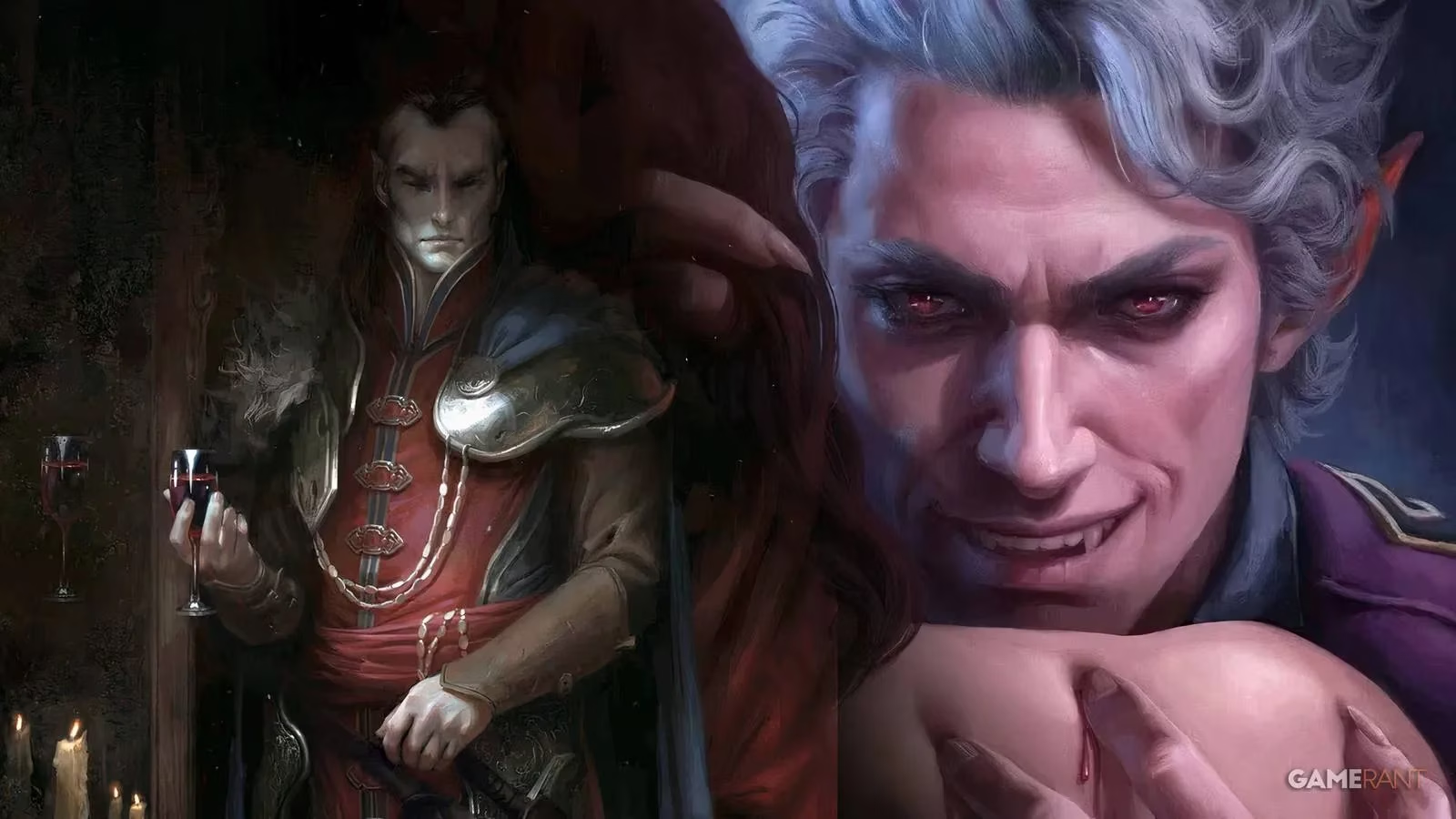
As a certified horror and vampire stan, one book called to me like a Siren's song: Curse of Strahd. Just reading it, you can feel the gothic dread seeping from the pages—the despair, the hunger, the eternal, fog-shrouded tragedy of Barovia. But here's the kicker: as I dove into the tale of Count Strahd von Zarovich, my brain kept doing a weird redirect. I wasn't just thinking about the ancient vampire lord... I couldn't stop thinking about our favorite snarky, trauma-riddled vampire spawn from BG3, Astarion. Talk about a vibe check I wasn't ready for.
Wait, Comparing Astarion to Strahd? Let's Unpack That
Okay, hear me out. On the surface, it seems wild. Strahd is the OG BBEG, an immortal tyrant who sees his subjects as literal cattle. Astarion? For most of the game, he's a victim, a spawn under the thumb of a sadistic master. They're practically opposites... except for the whole "undead" thing. But Curse of Strahd isn't just about fighting monsters; it's about the mood—the oppressive weight of corrupted power and the loneliness at the heart of monstrosity. And reading it... man, it cast Ascended Astarion in a whole new, terrifying light.
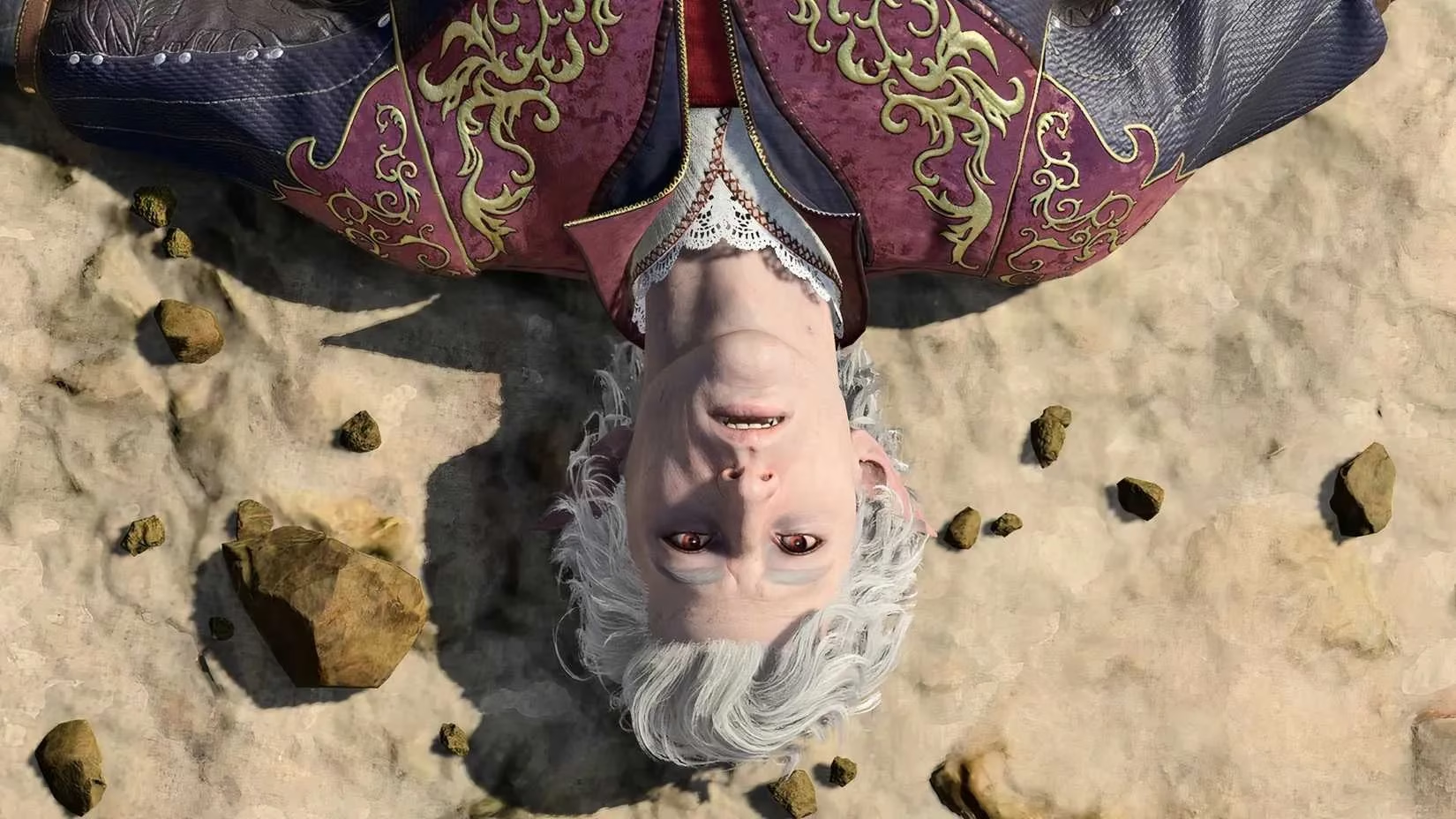
That pivotal Act 3 choice in BG3—to let Astarion complete the Rite of Profane Ascension—is a game-changer. An Ascended Astarion becomes a Vampire Ascendant, a being of unprecedented power in the Forgotten Realms, arguably surpassing even Strahd. And that's where the parallels start getting uncomfortably cozy. Let's break it down with a quick table:
| Thematic Parallel | Strahd in Curse of Strahd | Ascended Astarion in BG3 |
|---|---|---|
| Tragedy Before Terror | A nobleman's love curdled into an obsessive, eternal curse. | A spawn's fight for freedom ends with him losing his soul to power. |
| The Illusion of Freedom | Rules Barovia, but is its greatest prisoner, bound by his own curse. | Rules the Szarr Palace, but trades Cazador's chains for gilded ones of his own making. |
| Loneliness of Power | Surrounded by minions, eternally alone, chasing a ghost. | Powerful and confident, yet his "consort" dynamic is about possession, not partnership. |
Reading about Strahd's eternal, repeating patterns—his "love" for Tatyana that's really just possessive obsession wrapped in centuries of grief—was a massive gut punch. It made me see Ascended Astarion's "good" romance ending not as a triumph, but as the first step down the same dark path. When he names Tav his consort, it's not an equal partnership; it's a coronation. It's reverence bound by imbalance, a gilded eternity that feeds rather than frees. Strahd marries to eventually discard; Astarion immortalizes to... consume. Oof.
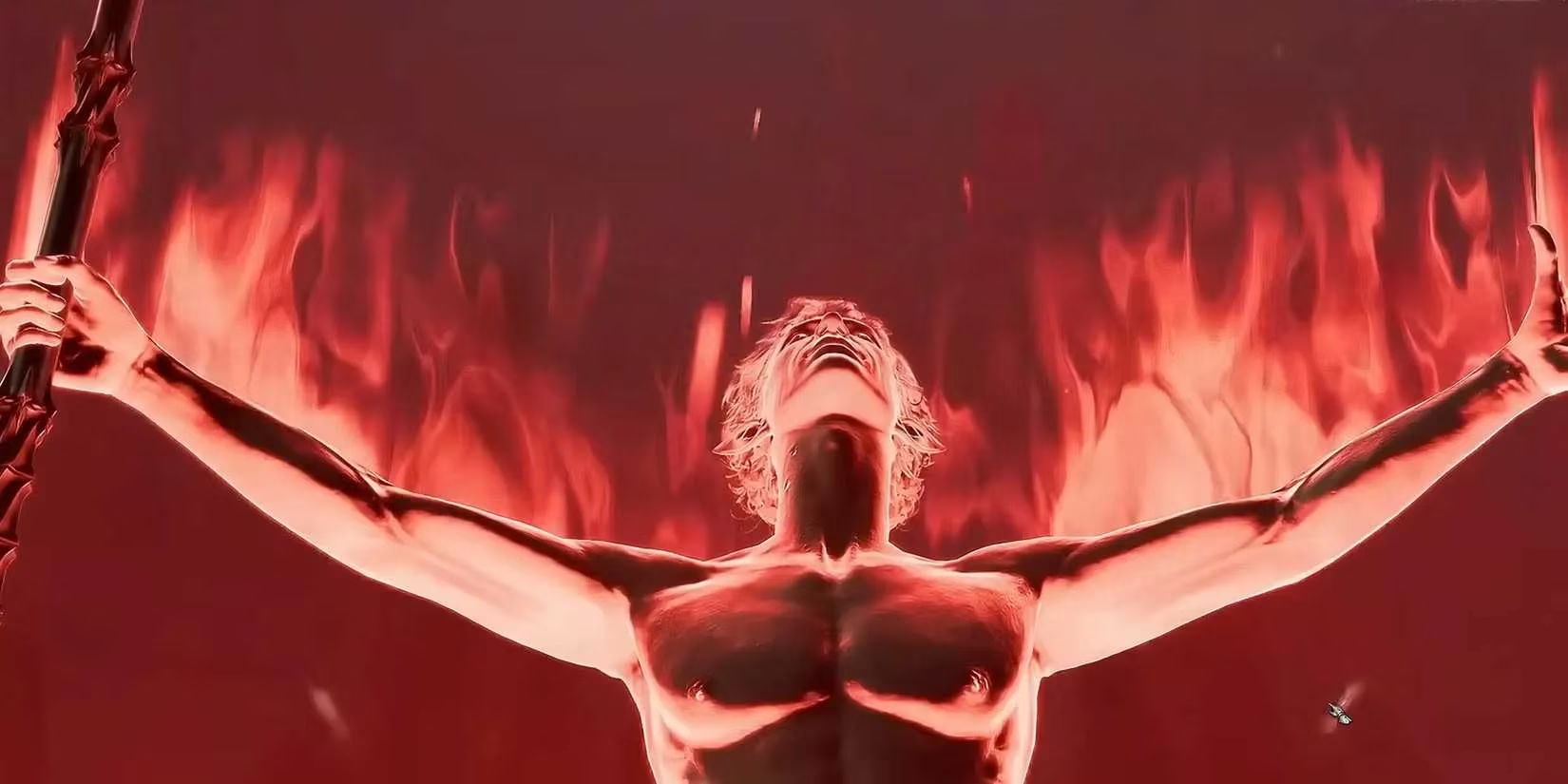
Barovia: A Mirror to Baldur's Gate's Worst Future
And then there's Barovia itself. This land of endless night, where the very land is poisoned by its ruler's despair. Playing through Curse of Strahd in 2026, with all its updated terror, I couldn't help but project. The epilogue of BG3 shows Ascended Astarion just starting his political climb, throwing lavish parties in his palace. But what comes next? Curse of Strahd felt like a crystal ball showing me Baldur's Gate's potential future under a long, unchallenged Astarion reign.
-
A city ruled by hunger (for power, for adoration, for security).
-
A city polished by vanity, yet hollowed out by a loneliness no amount of worship could ever fill.
-
A place where, like Barovia, the shadow of its ruler stretches over every street, corrupting everything it touches.
It's a future where the charming rogue we all loved becomes the source of the same gothic dread we explore in Ravenloft. The true horror isn't the fangs or the necrotic damage—it's watching ambition and the desperate need to never be hurt again curdle into absolute domination. That's the legacy Strahd represents, and it's the path Astarion sets foot on the moment he ascends.

The Tender Tragedy in the Terror
But here's the thing that really got me emotional. Despite all this darkness, I can't help but feel a pang of... tenderness? For both of them, in a messed up way. Because beneath Astarion's ascended hunger is the ghost of the man who just wanted to see the sun again. His potential for a softer, redeemed ending doesn't get erased by his worst one. And Strahd? His entire curse is born from a twisted, catastrophic failure to connect.
Curse of Strahd drills home a brutal truth: vampire lords cannot love. They can only hunger. Strahd mistakes possession for devotion, control for care. And looking at Ascended Astarion through that lens... you can see the same shadow flickering behind his charming smile. They both prove that power, no matter how divine or damned, can't resurrect what's been lost.
Yet, there's one crucial, beautiful difference. Strahd is trapped. His story is a closed loop of eternal recurrence, a curse with no exit. Astarion's story, however, ends with our choice. Baldur's Gate 3 gives us—and him—the mercy that Barovia never offers: the chance to walk away from the abyss before the hunger wins. We can choose the path where he learns to live with his scars, not become a monster defined by them. We can give him the sunrise, not just a darker shade of night.
So yeah, diving into Curse of Strahd in 2026 didn't just teach me about Ravenloft; it reframed one of my favorite BG3 characters in the most heartbreaking way. It showed me the full, terrifying weight of that Ascension choice. It reminded me that in D&D, the most powerful curses aren't always cast by wizards... sometimes, they're the ones we choose for ourselves. And maybe, just maybe, the greatest heroic act isn't slaying a vampire lord, but convincing a broken man that he doesn't have to become one.