From Clueless Newcomers to Master Hunters: RPGs That Truly Reward Your Time and Skill
Discover the unparalleled satisfaction of mastering challenging role-playing games, where survival hinges on strategic learning and relentless perseverance. From Darkest Dungeon's psychological trials to Monster Hunter Wilds' epic hunts, these games transform you from a terrified survivor into a calculated, unstoppable force.
You know what I’ve realized in 2026? Not all adventures are created equal. Some role-playing games just hand you power on a silver platter, while others… well, others make you earn every single victory. And honestly, isn’t that the most satisfying feeling? The journey from being completely overwhelmed to becoming an unstoppable force is what separates a good RPG from a legendary one. So,
When the Dungeon Fights Back: Learning to Survive
Remember that first time you stepped into a game and got absolutely demolished? I sure do. It’s humbling. Take Darkest Dungeon, for example. That game doesn’t just challenge you; it psychologically warps you and your party. You start with a ragtag group of mercenaries, trembling before eldritch horrors. Every decision feels life-or-death. But here’s the magic: you learn. You start to understand which skills counter which threats, how to manage stress, and how to build a party that works in symphonic, violent harmony. The shift from terrified survivor to calculated dungeon delver is profound. You don’t just get stronger; you get smarter. Isn’t that the ultimate form of progression? 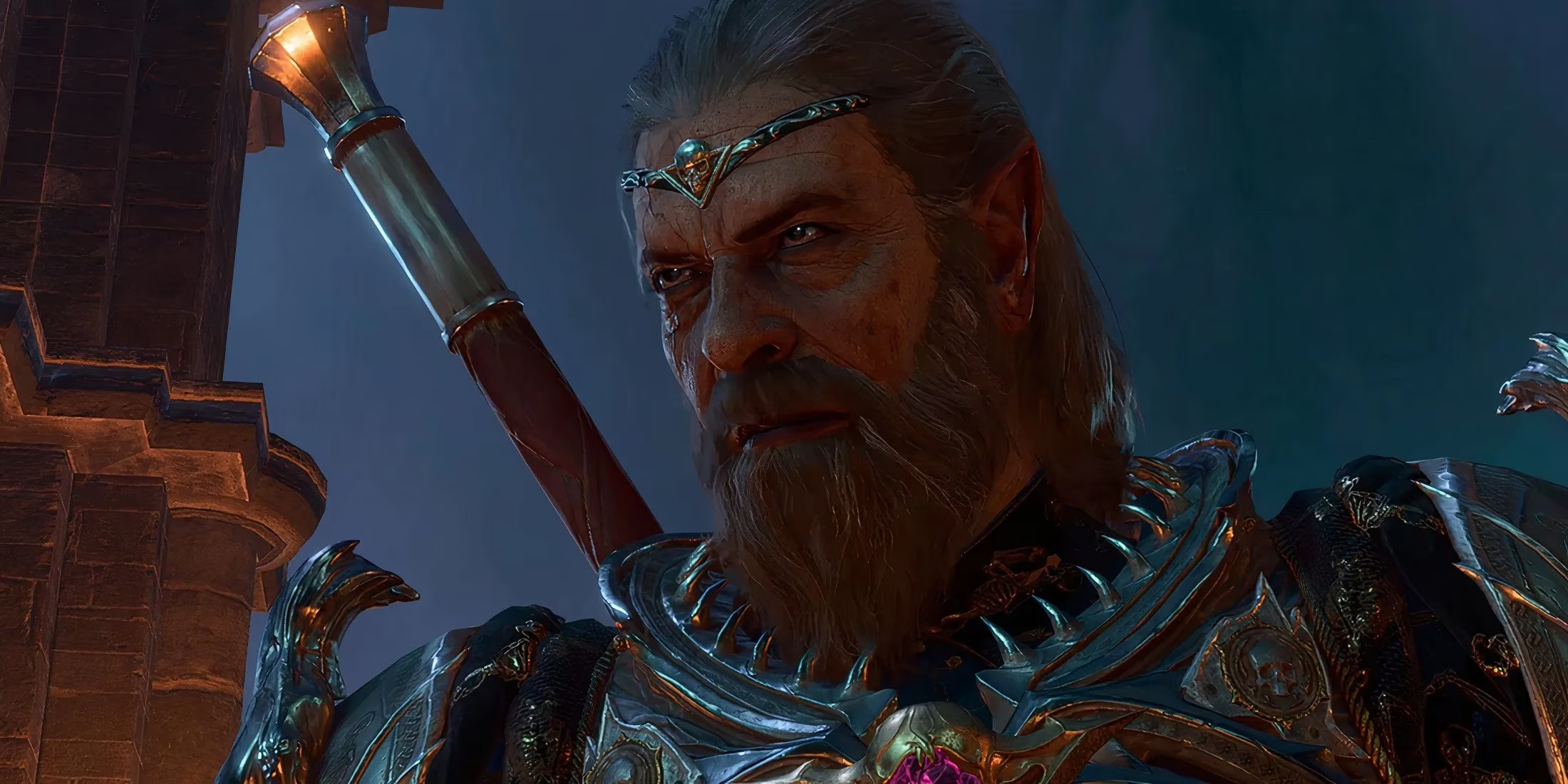
Then there’s the school of hard knocks known as Shin Megami Tensei: Nocturne. This game is a brutal professor of turn-based combat. You’ll hit a boss and it will feel like a brick wall. But that wall has a pattern, a weakness. The game forces you to optimize. You can’t just overlevel; you need to understand affinities, fuse the right demons, and master the buff/debuff dance. When it finally clicks? You go from being schooled to schooling those very same bosses. The knowledge you gain becomes your most powerful tool, and the efficiency of your combat is a direct reward for your perseverance.
The Joy of Starting from Zero
Some games master the art of making you feel genuinely powerless at the start, which makes your growth so much sweeter. Gothic is a classic example. You begin as the clueless “Nameless Hero,” and even a lone scavenger can end your journey. All you can do is bait enemies into clumsy one-on-one fights, hoarding experience points you barely understand. The world feels hostile and impenetrable. But then, you learn the camp structure. You talk to the right experts, you train, and suddenly, you’re not just surviving—you’re thriving. The moment you confidently take on an orc that would have obliterated you hours earlier is a triumph of player learning, not just character stats.
This philosophy is taken to a grand, epic scale in Monster Hunter Wilds. Sure, it’s the series’ first true open world, but the core satisfaction remains. You start by fumbling with your weapon, maybe getting carted by a relatively small monster. But with every hunt, your knowledge expands. You learn the monster’s tells, you master your weapon’s full moveset, and you optimize your gear. The progression isn’t just in your hunter’s rank; it’s in your own hands and mind. Overcoming a foe that once seemed impossible isn’t just a win; it’s a testament to your growth as a player. The game systematically rewards both your careful loadout planning and your raw mechanical skill.
Mastering the System: From Understanding to Domination
This is where RPGs become truly special—when you transition from playing the game to mastering its systems. Octopath Traveler 2 is a beautiful exhibit. On the surface, it’s a gorgeous, accessible JRPG. But beneath that lies a deep, combinatorial combat system. Beginners can have fun, but diligent players can unlock devastating synergies between jobs. Discovering how to break the game using secret jobs and latent abilities (https://www.gamerant.com/baldurs-gate-3-ketheric-thorm-…), after spending 50+ hours understanding the mechanics, is an incredible feeling. You witness your party transform into a well-oiled machine of destruction, and you know it’s not because of random luck, but because of your strategic planning.
Of course, no discussion about mastery is complete without Dark Souls. Yes, it’s hard—famously so. But its difficulty is a gateway to its greatest reward: profound satisfaction. Every death teaches you something. You learn enemy placements, attack patterns, and environmental hazards. You find a weapon that clicks with your style. You discover powerful spells or miracles. And then you start experimenting with builds—the community in 2026 is still finding new, wild ways to play. The progression from being crushed by the Asylum Demon to effortlessly parrying every attack from a late-game boss is a journey of personal growth. You didn’t just level up your character; you leveled up your patience and insight.
Modern Masters: Applying Lessons Learned
The principles of these classic challenging RPGs are alive and well in modern titles, just presented in a more approachable package. Look at Baldur’s Gate 3. Compared to its predecessor, it’s much friendlier to newcomers. You don’t need a PhD in D&D to have fun. But once you grasp the basics, the ceiling for mastery is incredibly high. You can create terrifyingly powerful character builds by combining abilities, items, and environmental interactions. This mastery becomes essential in modes like Honor Mode, where a single mistake can be catastrophic. Learning to exploit an enemy’s vulnerability, positioning your party perfectly, and unleashing a flawless strategy is the pinnacle of rewarding progression. It’s the same journey from novice to expert, just with a smoother on-ramp.
And we can’t forget the lessons of Bloodborne. It taught a generation of players that sometimes, you have to unlearn to relearn. Going in with a Dark Souls mindset got you killed. It forced aggression, precision, and a complete understanding of your weapon’s transformed moveset. Beating Father Gascoigne was a graduation. From there, you learn to craft a build that turns your chosen trick weapon into an extension of yourself. The difference between a first playthrough and a subsequent one is night and day. The dreaded Threaded Cane? In the hands of a master, it’s a whirlwind of elegance and death. The game rewards not just reaction time, but style and deep systemic understanding.
In the end, that’s what these RPGs offer: a documented journey of your own improvement. The save file shows your character’s level, but your brain holds the real progress—the tactics learned, the systems mastered, the patience earned. In 2026, with so many games vying for our attention, there’s something uniquely valuable about these experiences that don’t just challenge us, but truly respect our time and intelligence by rewarding mastery with unparalleled satisfaction.