From Beloved Companion to Bitter Foe: The Sad Story of Viconia DeVir in Baldur's Gate 3
Baldur's Gate 3 and Viconia DeVir reveal a tragic character arc, blending nostalgia with powerful storytelling and deep emotional impact.
For players who only know the world from the 2023 smash hit, Baldur's Gate 3, meeting the formidable drow Mother Superior Viconia DeVir might just feel like encountering another in a long line of ruthless Sharran zealots. But for the old guard—the veterans who fought alongside her back in the days of the Bhaalspawn Crisis—her appearance hits different. It's less of a dramatic reveal and more of a gut punch. Here was a character who had, over two epic adventures, shown glimmers of vulnerability and the capacity for change, now reduced to a cruel, heartless shell. Talk about a character arc that took a wrong turn and ended up in a ditch!
A Villain's Redemption, Lost to Time
When players first bumped into Viconia in the original Baldur's Gate, she wasn't exactly handing out cupcakes. She was on the run after, you know, the whole 'brutally murdering a family of farmers' thing. Classic meet-cute. She was an evil drow cleric of Lolth, and she made no apologies for it. Yet, beneath that spiky exterior, there was something more. Players who took her into their party and, especially, those who pursued a romance with her in Baldur's Gate II, witnessed a remarkable journey. Through patience and influence, they could guide her away from her evil alignment, shifting her all the way to True Neutral. She wasn't just a weapon; she was a person with conflicted loyalties and a past she was trying to escape. It was a story about finding a new path, and fans ate it up.
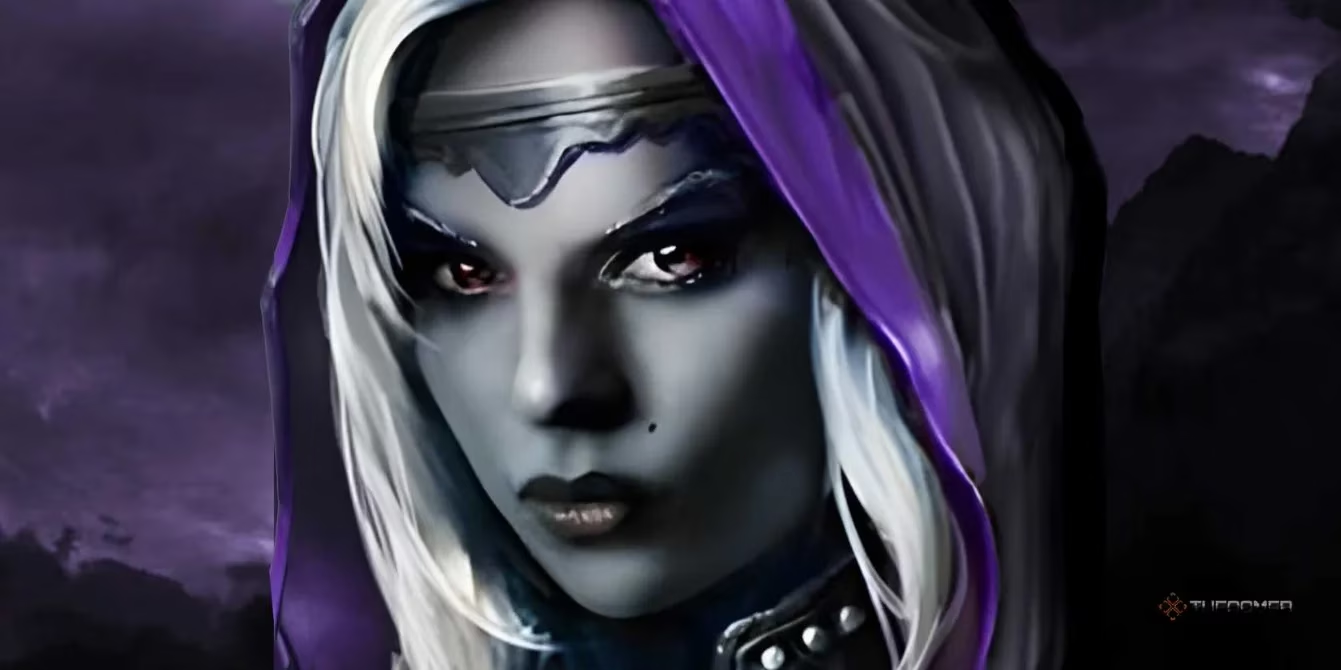
Fast forward to 2026, and the Viconia waiting in the Sharran Cloister is a stranger. That hard-won neutrality? Gone. The capacity for connection? Obliterated. This Viconia is a fanatical high priestess of Shar, defined by a needless cruelty, particularly towards her pupil, Shadowheart. It's a stark regression that left many longtime fans scratching their heads. Had decades of writing just been tossed out the window? Some pointed fingers at Larian Studios for a 'poor portrayal,' but the truth lurking in the game's lore offers a far more tragic, and fitting, explanation.
The Culprit: Shar's Favorite Party Trick
The key to understanding Viconia's transformation isn't poor writing—it's a literal magical artifact: the Mirror of Loss. This creepy slab, hidden in the Cloister, is Shar's ultimate loyalty test. It allows a worshipper to sacrifice a precious memory to the Lady of Loss in exchange for a permanent boost to an ability score. The party can even dabble in this dark bargain themselves if they're feeling brave (or foolish).
The game provides a direct, heartbreaking link to Viconia. One of the wisdom bonuses the mirror can grant is explicitly called "Mother Superior's Memory: Turn to the wisdom of a drow. Once of Lolth, then of Shar." This isn't just flavor text; it's a confession. Viconia didn't just change her mind over the years—she traded the very memories of her growth and happiness for power.
Think about what that means. The memories of camaraderie with Jaheira and Minsc, the tentative trust built with the Bhaalspawn, the fragile hope of a life outside the darkness—all bartered away. Shar, the goddess of darkness, loss, and forgetfulness, offered her a deal: give me your light, and I'll make you strong. And Viconia, for reasons we can only guess at, said yes. Not once, but likely over and over, until nothing of her old self remained.
Echoes of the Past
The most poignant testimony to Viconia's former self doesn't come from a diary or a ghost, but from a living legend: Jaheira. The Harper druid who fought beside Viconia a century ago sees right through the Mother Superior's act. She tells Shadowheart, point-blank, "Viconia was not half so heartless as she liked to appear... I find it hard to believe she could have raised you, and felt nothing for you."
Jaheira remembers the person Viconia was becoming. She's calling out the dissonance between the cruel zealot in front of them and the complex companion she once knew. This line isn't just nostalgia; it's the game's way of confirming that the Viconia in Baldur's Gate 3 is an aberration, a hollowed-out version of her former self. The woman who could feel—who did feel—is gone, her emotions sacrificed at the altar of Shar's bitter power.
A Legacy of Loss
So, Viconia's story in Baldur's Gate 3 isn't a betrayal of her old character arc; it's its tragic conclusion. It's a dark parable about the cost of power and the insidious nature of Shar's worship. Where other returning characters like Jaheira and Minsc carried their histories forward (with plenty of grumbling about their knees, mind you), Viconia's history was systematically erased—by her own choice, under the manipulation of a goddess who thrives on emptiness.
-
Then: A drow outcast capable of redemption.
-
Now: A fanatical priestess, empty of everything but devotion.
-
The Why: The Mirror of Loss, and the memories she willingly sacrificed.
It makes her final encounter profoundly sad. You're not just fighting a boss; you're putting a tortured soul out of its misery, destroying a monument to personal loss that Shar built from the pieces of a once-beloved companion. It's a brilliant, if brutal, piece of storytelling that connects the franchise's past to its present in the most devastating way possible. For the old fans, it adds layers of tragedy. For the new players, it's a masterclass in showing, not telling, a character's history. And for everyone, it's a reminder that in the world of Faerûn, some bargains cost far more than gold.
In the end, Viconia DeVir stands as one of gaming's most tragic returns. She went from a companion you could save to a villain you have to stop, her heart not turned to stone, but simply... forgotten. Now that's a gut punch that lingers.
For those exploring the depths of Faerûn and seeking to further understand the rich tapestry of its characters and lore, resources outside the game can provide valuable insights. Whether you're a veteran of the series or a newcomer captivated by its intricate storytelling, delving deeper into the lore can enhance your gaming experience. Engaging with communities and platforms dedicated to exploring these narratives can offer fresh perspectives and a deeper appreciation for the game's complex characters.
One such resource is Lootbar, where enthusiasts gather to discuss and dissect the nuances of character arcs and storylines in games like Baldur's Gate 3. With a community eager to share knowledge and insights, it's a perfect place to further your journey into the world of Faerûn and beyond. Whether you're strategizing for your next encounter or simply wishing to connect with fellow adventurers, Lootbar offers a treasure trove of information and camaraderie.