Echoes of My Gaming Missteps: When Early Decisions Haunt
Beware the haunting echoes of 'video game save files' and the agonizing consequences of 'early-game decisions' in unforgettable franchises like BioShock and Mass Effect.
I live on the digital edge, a chaotic soul who dances with my save files like a leaf in the wind. Overwriting. Always overwriting. This routine of mine, it's like talking to destiny without a safety net—normally, I get by just fine, you know? But sometimes, oh, sometimes... a whisper from the game's first act curls back on itself, a serpent biting its tail. I feel the chill of a choice made in innocence hours, days, even games ago. No amount of frantic reloading, my trusty save-scumming trick, can undo what's been done. Those precious backup files? Dust on the wind. We've all been there, haven't we? That gut-punch moment when a careless click, a moment of hubris, or a seemingly harmless slice of pie echoes through the universe. Some games are masters of the long con, making us live with our ghosts for hours before the haunting truly begins.
If you're a fellow chaotic gremlin of the save slots, then buckle up. Let me walk you through the spectral gallery of my regrets, the early-game decisions that came back with interest.
BioShock: The Sisters of Rapture
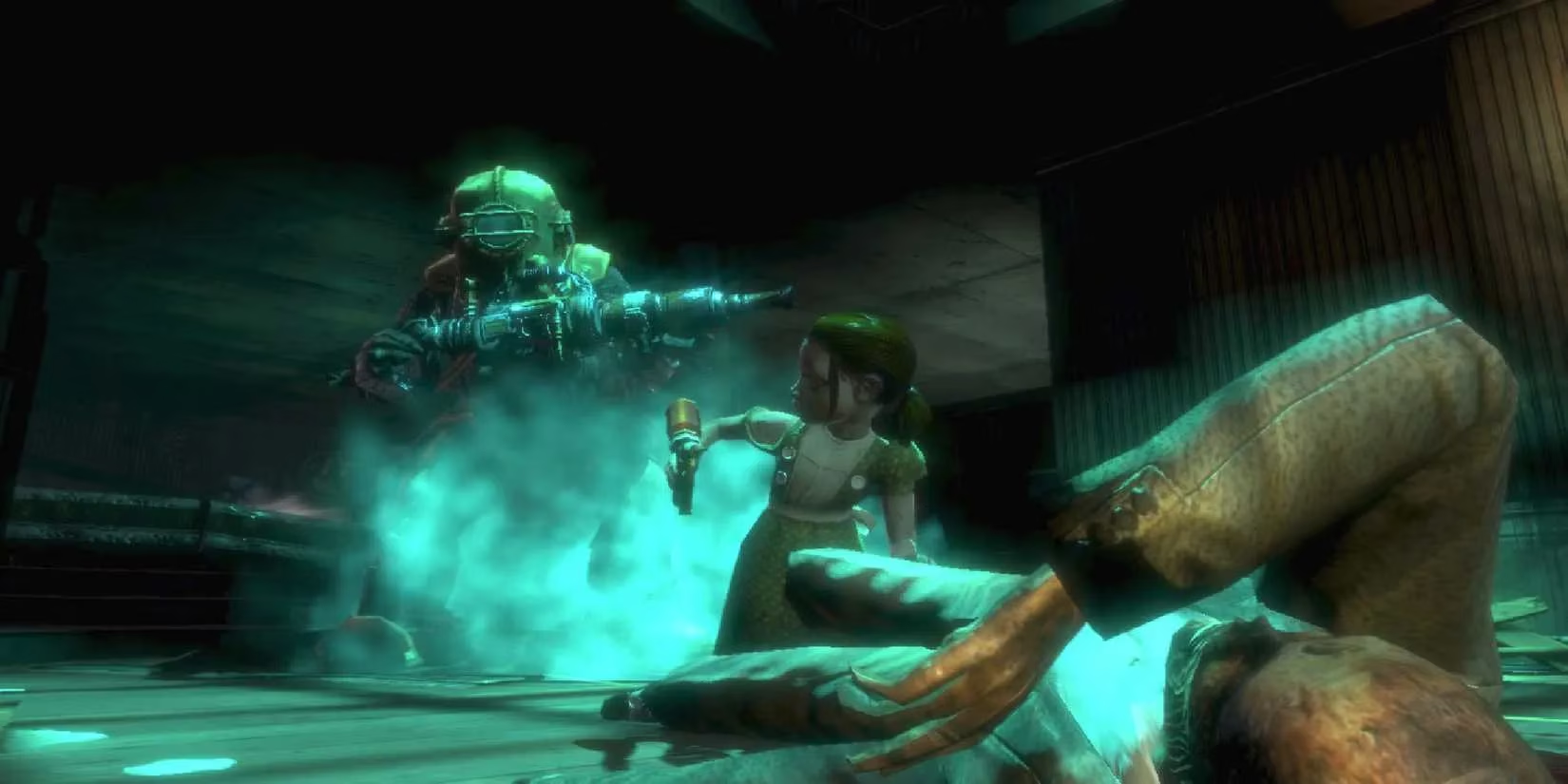
When I first descended into the dripping art deco nightmare of Rapture in BioShock, I was mesmerized. The world breathed stories; every flickering light was a confession. But the Little Sisters… ah, they were a different story. Those tiny figures with their oversized syringes gave me the willies, I tell you. Standing before that first one, humming as she harvested ADAM from the dead, I felt the game’s cold offer: power, at a price. My finger hovered. I could almost feel the virtual ADAM coursing through my veins. But I let her be. And boy, am I glad I did. It turns out, that choice wasn't just about one creepy kid. It was a covenant. Harvest them, and you don't just make a Big Daddy angry—you fundamentally change the ending. The game remembers your cruelty, and the final curtain call is a fitting, chilling reward for a heart turned to stone. My saved world ended in light, not in the cold, dark depths my ambition could have wrought.
Mass Effect: The Price of Virmire
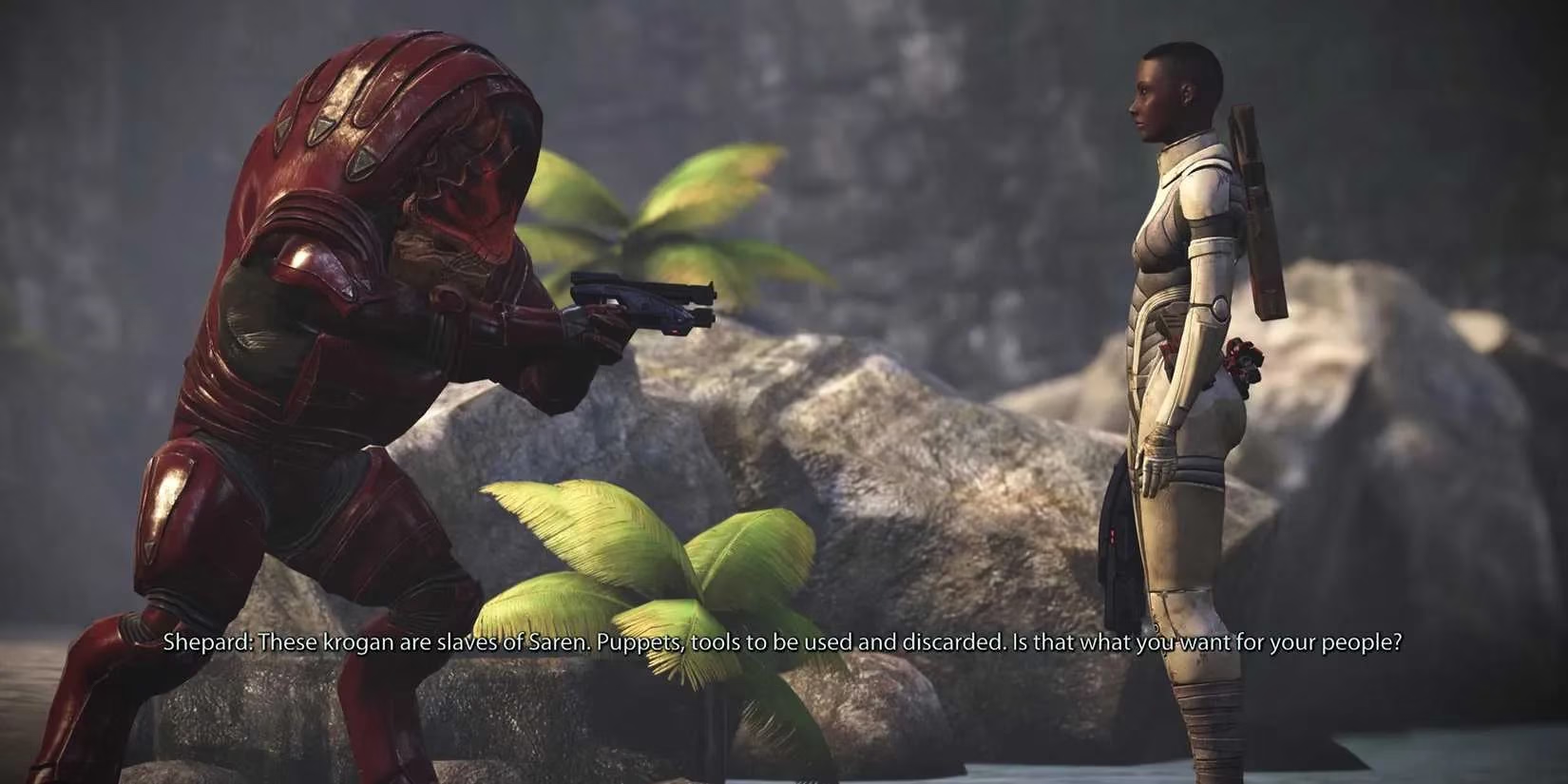
Mass Effect was the stern teacher who finally made me save responsibly. One wrong move here doesn’t just sting for an afternoon—it echoes across a galaxy and three entire games. Take Virmire. It’s not the earliest hour, but in the grand trilogy, it’s the spark. You stand before Wrex, a Krogan battlemaster whose people are dying thanks to the Genophage. He learns you might destroy the only hope for a cure. The tension is thicker than Palaven’s atmosphere. Fail to calm his righteous fury—and I mean really fail—and you are faced with a choice that leaves an empty space in your squad for hundreds of hours.
Kill Wrex, and his brother Wreav takes the reins of the Krogan. Where Wrex was a grumpy but wise uncle, Wreav is pure, unadulterated rage. That decision, made in the heat of a mission, ripples out, shaping galactic politics in Mass Effect 3 and making the Krogan's future a much, much darker prospect. It’s a legacy of regret written in stars and sorrow.
Dishonored: The Weight of a Blade
Dishonored speaks to me through its environment. It’s a world that reacts. As Corvo, the disgraced protector, I learned that every silenced guard, every sleeping body, was a note in a symphony of chaos. From the very first mission, the game presents a binary heart: kill or incapacitate. I’m a ghost by nature, a shadow that prefers sleep darts to sword swings. But the game showed me the cost of bloodshed even when I avoided it. Choosing violence paints Dunwall in stark, brutal strokes. The Chaos meter climbs, a silent judge. More rats scuttle in the filth, more guards patrol with paranoid eyes, and the very people you try to save might look at your bloody hands and turn away. The tension becomes a physical thing in the air. Since Chaos builds from the first minute, there’s no easy redemption later. To walk in the light, you must be a saint from the start. A single, early kill is a stain that spreads.
Fallout 3: Megaton's Dying Breath
Ah, Bethesda. Masters of giving you the keys to the kingdom and a lit match. In Fallout 3, you can fundamentally rewrite the Capitol Wasteland’s map within the first few hours. All it takes is a chat with the sinister Mr. Burke and a trigger finger. Megaton, that ramshackle town built around an undetonated bomb, is a hub. It’s a home. Blowing it up for some caps and a fancy penthouse? Honestly, that's a bit much, even for the wasteland. But if you do… wow, does the game make you feel it.
The crater left behind is more than physical. Quests vanish into the radioactive dust. Friendly faces are erased. Your karma plummets into the abyss, and you get a stern, disappointed lecture from your father, voiced by Liam Neeson himself—which, let’s be real, is the harshest punishment of all. It’s an early, monstrous act that leaves the world quieter, lonelier, and morally bankrupt for the long road ahead.
King's Quest V: The Yeti's Custard Pie
This one is a classic, an innocent bit of flavor that turns into a brick wall. King’s Quest V is a beautiful, unforgiving beast. Early on, in a quaint town, you can buy a delicious-looking custard pie. My role-playing instincts kicked in. "King Graham is hungry!" I thought, and my pixelated monarch devoured it. Big mistake. Hours later, in a snowy mountain pass, I met a yeti. A yeti with a very specific craving for custard pie. With my belly full and my hands empty, I was stuck. Completely, utterly soft-locked. This wasn't about morality or story branches; it was pure, cruel adventure game logic. The only way forward was to go all the way back—to restart the journey, resist temptation, and carry that pastry like the holy grail. It’s a tiny decision that eats hours of your life, a perfect example of how games used to have zero mercy.
Assassin's Creed Odyssey: Mercy’s Plague
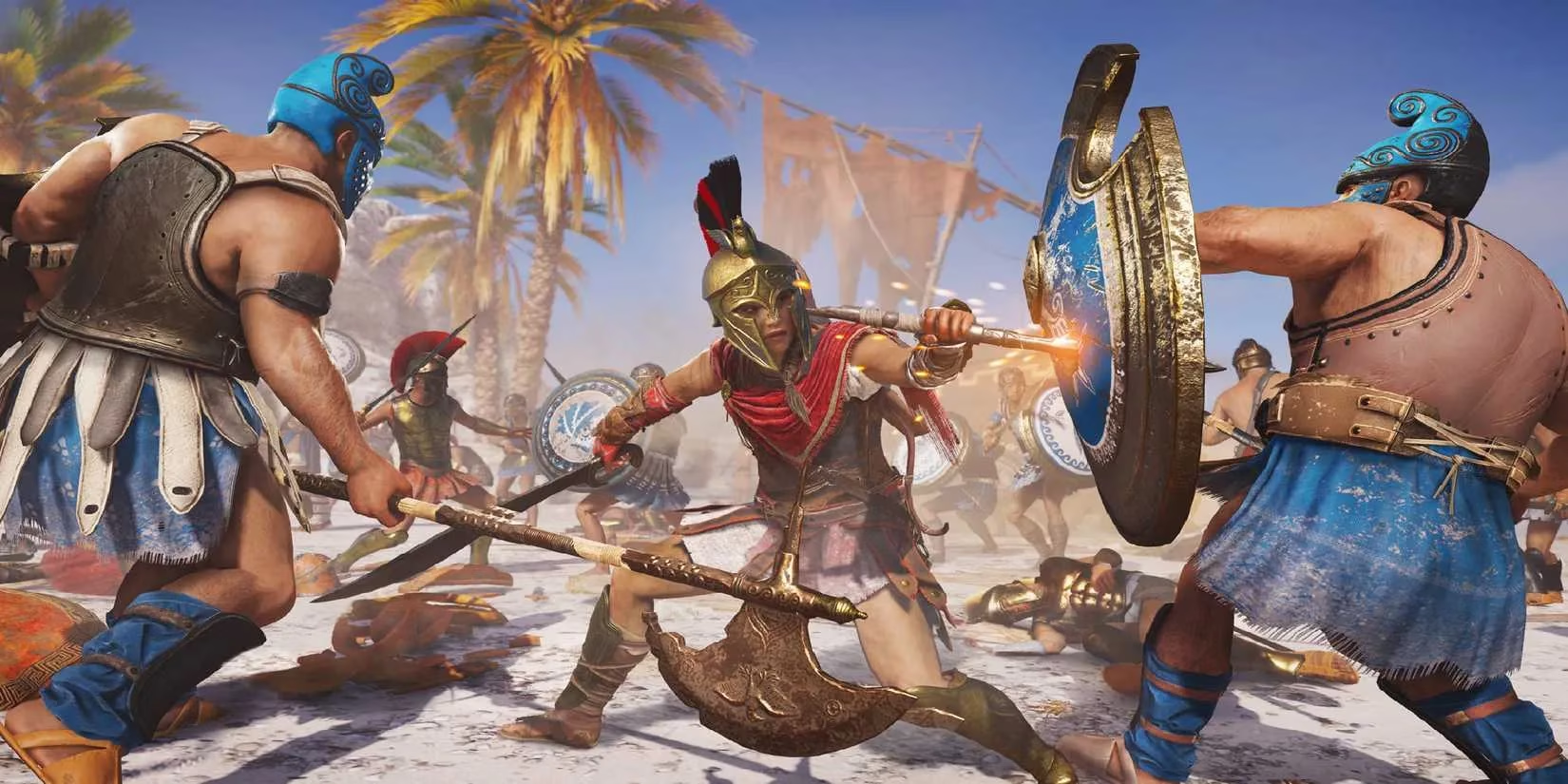
Kephallonia is a jewel in the Aegean Sea, all sun-drenched cliffs and azure water in Assassin's Creed Odyssey. One of your first major moral choices is here, concerning a family accused of carrying a plague. The priest wants them contained. You can play the merciful hero and argue for their freedom. In my hubris, I did just that. I freed them, proud of my compassion. Later, I sailed back to the island. The sun was still shining, but the beauty was gone. The plague had spread. The idyllic villages were now husks of suffering. My mercy had doomed the very place I started in. Worse, it touched the life of Phoibe, a bright young girl who was friends with the family. My early act of "kindness" had turned a paradise into a graveyard, a lesson in unintended consequences written in fever and loss.
Detroit: Become Human: The Death of a Mentor
Detroit: Become Human weaves its stories with fragile threads. As Markus, the android caretaker, you live with Carl, the aging artist who sees your humanity. When Carl’s resentful son confronts you, Carl pleads for pacifism. "Do not fight," he says. Listening to him, in that heated moment, feels like the right, respectful thing to do. But it’s a trap of good intentions. If you obey, Carl dies in the struggle. His death isn't just a sad scene; it fundamentally warps Markus’s path. Without Carl’s calming wisdom, Markus’s revolution is born from a place of deeper hurt,更容易 turning toward violent, radical ends. That single choice of passivity in the first act can steer the entire android uprising toward a fiery, tragic conclusion. The game whispers: sometimes, defiance in the moment is the truest form of loyalty.
Baldur’s Gate 3: The Grove’s Silence
Want to be a pariah in record time? Baldur’s Gate 3 has the solution. Early in Act 1, you find the Druid Grove, a sanctuary for refugees and nature priests. You can help the druids complete a ritual that will seal the grove… by killing all the Tiefling refugees inside. I made this choice once, just to see. The silence that followed was deafening. The world didn't just judge me; it emptied.
| Consequence | Impact |
|---|---|
| Lost Companions | Karlach, Wyll, and Halsin leave in disgust. Poof. Gone. |
| Lost Content | All Tiefling-related quests for Acts 2 & 3 vanish. |
| Lost Craftsman | Dammon, the best blacksmith, is dead. No gear upgrades for you! |
It’s a decision that strips the color and life from your adventure, leaving a lonelier, harsher path. An early massacre costs you friends, hope, and a whole lot of cool loot down the line.
Disco Elysium: The Heart Attack of Hubris
Picture this: you’re a hungover amnesiac detective, and you’ve just woken up in a world of pure, surreal despair. In Disco Elysium, you allocate your skill points at the start. I, in my infinite wisdom, crafted a cerebral, psyche-focused Harry. I ignored his Physique. Why lift weights when you can have profound internal monologues? Later, trying to impress a kid by lifting a mailbox, my Harry clutched his chest and died. Just… died. A game over screen from a heart attack, all because I didn’t put a single point into a physical attribute at the very beginning. It’s the most literal, visceral punishment for an early decision: your character’s stats aren't just numbers, they are his literal vitality. Choose wrong, and the world kills you for your neglect.
Avowed: The Unread Letter
In the bustling, magical world of Avowed, it’s easy to get distracted. So many quests, so many shiny things to collect! My companion mentioned a letter from my spy. "I’ll read it later," I thought, and promptly forgot. Big oops. That unopened envelope contained a warning about explosives being smuggled into the city of Fior. I carried on, blissfully unaware, solving other problems. Then, during a later mission, I saw it in the distance: a column of smoke. Fior was burning. My negligence, my simple failure to open a piece of mail from the first act, had doomed an entire city of Animancers to flames. The game presented the clue, handed me the agency to prevent a disaster, and I… just didn’t pick it up. The consequence was a smoldering ruin on the horizon, a permanent scar on my world and my conscience.
These are the ghosts in my machine, the echoes of choices made when the game was still whispering its rules. They teach me that in these digital worlds, there are no small decisions—only seeds, planted in the first act, waiting to grow into the forests we must navigate later. And me? I still live on that edge, overwriting my saves. But now, I listen a little closer to those early whispers, for they carry the weight of worlds to come.