Crafting Light in the Darkness: The Soul of Starfinder: Afterlight
Embark on an epic journey into the immersive universe of Starfinder: Afterlight, where innovative game development meets cosmic storytelling. Discover the unparalleled challenges of animating unique ancestries like the Kasatha and Skittermander, as the team at Epictellers crafts a narrative that transcends traditional gaming experiences.
I find myself adrift in the vast, silent sea of game development, a lone captain charting a course for a star that has yet to be born. The year is 2026, and the nebula of our creation, Starfinder: Afterlight, has just begun to coalesce from the cosmic dust of ideas and passion. Our small vessel, Epictellers, is sailing into the deep, inspired by the constellations of Baldur's Gate 3, Guardians of the Galaxy, and the warm, familiar glow of the tabletop around which we first dreamed. Our mission is not just to build a game, but to forge a crew of souls whose stories could outshine the very threat we created—a cosmic void called the Afterlight, a darkness so profound it seeks to extinguish all light in the galaxy. This is not merely a story we are telling; it is a feeling we are building, piece by fragile piece.
The Bones of a Universe: Animating the Impossible
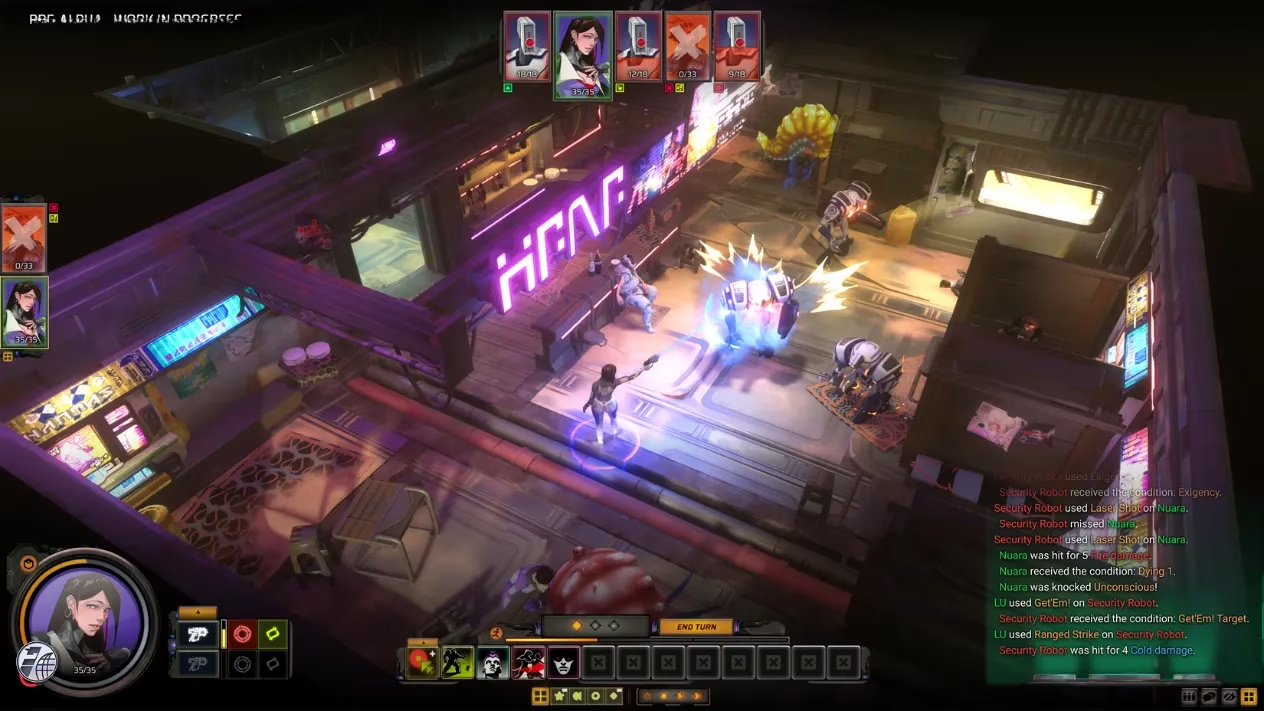
The first challenge was not writing the story, but building the bodies that would carry it. Adapting Paizo's Starfinder was like being handed a box of clockwork butterflies and told to make them fly in a hurricane. The system's complexity is legendary, a sprawling ecosystem of rules and possibilities. The Witchwarper class alone was a puzzle box wrapped in an enigma; its reality-bending abilities forced us to re-imagine not just what a character could do, but how the entire universe would react. It was less like coding a class and more like teaching a star to dance to a new, chaotic rhythm.
But the true test came with the Ancestries. We hesitated, I admit. The safe harbor of dwarves and elves was tempting. But Starfinder offered creatures of pure, unbridled imagination.
-
The Kasatha, with four arms, each demanding its own purpose in combat and idle animation.
-
The Skittermander, a bundle of frenetic joy with six arms, capable of using its lower limbs to skitter across the ground like a living, furry constellation.
-
The Shirren and Lashunta, whose primary mode of communication is telepathy—a narrative challenge as vast as any visual one.
Our brilliant rigger, Noa, spent half a year forging a single, protean skeleton—a master rig that could support six arms, a tail, antennae, and more. A human character uses only half of its potential; it is a scaffold for the impossible. Modeling these beings was one thing, but giving them life through animation was like trying to compose a symphony for instruments that had not yet been invented. The narrative layer was equally daunting. How does a telepathic being "speak" in dialogue options? How do you convey the internal, emotional landscape of a Lashunta? These questions were not obstacles, but the very soil from which Starfinder's unique soul would grow.
The Heart of the Matter: Forging a Crew
From the very start, our guiding star was not a plot, but people. The first pillar of our game, our non-negotiable truth, was the companions. Strategy is empty without soul; a player might forget the final boss, but they will forever remember the friend who fought beside them. We spent months in a room that smelled of coffee and desperation, workshopping these personalities until they breathed on their own.
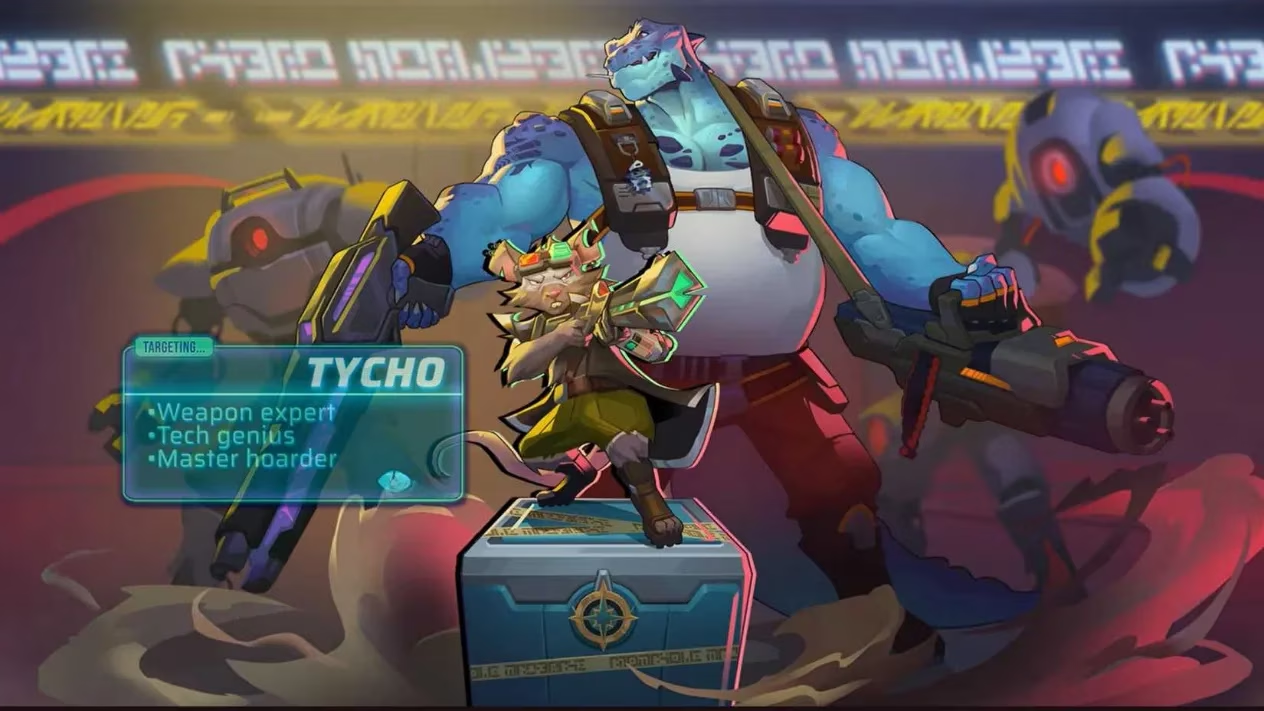
The first to emerge from the creative ether was Kole. Inspired by the glorious cheese of 80s action films like American Ninja, he was our wild gamble: a Vesk, a hulking reptilian warrior, who dreams of being an actor. The idea landed with the perfect, satisfying thump of a die on a gaming table, and from that moment, he was immutable.
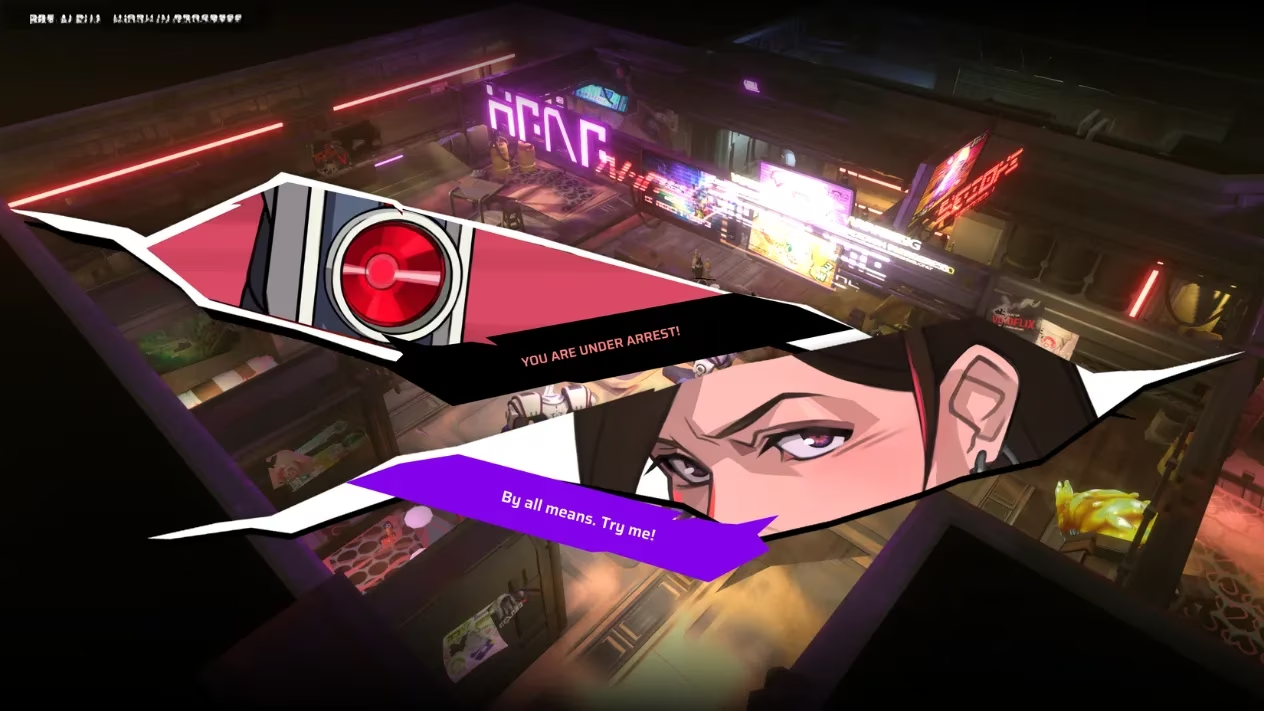
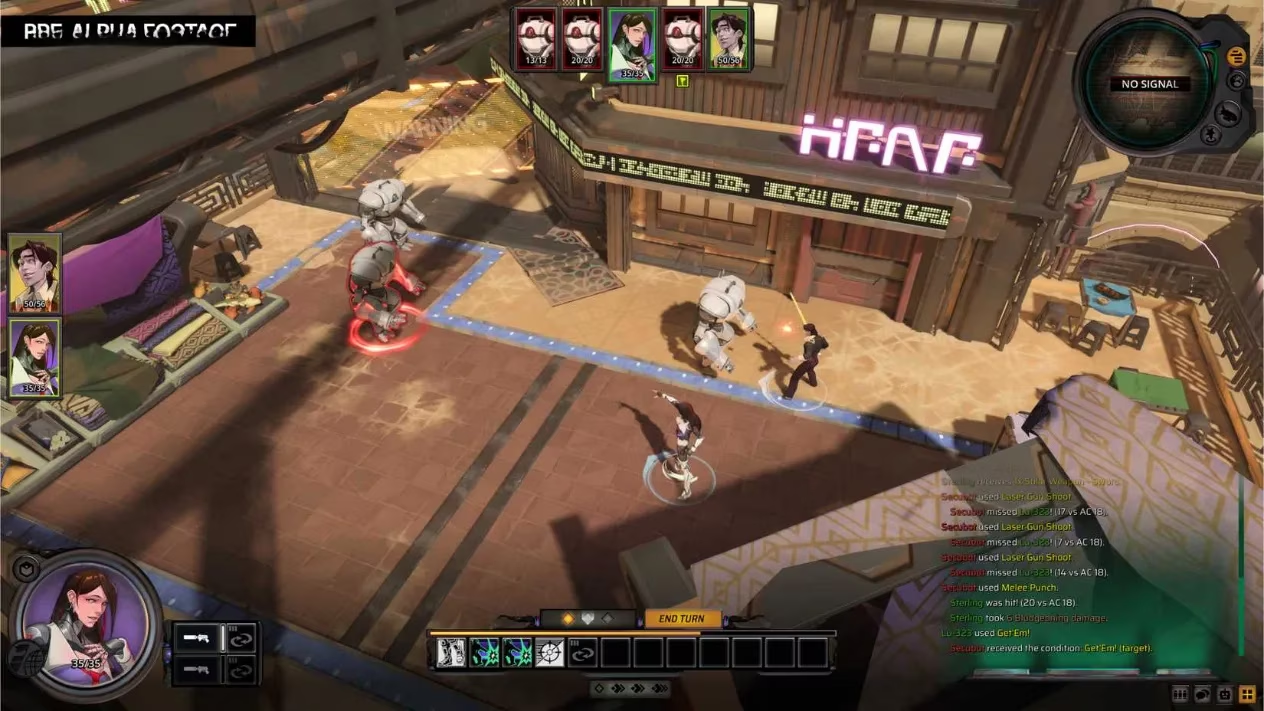
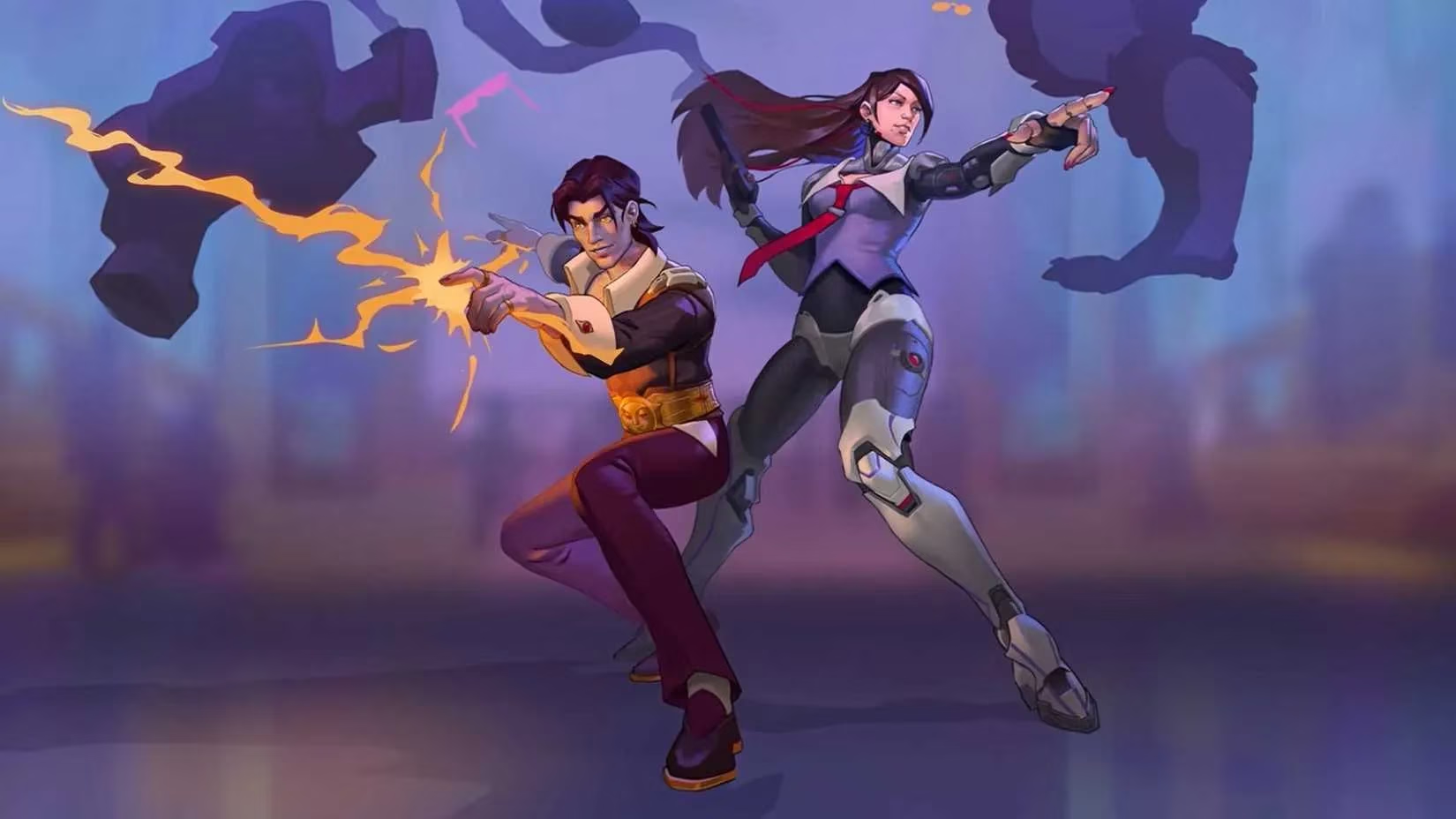
Then came Lu. Her genesis was the profound question: "Are you your programming?" An android built as an infiltrator and seducer, her entire existence is a quest for free will. Every action, every potential romance, is shadowed by her doubt: "Is this me, or is this my code?" Finding her visual identity was a month-long waltz with concept artists, a search for a form that could hold both lethal grace and a searching, vulnerable heart. She is a locked garden, and we are giving players the key.
Only when our strange, wonderful family was assembled did we ask: what challenge is worthy of them? The answer could not be small. We went to Paizo and asked, "How epic can we be?" Their response was a resounding, "Yes." Thus, the Afterlight was born—a galactic-scale threat born from our need for a crucible hot enough to forge these bonds. It was a happy accident, a synergy of our character-first philosophy and Paizo's desire to seed new lore for Starfinder's Second Edition.
The Voice of a Soul: Casting Without a Net
If the companions are the heart, their voices are the heartbeat. We were novices in this arena, two directors suddenly tasked with orchestrating a choir of stars. Enter Neil Newbon, our voice director and patient guide. His involvement was a gift, a master craftsman agreeing to teach apprentices how to shape sound into soul.
The casting process was a revelation. We consciously avoided the siren song of big names alone. For Lu and Sterling, we listened to 60 auditions each, eyes closed, judging only the voice that emerged from the darkness. It was like panning for gold in a river of pure potential. Neil would guide us: "This actor has range for others," or "This one owns a studio, very practical." But the final choice was always about the heart.
Melissa simply was Lu. Her audition wasn't a reading; it was a possession. And then there was Tycho. We received an audition file from Inel Tomlinson that was twenty times larger than the others. He hadn't just read the lines; he had lived in Tycho's skin for an hour, improvising, muttering, becoming the character so completely that even his directions to Neil were in character. Most of Tycho's brilliant, arrogant charm in the game is Inel's raw, spontaneous creation. Casting him felt less like hiring an actor and more like discovering a new element.
The Player's Embrace: Finding Our Constellation
As we revealed our crew to the world, the response was a warmth we dared not fully expect. Fans latched onto Tycho with a fervor that surprised even us—his attitude was a spark in the darkness. The chemistry between him and Kole sparked calls for an animated series, a dynamic that echoes Guardians of the Galaxy in the best way. And Sterling, our space-faring gentleman, became an instant favorite for romance. Crafting him was a struggle against modern cynicism; to make a truly kind, chivalrous ex-operative feel authentic and desirable was one of our greatest narrative tightrope walks.
This journey has been one of constant, beautiful learning. From building the impossible rigs for six-armed aliens to plumbing the depths of an android's search for self, every step has been about finding the light within the intricate machinery of a CRPG. The Afterlight in our story is a devourer of stars, but in its shadow, we have worked to create something more enduring: the fragile, brilliant light of connection. We are not just coding systems and writing dialogue; we are building a campfire in the interstellar void, a place for players to gather with their unlikely crew and, for a little while, hold back the dark together.