Characters Like Lae'zel: The Best Rude & Redemptive Archetypes in Gaming
Lae'zel from Baldur's Gate 3 and other rude video game characters deliver unforgettable, rewarding redemption arcs that captivate players.
In the vast landscape of video game characters, few archetypes are as compellingly abrasive as the one perfected by Lae'zel from Baldur's Gate 3. She's short-tempered, openly disrespectful, and consistently temperamental—a character who might just be the best in the game precisely because of, not despite, her prickly exterior. This archetype of the initially insufferable but ultimately redeemable character is a rare gem, offering some of the most satisfying character arcs in gaming. While Lae'zel sets a high bar with her journey of overcoming githyanki indoctrination over dozens of hours, several other games feature characters who walk a similarly rude but rewarding path. From begrudging avian champions to arrogant lizard princes, these characters prove that winning over the jerk feels damn good. Let's dive into some of the best examples.
Breath Of The Wild: The Champion with a Chip on His Shoulder
The Legend of Zelda: Breath of the Wild isn't exactly known for its dense character writing, but one figure manages to leave a lasting impression through sheer force of personality: Revali. Much like Lae'zel, Revali's first impression is one of unearned superiority and a beak firmly lodged up his own backside. He's the Rito Champion who looks down on Link, believing his own skills with the Gale to be unmatched and viewing the hero with thinly-veiled contempt.
Where Lae'zel's growth is a slow-burn narrative spanning an entire campaign, Revali's arc is a condensed version. His journey from rivalrous jerk to a source of begrudging respect is delivered in a handful of key memories. Is it as deeply rewarding as Lae'zel's? Absolutely not—it lacks the nuanced hours of shared adventure. However, it cements what is arguably Link's most memorable relationship in the game. There's an undeniable, primal satisfaction in earning the respect of someone who started off convinced you weren't worth their time. It's a classic "prove them wrong" fantasy executed with avian arrogance.
Suikoden IV: The Entitled Noble's Fall and Redemption
For fans of the JRPG genre, Suikoden IV is often considered a low point in the beloved series—a game that's, at best, sorta mediocre. Yet, it houses one of the genre's most fascinating character studies in the form of Snow. Like Lae'zel, Snow begins his journey shaped by a privileged upbringing, which manifests as a palpable sense of entitlement and arrogance. He starts as a companion but quickly becomes an antagonist, remaining a thorn in your side for a significant portion of the game.
His redemption is not a gentle awakening but a brutal dismantling. Snow is defeated, humiliated, and shown mercy on multiple occasions, each event chipping away at his ego until he finally hits rock bottom. From there, we witness him clawing his way back, rediscovering latent decency and coming to terms with his flaws. This journey mirrors Lae'zel's in a crucial way: both are about individuals overcoming the toxic ideologies of their upbringing. Snow's excellent, transformative arc is the single biggest reason to play Suikoden IV. It's a masterclass in how a single well-written character can elevate an entire experience.
Nier: Automata: A Tragic Inversion of the Archetype
Now for something completely different. Throwing a curveball into this list is 9S from Nier: Automata. To discuss him without spoilers is a challenge, but here's the gist: 9S begins as a personable, curious YoRHa android, arguably the least emotionally cloistered of the units we meet. However, he holds a disturbingly indifferent view towards the sentient machines you encounter, seeing their lives as valueless.
Nier: Automata presents a fascinating, tragic inversion of Lae'zel's arc. Where Lae'zel starts closed-off and slowly opens up, 9S's journey is one of emotional disintegration. After experiencing a series of profound tragedies, we watch as he twists, becoming colder, more vengeful, and more isolated—essentially morphing into a version of who Lae'zel was at the start of her story. This parallel is heartbreaking and brilliant. It shows the fragility of compassion and how trauma can forge a person into a sharper, crueler weapon. 9S stands as a poignant reminder that not all character development is positive growth, and sometimes the most compelling journeys are descents into darkness.
Lunar: Silver Star Story Complete: The Arrogant (and Incompetent) Apprentice
Shifting back to a lighter tone, Lunar: Silver Star Story Complete offers a goofier, more comedic take on the archetype with Nash, an apprentice wizard. Nash shares Lae'zel's inherent sense of superiority and quickness to dismiss others. The key difference? Competence. Lae'zel, for all her warped worldview, is a supremely capable warrior. Nash, on the other hand, is... well, a bit of a moron. To be fair, he's also still a child, which earns him a little slack.
| Trait | Lae'zel | Nash |
|---|---|---|
| Source of Arrogance | Githyanki Cultural Indoctrination | Insecurity & Inadequate Training |
| Actual Skill Level | Highly Competent Warrior | Inept Apprentice |
| Arc Core | Unlearning Dogma | Gaining Humility & Skill |
As you travel with Nash, his growth stems from confronting his own inadequacy. He learns humility through failure and the support of the party. Like Lae'zel, becoming part of a found family is central to his development. While his journey doesn't have the narrative weight of Baldur's Gate 3, it's genuinely rewarding within the game's lighthearted framework. It proves that this archetype can work beautifully in both epic dramas and charming, traditional JRPGs.
Divinity: Original Sin 2: Royalty with a Heart (Beneath the Ego)
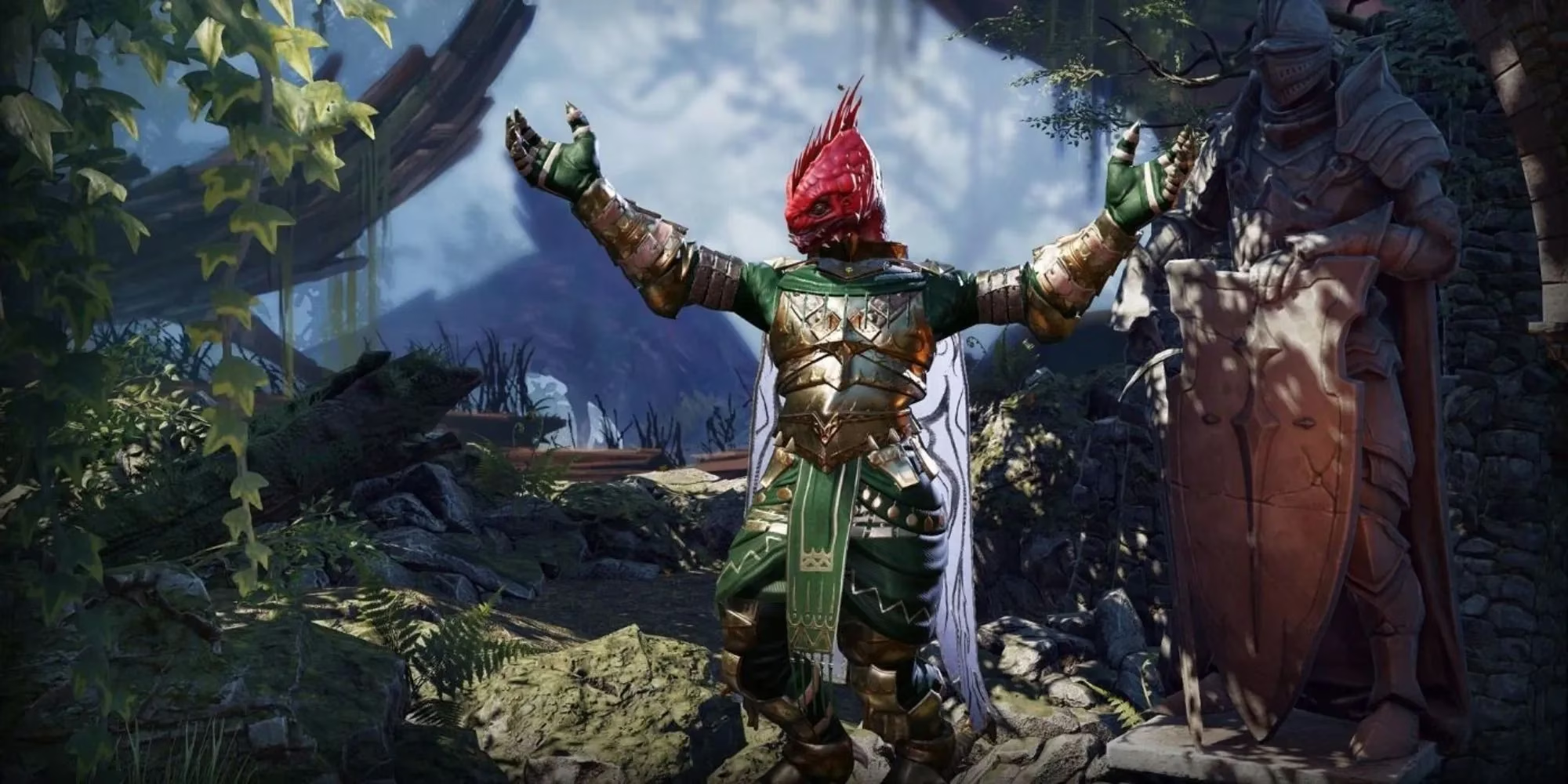
Finally, we come to a character from Lae'zel's own genre and spiritual predecessor: The Red Prince from Divinity: Original Sin 2. He is the game's resident, self-appointed aristocrat—a character who thinks absurdly highly of himself and looks down on every other party member. Sound familiar? He mirrors Lae'zel in his xenophobia, viewing his lizard-folk kin as inherently superior to other races.
However, The Red Prince carries his arrogance with a certain... decorum. He's high on his own supply, but he's not as brutally harsh as Lae'zel can be. His development across the game is superb. He softens his stance on others, performs genuinely heroic deeds, and reveals layers of complexity beneath the haughty exterior. The best part? He never truly loses his arrogance. He simply learns to temper it, to stop bludgeoning you with it at every turn. He grows from an insufferable prince into a confident, capable leader who still believes he's the best thing since sliced bread—and honestly, by the end, you might just agree with him. No one loves The Red Prince as much as The Red Prince does, but players are a close second.
Why We Love the Lae'zels of Gaming 🎮
So, what makes these rude, stand-offish characters so enduring? It's not just about the satisfaction of a "I told you so" moment. Their appeal lies in a few key factors:
-
The Reward of Earned Trust: Gaining the loyalty of someone who despises everyone is a powerful fantasy.
-
Complexity Over Likability: They are walking contradictions—competent yet flawed, cruel yet vulnerable—which makes them deeply interesting.
-
The Arc of Unlearning: Their journeys are often about deconstructing prejudice and dogma, a narrative that feels profoundly relevant.
-
They Keep Things Interesting: A party full of yes-men is boring. These characters provide constant friction, drama, and memorable dialogue.
In an era where games are pushing narrative boundaries further than ever, characters like Lae'zel, Revali, Snow, 9S, Nash, and The Red Prince show that the most rewarding companions aren't always the nicest. Sometimes, the best friend your protagonist can have is the one who starts out telling them they're chk worthless. Their journeys from insolence to camaraderie remain some of the most cherished stories in gaming, proving that even the prickliest characters can have hearts of gold—or at least, burnished bronze.