Celebrating Queer Narratives in Gaming: My Personal Journey Through LGBTQ+ Representation
As Pride Month 2026 approaches, the groundbreaking representation of LGBTQ+ characters and narratives in mainstream video games is a profound testament to how far the industry has come. From revolutionary RPGs with complex queer relationships to intimate visual novels serving as personal sanctuaries, these games offer mirrors and windows into deeply resonant experiences, making gaming a space for genuine celebration and identity exploration.
As Pride Month rolls around in 2026, I find myself reflecting on how far gaming has come in embracing LGBTQ+ stories. I remember when finding a queer character felt like discovering a hidden gem—now, we have entire worlds where queerness isn't just present but celebrated. From sprawling RPGs to intimate visual novels, these games have become my personal sanctuary for exploration and connection. They're not just entertainment; they're mirrors and windows into experiences that resonate deeply with who I am and who I'm becoming. Gaming has truly become a space where I can see myself reflected, and that's something worth celebrating every day of the year, not just during Pride.
RPGs: Where Queerness Takes Center Stage
When I think about games that let me truly shape my identity, RPGs always come to mind first. These games have been my playground for exploring relationships, morality, and self-expression. The beauty of modern RPGs is how they've moved beyond token representation to weave queerness into the very fabric of their worlds.
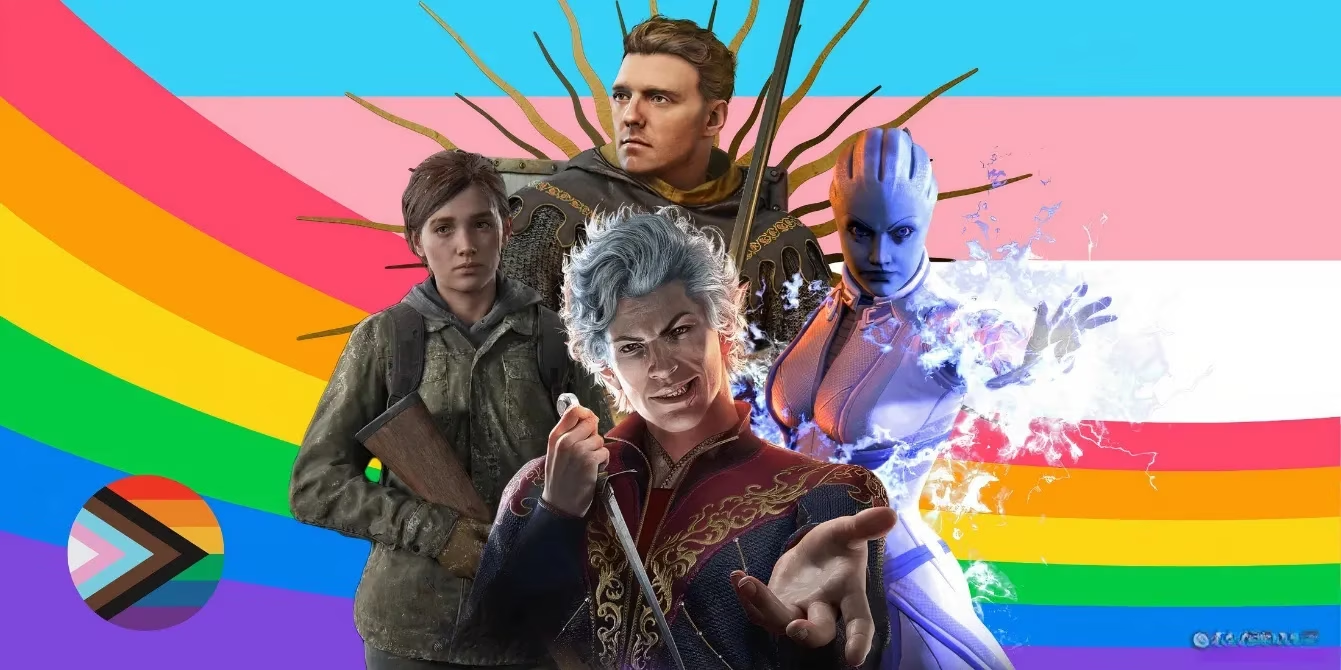
Baldur's Gate 3 absolutely blew my mind when I first played it. The way every companion is pansexual felt revolutionary—no more worrying about gender restrictions when pursuing romance! I spent hours developing relationships with characters like Astarion, whose moral complexity kept me guessing, and Wyll, whose noble heart felt genuinely refreshing. What really struck me was how the game treats LGBTQ+ NPCs with the same narrative depth as anyone else. Dame Aylin and Isobel's relationship isn't a side story; it's integral to the plot. And creating my own Tav? Being able to craft a character that truly represents my gender identity was... well, it was everything.
Here's what makes these RPGs so special for queer players:
-
Romance without restrictions: No more hitting invisible walls because of gender
-
Complex character dynamics: Relationships that feel real and nuanced
-
Customizable identities: Avatars that break traditional gender expectations
-
Integrated narratives: Queerness woven into main storylines, not just side quests
Mass Effect: Legendary Edition holds a special place in my heart too. Playing through the remastered trilogy recently, I appreciated how it preserves those groundbreaking queer romances. Sure, by today's standards the options might seem limited, but back in the day, romancing Kaidan or Liara felt like a revelation. It was one of the first times I saw same-gender relationships treated with genuine emotional weight in a mainstream game.
And then there's Kingdom Come: Deliverance 2—talk about a surprise! At first glance, this gritty medieval simulator seems like the last place you'd find queer representation. But Henry and Lord Hans Capon's slow-burn romance completely caught me off guard in the best way possible. Their journey from friends to lovers felt organic and tender, proving that queerness can bloom in even the most unexpected settings. It's a beautiful reminder that representation doesn't always have to be loud to be powerful.
Action-Adventure: Stories That Hit Close to Home
Sometimes, I want a game that tells a focused, emotional story rather than letting me create my own. That's where action-adventure games come in—they've given me some of the most moving LGBTQ+ narratives in gaming history.
The Life is Strange series has been with me through some tough times. Each installment feels like a warm hug from someone who understands. The bond between Max and Chloe in the first game? That was my introduction to seeing queer relationships portrayed with such raw honesty in games. And True Colors took it even further with its thoughtful romance options. These games don't just feature queer characters; they explore queer experiences with care and complexity.
But nothing prepared me for The Last of Us Part 2. Playing as Ellie, watching her navigate grief, love, and violence while never hiding her sapphic identity... it was powerful stuff. The game is brutal, sure, but those moments of tenderness between her and Dina? They felt revolutionary in a triple A title. Ellie isn't just a queer character—her queerness shapes her entire journey, and that representation matters more than I can put into words.
Life-Sims: Building Our Own Inclusive Worlds
After an intense gaming session, I often turn to life-simulation games for some cozy comfort. These games have become my safe space for identity exploration without any of real life's complications getting in the way.
The Sims 4 has evolved into something truly remarkable. The customization options alone are mind-blowing:
| Feature | Why It Matters |
|---|---|
| Customizable pronouns | Finally, language that reflects who I am |
| Asexual/aromantic markers | Recognition that not everyone wants romance |
| Nuanced relationship options | Relationships that reflect real complexity |
| Gender customization | Breaking free from binary constraints |
Playing The Sims 4 feels like being given permission to live as my most authentic self. It doesn't just accommodate non-heteronormative playstyles—it actively celebrates them. Creating households that reflect diverse family structures, exploring relationships without restrictions... it's therapeutic in a way I never expected from a game.
And then there's Stardew Valley. Oh man, Pelican Town feels like coming home. The way same-gender relationships are treated as completely normal—no fanfare, no special dialogue, just part of daily life—that's the kind of representation that warms my heart. I've spent countless hours building my farm, getting to know the townsfolk, and eventually marrying whoever catches my eye, regardless of gender. It's a gentle reminder that inclusive communities are possible, even in pixel form.
Visual Novels: Intimate Glimpses into Queer Life
When I really want to sink into a story, visual novels are my go-to. These games prioritize narrative above all else, inviting me to think, feel, and empathize rather than just react. For exploring queer themes, they're unparalleled.
Goodbye Volcano High hit me right in the feels. Playing as Fang, a nonbinary dinosaur navigating the end of the world (literally), felt strangely relatable. The game tackles queerness, mental health, and creative expression with such emotional honesty that I found myself pausing frequently just to process what I was experiencing. It's like if Life is Strange met prehistoric creatures with existential dread—and somehow it works beautifully.
But nothing prepared me for If Found…. This hand-drawn visual novel follows Kasio, a young trans woman returning to rural Ireland, and... wow. The mechanic of erasing diary pages to progress the story becomes a powerful metaphor for self-erasure and reconstruction. Between Kasio's story and the parallel sci-fi narrative about Cassiopeia discovering a world-ending black hole, the game explores memory, belonging, and identity in ways that left me genuinely emotional. It's a quiet masterpiece that deserves more attention in LGBTQ+ gaming circles.
Dating Sims: Playful and Heartfelt Romance
Dating sims have come a long way from their heteronormative origins. The best ones now explore queerness with both playfulness and genuine heart, flipping tropes and breaking norms along the way.
Dream Daddy started as what I thought would be a silly meme game but turned into one of the most sincere dating sims I've ever played. Creating my own dad and romancing other fathers in the neighborhood felt surprisingly meaningful. Each potential partner has their own quirks and emotional depth, and navigating single fatherhood while trying to date added layers of complexity I didn't expect. The representation here is lighthearted but never dismissive—it treats queer romance with the sincerity it deserves.
And speaking of exciting new releases, Date Everything! has been on my radar since those viral TikToks started popping up last year. The premise alone—magical glasses that make everything in your home turn into dateable, fully voice-acted characters—had me hooked. Playing it now in 2026, I can confirm it delivers on its promise of chaotic, gender-inclusive romance. From flirting with my front door to having deep conversations with the washing machine, this game challenges every assumption about what dating sims can be. It embraces a broad spectrum of gender expressions and relationships while never taking itself too seriously. The perfect blend of absurdity and heart.
Looking Forward: The Future of Queer Gaming
As I reflect on these games and the journey they've taken me on, I'm filled with hope for what's next. We've come so far from the days when queer characters were rare or relegated to subtext. Now, we have games where:
-
🌈 Queerness is integrated into core narratives
-
🎮 Players can explore identities freely
-
❤️ Relationships reflect real diversity
-
🏳️🌈 LGBTQ+ experiences are treated with depth and respect
The gaming industry still has work to do, of course. We need more queer developers telling their own stories, more intersectional representation, and continued pushback against tokenism. But the progress I've witnessed in my own gaming lifetime gives me genuine optimism.
These games have been more than just entertainment for me—they've been companions through self-discovery, mirrors showing me possibilities, and windows into experiences beyond my own. They've made me laugh, cry, think, and feel seen in ways I never expected from a medium once dominated by straight, male protagonists.
So this Pride Month, and every month after, I'll keep celebrating these stories. I'll keep playing games that challenge norms, embrace diversity, and tell queer stories with authenticity and heart. Because in the end, that's what gaming should be about: creating spaces where everyone can find themselves, explore freely, and connect with stories that matter. And honestly? That's pretty damn awesome.