Baldur's Gate 3: The Ship of Theseus of Modern Gaming
Baldur's Gate 3, Game of the Year 2023, thrives in 2026 with unmatched post-launch support and continual transformative updates.
It's 2026, and the gaming landscape continues to evolve at a breakneck pace. 🎮 Yet, amidst the constant churn of new releases, one title from 2023 not only refuses to fade but actively reshapes itself. That title is Baldur's Gate 3. Having clinched Game of the Year in 2023, it's a game that defies the typical lifecycle, remaining a vibrant topic of discussion and a benchmark for post-launch support. Its recent nomination for Best Community Support in 2025 wasn't a fluke; it was the natural outcome of a development philosophy that treated the game not as a finished product, but as a living, breathing world. Larian Studios maintained a relentless rhythm of updates, adding content, squashing bugs, introducing new subclasses, and polishing narrative threads long after most studios would have moved on. The result? A game that has undergone such profound transformation it invites a classic philosophical question: Is the Baldur's Gate 3 of today the same game that launched three years ago, or has it quietly become something new—a true Ship of Theseus of the gaming world?
🛠️ From Launch Turbulence to 2026 Polish
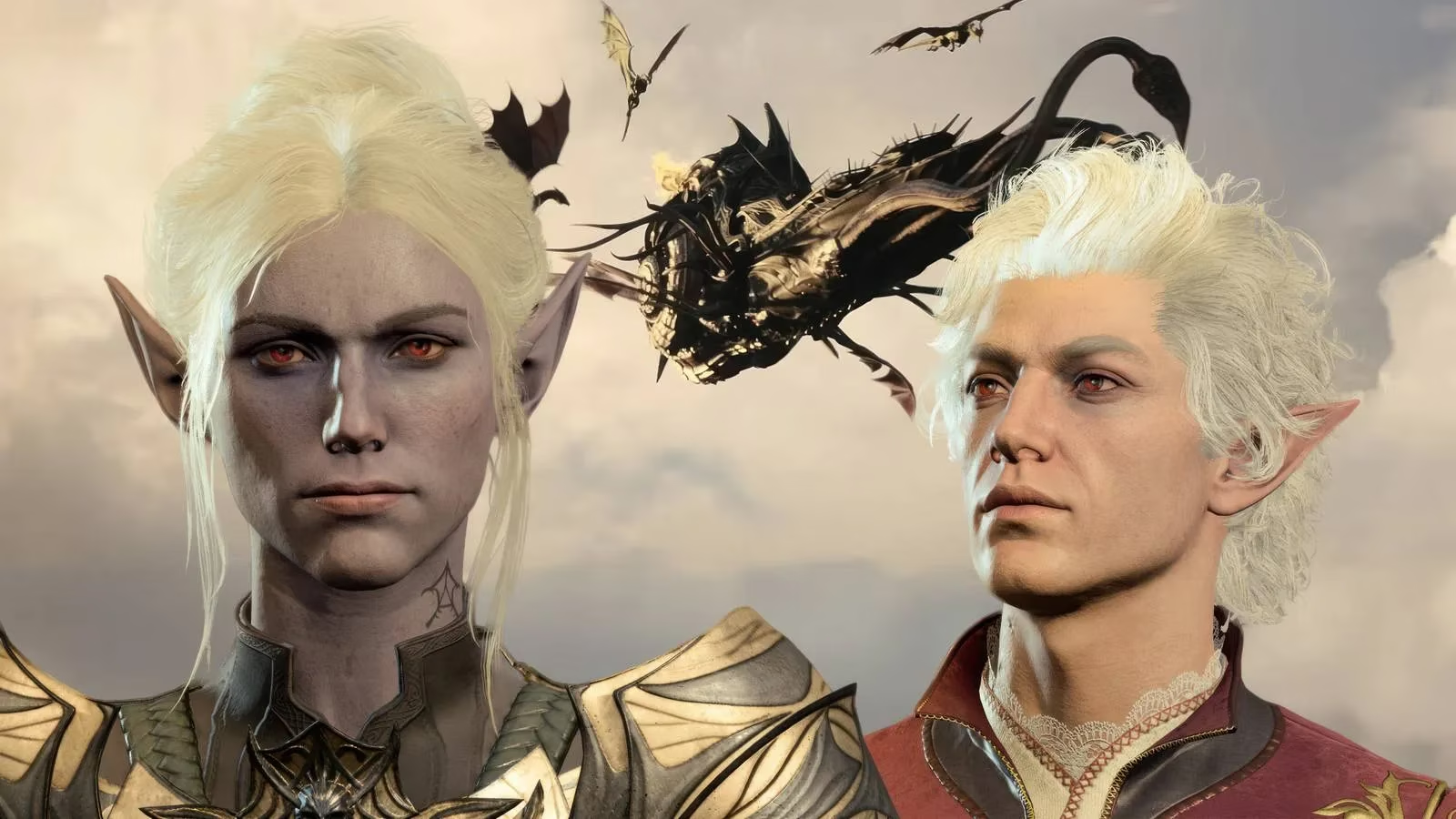
Let's rewind for a moment. The launch version of BG3 was celebrated, yes, but it was also famously... janky. 😅 Critics and players alike pointed to Act 3 as a major pain point, plagued by performance dips, scripting bugs, and instability that sometimes marred its extraordinary narrative ambition. Fast forward to the present, and the contrast is stark. The 2026 iteration of the game runs with a level of stability and polish that would have seemed like a distant dream at launch. While the core story and world remain largely intact—no new continents or DLC story arcs—the quality of the experience has evolved substantially. It's like watching a rough diamond receive a masterful cut; the material is the same, but its brilliance is fundamentally enhanced.
📜 The Patch Notes Tell the Story of Evolution
Larian's update cadence is the engine of this transformation. Each major patch didn't just fix things; it added layers.
-
Patch 4's Epilogue: This wasn't a minor addition. It fundamentally reshaped emotional closure for the entire saga, giving players the cathartic, detailed endings the story deserved.
-
Patch 8's Arsenal: Introduced a surge of new subclasses and long-requested tweaks to origin characters, dramatically broadening build diversity and replayability.
-
The Constant Churn: Almost every update, big or small, brought substantial bug fixes, performance optimizations, and balancing realignments.
🔍 The Invisible Hand of Improvement
Many of the most impactful changes are the ones you don't actively notice, especially if you're a new player diving in today. These are the quality-of-life enhancements that collectively create a seamless rhythm:
-
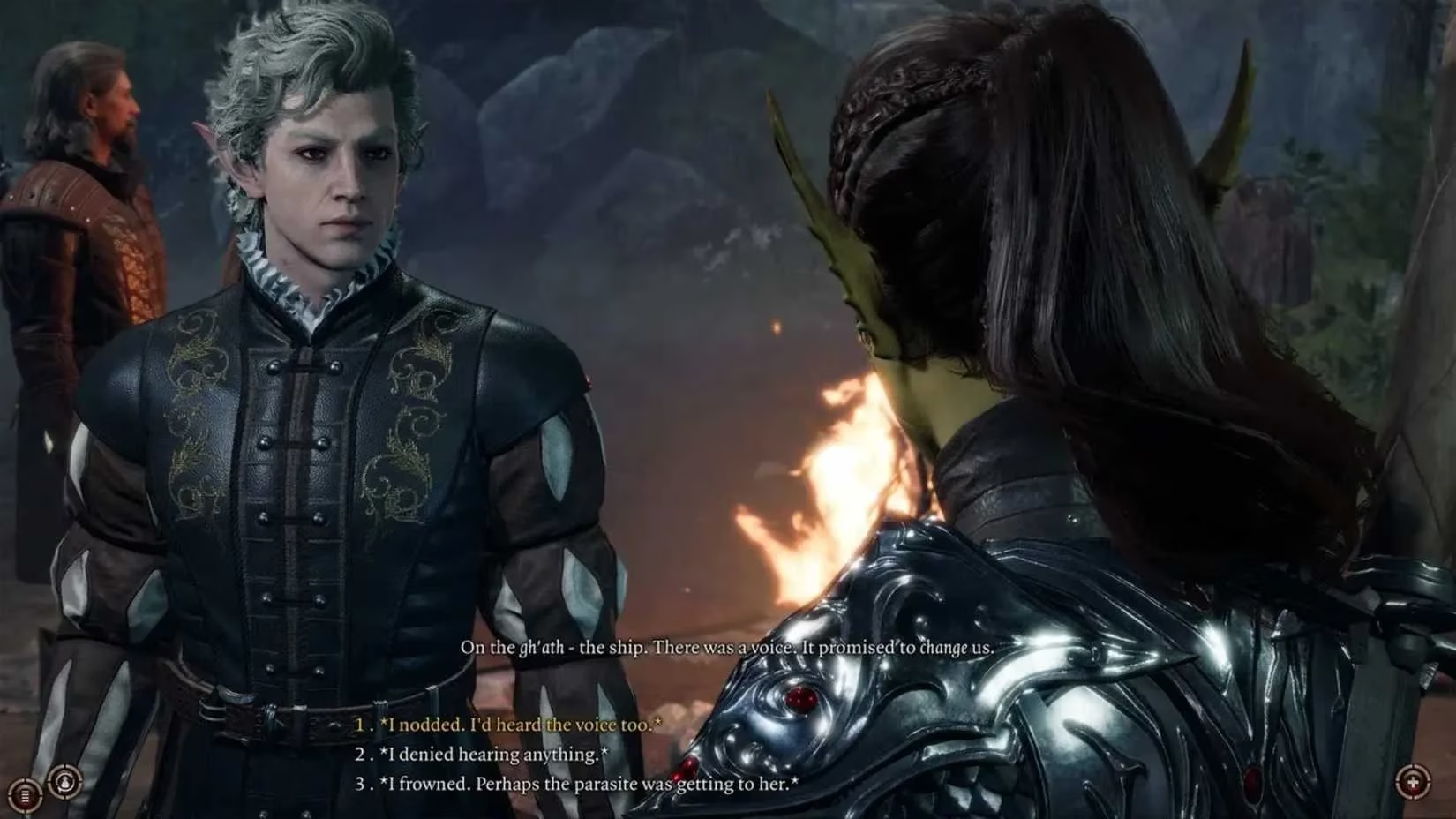
Smarter Companions: Tighter pathfinding and better AI responsiveness mean your party doesn't get stuck on geometry or act unpredictably in combat.
-
Dialogue Reliability: Scenes fire correctly, flags trigger as intended, and the dreaded game-breaking bugs have become rare relics.
-
Inventory Zen: Managing your hoard of magical items no longer feels like a tedious chore, thanks to numerous interface and management improvements.
These tweaks might seem minor in isolation, but together, they strip away friction and let the game's stellar writing, characters, and systems shine unobstructed.
⚖️ The Ship of Theseus, Resolved
So, we return to the paradox. If nearly every "plank"—the performance, the balance, the subclasses, the narrative epilogue—has been replaced or refined, is it still the same ship? Is the Baldur's Gate 3 we play in 2026 the same game that won all those awards in 2023?
The beautiful answer BG3 provides is: It is both. 🤯
The game's bones—its soul—remain unchanged. The core narrative of tadpoles, mind flayers, and forging alliances (or burning bridges) in Faerûn is intact. The spirit of player agency, deep role-playing, and memorable character moments is the strong, unwavering keel. What Larian has done is rework the musculature, tighten the sinews, and articulate the emotional heart with greater clarity. The patches that occasionally introduced new bugs (a broken animation here, a bugged dialogue there) were like temporary gremlins, quickly exorcised, never altering the upward trajectory.
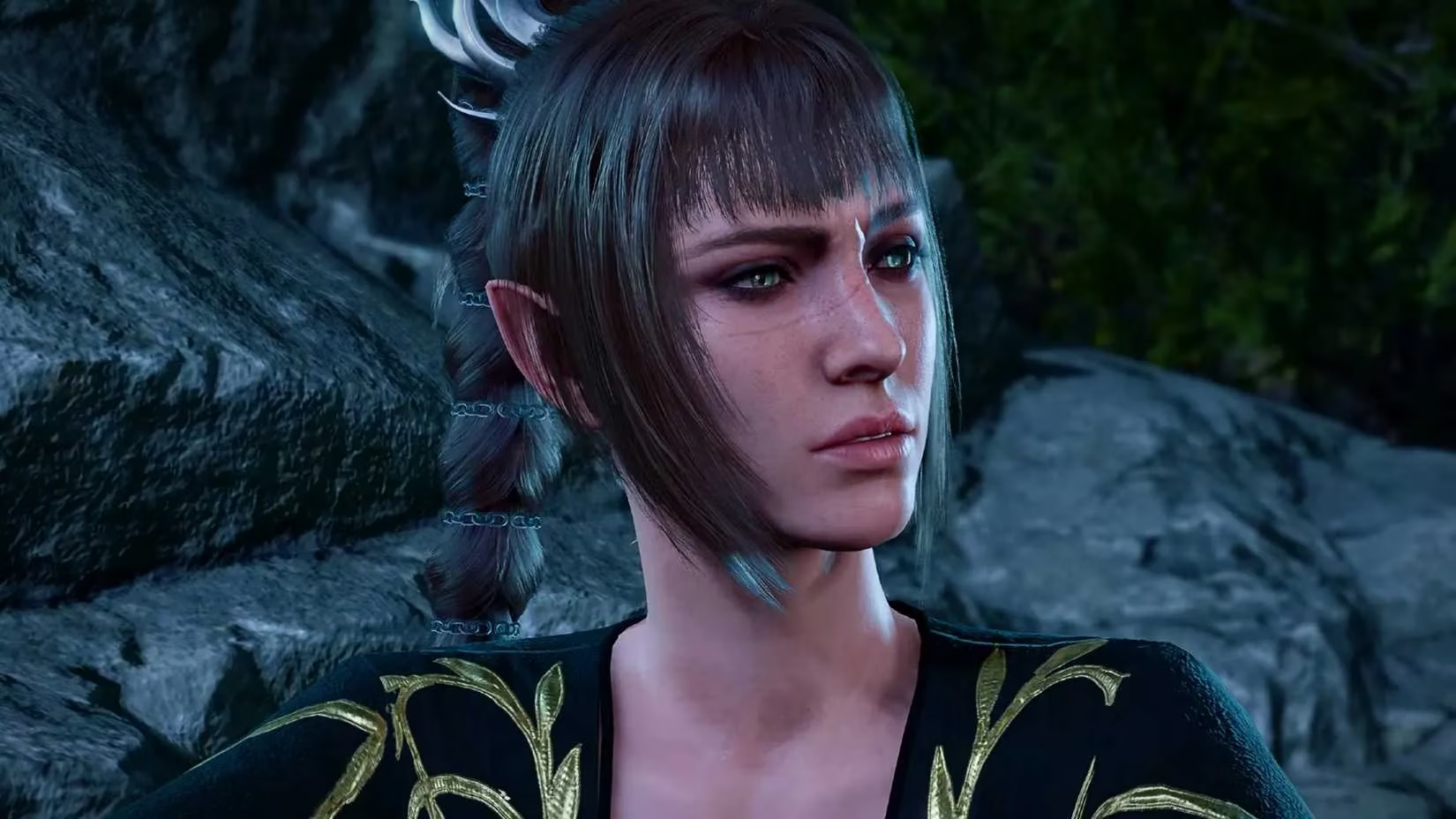
In the end, Baldur's Gate 3 doesn't just challenge the Ship of Theseus thought experiment; it resolves it in a way uniquely suited to live-service art. The game endures and thrives precisely because its parts can be improved, replaced, and expanded without ever compromising the foundational soul that anchored it from the beginning. What we praise today is inseparable from the game it has become—a polished, expansive, and more emotionally resonant version of its already brilliant self. It stands not as a relic of 2023, but as a living testament to what ongoing, passionate development can achieve, setting a dauntingly high bar for the entire industry as we sail further into the decade. 🚢✨