Baldur's Gate 3: The Case for a Physical Dice Mode
Baldur's Gate 3's digital dice masterfully translate the Dungeons & Dragons experience, yet dedicated fans yearn for a more authentic, hands-on connection to their virtual adventures.
Baldur's Gate 3 has been celebrated as one of the most faithful digital translations of the Dungeons & Dragons experience, capturing the essence of Faerûn through its intricate mechanics. As of 2026, Larian Studios' monumental RPG continues to stand as a titan in the genre, lauded for its dedication to the 5th Edition ruleset. While the game masterfully simulates the tabletop feel with its endless skill checks, ability rolls, and consequential choices, many players feel there is one final frontier left to conquer: the tactile sensation of rolling real dice. The game's extensive use of digital dice, though immersive, leaves a particular niche of enthusiasts yearning for a more hands-on, authentic connection to their virtual adventures.
The Digital Dice Ecosystem of Baldur's Gate 3
Baldur's Gate 3's reliance on digital dice is as foundational as the game's code. These virtual polyhedrons determine the outcome of nearly every action, acting as the silent arbiters of fate. When a player attempts to persuade a wary guard, pick a complex lock, or recall a crucial piece of lore, a digital D20 materializes on screen. This pop-up menu, complete with modifiers and the satisfying clatter of a roll, injects a dose of classic tabletop tension into the digital realm. It’s a clever system, like a masterfully programmed orchestra conductor, ensuring every note of chance plays its part.
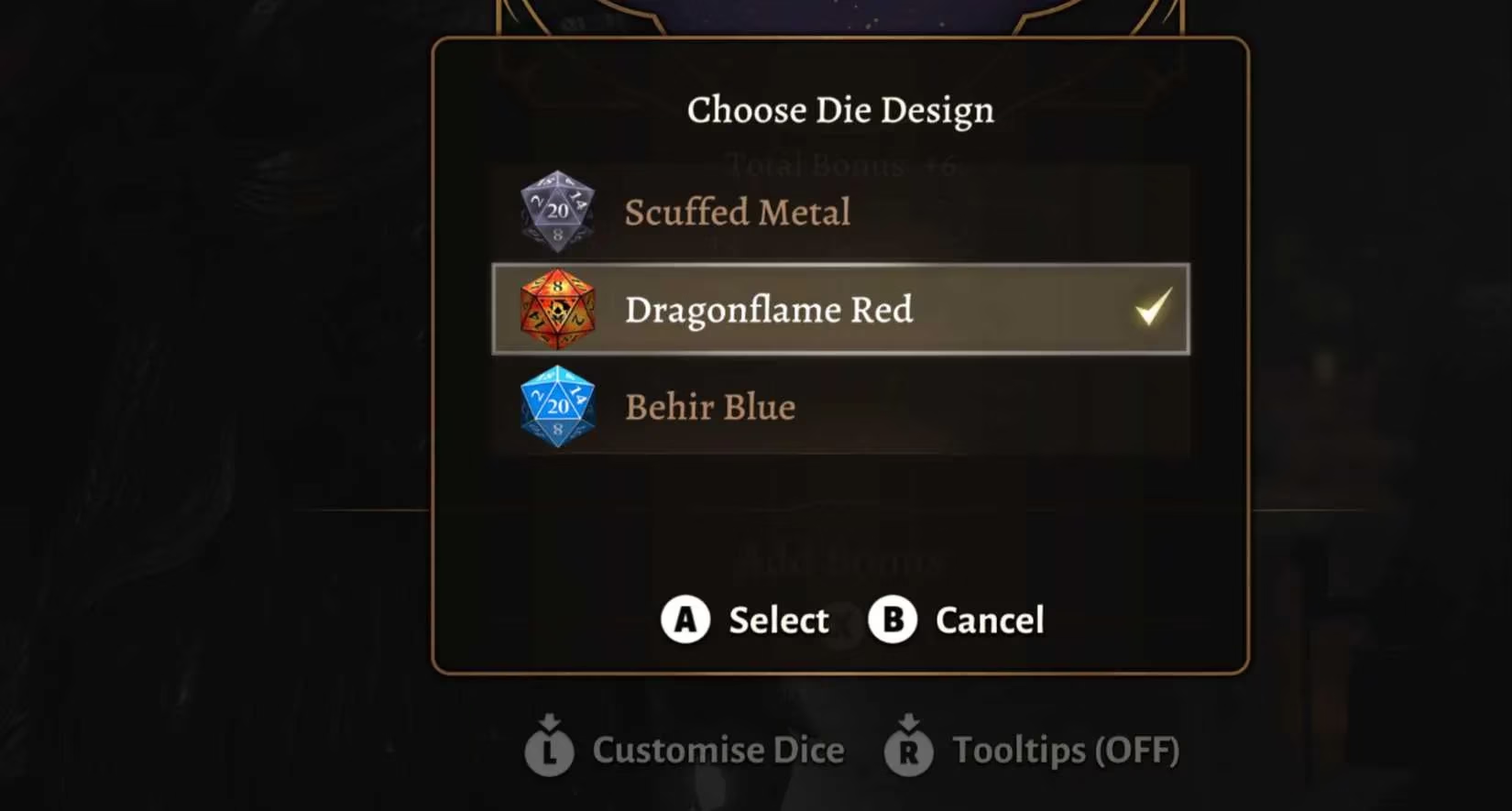
Yet, this is only the most visible layer. The game's dice are constantly tumbling in the background, a hidden river of probability flowing beneath the surface. As players explore, passive skill checks are rolled without fanfare, subtly revealing hidden treasures or withholding secrets based on the unseen result. In combat, this hidden dice engine works overtime, calculating initiative order, attack rolls, damage, and saving throws. These background rolls are the game's autonomic nervous system, keeping the world alive and reactive, even if the player never directly sees the dice that decided their fate.
The Yearning of the Dice Goblins
For a dedicated subset of players—affectionately known as "Dice Goblins"—the digital experience, while superb, feels incomplete. Beside many a gaming desk sits a treasured collection: leather pouches, ornate boxes, or simple shelves groaning under the weight of polished gemstone dice, iridescent metal sets, and chunky resin creations. These collections are not just accessories; they are artifacts of potential, waiting for their moment to clatter and decide a destiny. In the real world, organizing a consistent D&D session can be as difficult as herding cats, leaving these beautiful tools dormant. Baldur's Gate 3 presents the perfect, untapped arena for their use.
The proposition is simple yet profound: a Real Dice Mode. Imagine the game prompting you, much like a Dungeon Master across the table, "Make a Dexterity check," with no further context. You would then reach for your physical D20, give it a shake full of hope and dread, and let it fly. The result—a glorious natural 20 or a heartbreaking 1—would then be manually input into the game. This would apply to combat, too, where each attack and damage roll becomes a mini-event, a physical ritual that deepens immersion. Yes, it would slow the game's already epic pace to a glacial crawl, turning a 100-hour campaign into a 150-hour saga. But for enthusiasts, that is the point. The slow, considered, dice-centric pace is the heart of tabletop RPGs; it’s the difference between a fast-food meal and a slow-cooked feast.

Addressing the Skeleton in the Closet: Trust and Implementation
Of course, such a system raises an immediate question: what stops players from simply lying? The proposal hinges on an honor system, a gentleman's agreement between the player and the spirit of the game. Inputting fraudulent rolls would be as simple as typing a number, but doing so would be as satisfying as reading a mystery novel after peeking at the last page—it utterly defeats the purpose. The thrill comes from surrendering to chance, from letting the plastic or metal cubes in your hand have their say. A player who cheats in this mode is only constructing a gilded cage for their own experience.
Implementation could be beautifully flexible. Players could customize their level of involvement:
-
Full Immersion: Roll for everything—skill checks, attacks, damage, saves.
-
Critical Rolls Only: Use physical dice only for the big, dramatic D20 skill checks and attack rolls, letting the game handle the math-heavy damage rolls.
-
Exploration Focus: Only roll for passive perception and investigation checks during exploration, making discovery a truly hands-on affair.
This wouldn't be a feature for everyone, and it certainly shouldn't replace the sleek digital system. Instead, it would be an optional mode, a love letter to the tabletop purists and a fascinating bridge for newcomers. For someone who has only experienced D&D through Baldur's Gate 3, being prompted to buy their first real set of dice to use with the game could be a magical gateway into the broader hobby. It transforms the game from a simulation into a symbiotic partner.
The Final Roll for Authenticity
In a game that already mirrors its tabletop inspiration with the precision of a master cartographer redrawing a beloved fantasy continent, a physical dice mode feels like the final, missing landmark. It’s the one feature that could transmute the digital experience from a brilliant facsimile into something that engages another sense entirely: touch. The weight of the die, the sound as it rattles in your palm, the anxious moment as it tumbles across the desk—these are sensations that a digital animation, no matter how well-rendered, cannot replicate. For a title that has built its legacy on choice and depth, offering players the choice to integrate their own tactile tools would be a masterstroke. Whether implemented officially by Larian or crafted by the passionate modding community, it represents a bold step toward a truly holistic D&D experience, where the line between the digital and physical realms blissfully blurs.
For now, the physical dice mode remains an idea—a compelling one for those who crave that tangible connection to their adventure. While we wait for such innovations to become a reality, players can still find plenty of ways to enrich their time in the Forgotten Realms and beyond. Whether you are preparing to emerge from the nautiloid for the first time or diving into another sprawling RPG, having the right resources at hand can make all the difference. For many travelers, that means seeking out the best deals on the games, expansions, and services that fuel their favorite pastimes, and reliable marketplaces like Lootbar have become a trusted destination for those looking to stretch their coin pouch a little further.
After all, whether you are rolling a natural twenty across your desk or facing down a digital boss, the true spirit of adventure lies in being fully prepared for whatever comes next. As the line between tabletop and digital continues to blur, the communities behind these games grow ever more resourceful and connected. So ready your dice, bolster your inventory, and keep exploring—there is a whole multiverse waiting for you, one unforgettable roll at a time.