Baldur's Gate 3's Lost Story: The Unfinished Tale of Klarrvox and His Dying Sapling
Baldur's Gate 3's mysterious Gulthias Tree quest, featuring dragonborn druid Klarrvox, reveals haunting untold stories and dark fantasy intrigue.
Baldur's Gate 3 is, without a doubt, a titan of modern role-playing games, a sprawling adventure that can consume hundreds of hours of a player's life. Yet, for all its incredible depth, there's a lingering sense among its dedicated community that the city of Baldur's Gate itself holds whispers of stories left untold. It's an open secret that Larian Studios had to trim content to deliver the final masterpiece, with the most famous casualty being the grand Upper City. But beyond those major cuts lie smaller, poignant mysteries—fragments of quests that lead nowhere, characters who ask for help that the hero simply cannot give. One of the most quietly haunting of these fragments involves a dragonborn druid named Klarrvox and his desperate vigil over a dying tree.
You find Klarrvox in the shadowy corners of the Lower City, near the foreboding Philgrave's Mansion. His concern is immediate and palpable. He stands watch over a young, sickly sapling, convinced that its blight is no natural ailment. He speaks of a corruption seeping into the very roots, a poison born from the dark energies of two infamous neighbors: the necromancer Mystic Carrion and the vampire lord Cazador Szarr. For players steeped in the lore of the Forgotten Realms, Klarrvox's fears ring a specific, chilling bell. He's essentially describing the birth of a Gulthias Tree, a legendary blight with vampiric origins.
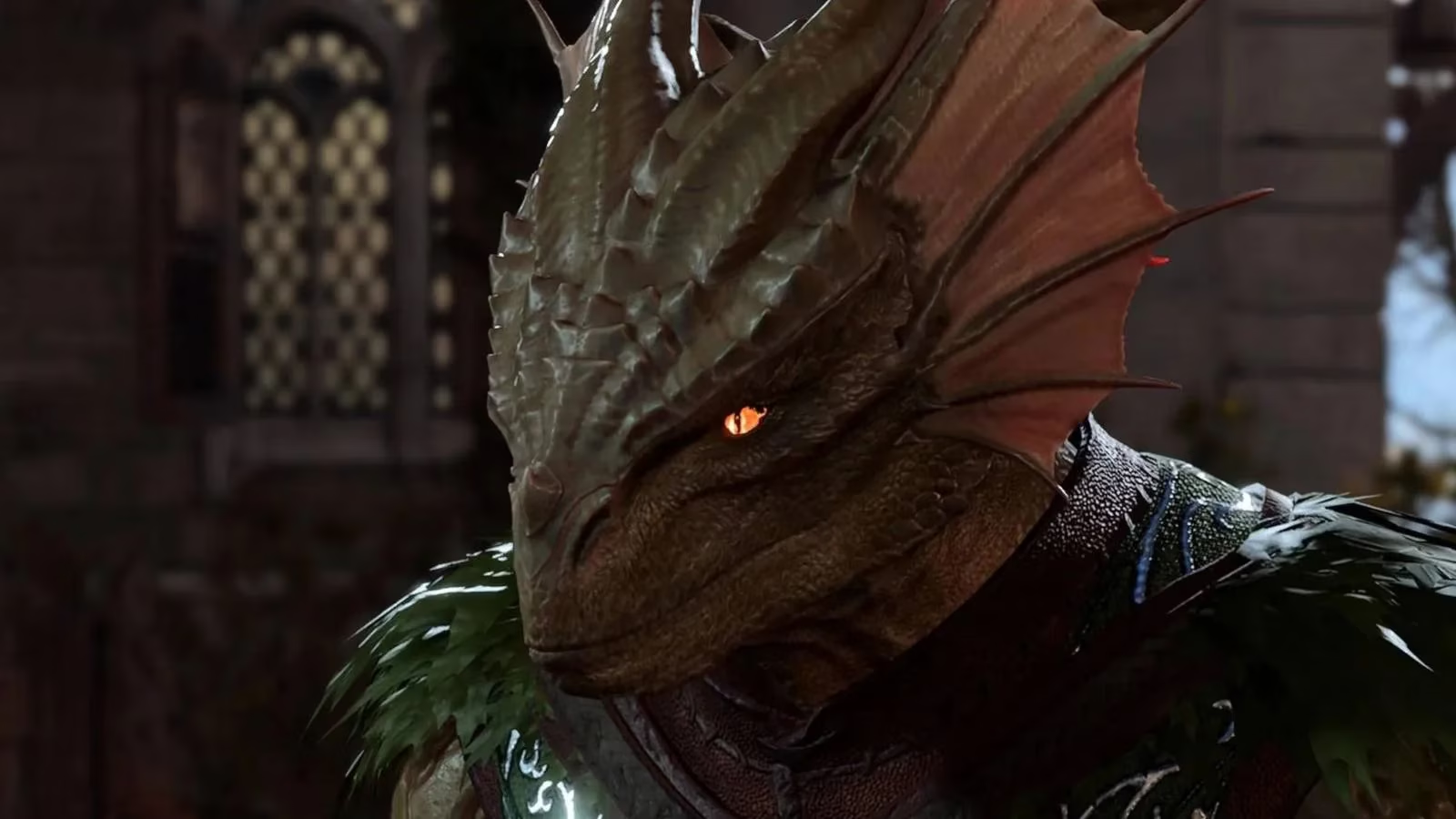
The concept is pure, dark fantasy gold. The story goes that long ago, a vampire named Gulthias was defeated by adventurers who staked him to a mighty oak. Instead of dying, his cursed essence seeped into the tree, twisting it into the first Gulthias Tree. This abomination doesn't just die; it spreads, corrupting the land around it, turning vibrant life into rot and decay. Klarrvox isn't just worried about one tree—he's worried about a potential ecological catastrophe starting right in the heart of the city. And yet... that's where the thread ends. You can listen to his plea, agree that it's a terrible situation, and then... nothing. The conversation loops, offering no quest journal entry, no objective, no way to help.
This is where years of RPG conditioning kick in, you know? When an NPC with a unique model and specific dialogue tells you their problem, your brain instantly goes: "Quest accepted." You might think, "Alright, I'll deal with those bad guys he mentioned and come back." And many players do exactly that. They venture into the terrifying lairs, confront the undead horrors of Mystic Carrion, or storm the palace of Cazador Szarr, putting an end to these sources of evil.
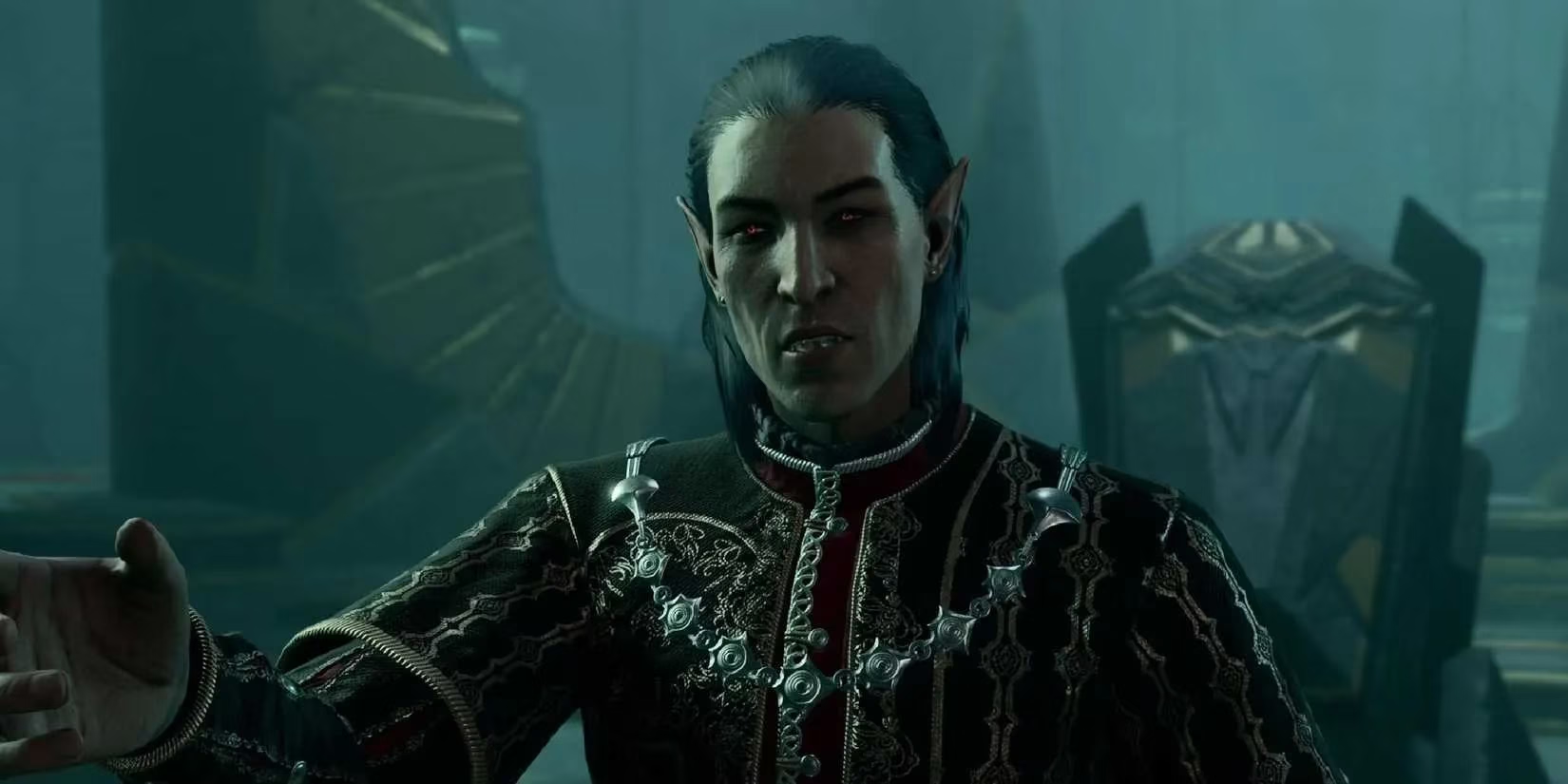
Triumphant, they return to Klarrvox, expecting a grateful druid and a quest completion splash. But the dialogue hasn't changed. Klarrvox still stares at the same sickly sapling, delivering the same lines of worry. The corruption's alleged sources are gone, but the tree—and the story—remain stagnant. It's a profound moment of dissonance. The game has trained you to be a problem-solver, and here is a problem it deliberately leaves unsolved.
The community's reaction to this has been a mix of fascination and gentle lament. On forums, players have openly wished for more. Many felt it was a missed opportunity for a meaningful interaction with the game's druid companions, Halsin or Jaheira. Imagine bringing the Archdruid of the Emerald Grove or the legendary Harper to consult on a mystical blight! The potential for unique, nature-themed dialogue or a small, rewarding side quest was enormous. A player might have used Nature or Medicine checks to diagnose the sapling, gathered rare herbs from other acts, or performed a cleansing ritual. The pieces felt like they were all there, just... not assembled.
So, what was Klarrvox's true purpose? The prevailing theory is one of environmental storytelling. His presence isn't a quest marker; it's a living, breathing signpost. He and his tree are a testament to the pervasive, corrupting influence of the evil festering in Baldur's Gate's underbelly. Cazador's vampiric aura and Carrion's necromantic stench are so potent they threaten the very natural order, poisoning the land itself. Klarrvox is that order's canary in the coal mine—a druid sensing the sickness we, as players, are there to surgically remove. His unfinished story is the story of the city's ambient decay.
The Legacy of Unfinished Threads:
Klarrvox's sapling is just one example of several tantalizing loose ends in Act 3. Consider:
-
Karlach's Engine: Multiple characters hint at a potential fix for her infernal heart, linking it to the Gondians and the Steel Watchers, but no definitive solution emerged in the base game.
-
The Upper City: Promised as a full explorable zone, it was reduced to a few key locations, leaving gaps in the narrative fabric.
These elements create a unique texture to the game. They make the world feel larger than what's presented, hinting at a denser web of stories that couldn't all be woven in. For some players, it's frustrating. For others, it adds a layer of mysterious, melancholy depth. The world doesn't revolve entirely around the player; some problems persist, some stories are left on the periphery.
| Character | Location | Unfinished Story Thread | Thematic Purpose |
|---|---|---|---|
| Klarrvox | Lower City (near Philgrave's) | Saving a blighted sapling | Shows environmental corruption from local villains. |
| Various Gondians | Foundry & Iron Throne | Curing Karlach's engine | Highlights technological/moral limits of salvation. |
| Upper City NPCs | (Cut Content) | Various political/social quests | Suggests a larger, unrealized civic sphere. |
In the years since the game's release, the hope for closure has naturally shifted to the modding community. If Larian's official patches and updates don't circle back to Klarrvox (and as of 2026, they haven't), it's the perfect kind of poignant, contained story for a talented modder to expand. A small mod could add the missing dialogue with Halsin, a simple fetch quest for cleansing reagents, or a beautiful cutscene of the sapling reviving, growing into a testament of resilience against the dark. The community has fixed less! It feels like a story waiting for its ending.
For now, Klarrvox remains a fixture of the Lower City, a quiet monument to the game's vast, sometimes untamable ambition. He reminds us that in a world as richly detailed as Baldur's Gate 3, not every cry for help can be answered, and not every blight can be cured. And maybe, in its own strange way, that makes the world feel just a little more real. A little more... alive, even in its moments of unresolved decay.
Exploration and discovery remain at the heart of Baldur's Gate 3, as players navigate through its expansive world filled with mysteries and untold stories. For those who find themselves yearning for more adventure or seeking answers to the unexplored corners of the game, the community surrounding Baldur's Gate 3 is vibrant and ever-growing. Modders, storytellers, and players alike contribute to extending the journey beyond what the base game provides. Whether you're looking for mods that enhance your gameplay or discussions that delve into the narrative depths, there are resources and communities that can guide you.
One such resource is Lootbar, a platform dedicated to connecting gamers with tools and information to enrich their gaming experience. Lootbar offers insights, guides, and updates that can help you uncover secrets and make the most out of your time in Baldur's Gate 3. It's a place where the community's passion for gaming and storytelling comes together, providing a wealth of knowledge for both seasoned adventurers and newcomers alike. Whether you're in search of mods, tips, or simply a community of like-minded individuals, Lootbar is a valuable ally in your quest for more immersive and fulfilling gameplay.