Baldur's Gate 3's Hidden Reanimation Secrets: How Your Act 1 Choices Resurrect Old Foes in Act 2
Baldur's Gate 3's incredible reactivity and narrative consequences are masterfully showcased as specific Act 1 choices, like defeating Dror Ragzlin, can resurrect old enemies as undead horrors in Act 2 under Balthazar's control.
I've spent hundreds of hours exploring every corner of Faerûn in Baldur's Gate 3, and even now, in 2026, the game's incredible reactivity continues to astonish me. Just when I think I've seen everything, the community uncovers another layer of consequence woven into Larian's masterpiece. The latest discovery, which still has players buzzing, revolves around how specific choices in Act 1 can literally bring your old enemies back from the dead to face you again in Act 2—not as allies, but as reanimated horrors under Balthazar's control.
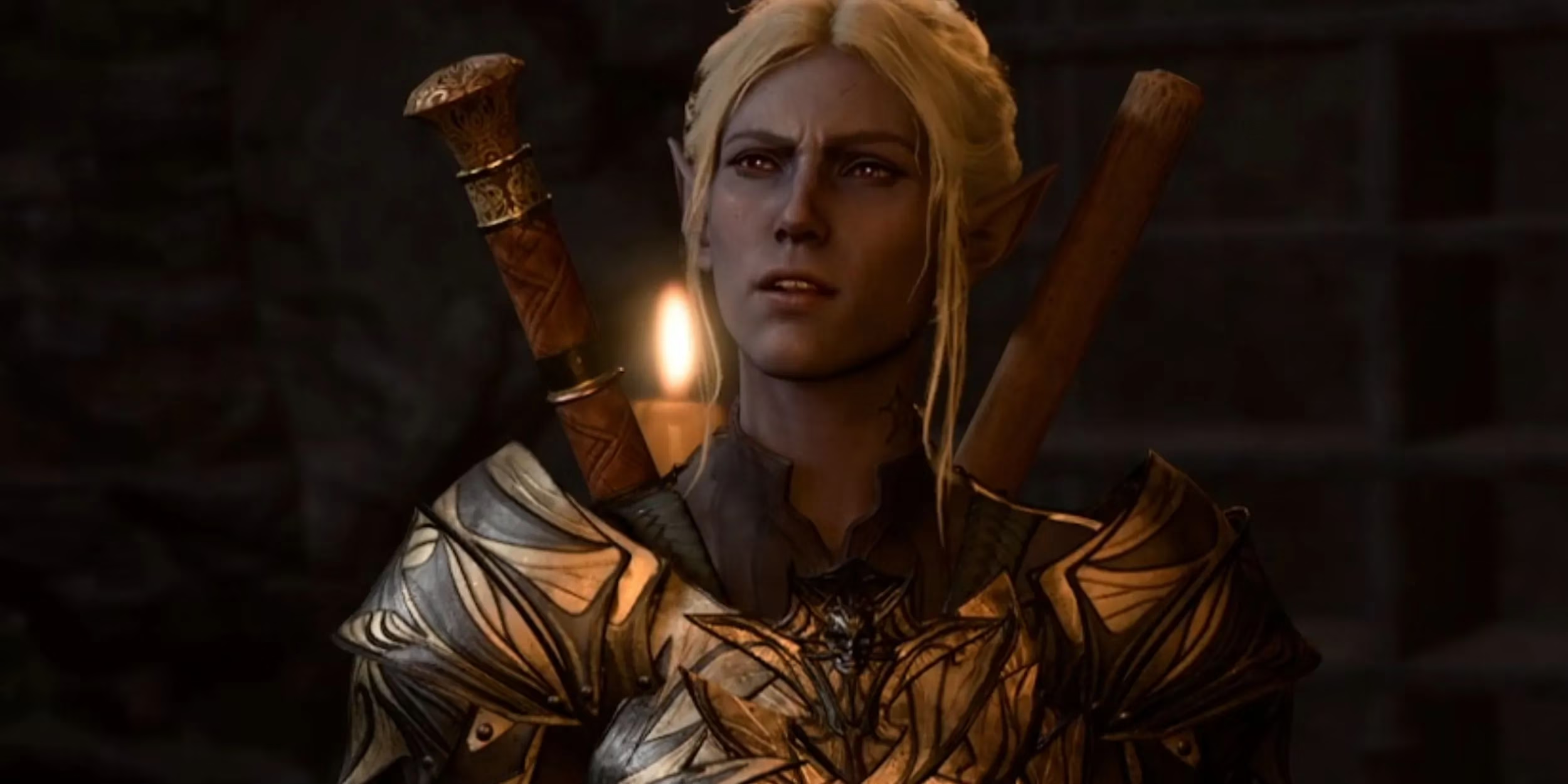
The Undead Return: Dror Ragzlin's Surprising Comeback
Let me break down the specific scenario, as discovered by players like Reddit user piwithekiwi. Remember Dror Ragzlin, that boisterous goblin leader in Act 1 holding court while poor Volo is forced to sing his praises? His fate isn't always final. If you make a very particular sequence of choices, you'll encounter him again in the Shadow-Cursed Lands.
Here’s the exact recipe for this undead reunion:
-
In Act 1: You must side with the Tiefling refugees at the Emerald Grove and ensure Dror Ragzlin is dead before you leave the area. This is the classic "good guy" path.
-
In Act 2: You must then, somewhat ironically, choose to follow Ketheric Thorm's orders and align yourself with the antagonists at Moonrise Towers.
If you follow this seemingly contradictory path—heroic in Act 1, then compliant with the villains in Act 2—Balthazar will have reanimated Ragzlin's corpse as a zombie servant. It’s a brilliant, dark twist. Larian accounted for this unlikely but possible narrative branch, ensuring the world remembers your actions, even if they were morally inconsistent. It’s not just Ragzlin, though. This system of posthumous consequences applies to other major figures as well.
A Chorus of Corpses: Minthara and Nere's Fates
The reactivity extends beyond the goblin camp. Depending on your pivotal decisions, you might run into other familiar faces among Balthazar's macabre collection.
| Character | Condition for Reanimation in Act 2 |
|---|---|
| Minthara | Ensure she is killed during the raid on the Grove or at the Goblin Camp before you travel to Moonrise Towers. |
| Nere | This one is trickier. You must ensure he survives the Grymforge, but then send him to Balthazar. The necromancer will certainly "find a use" for him. |
Finding Minthara as a shambling undead is a particularly poignant moment, given her significance in other playthroughs. It underscores the permanence of choice in Baldur's Gate 3. There's no universal "right" path, only the consequences of your specific journey.
The Ripple Effect of Recruitment Choices
This philosophy of consequence even extends to characters you choose not to bring along. One of the most chilling examples involves our favorite vampire spawn, Astarion.
-
If you never recruit Astarion in Act 1 and leave him to his fate...
-
...you will eventually encounter him later during the Cazador Szarr questline.
-
The implication is clear and grim: without your intervention, Cazador successfully recaptured him, and Astarion is forced to participate in the dreadful Ascension ritual against his will.
This detail is heartbreaking and showcases Larian's commitment to a living, reactive world. Your choice to ignore a companion doesn't mean they cease to exist; it means their story continues down a darker, uncharted path.
Why This Detail Matters in 2026
Years after release, discoveries like this keep the community engaged. They prove that Baldur's Gate 3 isn't just a game with multiple endings; it's a game with countless nuanced narrative branches. Every defeated foe, every spared life, and every abandoned companion has a potential future state coded into the game. It rewards (or punishes!) thorough exploration and role-playing consistency in a way few other games dare to attempt.
So, on your next playthrough, remember: in the world of Baldur's Gate 3, death is often just a temporary condition, and your past decisions will always find a way to catch up with you—sometimes quite literally, one shambling step at a time. 😱 It makes every choice feel weighty and every victory, however small, worth savoring.