Baldur's Gate 3 and the Quest for a Game Master Mode: A Story of Freedom and Limitations
Baldur's Gate 3's monumental legacy as a Dungeons & Dragons adaptation champions player freedom, yet the community passionately desires an official campaign creator. This compelling vision for democratizing storytelling intriguingly traces back to Larian's own history, revealing a fascinating chapter of developer ambition.
In the realm of video games, few titles have captured the collective imagination of players quite like Baldur's Gate 3. By 2026, its legacy as a monumental adaptation of Dungeons & Dragons is firmly cemented, celebrated for granting players an unprecedented level of freedom to shape their own epic narratives. Larian Studios masterfully wove the intricate rules of D&D into the digital fabric of Faerûn, creating a world that felt alive and responsive. Yet, as the years passed and countless adventurers completed multiple playthroughs, a persistent question began to echo through the community: why can't we become the storytellers ourselves? What if players could craft their own campaigns within this rich, detailed world, acting as the Dungeon Master for their friends? This desire, it turns out, points to a fascinating chapter in Larian's own history and the complex relationship between developer ambition and publisher oversight.
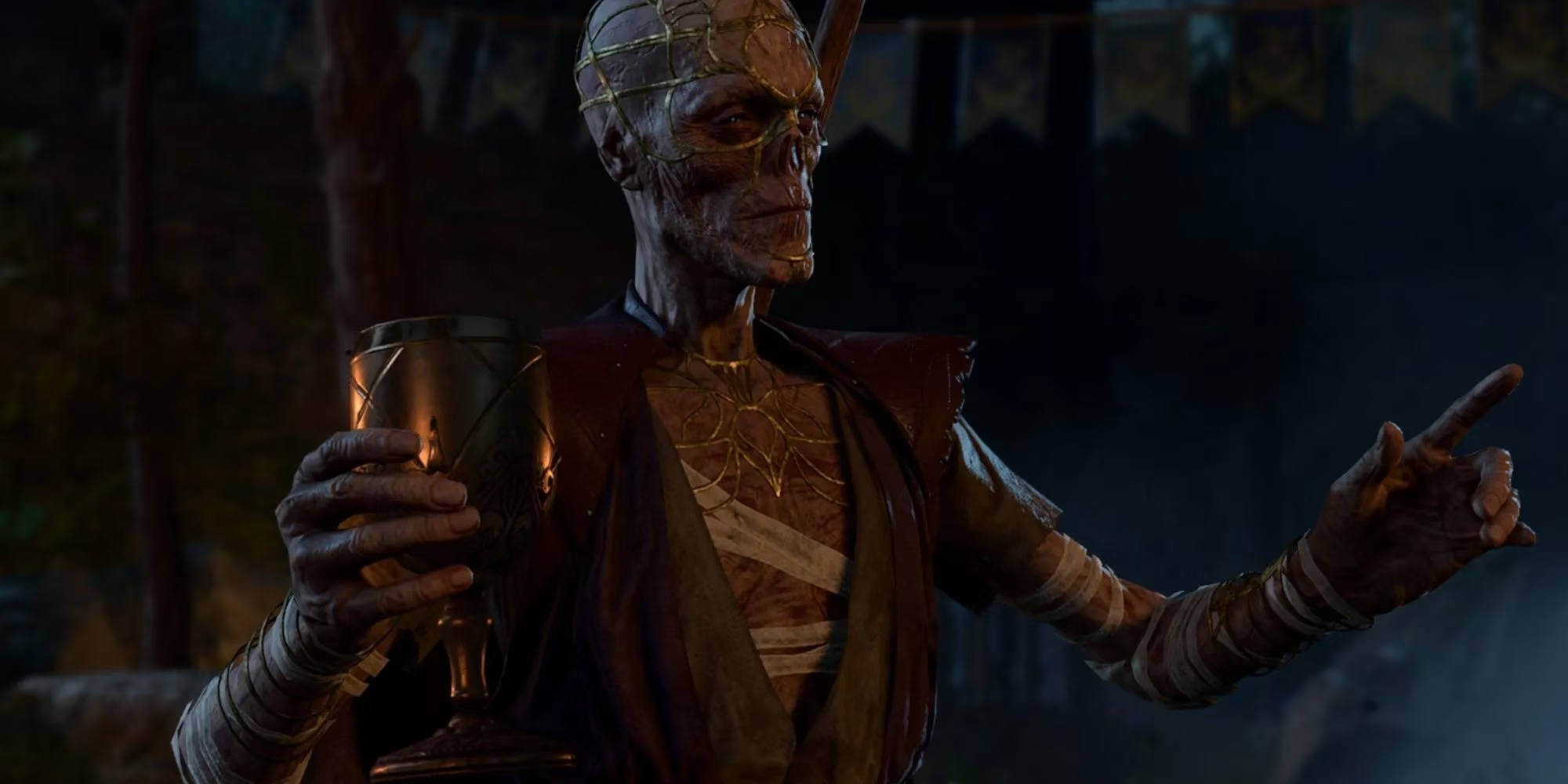
The Dream of a Faerûn Forge
The appeal is undeniable. Imagine harnessing the vast array of assets, characters, monsters, and locations from Baldur's Gate 3 to build entirely new adventures. While dedicated modders have always pushed boundaries, the absence of an official, in-game campaign creator felt like a missed opportunity. As one player, KnightofTrium, speculated on a popular forum, such a tool could have spawned an entire ecosystem of user-generated content. "Imagine if Wizards of the Coast partnered with Larian... but instead of making a game, they utilize the combat system from Baldur’s Gate and make an engine which Dungeon Masters can use to build combat maps and encounters," they mused. This vision wasn't just about modding; it was about democratizing creation, putting the power of a digital Dungeon Master into the hands of every player. Isn't that the ultimate expression of the freedom Baldur's Gate 3 so famously champions?
The Answer Was Already Written in Rivellon
What many newer fans of Larian's work may not realize is that the studio had already answered this call—years before the mind flayers invaded the Sword Coast. The solution existed not in Faerûn, but in the world of Rivellon, within Divinity: Original Sin 2. This revelation often comes as a surprise. For players who ventured from Baldur's Gate 3 back to Larian's previous masterpiece, the discovery of the Game Master Mode was a moment of both awe and slight frustration. Here was precisely the tool they were dreaming of: a built-in, developer-supported suite for crafting custom campaigns, complete with guides, templates, and an intuitive interface.
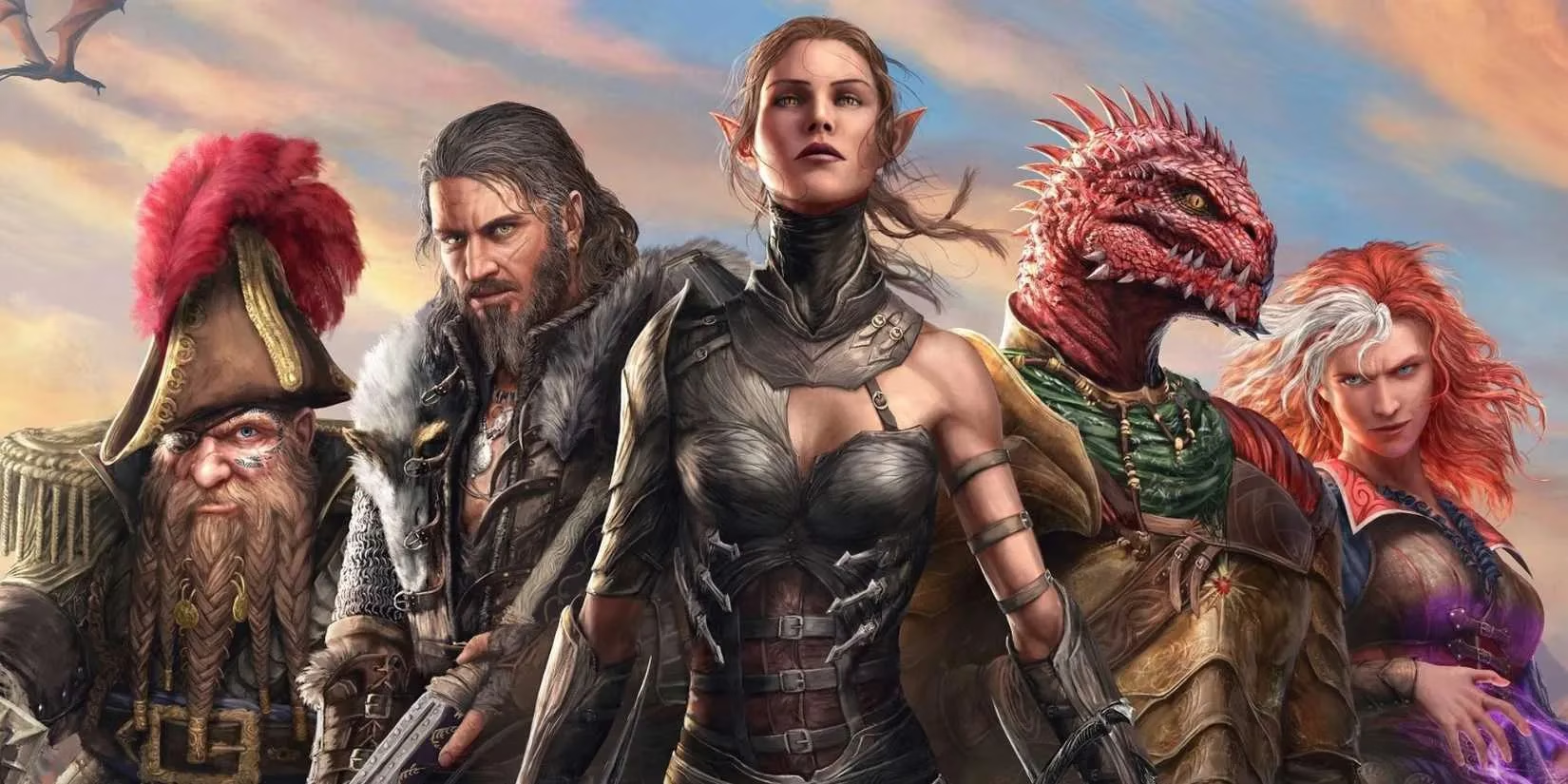
The capabilities of this mode were, and still are, remarkably deep:
-
No Coding Required: It provided almost everything a budding Game Master needed without demanding advanced modding knowledge.
-
Dynamic Storytelling: The tool allowed for real-time narrative control, letting the GM place enemies, items, and environmental effects on the fly.
-
A Canvas for Creativity: Using the game's robust systems, players could create everything from simple dungeon crawls to complex, branching narratives for their friends.
This feature showcased Larian's commitment to player agency not just in playing a story, but in authoring one. So, the burning question becomes: if they had perfected this system once, why was it absent from their magnum opus, Baldur's Gate 3?
The Shadow of the Publisher: A Tale of Two Freedoms
The speculation, widely discussed by 2026, points to a pivotal factor: the involvement of Wizards of the Coast, the stewards of the Dungeons & Dragons brand. While Larian was granted incredible leeway to interpret D&D's Fifth Edition rules, the concept of a Game Master Mode may have represented a bridge too far. Giving players the keys to the entire Forgotten Realms, with official tools to reshape it, could have been seen as relinquishing too much creative control over a highly valuable IP.
Consider the potential implications from a publisher's perspective:
| Consideration | Potential Publisher Concern |
|---|---|
| Brand Consistency | User-created content might conflict with established D&D lore or tone. |
| Quality Control | An official tool implies a level of endorsement for all content made with it. |
| Commercial Strategy | It might divert attention from officially licensed adventures and products. |
Was this difference in vision one of the underlying reasons for Larian and Wizards of the Coast parting ways after Baldur's Gate 3's monumental success? Many in the community believe so. It paints a picture of a developer whose ethos is rooted in radical player freedom, sometimes clashing with a publisher's need to guard a legacy universe. Larian had already proven with Divinity: Original Sin 2 that they trusted their community with powerful creation tools. The absence of a similar mode in Baldur's Gate 3 stands as a silent testament to the compromises inherent in working with a licensed property as storied as Dungeons & Dragons.
The Legacy and the Future
By 2026, the conversation has evolved. The modding community for Baldur's Gate 3 has flourished, creating astounding content that edges ever closer to the dream of a full Game Master Mode. Yet, the official, polished, and integrated experience of Divinity: Original Sin 2's system remains a high-water mark. It serves as a reminder of what could have been and a benchmark for what might come next.
For Larian, the story of these two modes is a defining arc. It highlights their core identity as pioneers of interactive storytelling who believe players should be co-authors of their experience. The tale of the missing Game Master Mode in Baldur's Gate 3 is not just one of a missing feature; it's a narrative about the boundaries of freedom, the weight of legacy, and the creative tensions that shape the games we love. As players look to the future, whether in Larian's next original world or another developer's take on D&D, the question remains: will we ever get those official tools to become the masters of our own digital dungeons once more? Only time, and perhaps a more permissive publisher, will tell. 🎲✨
As the landscape of role-playing games continues to evolve, players and developers alike are constantly seeking new ways to enhance their adventures. The ever-growing modding community is a testament to the desire for deeper engagement and customization in gaming experiences. This is where platforms like Lootbar come into play, offering resources and inspiration for both seasoned modders and newcomers alike. By providing a hub for sharing and discovering custom content, Lootbar helps bridge the gap between player imagination and game reality.
Whether you're looking to expand your current campaign or eager to dive into the world of game modding, Lootbar offers a plethora of tools, guides, and communities to support your journey. As we look forward to the future of interactive storytelling, platforms like these are crucial in fostering a vibrant ecosystem where creativity knows no bounds. With resources at your fingertips, the potential to bring your unique vision to life in the digital realm has never been more accessible.