Baldur's Gate 3: A Masterpiece, But Did The Older Games Do Some Things Better?
Baldur's Gate 3 and its predecessors offer an expansive, narrative-rich CRPG legacy, blending tactical party flexibility with compelling storytelling.
For many players, Baldur's Gate 3 stands as the ultimate CRPG achievement of the mid-2020s, a sprawling, narrative-rich adventure that feels nearly impossible to critique. Larian Studios crafted a behemoth where the word "expansive" barely scratches the surface, weaving incredible storytelling, world-ending stakes, and unforgettable companions into a journey easily surpassing 100 hours. The game's legacy is undeniable, having swept awards and defined a generation of RPGs. Yet, for those who have journeyed through the entire saga, a fascinating conversation emerges when looking back at the franchise's roots in Baldur's Gate and Baldur's Gate II. While BG3 is a monumental evolution, the classics from decades past still hold certain design triumphs that feel worth revisiting.
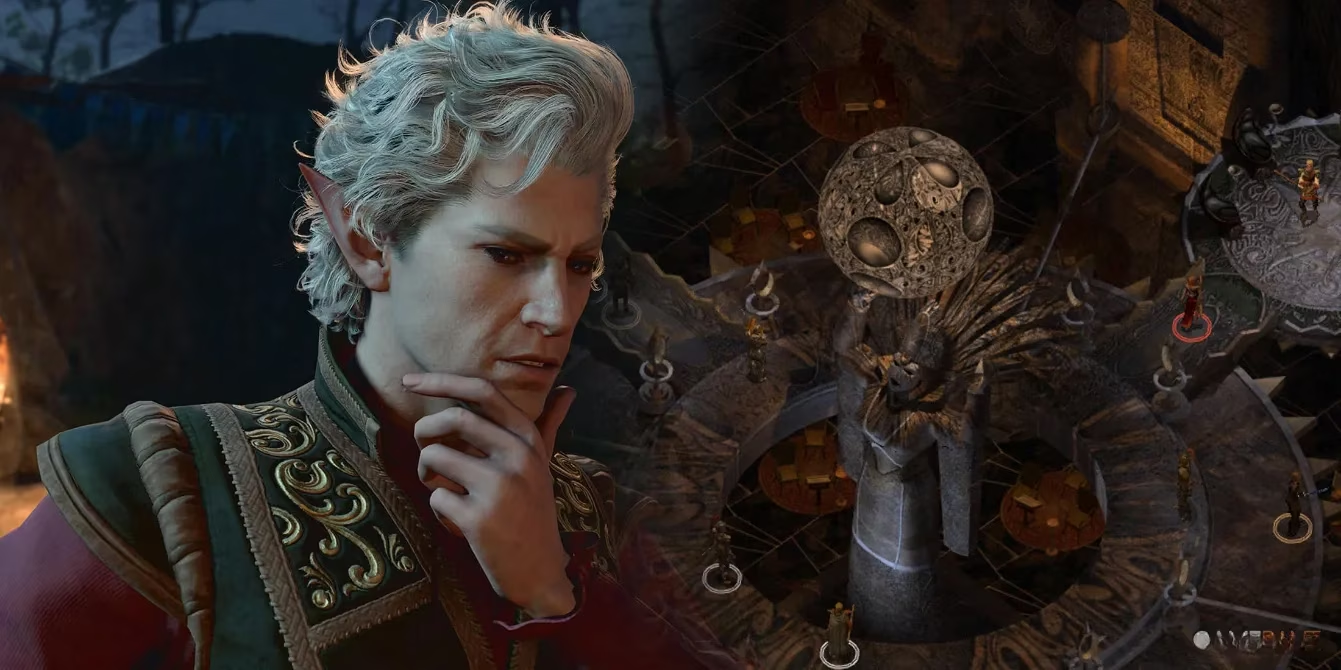
Party Size & Companion Flexibility 🧙♂️👥
One of the most immediate quality-of-life shocks for players moving from the older titles to BG3 is the party limit. In the original Baldur's Gate games, you adventured with a full party of six characters. No mods required—that was just the standard. This allowed for incredible tactical flexibility and party composition. Want a classic fighter, cleric, mage, thief lineup and still have room for two extra specialists or story companions? You could do that.
Baldur's Gate 3, in contrast, limits the active party to four. This creates one of the game's most famous agonies: choosing who to bring. 🤔 Do you pick based on story relevance, combat synergy, or just your personal favorites? The camp is always full of fascinating characters you're leaving behind. While BG3's companions are deeper and more interactively rich, the constraint of only three allies feels notably tighter compared to the strategic freedom offered by a party of five companions in the originals.
It's worth noting the sheer scale of recruitable options in the older games, though. Baldur's Gate could have over 30 potential companions under specific conditions, and Baldur's Gate II featured over 20. This came with its own challenge—getting to know them all intimately was harder—but the flexibility in party building was unparalleled.
Narrative Urgency & Pacing ⏳
The opening acts of the classic Baldur's Gate games are masterclasses in establishing immediate, palpable stakes. In Baldur's Gate, you're fleeing Candlekeep after a horrific murder, thrust into a dangerous world with a target on your back. In Baldur's Gate II, you begin as a prisoner in the twisted dungeons of Jon Irenicus, and the desperate escape sequence fuels the entire first chapter with relentless adrenaline. This sense of urgency felt consistent and pulsing throughout those adventures.
BG3 clearly studied this formula. Its opening aboard the crashing nautiloid is arguably even more spectacular and dire—a level 1 character facing mind flayers and a burning ship! The cerebral parasite serves as a brilliant narrative hook, a "ticking time bomb" in your head. 🧠💣
However, this is where the comparison gets interesting. In the older games, that urgency often matched the gameplay pacing. In BG3, many players quickly discover that the impending doom is... somewhat flexible. Believing in hard deadlines can lead to missing huge chunks of content. The game truly sings when played with exploration in mind and taking long rests freely to see companion story beats. This creates a slight tonal dissonance: the first few hours sell a desperate race against time, but the optimal way to play is a more leisurely, curious exploration. The classics maintained a tighter, more consistent thread between their opening urgency and the journey's rhythm.
Dungeon Design & Loot Satisfaction 🏰📦
Exploring a dungeon in Baldur's Gate 3 is an audiovisual feast, with incredible detail in every corner. Larian's deliberate level design is evident. However, this immersion comes with a common player gripe: the abundance of empty, worthless containers. How many times have you clicked on a barrel or crate only to find rotten food, a single piece of worthless cutlery, or nothing at all? This was a conscious design choice to make environments feel "lived-in," but it can turn looting into a tedious scavenger hunt rather than a rewarding exploration.
This contrasts with the more streamlined approach of Baldur's Gate and Baldur's Gate II. Their dungeons were often tighter and more focused. When you found a container or a hidden niche, there was a much higher chance it contained something genuinely useful—a potent scroll, a magic weapon, a key plot item. Finding loot felt like a reward for thorough exploration, not just part of the environmental noise. The satisfaction of discovering a powerful item was more concentrated and impactful.
| Feature | Baldur's Gate / BGII | Baldur's Gate 3 |
|---|---|---|
| Party Size | 6 members | 4 members |
| Loot Focus | Rewarding, curated finds | Immersive, often empty containers |
| Opening Urgency | Consistent narrative drive | Strong start, but flexible pacing |
| Companion Count | Vast roster (20-30+) | Smaller, deeper roster (~10) |
Final Thoughts: Evolution vs. Foundation 🏆
Making these comparisons isn't about declaring one game "better" than the other. It's about appreciating how different design philosophies shape the experience. Baldur's Gate 3 is a modern masterpiece that excels in cinematic storytelling, character depth, and player freedom within its systems. It's the pinnacle of what a 2020s CRPG can be.
The original Baldur's Gate games, products of their time, mastered a different set of principles: strategic party-scale combat, tighter dungeon crawling, and a relentless narrative pace. They offered a purer, more focused translation of the tabletop Dungeons & Dragons experience of their era.
For today's gamers, Baldur's Gate 3 remains the essential, must-play entry. But for those curious about the roots of the genre and the foundations upon which this modern giant was built, the classics still have powerful lessons to teach—and moments they absolutely nailed. The legacy of Baldur's Gate is a tapestry woven across decades, and each thread contributes to its enduring strength. ✨