Arc Raiders' AI Voice Controversy: Actor Neil Newbon Calls for Ethical Re-Recording in Wake of Success
Arc Raiders AI voice controversy sparks debate on ethics, labor, and the value of human performance in gaming industry success.
In a twist of fate that seems ripped from its own sci-fi narrative, Arc Raiders—a game centered on humanity's struggle against machine usurpers—found itself at the heart of a very human controversy. Upon its release in late 2025, it was revealed that the game had utilized AI-generated voices for some of its characters, a decision that ignited a fierce industry-wide debate about ethics, labor, and the soul of performance. The developer, Embark Studios, defended the move, citing actor permissions and logistical ease over booking new recording sessions. But for many, including seasoned actor and outspoken critic Neil Newbon, these justifications rang as hollow as the AI performances themselves.
The Core of the Controversy: Cost vs. Value
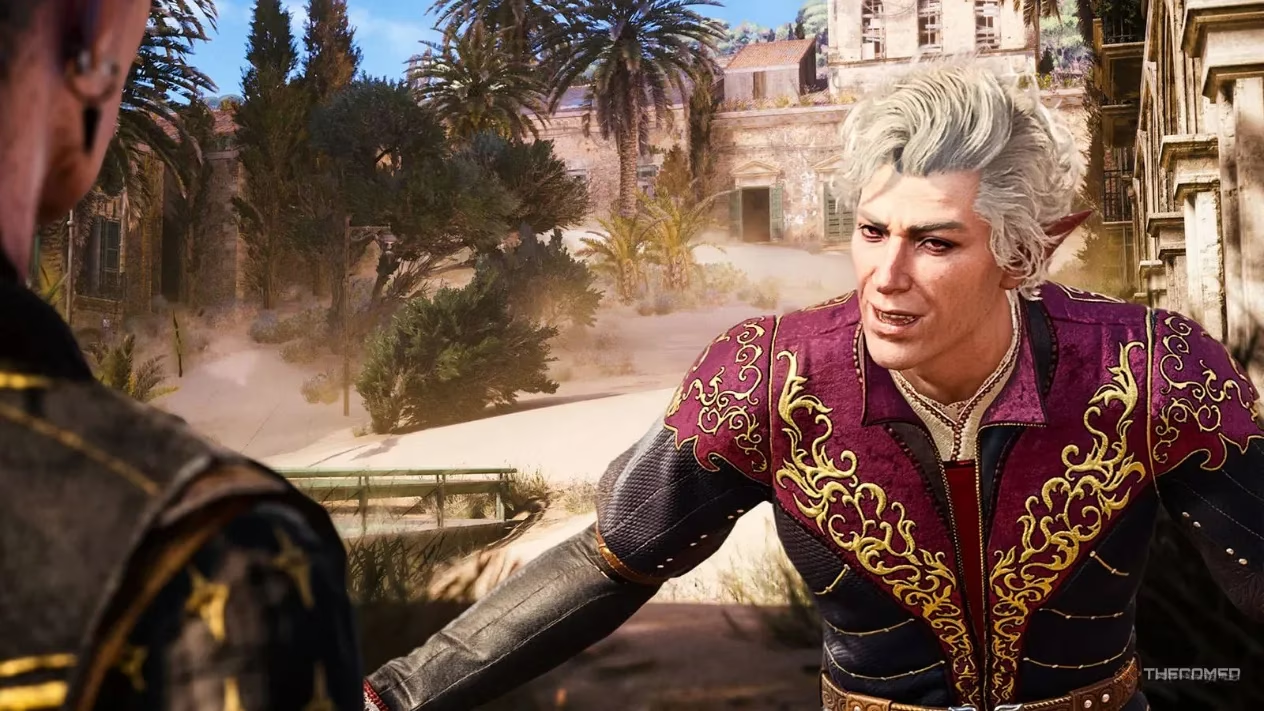
Neil Newbon, whose vocal anti-AI stance has been consistent for years, minced no words when discussing the practice. "The amount of money it costs to do those voice lines compared to the rest of the game's development is peanuts," he argued. While careful not to comment on the specific contractual details of Arc Raiders, Newbon framed the fundamental issue in stark terms: using AI to manipulate a consented voice recording is, in effect, "robbing that performer of that day's fee."
He went on to highlight the economic reality for most working actors: "Most actors, notoriously, are not rich. Most of us struggle our entire career." This point strikes at the heart of the fear permeating the creative industries—that AI adoption, even with initial permission, normalizes a process that could eventually sideline human artists entirely. Is the convenience of a text-to-speech program worth the precedent it sets for devaluing artistic contribution?
A Proposal for Redemption: Success Should Fund Ethics
What makes the Arc Raiders case particularly poignant is its subsequent success. The game was a hit, selling over four million copies and achieving a peak concurrent player count of nearly half a million. For Newbon, this commercial triumph transforms the situation from a budgetary constraint into a question of ethical responsibility.
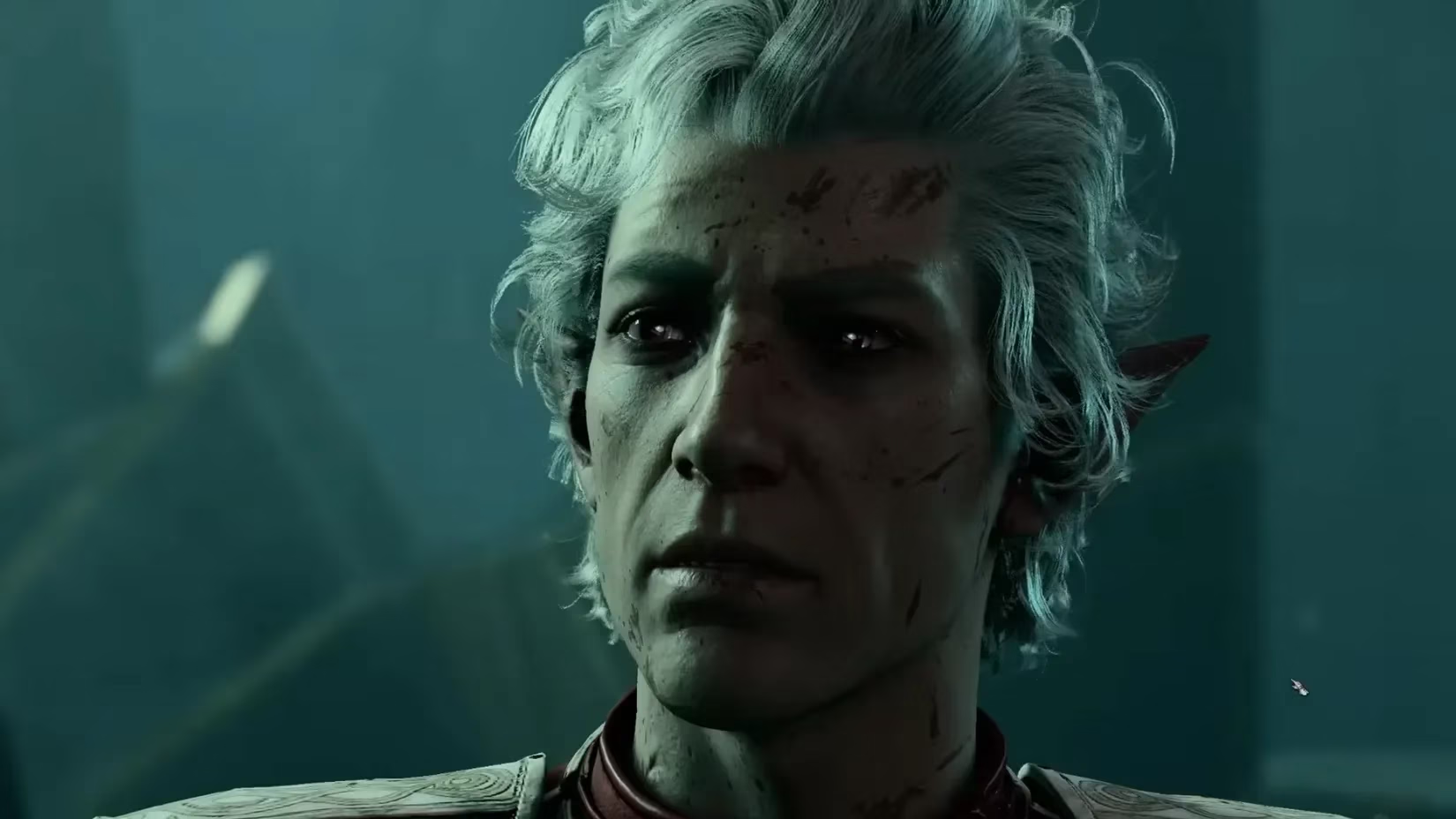
"When a game's successful, I don't really get why [developers] don't go, 'Well, at the time we couldn't afford to do it... but now we've been super successful, why don't we go back and actually redo the lines with actors?''' he proposed. This isn't just about making amends; Newbon positions it as a strategic move to enhance the game's quality and longevity. He contends that even in 2026, AI voices lack the convincing emotional depth of a human performance. "I don't really care about generative AI, because it sounds crap," he stated bluntly. "No matter how advanced it's getting, it still sounds not right."
The Wider Landscape: Not an Isolated Incident
The debate around Arc Raiders did not occur in a vacuum. It echoed similar controversies from 2025, such as those surrounding Where Winds Meet and Call of Duty: Black Ops 7, where AI's role in creative processes was similarly scrutinized. These cases collectively paint a picture of an industry at a crossroads, testing the boundaries of technology while grappling with its human cost.
Newbon's argument extends a direct challenge to studios that profit from using such technology: "I would say to anyone who made a sh*t ton off a release that uses generative AI for voices: maybe go back to those actors you paid however much money to clone their voices, maybe get them in the booth and re-record that stuff. Just saying. You've got the money now, spread the wealth." This call to action reframes the issue—it's no longer just about what is legally permissible, but about what is ethically right once financial success is secured.
Looking Forward: A Matter of Legacy
The implications are significant. If a successful game like Arc Raiders were to revisit and re-record its AI lines with human actors, it would set a powerful precedent. It would signal that:
-
🎤 Human performance is an invaluable asset, not just a cost to be minimized.
-
💰 Financial success brings ethical obligations to reinvest in the people who contributed to the product.
-
🕹️ Player experience matters; authentic performances create deeper immersion and lasting appeal.
Neil Newbon's stance is a reminder that technology should serve to augment human creativity, not replace it. As AI tools become more sophisticated and accessible, the industry must answer difficult questions: Where do we draw the line? How do we protect the livelihoods of performers? And when a game struck gold by featuring a war against machines, shouldn't it ensure its own creation doesn't inadvertently win that war for them? The conversation sparked by Arc Raiders is far from over; it's a crucial chapter in defining the future of storytelling in gaming.